








Key Takeaways
- Manual data entry error rates range from 1-4%, reaching 4% in supply chains, and over 60% of invoice errors are caused by manual data entry.
- API integrations allow real-time data synchronization across systems, eliminating most copy-paste and re-keying between tools.
- Start with a few high impact, multi step workflows (invoice to ERP, web form to CRM) and automate them end to end before scaling.
- Modern automation combines APIs, data extraction, and computer vision to handle PDFs, emails, scanned images, and handwritten notes.
- SoftDoes helps U.S. and Canadian companies design, build, and maintain these integrations as part of larger digital transformation efforts.
The Real Cost of Manual Data Entry in Modern Operations
Picture a 10 person operations team. Three team members spend their mornings entering data from supplier invoices, uploaded files, and customer forms into an ERP. Two others reconcile Excel files against CRM records. By the time they finish manual typing, half the workday is gone. Automation can save teams 240 hours monthly; without it, that time disappears into repetitive tasks.
Poor data quality costs U.S. businesses approximately $3.1 trillion annually, and 26% of organizations lose over $5 million each year due to inconsistent data, duplicate records, and missing fields. The errors compound: an incorrect due date on an invoice delays payment, a misspelled vendor name creates a duplicate record, and a wrong amount triggers a compliance review. Nearly 60% of workers could save 6 hours weekly with automation, but most are still entering data by hand.
As data volumes grow in 2026, the cost of keeping manual entry in place rises faster than headcount can scale. A ready-mix concrete company, for example, used two full time employees just to key supplier tickets. That consumed 3,600 hours per year on a single process, illustrating how custom construction and manufacturing software solutions can reclaim thousands of hours from field ticket entry and production reporting.
What Is Data Entry Automation and Why It Matters
Data entry automation replaces keystrokes and copy-paste with software that can capture data from a source, validate it against business rules, format it, and insert it into the right system. The difference between a spreadsheet macro and modern automated data entry is the difference between auto-filling a column and having software read an invoice PDF, extract key fields like vendor name, amount, and payment terms, then push that structured data into your ERP with no manual work.
Automated workflows require validation to ensure data quality and prevent errors. AI data entry automation can achieve 99.5% accuracy rates, compared to the 1-4% error rate typical of manual processes. Organizations see an 80% cost reduction with automation in targeted workflows, and automated workflows can eliminate manual data re-entry entirely.
Before: a finance team member spends 3 to 5 minutes per invoice, manually entering line items. After: the same invoice is processed in seconds, with the system flagging only low confidence records for human review. One firm processing 2,000+ invoices per month built this pipeline in six weeks and hit 95% extraction accuracy.
Automation does not remove people from the process. It shifts them from entering data to analysis, customer support, and decision making that requires human judgment.

How API Integration Helps Eliminate Manual Entry Between Systems
APIs are the way applications talk to each other. When your CRM, ERP, billing tool, help desk, and marketing platform all connect through API connections, data flows between them without anyone re-keying it. API integrations eliminate manual data entry tasks by letting a record created in one system appear in every other system that needs it.
A concrete example: a new customer signs up on your website. Their information syncs instantly to your CRM, billing system, and email marketing tool. No team member copies and pastes. No one forgets to update the billing address. Connecting CRM, ERP, and internal tools through APIs creates a single source of truth with fewer duplicates and fewer errors.
Event-driven webhooks enable real-time updates by notifying systems of data changes as they occur, rather than relying on scheduled batch syncs or nightly spreadsheet uploads. Businesses benefit from increased operational efficiency by implementing API integration and workflow automation. SoftDoes builds these integrations with proper authentication, encrypted transit, audit trails, and logging so they meet compliance requirements for finance and healthcare clients.
From Document to Database: Automating Data Extraction
A large share of manual entry still comes from unstructured sources: PDFs, scanned forms, email attachments, even handwritten notes on intake documents. These arrive in multiple formats, with every supplier or patient using a different document layout.
Intelligent Document Processing (IDP) uses OCR and computer vision to read invoices, receipts, contracts, and forms. IDP can process documents 21 times faster than manual methods, and modern IDP systems achieve accuracy rates of 95% or higher. AI platforms can reduce invoice processing time from weeks to minutes by extracting key fields, running validation, and pushing structured results into business systems via APIs.
The basic flow:
- Ingestion: a document arrives by email, scan, or upload.
- Extraction: OCR and computer vision read the text, tables, and line items. The tool extracts data from every field it can identify.
- Validation: business rules check totals, match purchase orders, and flag mismatches.
- Routing: confident results go straight to the ERP or CRM. Low confidence records go to human review.
Intelligent Document Processing integrates with existing business systems via APIs, so there is no need to rip out your current tools.
Tangible use cases for U.S. and Canadian businesses include trucking bills of lading routed to a TMS, healthcare intake forms pushed to an EHR, and supplier invoices matched to accounts payable records, and practices using custom software for dental and orthodontic workflows to eliminate manual charting and billing entry.

Let’s Turn Your Idea into Scalable Software
Book a call with the representative to get answers to all the questions you may have.
Designing Automated Workflows to Replace Multi Step Manual Processes
Automated workflows are sequences of steps: a trigger fires, conditions and business logic are evaluated, and actions execute. Automated workflows reduce decision points and manual handoffs, removing the need for a team member to check email, open a file, copy a value, and paste it somewhere else.
Automation can handle complex data transformations by integrating multiple data sources. Workflow engines and Integration Platform as a Service (iPaaS) tools facilitate cloud application connections without extensive coding, chaining APIs, data extraction, and approval workflows into end to end processes.
Two concrete multi step workflows:
- Lead capture → CRM → sales notification → nurture sequence. A form submission on your website triggers a record in HubSpot, assigns a sales rep based on geography, sends a Slack notification, and starts a drip email campaign. No manual handoffs, no lost leads, no inconsistent data in the CRM.
- Invoice email → data extraction → ERP entry → approval → payment queue. An invoice arrives as a PDF attachment. The system extracts vendor name, line items, and due date, validates against the purchase order, writes the entry to NetSuite, and routes it to a finance manager for approval only if the amount exceeds a threshold.
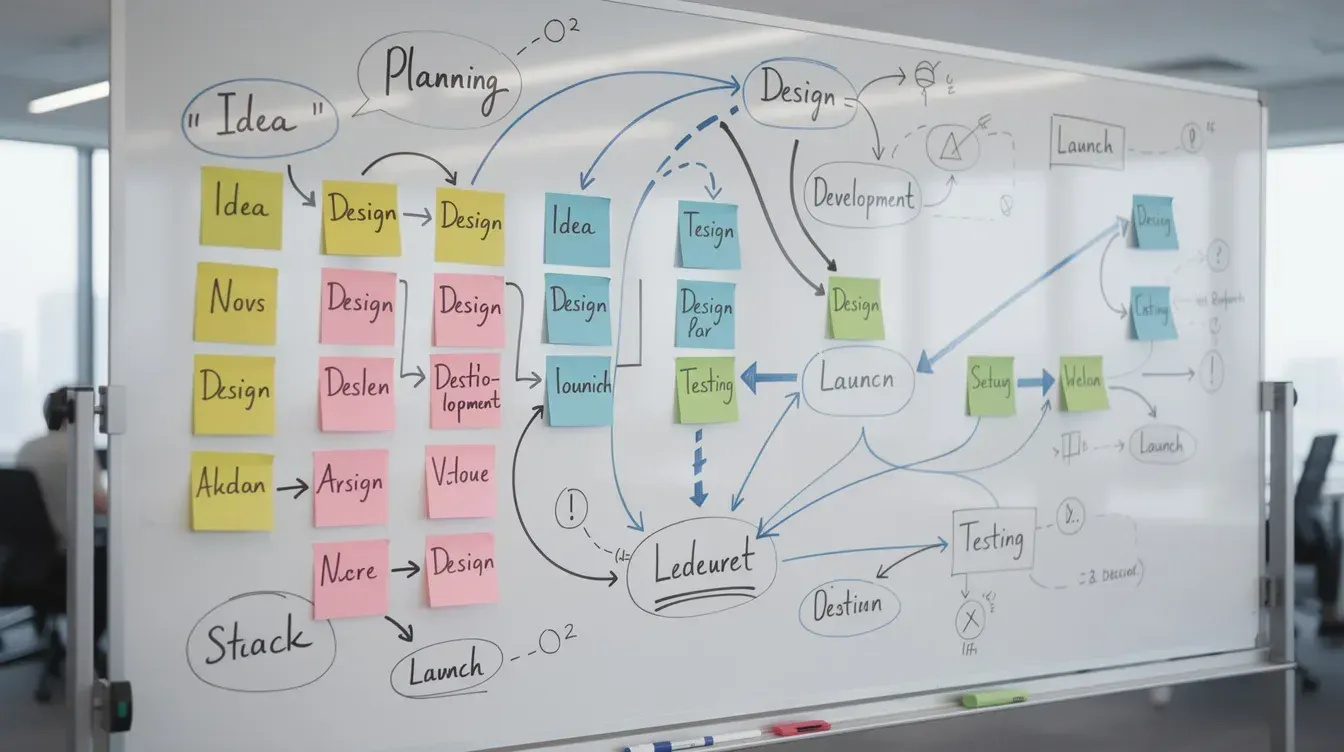
Automated workflows can eliminate decision points and manual handoffs for routine cases, while still routing edge cases to people. SoftDoes helps model these workflows visually so business owners and IT teams can agree on exact logic and exception handling before a line of code is written.
High-Impact Use Cases for Reducing Manual Data Entry
Here are specific scenarios U.S. and Canadian organizations can automate first.
Finance teams: invoice to ERP, expense reports from receipts, and purchase order matching. Over 60% of invoice errors stem from manual data entry; automating this workflow cuts close times and produces fewer errors. iPaaS tools and custom ERP integrations connect billing, accounting, and reporting without spreadsheets.
Revenue and customer operations: web forms to CRM for new clients, quote to contract workflows, and subscription changes syncing across billing and support tools. When a customer updates their plan, the change propagates to every system that needs it.
Supply chain and logistics: orders and shipment updates syncing between e-commerce platforms, WMS, TMS, and accounting without anyone opening a spreadsheet. One e-commerce operations team automated roughly 10,000 tasks per day across five workflows, eliminating about 67% of manual entry time and saving an estimated $148,000 per year.
Healthcare and education: digital forms and automated workflows protect data quality while meeting compliance requirements. Patient intake data routes directly to EHR systems. Student admissions forms populate records without error prone re-keying.
Step by Step Roadmap to Start Reducing Manual Data Entry
Start with a quick assessment: list every place where people re-type the same data. Log how many hours each process takes per week and what format the source data arrives in (email, PDF, scanned images, forms, or uploaded files). One operations team tracked tasks in a shared Google Sheet for two weeks before prioritizing.
Rank workflows by impact (hours saved, error risk, lost productivity) against complexity (number of systems involved, document variety, compliance requirements). Several options will surface; focus on the highest impact, moderate complexity processes first.
Phase 1 (0 to 2 months): Pick 1 to 2 critical workflows. Document current steps. Define success metrics: manual hours reduced, error rate, processing cycle time.
Phase 2 (2 to 6 months): Implement API integrations and basic automated workflows, including rules to validate data at the point of entry. Connect your CRM, ERP, and billing system so data flows without manual touch.
Phase 3 (6 to 12 months): Extend automation to more departments. Refine exception handling. Standardize data formats across teams. Use AI tools to improve extraction for new document types.
Tracking and monitoring automation performance helps identify bottlenecks and improve processes. Measure manual entry reduction, error rates, and cycle times continuously to guide the next round of investment.
SoftDoes collaborates with client teams in workshops and pilots during these phases to lower risk and accelerate results.
Technical and Organizational Best Practices for Automation
Data quality practices: define standard field formats (date, currency, vendor name). Add validation rules at the point of ingestion so missing fields or mismatched totals get caught before they reach the database. Maintain centralized reference data (vendor lists, GL account codes, customer IDs) to prevent inconsistent data across multiple systems.
Reusable components: build a shared "customer profile" API or "vendor record" connector that every workflow can use, rather than one-off integrations that break when a system updates. Integrate once, connect many.
Security and governance: access control per user role, audit trails on every automated insert or edit, encryption at rest and in transit. For healthcare, that means HIPAA compliance; for finance, SOX and PCI controls.
Change management: involve operations, finance, and IT stakeholders early. Show them the workflow diagrams. Let them define the business rules and exception cases. When a team trusts the automated workflow, they stop working around it.
Exception runbooks: create simple documents that explain what to do when the system flags an issue. If a vendor record is missing, here is who adds it. If an invoice total mismatches the PO, here is the approval path. Staff should know when to override and when to escalate, rather than silently fixing things.
Benefits of Working with SoftDoes
SoftDoes is a software engineering partner focused on custom software development, data engineering, and API integration for North American enterprises and scale-ups. The team builds automated workflows for clients in finance, healthcare, education, energy, and e-commerce, connecting existing CRMs, ERPs, and legacy systems rather than forcing a full platform replacement.
SoftDoes combines AI/ML, computer vision, and cloud native architectures to build data extraction and data entry automation solutions that are accurate, compliant, and auditable. Every integration includes logging, error handling, and human review queues for edge cases.
If your team is still spending hours on manual processes, book a discovery call with SoftDoes. The team will review your current manual data entry pain points and propose a phased automation plan tailored to your environment.



Comments (0)
No comments yet.