







Key Takeaways
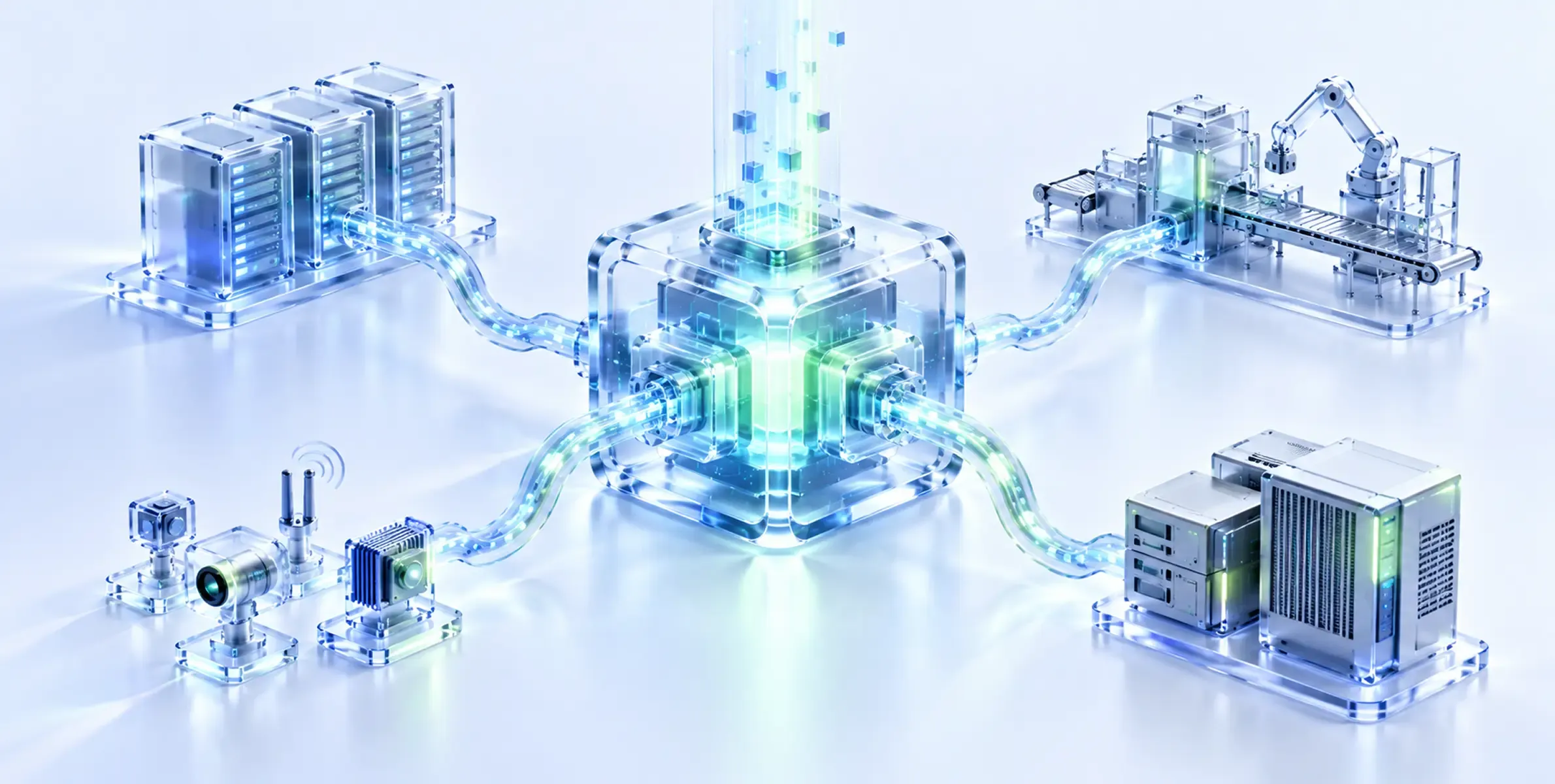
- Industrial data integration creates a unified data backbone connecting ERP, MES, IoT, and legacy systems. This integration uses APIs, data pipelines, and message buses to ensure seamless data flow between business and operational systems.
- About 40% of integration projects in U.S. and Canadian manufacturing fail due to challenges with data silos, inconsistent master data, and legacy protocols. A phased approach with clear governance helps overcome these issues.
- ERP systems manage orders, finance, and inventory. MES handles production and quality control. IoT devices provide real-time machine and environmental data. Together, these systems form a connected operational picture.
- SoftDoes partners with enterprises to build custom integration layers that preserve legacy investments while enabling Industry 4.0, analytics, and AI.
Why Industrial Data Integration Matters Now
Industrial data integration connects ERP, MES, IoT, and legacy systems through middleware, APIs, and data pipelines. This creates a consistent data flow without replacing existing systems. Poor data quality costs companies an average of $9.7 million annually due to rework, excess inventory, and delayed reporting. Meanwhile, 78% of executives struggle to use their data effectively, despite having raw data scattered across systems.
This integration is critical as Industry 4.0, AI, cloud platforms, and machine learning depend on accurate, integrated operational and customer data for dashboards, automation, and better decisions. SoftDoes supports manufacturers across the U.S. and Canada in implementing integration foundations for analytics, AI, compliance, and efficiency, drawing on its broader custom software and digital transformation expertise.
Core Systems in Industrial Environments: ERP, MES, IoT, and Legacy
Most North American plants operate four key technology layers generating manufacturing data.
ERP platforms like SAP S/4HANA, Oracle ERP Cloud, or Microsoft Dynamics 365 manage orders, inventory, finance, customer, and supply chain data. They are the system of record for business data, backed by robust database design and development practices.
MES connects shop floor data with enterprise systems, managing work orders, routing, quality control, production tracking, and batch genealogy. Examples include Rockwell MES, Plex, and Aegis.
Industrial IoT devices—PLCs, SCADA systems, edge gateways, condition monitors—generate time series data such as vibration, energy use, and temperature. These raw data streams require filtering and context before being actionable.
Legacy systems, including IBM i/AS/400, custom LIMS, and Excel-based tools, hold critical process logic and historical records. They lack modern APIs but must be integrated to participate in the overall data flow, often requiring strong enterprise data management and platform capabilities.
Integrating these systems connects transactional business data, time series sensor data, quality control data, and customer feedback into a unified factory ecosystem, supporting inventory management and quality systems.
Typical Integration Challenges and Data Silos
While many plants have the right systems, connecting them is difficult. Separate CMMS for maintenance, spreadsheets for quality, and ERP data refreshed only overnight create disconnected systems and blind spots that hurt data accuracy and slow production.
Data quality issues compound the problem. Inconsistent item and equipment codes, mismatched units, duplicate customer records, and outdated master data cause conflicts even when systems connect. Over 51% of manufacturers report significant issues with MRO master data quality. Additionally, 24.6% of organizations still use on-premise solutions, complicating hybrid cloud environments.
Technical barriers include legacy devices using Modbus RTU or proprietary serial protocols without encryption or APIs. Mixing on-premises PLCs with cloud analytics creates challenges around latency, security, and protocol translation. Direct database links are brittle legacy workarounds.
Organizational barriers persist as OT teams own the shop floor and IT owns enterprise platforms. Without aligned data governance and shared ownership, projects stall. Overcoming resistance and fostering collaboration is essential. These challenges also impact regulatory compliance in food, pharma, and energy sectors, where traceability gaps cause audit failures and costly recalls. Data integration reduces operational costs by improving collaboration when these barriers are addressed, especially when combined with industry-specific software solutions and services.

Architectural Patterns for Connecting ERP, MES, IoT, and Legacy
A hub-and-spoke or middleware architecture is the most reliable for industrial integration. Instead of fragile point-to-point connections, ERP, MES, IoT, and legacy apps connect through a central integration layer—API gateway, message bus, or middleware/iPaaS to reduce complexity. APIs and middleware manage data mapping and transformation across multiple systems, underpinned by solid data engineering and infrastructure consulting.
Typical data flows include ERP to MES for work orders and BOMs, MES to ERP for production confirmations and scrap reporting, IoT to MES for machine performance status, and legacy to cloud data lakes for historical analytics. A unified namespace architecture lets systems publish and subscribe to live operational data for seamless flow.
Real-time APIs and event streaming support production visibility and predictive maintenance with alerts within seconds. Batch ETL/ELT pipelines suit daily reporting and aggregate data consolidation. Edge gateways normalize protocols between OT and IT. Standardized industrial protocols ensure interoperability; OPC UA provides secure platform-independent modeling. MQTT is a lightweight protocol for real-time IoT to cloud and MES connectivity.
SoftDoes designs vendor-neutral integration architectures on AWS, Azure, or GCP, connecting to on-premises plants. Legacy systems can be integrated incrementally using middleware or protocol gateways, bridging old and new environments without forklift upgrades.

Let’s Turn Your Idea into Scalable Software
Book a call with the representative to get answers to all the questions you may have.
Step-by-Step Roadmap to Industrial Data Integration
Start by assessing and mapping all data sources: ERP, MES, historians, IoT platforms, and legacy applications. Document data owners, formats, update cycles, and protocols. Decide on cloud or on-prem approaches per source. This discovery uncovers technical debt and helps standardize data models, reducing errors and improving interoperability as part of a broader digital transformation services roadmap.
Next, define business outcomes. Instead of integrating everything at once, select one or two high-impact use cases such as reducing unplanned downtime, improving overall equipment effectiveness, enhancing supply chain management, ensuring traceability for audits, or eliminating manual production reporting. Integrating manufacturing data improves visibility and accelerates production cycles when tied to measurable goals.
Design your data model and governance framework. Establish standard item, equipment, and location master data hierarchies. Define naming conventions, units of measure, and ownership roles. Data should be enriched with context for meaningful analysis, not just moved.
Choose integration methods based on latency and volume needs. Real-time APIs support process optimization and machine alerts; message queues handle event streaming for supply chain visibility; file transfers or ETL/ELT pipelines suit batch reporting. Match methods to use cases to streamline data movement.
Pilot and then scale. Phased rollouts minimize disruption and test integration strategies before enterprise-wide deployment. Start with one plant or production line connecting MES, ERP, and IoT data. Validate consistency, latency, and reliability. Once proven, standardize templates and expand across sites and plants. SoftDoes supports clients throughout discovery, build, testing, and training, applying its product development and engineering services approach to industrial integrations.

Best Practices for Data Accuracy, Consistency, and Security
After connecting ERP, MES, IoT, and legacy systems, maintaining data integrity requires discipline.
Establish a single source of truth for master data. Materials, equipment IDs, customers, and suppliers should be governed from one authoritative source, usually ERP or a dedicated MDM tool. This prevents conflicts when production, CRM, and quality systems reference the same entities.
Automate validation. Automated data flow reduces manual errors, but profiling rules must catch missing values, outliers, and duplicates as data crosses system boundaries. Real-time monitoring ensures system health and detects issues before bad data spreads, supported by mature enterprise data management and platform services.
Manage schema changes carefully. When systems update data models or interfaces, integrations can break silently. Version APIs, maintain integration tests, and document changes so teams know promptly.
Security is critical. Segment networks between IT and OT, enforce role-based access control, encrypt data in transit, and monitor for abnormal access. Cloud-based integration enhances security for sensitive data when architected properly. Cloud solutions offer scalable processing power and enable easy integration of new data sources.
Align with U.S. and Canadian regulations. FDA for life sciences, NERC CIP for power, and sector-specific privacy rules impose traceability and compliance standards. SoftDoes integrates data engineering, cloud security, and compliance expertise from project start.
Leveraging Integrated Data for Analytics, AI, and Operations
Connecting ERP, MES, IoT, and legacy systems sets the foundation. The real value comes from what you build on top.
Unified data enables key metrics from multiple sources in dashboards and reports: overall equipment effectiveness, line performance, inventory exposure, and order status across facilities. Real-time visibility improves decision-making and operational efficiency, turning raw data into actionable production metrics.
Predictive maintenance is a high-value use case. Combining IoT sensor data and maintenance records with ERP work orders lets models recommend optimal service times, reducing unplanned downtime and extending asset life. Real-time integration improves inventory accuracy by aligning spare parts with predicted demand.
Quality and traceability rely on integrated MES, lab, and ERP data to quickly trace lots during recalls or complaints. MES integration enhances compliance and traceability, critical in food, pharma, and aerospace. ERP alignment ensures production matches customer demand and production schedules.
SoftDoes uses integrated industrial data to forecast demand, optimize processes, detect anomalies, and recommend energy savings. These use cases unlock cost savings and competitive advantage. Real-time data integration enhances collaboration and reduces operational costs by automating processes, especially when combined with targeted data science consulting and analytics services. Start with one or two high-impact analytics use cases to prove ROI before expanding.
How SoftDoes Helps Industrial Enterprises Integrate Their Data
SoftDoes is a software development and data engineering partner for North American industrial companies. Our services cover custom API development, middleware and iPaaS implementation, data pipeline engineering, cloud data lake and warehouse design, and legacy modernization, delivered by a seasoned engineering team and culture.
In one engagement, we integrated over 20 equipment data sources with ERP and MES for a U.S. manufacturer, improving data accuracy and reducing manual reporting by over 60%. Supply chain teams gained real-time visibility into inventory and production across three facilities, improving responsiveness and eliminating hours of manual data entry weekly.
We offer flexible engagement models: dedicated squads, project delivery, or co-delivery with internal teams. Vendor neutral, we connect SAP, Oracle, Dynamics, homegrown MES, business systems, and modern IoT platforms on AWS, Azure, or GCP without pushing specific products. Whether aggregating disparate data, connecting enterprise to shop floor sensors with custom web application solutions, or building data-driven oil and gas software, we help.
If you’re evaluating integration gaps, contact us for a discovery conversation to identify quick wins and map a long-term architecture that fits your environment and unlocks competitiveness.
Conclusion
Industrial data integration is the backbone of Industry 4.0, AI, and modern manufacturing operations in the U.S. and Canada. Success comes from clear architecture, strong governance, and phased implementation—not a single tool or one-time project.
Connecting ERP, MES, IoT, and legacy systems preserves prior investments while unlocking data needed for process optimization, compliance, and growth. Identify data silos and manual processes, then consider a structured integration roadmap with expert support. Manufacturers who connect their data now will lead the next decade of North American industry.


Comments (0)
No comments yet.