




U.S.-Based
AI Development Services
SoftDoes is a B2B software development company and AI development partner that incorporates artificial intelligence into roughly 80% of client projects. We work with enterprises and scale-ups in finance, healthcare, education, e-commerce, energy, and other regulated industries-building production-grade AI systems that go beyond demos.















Business Outcomes of Artificial Intelligence Development
60%
AI development significantly cuts manual work in key business areas like support, claims, and document processing. By automating repetitive tasks, teams speed up decision-making in data-heavy operations. Employees double their productivity by focusing on strategic initiatives instead of routine tasks.
42%
Custom AI software speeds up response times across all digital customer channels while driving higher self service resolution rates. Sales teams leverage predictive insights and automated account research to boost conversion rates and increase pipeline velocity.
91%
Enterprise AI solutions ensure consistent policy adherence by enforcing automated governance rules and generating complete audit trails for every transaction. Eliminating human error during complex data processing reduces costly compliance violations and operational risks. Built in security guardrails maintain system safety and regulatory alignment even as business volumes scale.
What is Artificial Intelligence Development?
Artificial Intelligence (AI) development involves building, fine-tuning, and integrating intelligent software solutions into business operations. It encompasses predictive analytics, machine learning, Generative AI, Large Language Models (LLMs), and autonomous AI agents. AI systems process complex data, adapt to context, run multi-step workflows, and deliver automated outcomes with strong security.
AI Model Development
SoftDoes starts every AI project with a business outcome-focused discovery. Instead of generic experiments, we identify high-ROI workflows like claims intake, KYC verification, invoice processing, and support deflection where AI software development delivers measurable returns. We map workflows and set KPIs like reduced handle time, fewer manual steps, and better SLA adherence.
Data Processing & Training
High-performing AI models depend on clean, enterprise-grade data foundations. We convert raw data into high-quality inputs for accurate, hallucination-free AI results. Our secure pipelines use vector databases for RAG, with strict guardrails like validation, access control, and
AI Integration
Our AI integration approach embeds models and intelligent agents into your existing software ecosystem, including Salesforce, SAP, ServiceNow, custom backends, and REST or GraphQL APIs. Event-driven triggers and plug-ins automate connected systems without disrupting workflows. We build scalable AI architectures on AWS, Azure, or GCP to handle high data volumes.
Engagement Options
We don’t just deliver code — we deliver outcomes. Our partners trust us to turn complex ideas into scalable digital products that actually work. Here’s what they say — and how we proved it.
> Time and Materials <
> FIXED PRICE <
> MANAGED TEAM <
> managed product <
What AI development Deliver for Your Business
Custom AI development produces measurable financial and operational results across four core enterprise domains: customer support, operations, sales research, and back office. By combining predictive analytics, large language models, computer vision, and workflow automation, AI solutions solve complex business challenges with clear ROI.
Customer Support
Omnichannel AI development powers intelligent support platforms across chat, email, and self-service portals. Modern AI models analyze customer intent, order histories, and enterprise knowledge bases to resolve issues instantly. For complex cases, AI summarizes conversation context for seamless handoff to human representatives and integrates with platforms like Zendesk, Freshdesk, or proprietary helpdesks.
Operations
AI driven document processing and computer vision systems extract, validate, and structure critical operational data from invoices, contracts, and medical forms. Typical workflows automatically ingest physical or digital documents, cross-check records in ERP systems, flag compliance issues, and route exceptions to managers.
Sales Research
AI technology automates market analysis, prospect research, and lead prioritization by synthesizing data from company filings, web content, and industry news directly into your CRM. Sales teams use predictive analytics to evaluate customer fit and forecast buying behavior. Automating research and brief generation saves hours per lead and lets account executives focus on high-value deal strategy.
Back Office
AI integration empowers internal enterprise search, policy navigation, and document drafting across finance, legal, and HR teams. Using retrieval augmented generation (RAG) and secure vector databases, employees query internal repositories with strict permission controls. Teams get instant, citation-backed answers to complex regulatory questions, speeding onboarding and removing knowledge bottlenecks.
How We Build AI Agents You Can Trust
Building enterprise grade AI technology requires four fundamental pillars. Each pillar directly impacts system reliability, data security, model transparency, and auditability across production environments.
Infrastructure & Tools
Enterprise AI solutions connect with underlying core systems, CRM, ERP, HRIS, data warehouses, and custom databases, through secure API gateways with fine grained, role based access control (RBAC). We separate read-only data querying from write-enabled operational triggers, applying additional encryption and safety layers to sensitive transactions like financial operations and records deletion.
Memory & Data Management
Custom AI models manage context with session state and vector database retrieval. Sensitive data is isolated with strict retention rules per GDPR and HIPAA. Self-learning is disabled in production; updates occur only via supervised retraining and controlled deployments.
Human in the Loop Governance
Production AI deployments use mandatory human approval gates to ensure governance. Human managers review and approve AI outputs for high-risk actions based on configurable risk thresholds, maintaining oversight and control.
Testing & Continuous Observability
Every AI development project undergoes rigorous validation using golden evaluation datasets and automated regression tests. We track key performance indicators like task accuracy, model latency, retrieval precision, cost per interaction, and hallucination rates. Continuous monitoring detects anomalies like model drift or latency spikes, triggering alerts for timely optimization.
How an AI Development Project Runs
A free 30–60 minute consultation covers goals, data landscape, constraints, and existing AI infrastructure. Activities include stakeholder interviews, system mapping, data availability review, risk identification, and an initial ROI model. AI consulting assesses digital maturity and identifies impactful AI use cases during this phase.
Sprint-based implementation: architecture design, model development, prompt engineering, data pipelines, and front-end/back-end development. We integrate with 1–3 core business systems and set up test environments. A small group tests the agent with iterative refinements. Deliverables: working pilot in staging or limited production, metrics dashboard, risk assessment, and rollout plan.
Production rollout uses phased deployment, feature flags, and fallback mechanisms to human-only workflows. Post-launch tuning covers prompt updates, routing adjustments, threshold settings, and integration refinements based on live data. Optional ongoing support includes monitoring, incident response, and model updates.
Case Studies: Real AI Development Projects with Measurable ROI
Each case below illustrates end-to-end AI development-from discovery to scaled deployment-with clear metrics.

- Startup
- Real Estate
Our Haus AI
A finance professional turned founder built Our Haus AI, an AI-powered collaborative workspace where homeowners and contractors scope, bid, contract, and document renovation projects together. SoftDoes took her prototype and made it production-ready.- 10XMVP scope delivered
- 2+years Ongoing partnership
- 1Fully owned Platform

- Finance
- Energy
Deepwater Insights
Deepwater Insights delivers proprietary alternative data and niche research on the offshore drilling and energy sector to institutional investors, family offices, and high-net-worth individuals who require coverage that larger firms don't provide.- 100%Brand Continuity
- 2Platform Distribution
- 100%Paywall-Ready Content

- Real Estate
The building buyer
The Building Buyer is a Florida-based real estate investment firm co-founded by Dylan Troiano and Charles Hanlin. They acquire single-family, multifamily, and commercial properties across South Florida and beyond, with a focus on motivated seller opportunities.- 18Weekly hours saved
- 2+Years Ongoing partnership
- 1Fully owned Platform

- Education
- Non-Profit
WOVEN & NICE
Woven is a Spring Valley, NY nonprofit running the NICE program (New Training Inclusive Community Environment) in four Rockland County schools. Their team supports students through restorative practices, mediation, and professional development for teachers and administrators.- 4Schools Served
- 4Weeks to Launch
- 1STTime on Upwork

- Healthcare
CareInTouch
CareInTouch is a Bay Area home health agency providing skilled nursing and therapy services to patients referred from hospitals and clinics. With over 100 staff, they operate in one of the most complex and compliance-driven healthcare markets in the country.- 40% Reduction In Billing Errors
- 100+Staff Operations Managed
- 0Missed Compliance Deadlines

- Startup
Sparkle The Cleaning Service
Sparkle The Cleaning Service is a Detroit-area residential cleaning company with 10 years in business, connecting homeowners with vetted, insured independent cleaners through a subscription-based marketplace platform.- 75% Platform Transparency
- 2XPlatform Growth
- 40%Higher User Retention

- Startup
DineMate
DineMate is a Maryland-based dating and connecting platform built around verified profiles, restaurant reservations, and prepaid dining experiences. Founded to bring back authenticity to how people meet and connect.- 60% Time Saved
- 99%System Reliability
- 40%Higher User Retention

- Healthcare
Prior Authorization AI
Prior Authorization AI is a healthcare automation startup building AI-powered tools to streamline prior authorization for Medicare and Medicaid medical transportation providers in New Jersey.- 16Weekly hours saved
- 63%Admin time reduced
- 43%Fewer submission errors

- Education
Grand Central Language Services
Grand Central Language Services provides translation and interpretation for organizations operating in complex, multilingual environments. As demand grew, internal workflows became harder to manage. SoftDoes built a custom platform to streamline coordination, improve visibility, and support scalable operations.- 72%Workflow Reduction
- 48%Coordination Reduction
- 83%Visibility Increase

- Healthcare
FMY Orthodontics
FMY Orthodontics, a multi-location practice in West Tennessee, partnered with SoftDoes to replace a spreadsheet-based financial workflow with a custom web platform. The goal was to simplify how staff present treatment financing while allowing patients and families to review and complete decisions remotely.- 60%Workflow Reduction
- 75%Remote Adoption
- 5Locations Aligned

Forbidden Alchemy
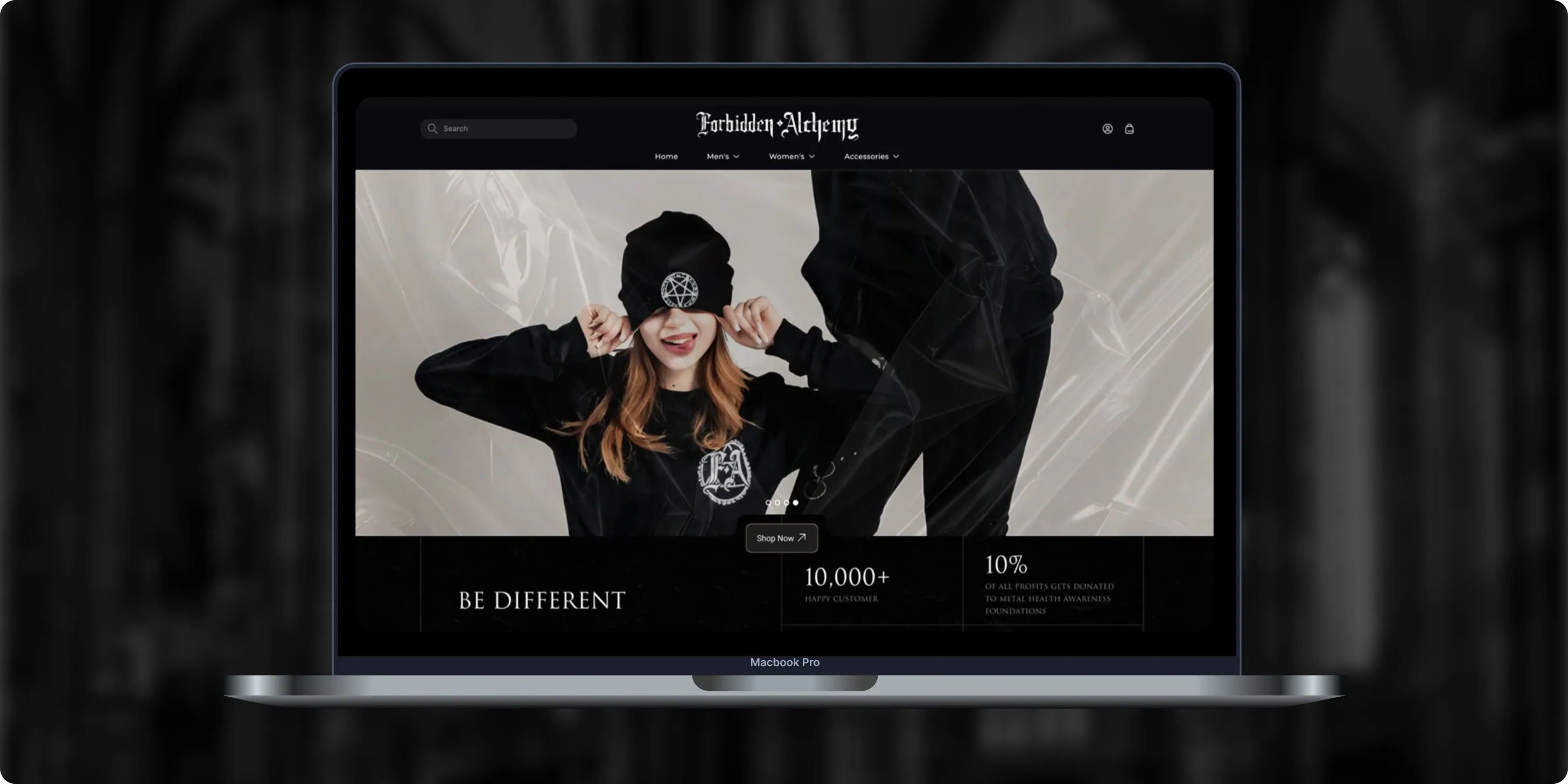
Forbidden Alchemy is an alternative fashion brand creating dark, provocative clothing for the metalhead community, with 10% of profits donated to mental health awareness. Its mostly mobile audience struggled with a store that was hard to navigate and weak on functionality.- +44%Revenue Month Over Month
- 86%Design Satisfaction
- 2.8XUser Retention Growth
Altera
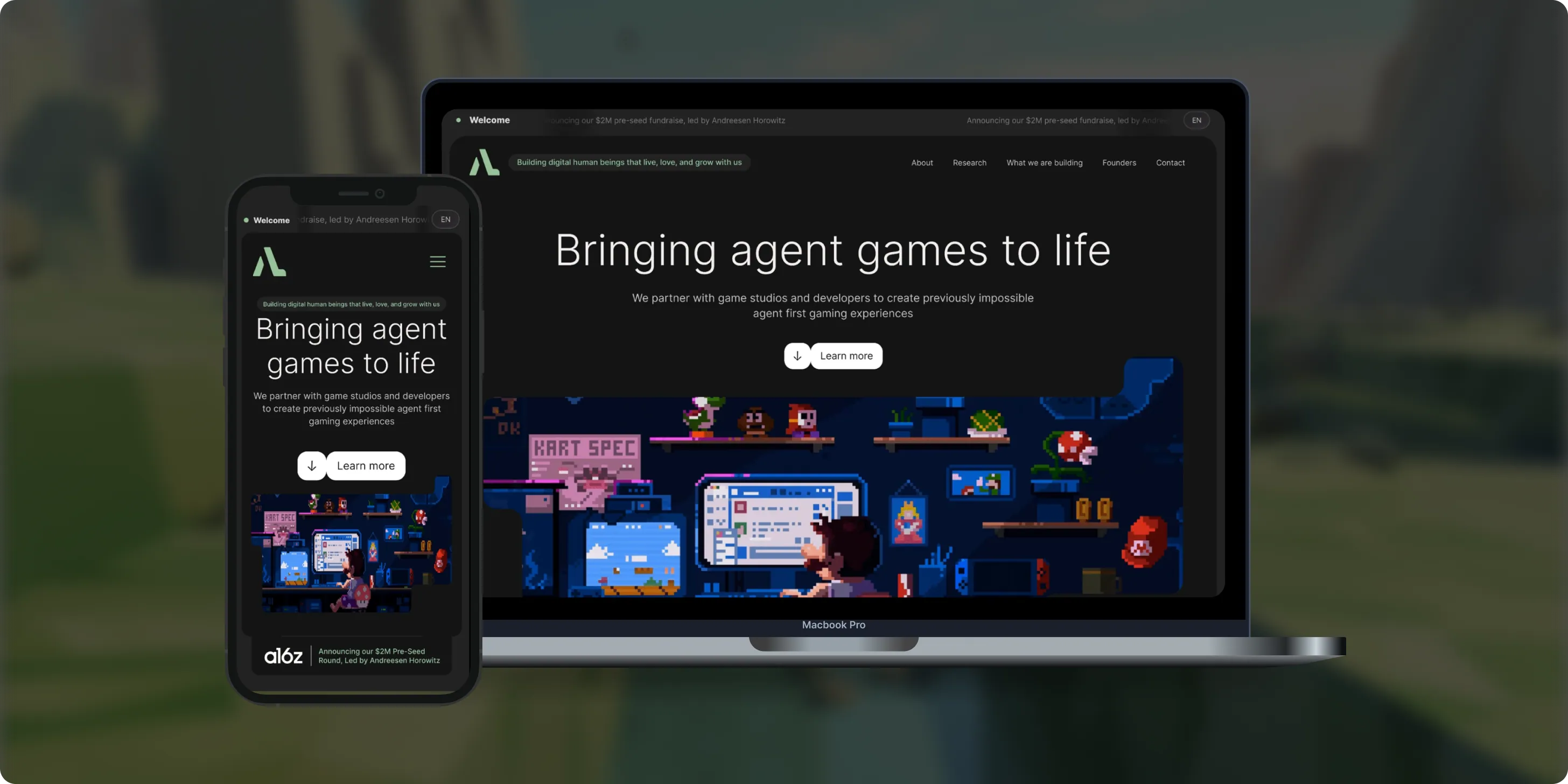
Altera builds on decades of computational neuroscience research to create digital human beings for gaming. Backed by a $2M pre-seed round led by Andreessen Horowitz, the team needed a landing page that could explain complex agent technology to players, partners, and investors.- 98%Dynamic Customization
- 100%Streamlined Navigation
- $2MPre-Seed Round
- Real Estate
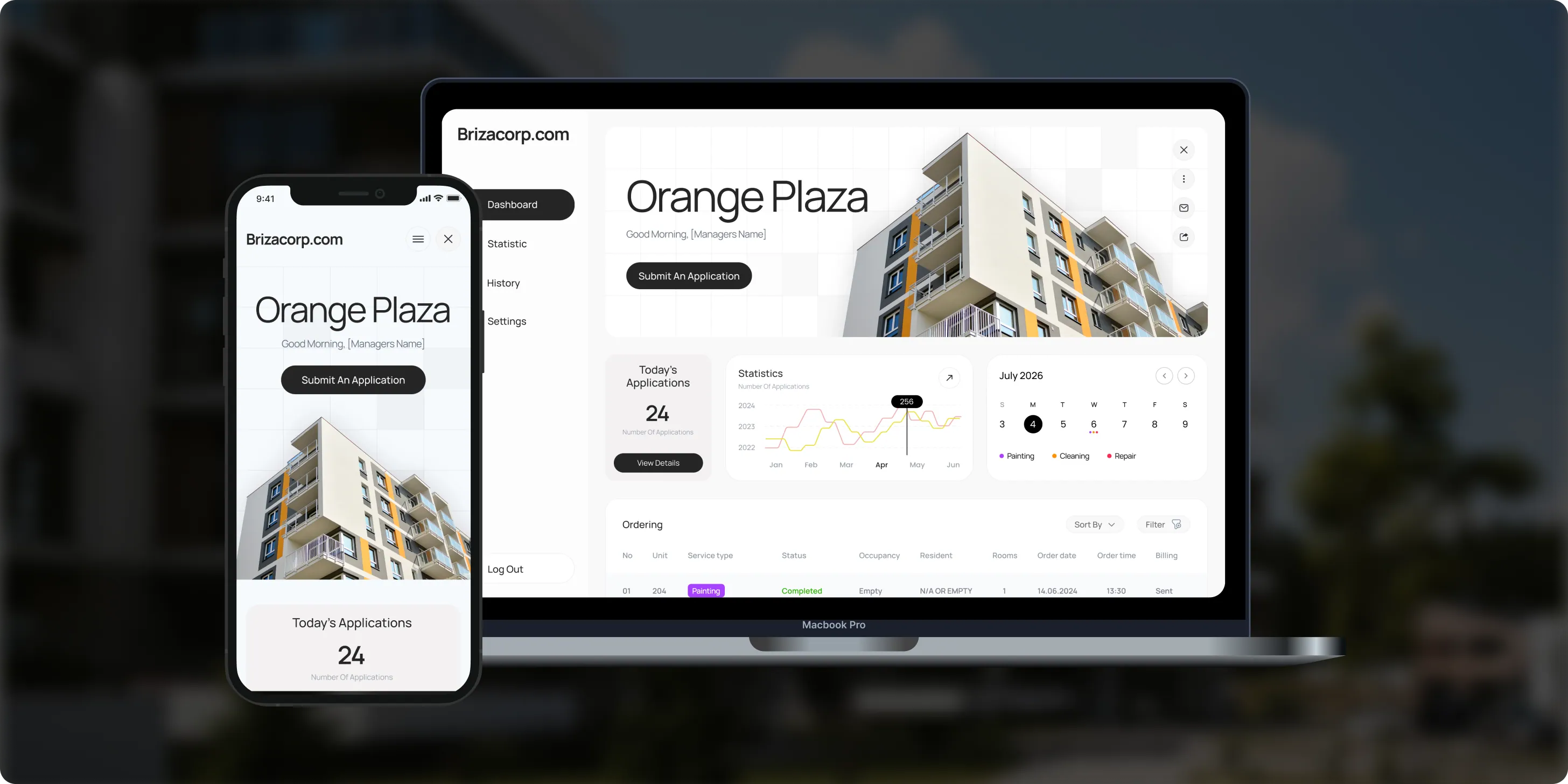
Brizacorp
Brizacorp manages residential properties and coordinates the staff who handle painting, cleaning, and repair requests. Its team tracked work across messengers, phone calls, e-mail, and paper planners, with no single place to manage requests or measure performance.- 98%Application Stability
- 95%Utilization Rate
- 30%Faster Task Completion
Color & Harmony
Color & Harmony is a Kentucky-based color consulting studio led by certified color strategist Diana Cartaya. The studio needed a website that reflects its refined aesthetic, showcases its portfolio, and explains a science-based color process in simple language.- 45%Conversion Rate Increase
- 50%Higher User Engagement
- 2Months to Launch

The Modern Gentlemen
The Modern Gentlemen sells premium men's skincare featured in Men's Health, GQ, and Men's Journal. Its customers wanted an efficient routine, but generic product suggestions and limited skincare knowledge made choosing the right products hard.- 30%Increase in Conversions
- 25%Higher Customer Retention
- 92%Mobile Purchases

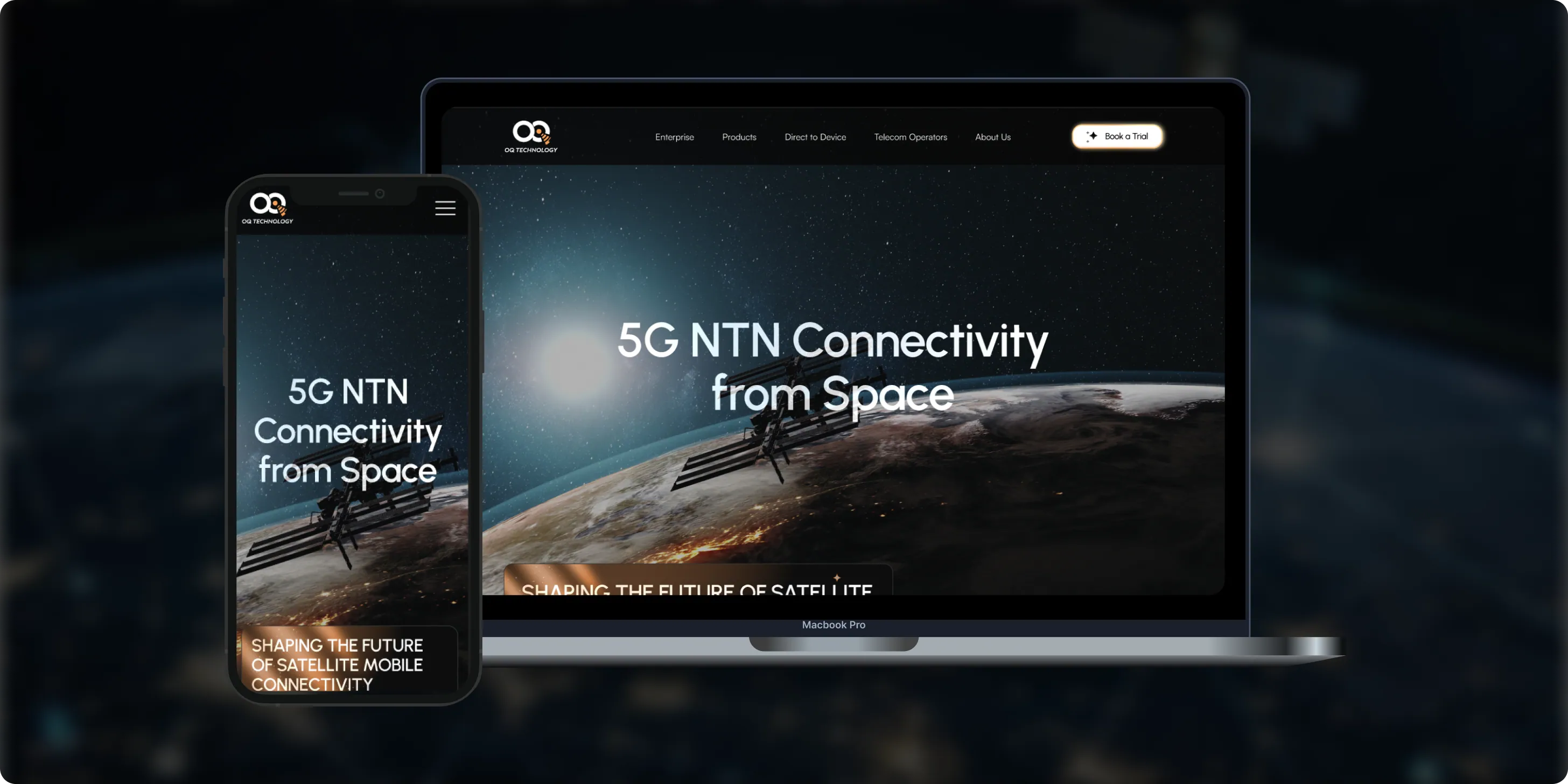
OQ Technology
OQ Technology connects IoT devices, machines, and people anywhere on the planet through its satellite network, serving energy, maritime, logistics, agriculture, and mobile operators. Its website made it hard to explore products and reach pricing plans.- 4Pricing Plans Clarified
- 3Dedicated User Flows
- 1Unified Platform
- Real Estate
- Finance
Stay Vest
Stay Vest is a private real estate investment firm that acquires, renovates, and operates boutique hotels for cash flow, tax benefits, and equity gain. It needed a platform that explains its strategy and earns the trust of passive investors.- 1,500+Guest Stays
- 200+Rooms Managed
- 5States Covered

Bokeyno Motorsports
Bokeyno Motorsports is the leading mobile installer of vertical doors for high-performance cars. This Shopify website isn’t just about services—it’s a bold statement of power, style, and expertise. With a sharp layout, strong visuals, and real-world case studies, the site delivers all the information car enthusiasts need to book confidently and instantly.- 54%Booking Requests
- 43%Lead Conversion
- 32%Qualified Inquiries

ai document processing platform
A comprehensive talent solution designed to help companies attract, hire, and retain top talent more effectively. The platform combines AI-powered recruitment technology with employee financial wellbeing programs, enabling smarter hiring decisions while supporting employees’ financial stability and long-term engagement.- 62%Faster Processing Time
- 78%Less Manual Work
- 35%Improved Accuracy


Related AI & Machine Learning Services
Frequently Asked Questions
Everything you need to know about working with SoftDoes. Can’t find an answer?
When is custom AI development better than an off-the-shelf tool?
Custom AI development is the right choice when your operational workflows span multiple systems, require strict data compliance, involve proprietary corporate data, or demand tailored model architecture. For instance, a core banking workflow connecting transaction databases, document processing, and automated regulatory reporting requires custom software architecture beyond what off-the-shelf platforms offer. For simple standalone bots or low-complexity pilots, off-the-shelf software may suffice. SoftDoes conducts a thorough discovery phase to evaluate whether custom AI development is cost-effective for your specific needs.
What business workflows can SoftDoes automate with custom AI solutions?
AI providers require technical expertise and compliance with data security regulations. We develop custom AI solutions across a broad range of enterprise operations, including customer support triage, KYC and AML verifications, claims underwriting, invoice and purchase order processing, automated HR onboarding, enterprise search, and IT helpdesk ticket resolution. Generative AI systems can create text, images, and insights. Automation does not always need to be fully autonomous; human-in-the-loop workflows with AI assistance yield exceptional ROI. Workflow selection depends on data quality, process predictability, and acceptable risk profiles.
How do you ensure guardrails, security, and data privacy with proprietary data?
We combine robust architectural principles (private cloud VPCs, zero trust architecture, data anonymization) with controlled model selection (self-hosted open-source models versus secure enterprise SaaS LLMs). We never use client data to train public foundation models. All data flows and API connections are governed by strict contractual and technical controls. Encryption, granular access logging, and automated safety guardrails are integrated directly into the AI development lifecycle, with your security team involved from early system design.
How do custom AI solutions integrate with our legacy software?
We connect AI architectures to existing infrastructure through REST and GraphQL APIs, event driven message queues, secure database views, or robotic process automation (RPA) for platforms without modern interfaces. Machine learning models learn from historical data for predictive analytics and recommendation engines. As an enterprise software development partner, SoftDoes builds secure abstraction layers to protect legacy core platforms. AI product engineering covers the full lifecycle from design to deployment. We utilize canary deployments to maintain system uptime, enabling organizations to modernize legacy software incrementally while immediately deriving value from sidecar AI services.
What is included in the AI discovery or prototype phase?
The discovery phase includes technical alignment workshops, data availability assessments, architectural blueprinting, risk and compliance mapping, and success KPI definitions. The prototype phase produces a fully functional proof-of-concept (PoC) focused on one or two high-value enterprise workflows rather than static slides. Clients receive complete technical documentation for internal alignment and budgeting. This phase is time-boxed and delivered with clear, fixed-scope pricing.
Who owns the source code, models, and project data?
Our clients retain full ownership of all custom source code, infrastructure-as-code scripts, data pipelines, and system configurations created during the project. Ownership of fine-tuned AI model weights and custom datasets is explicitly assigned in the contract. All raw logs and operational data remain strictly under client ownership, with flexible options to host all sensitive assets directly within your cloud environment. Reusable SoftDoes core frameworks are provided under clear component licenses, guaranteeing that client IP is fully protected.
How do you support the AI solution after production launch?
We provide comprehensive post-launch support options, including warranty coverage, SLA-backed maintenance, managed AI operations (AIOps), and iterative improvement sprints. Our team handles real time performance monitoring, incident resolution, model drift adjustments, prompt tuning, infrastructure optimization, and security updates. Communication occurs via dedicated support ticketing, Slack or Teams channels, accompanied by regular system health reports.
How do you price custom AI development projects?
Project cost estimates are calculated based on functional complexity, integration requirements, data engineering scope, compliance standards, and AI infrastructure scale. We offer fixed-price models for structured discovery and PoC phases, alongside Time & Materials (T&M) for ongoing scaling and roadmap execution. Variable costs like LLM API usage and cloud hosting are transparently tracked, and we optimize architecture for cost efficiency using caching, model selection, and batch processing.

