


90+
Active Client Partnerships
80+Person
Product & Engineering Team
100%
Your Code & IP Ownership
U.S.-Led
Delivery & Accountability
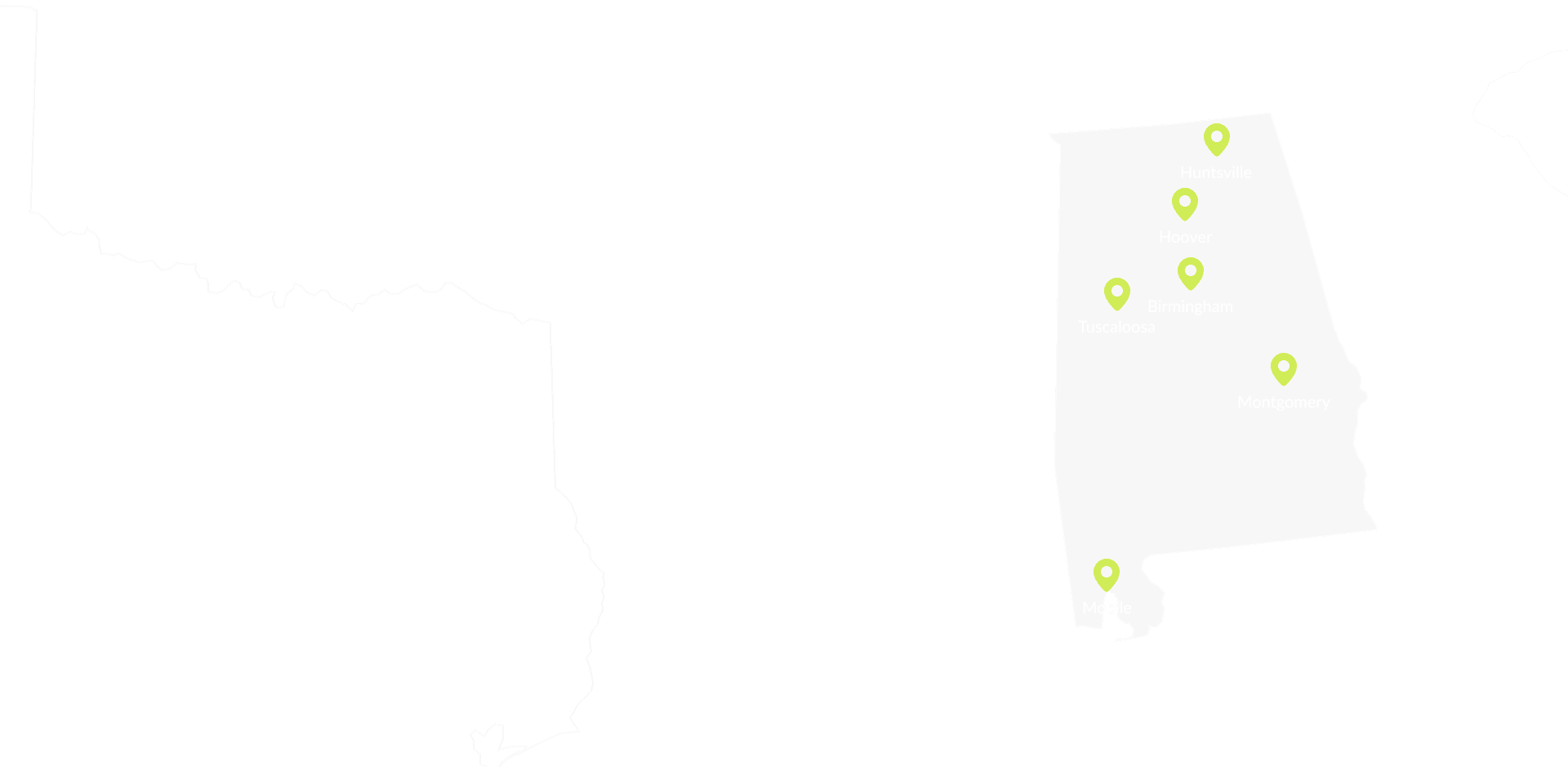
Where we operate
Alabama's technology sector is rapidly expanding with growth in software services, venture capital, and infrastructure investments. SoftDoes operates statewide, guiding planning and modernization to create adaptable, reliable tech ecosystems that transform fragmented systems into interconnected platforms supporting long-term value.
Huntsville
SoftDoes leverages Huntsville's R&D strengths to implement IoT, embedded systems, AI, and neural networks for advanced solutions meeting performance and compliance standards. Partnerships focus on high performance computing, secure data exchange, and complex project architectures.
Explore
Birmingham
Our engineering teams in Birmingham integrate SaaS platforms, cybersecurity, and analytics into cohesive ecosystems that eliminate silos. Collaborations with training institutions and employers ensure systems align with the region's growing expertise in artificial intelligence and advanced data analysis.
Explore
Montgomery
SoftDoes leverages Montgomery's growing data center and fiber networks to design fault tolerant infrastructure ensuring continuous service. Redundancy and recovery frameworks strengthen the digital backbone Alabama companies rely on for their operations.
Explore
Mobile
Enterprises gain advantage by modernizing outdated platforms into responsive architectures aligned with real time logistics and supply chain coordination. Machine learning, intelligent automation, and robotic process automation optimize processes for faster market response.
Explore
Tuscaloosa
Access to engineering talent from leading universities makes Tuscaloosa ideal for deploying microservices and cloud solutions that handle variable workloads. SoftDoes helps companies transition from monolithic systems to modular architectures that adapt without full reconstruction.
Explore
Hoover
Hoover enterprises trust SoftDoes to modernize applications, integrate APIs, and improve workflows for compliance. Alabama's Digital Expansion program ensures secure broadband for remote access to enterprise systems and custom apps.
Explore






Alabama's technology landscape is changing fast
SoftDoes is ready to help your organization navigate that shift, whether you are modernizing existing systems or preparing for demands that have not arrived yet. Connect with us to discuss how your company can create an infrastructure designed to evolve alongside your ambitions. Let's start the conversation about what your tech ecosystem should look like next.

What We Solve

- 01
Resilient Infrastructure Gaps Across Regions
- 02
Scaling Systems Under Operational Stress
- 03
Legacy Systems Architecture and Technical Dependencies
- 04
Integrated Security and Compliance Enforcement
- 05
Modernization Versus Accumulated Technical Debt
Engineered for Endurance
Alabama companies partner with SoftDoes because technology is treated as interconnected ecosystems designed to endure real conditions. Architecture absorbs failure through redundancy, secure design, and monitoring, keeping platforms performant from early adopters to enterprise traffic. Regional collaboration strengthens Alabama's tech ecosystem by linking local talent, infrastructure, and engineering practices into a shared vision of durable systems. Modernization is continuous, integrations intentional, and every technical choice connects to measurable business outcomes.
SOFTWARE DEVELOPMENT & ARCHITECTURE CONSULTING
Crafting system architecture with tailored software engineering to enable integration, reduce latency, and ensure maintainability across your tech stack.
AI & ML with DATA SCIENCE & ENGINEERING
Applying predictive models and intelligent data pipelines to extract insights, automate tasks, and guide strategic decisions using vast structured and unstructured data.
CLOUD SERVICES
Orchestrating cloud migration, infrastructure optimization, and platform provisioning to enhance resiliency and operational agility while controlling costs.
UI/UX DESIGN
Designing intuitive, accessible user interfaces and experiences through user research, wireframing, and usability testing that promote engagement and amplify adoption across digital platforms.
Frequently Asked Questions
Everything you need to know about working with SoftDoes. Can’t find an answer?
How do you approach tech ecosystem architecture planning?
Clear communication begins with discovery workshops where stakeholders share their business goals, constraints, and compliance requirements. From there, our teams conduct technical audits and map existing system dependencies before proposing any new architecture. Regular progress reviews follow a structured rhythm through weekly or biweekly syncs, milestone demos, and documented decisions. Engineers, architects, and business contacts stay aligned via collaboration tools and shared architecture diagrams. Feedback loops ensure that potential risks or shifting priorities are surfaced early, avoiding misalignment or technical drift across the entire process.
What makes a tech ecosystem truly resilient for growing companies?
SoftDoes works well with complex projects involving migration, modernization, or deep system integration across multiple layers. Initiatives that need high reliability, strong security, and resilient design benefit most from our specialized expertise. Companies pursuing public private partnerships or managing industry specific solutions find that our approach to compliance and data governance aligns with their business needs. We are equally interested in early stage work. Early stage funding is vital for high potential startups to remain in state, and our engagement model supports organizations at every phase. Monitoring startup formation and survival rates is important for ecosystem health, and we design systems that contribute to that long term sustainability.
Do you work with startups or only established enterprises?
Both. An MVP designed with thoughtful architecture means it can evolve into a full platform without requiring complete rewrites. Prototyping and testing validate design assumptions before development, which saves time and more investment later. Larger systems follow rigorous design, full documentation, and robust integrations including role based access control, secure data handling, and modular infrastructure. Many SaaS applications also support multiple user roles with specific permissions, which makes that access model practical from the start. Whether the project is a set of mobile applications or an enterprise platform, the objective is the same: positioning the codebase, data pipelines, and infrastructure for durability and future expansion. SaaS design must support critical business needs, and effective onboarding flows reduce early churn rates regardless of company size.
How do you ensure ecosystem scalability during rapid growth?
Scope definitions emerge from technical audits and stakeholder requirements, leading to prioritized backlogs and detailed roadmaps. When business processes shift or new possibilities emerge, change requests go through structured review. Impact on architecture, cost, schedule, and risk assessment gets evaluated before any modification is implemented. Agile methodologies allow adjusting direction without compromising the integrity of system resilience or compliance frameworks. All changes are versioned, documented, and designed to preserve core modularity so that new tools or integrations do not introduce fragility.
What happens during the ecosystem integration process?
After launch, the focus shifts to monitoring, maintenance, and iteration. Support systems monitor performance, availability, and security continuously, catching issues before they affect target users. Any defects or scaling issues are addressed via post launch sprints. The ecosystem does not remain static. Updates, optimizations, and integrations extend value over time as new features or market conditions require adaptation. Client teams receive documentation, training, and knowledge transfer so internal ownership of operations is viable from day one.
Will our company retain full ownership of the tech infrastructure?
Yes, ownership remains entirely with you. SoftDoes engineers systems using open standards or agreed licensed tools, ensuring you own all code, infrastructure, and intellectual property. Any third party services or libraries used are disclosed in advance with full transparency. Transfer of documentation, configuration, and credentials happens at delivery so you control hosting, access, and the system life cycle after the project concludes. There are no vendor lock in structures or hidden restrictions on how you use, modify, or extend what we create.
What differentiates SoftDoes from traditional development agencies?
SoftDoes acts less as a vendor and more as a strategic engineering partner focused on ecosystem health. Rather than delivering isolated features, the focus is on architecture, interoperability, and resilience across every layer. AI automates tasks, increasing efficiency and productivity, and AI algorithms can identify patterns in large datasets, but the real value is in how these capabilities integrate with your existing operations. Experts span multiple domains from data engineering and cloud infrastructure to machine learning model development and UX design, where product structure is shaped through user flows and the user interface to support clear interaction planning. Decision making includes long term maintainability, risk, and compliance, not just speed or surface level metrics. Input from real users helps teams validate user needs before choices harden into systems that are harder to evolve over time. Specializing in industries with existing competitive advantages can strengthen regional clusters, and our cross domain knowledge helps clients stay ahead.
How do you structure pricing for ecosystem development projects?
Pricing reflects complexity, technical risk, and the depth of integration required. Models may combine fixed price for initial architecture assessments with time and material arrangements for iterative delivery phases, with industry experience helping keep assumptions realistic for complex work. Transparent estimates cover infrastructure, licensing, staff hours, and ongoing maintenance so there are no hidden costs. Cost tradeoffs between refactoring existing systems or engineering from scratch, choosing between cloud or hybrid hosting, and evaluating automation versus manual processes are all laid out clearly. Investing in professional design reduces long term SaaS costs, and that principle extends to every pricing conversation. Generative AI automates tasks across various industries, and understanding where automation applies versus where human engineering is essential shapes realistic budgets while models use historical data to improve predictions and planning. It is also used for personalized shopping experiences in retail. It also streamlines medical imaging analysis in healthcare. AI enhances decision making by providing predictive insights, and we apply that same analytical rigor to help you make informed strategic decisions about where your technology investment creates the most value. Machine learning predicts customer behavior and engagement, which means the tools we implement continue generating returns well beyond initial deployment.