

90+
Active Client Partnerships
80+Person
Product & Engineering Team
100%
Your Code & IP Ownership
U.S.-Led
Delivery & Accountability
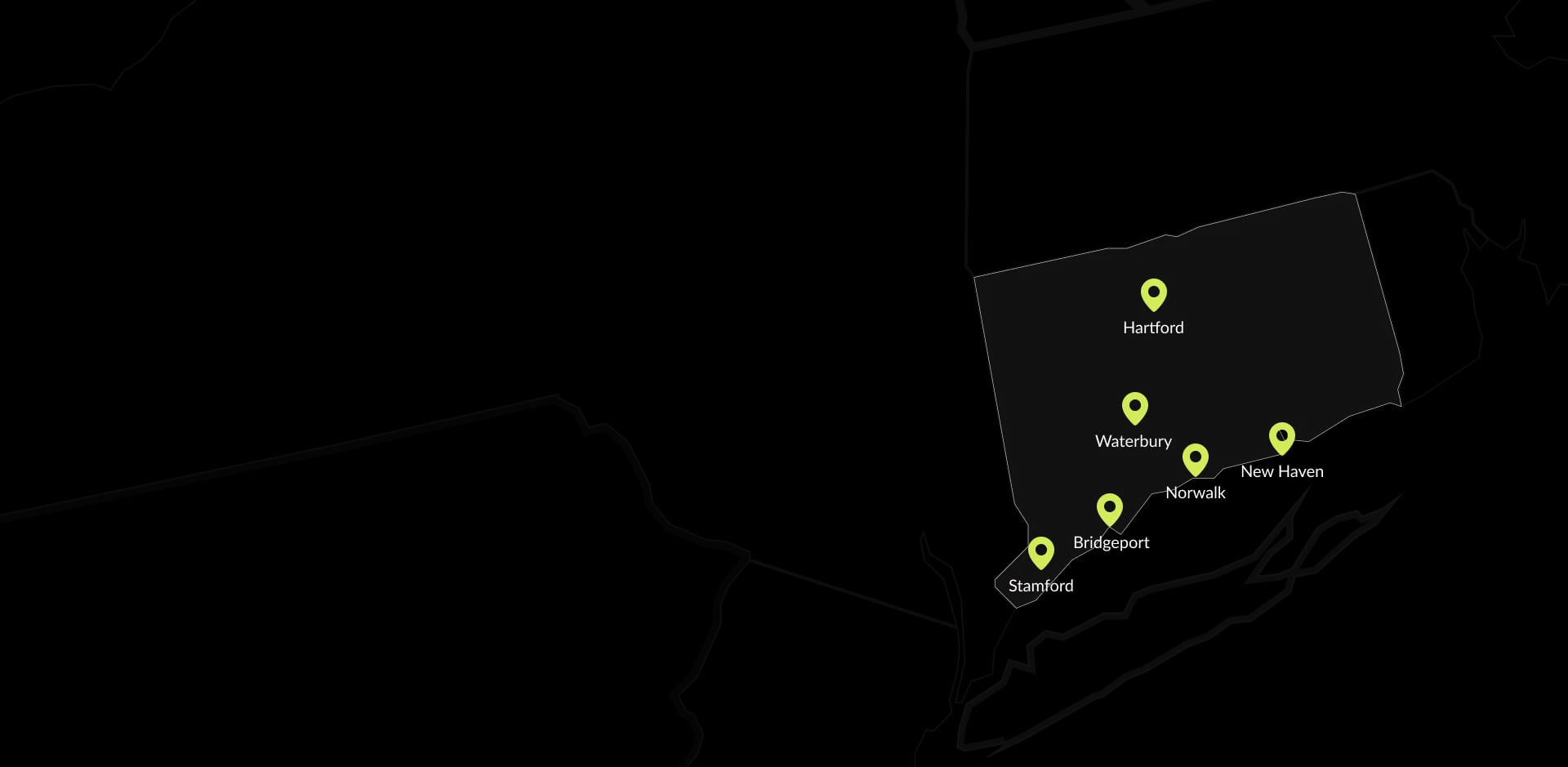
Where we operate
We bring deep understanding of Connecticut's technology landscape, where organizations face mounting pressure to modernize aging systems while navigating strict regulatory compliance and need systems. Our consulting services support businesses across the state through custom software development, cloud transformation, AI implementation, and architecture redesign, with professional services aligned to statewide technical support.
Bridgeport
We help Bridgeport organizations dismantle outdated monolithic architectures that restrict agility and accumulate technical debt. Our engineers refactor legacy codebases into modular, maintainable structures aligned with current compliance demands.
Explore
New Haven
SoftDoes implements machine learning models that extract predictive insights from operational metrics, customer logs, and internal datasets. Our teams handle everything from proof of concept through production deployment, closing the expertise gap many New Haven firms encounter.
Explore
Stamford
Hybrid and multi cloud architectures underpin our cloud migration engagements for Stamford companies pursuing disaster recovery, cost optimization, and low latency access. Each migration follows a cloud readiness assessment that accounts for regulatory constraints and existing dependencies.
Explore
Hartford
We architect API first platforms and automated workflows that replace manual processes across Hartford enterprises. SoftDoes designs digital channels, integrates emerging tools, and restructures user touchpoints to enhance operational efficiency.
Explore
Waterbury
Our API integration work links legacy databases, third party platforms, and internal applications to enable real time data exchange. SoftDoes engineers often re architect tightly coupled components into microservices during these engagements.
Explore
Norwalk
Responsive, accessible, and mobile first UI/UX design elevates adoption rates and reduces support costs for Norwalk firms. Our designers incorporate usability testing, modern front end frameworks, and comprehensive design systems into every interface.
Explore






Ready to Transform Your Technology Infrastructure?
Start a conversation about your specific technology obstacles and explore whether our approach matches your business needs. Contact us to discuss what comes next and how Connecticut teams can leverage existing systems and new technologies more effectively.

What We Solve

- 01
Legacy System Modernization Challenges
- 02
Scalability and Performance Bottlenecks
- 03
AI Integration and Implementation
- 04
Cloud Migration Complexity
- 05
Digital Transformation Roadblocks
Technical Depth That Matches Connecticut's Complexity
SoftDoes fills it with engineering teams experienced in developing and refining technical systems across software architecture, cloud platforms, artificial intelligence, data engineering, and new technologies. Consultants assist with strategic IT roadmaps to align infrastructure with business goals. Technology advisors audit software and cloud subscriptions to eliminate redundant licenses.
Software Development & Architecture Consulting
End to end software development combined with architecture consulting that reflects how a software development company structures legacy modernization into maintainable, well documented systems engineered for long term reliability.
AI & ML Implementation
AI development encompassing model training, MLOps pipeline creation, and production deployment using latest technologies to convert raw data into actionable business intelligence.
Data Engineering & Cloud Services
Comprehensive data pipeline architecture paired with managed cloud services that unify fragmented data sources, support large volumes of information, and reduce IT infrastructure costs through intelligent resource allocation.
UI/UX Design & System Integration
Intuitive interface design fused with robust API integration that accelerates user adoption, improves customer satisfaction, and enables seamless interaction between internal platforms and external tools.
Frequently Asked Questions
Everything you need to know about working with SoftDoes. Can’t find an answer?
How is communication handled in custom software projects?
Every engagement starts with a shared communications workspace. We use structured daily or weekly syncs depending on project phase, complemented by asynchronous updates through project tracking tools. Clients have clear visibility into status, decisions, and blockers at each stage. All team members operate within defined time zone overlap windows to ensure responsiveness. Code reviews, sprint demos, and retrospective sessions keep both sides aligned on progress and priorities. Escalation paths are established at kickoff so issues surface quickly. This approach keeps distributed teams as tightly coordinated as colocated ones.
What types of projects are a good fit for SoftDoes technology consulting?
SoftDoes works with a range of project management structures depending on your organization's maturity and goals. Fixed scope engagements suit well defined initiatives. Dedicated team models fit ongoing development programs. Time and materials contracts work when requirements are still emerging. SoftDoes supports both short and long initiatives, including clearly defined work and more ambiguous efforts. Each model includes transparent reporting, milestone tracking, and regular checkpoint meetings. We also support hybrid arrangements where a core team handles continuous work while specialists join for targeted objectives. Every project type receives the same level of engineering discipline.
Do you build MVPs or only large systems in software engineering?
Yes. Our MVP development process follows lean software architecture principles that validate assumptions quickly without sacrificing code quality. That includes developing early products as well as complex platforms. For enterprise systems, we work with complex multi service architectures, large datasets, and strict compliance requirements. The engineering approach differs in scope, not in rigor. A startup prototype receives the same attention to security, testability, and deployment automation as a platform serving millions of users. We right size the team and technology stack for each engagement.
How do you manage changing requirements during development?
Shifting requirements are expected, not resisted. Our agile methodology uses short iteration cycles that make scope adjustments natural rather than disruptive. Each sprint includes a planning session where priorities are reassessed based on new insights, user feedback, or market changes. Change requests go through a lightweight impact assessment covering timeline, budget, and technical dependencies. Feature toggles and modular codebases reduce the cost of pivoting. This structured flexibility means the final product reflects current business needs rather than outdated assumptions.
What ongoing support do you offer after launch in managed IT services?
Our maintenance services extend well beyond bug fixes. After launch, we monitor system health, track error rates, and review performance metrics to catch issues before users notice them. Ongoing monitoring ensures reliable performance during demand surges. We also support education so teams can use updates effectively and adopt new workflows with confidence. We handle infrastructure updates, security patches, dependency upgrades, and capacity planning. Dedicated support tiers let you choose the response times and coverage windows that match your operations. When new feature requests arise, the same team that designed your system handles them with full context.
How do intellectual property rights work?
Code ownership transfers fully to you upon completion and final payment. All source code, documentation, architectural diagrams, and related artifacts become your property. We do not retain rights to reuse your proprietary codebase or any custom components developed for your engagement. If open source libraries are used, they are documented with their respective licenses. Work for hire terms are codified in the contract before a single line of code is written. You walk away with complete control over your technology assets.
What makes SoftDoes different from a typical agency or IT consulting firm?
Genuine technical expertise across the full stack distinguishes us from firms that outsource engineering or rely on junior talent. Our senior engineers lead every engagement, not just the sales process. We combine consulting services, software development, AI implementation, data engineering, cloud architecture, and UI/UX design under one organization. That eliminates coordination overhead between other vendors. Detailed analysis of your existing systems precedes every recommendation. Teams also work with the latest technologies when they serve the architecture, operations, and long term maintainability. The result is tailored solutions rooted in your actual constraints rather than generic templates.
How do you structure pricing for business technology consulting projects?
Cost estimation begins with a thorough technical discovery. We assess complexity, risk factors, integration points, and required expertise before presenting pricing. Professional services pricing is tied to complexity, risk, and the level of oversight required. Fixed price quotes apply when scope is clearly defined. For evolving projects, time and materials arrangements with capped monthly budgets keep spending predictable without locking in premature decisions. Transparency matters. Every invoice maps directly to completed work and documented progress, giving you full visibility into where resources are allocated and why.