If you are planning to launch a digital lending product in 2026, you are entering a market that rewards speed, transparency, and regulatory rigor. This guide walks you through the features, architecture, compliance requirements, and realistic costs of building a lending platform for the U.S. and Canadian markets.Key Takeaways
- A modern lending platform consists of four distinct systems: a loan origination system, a credit scoring engine, a loan management system, and a borrower portal. Each must be separate but tightly integrated.
- Compliance must be integrated into the core architecture of digital lending platforms from day one. U.S. and Canadian rules like ECOA, TILA, the Fair Credit Reporting Act, GLBA, and KYC/AML are design constraints, not afterthoughts.
- Across U.S. vendors, a production ready lending platform typically costs $180k to $260k in 2026. An MVP with automated underwriting runs $90k to $140k. At SoftDoes, a lending or investor portal with payments starts from $42,500 (see our fintech app development cost page).
- AI credit scoring uses alternative data for better accuracy and can reduce defaults by 40% through improved risk assessment.
- SoftDoes delivers end to end lending software development, covering architecture, AI powered credit scoring, cloud infrastructure, and ongoing compliance driven iteration.
What Is a Digital Lending Platform in 2026?
A digital lending platform covers the full loan lifecycle: application intake, identity verification, credit scoring, automated underwriting, disbursement, loan servicing, collections, and regulatory reporting. In 2026, these platforms power everything from consumer lending to peer to peer lending and small business lending.
- The platform separates into distinct modules: a loan origination system (LOS) handles applications and eligibility. A loan management system (LMS) tracks the funded loan through its full lifecycle. A credit scoring engine makes underwriting decisions. A borrower portal gives users a self service dashboard.
- Digital lending platforms must support both consumer loans and small business lending, with configurable interest rate models, term ranges, and product rules for each loan type.
- Platforms can onboard retail borrowers and, where the lending model calls for it, institutional investors through distinct UX flows.
- The global peer to peer lending market is projected to reach $1.38 trillion by 2034. Peer to peer lending platforms process applications 10x faster than traditional banks, and borrowers receive funding in 24 to 48 hours compared to 3 to 6 weeks at traditional lenders. These online platforms operate at 85% lower costs than traditional banks.
- An accessible self service borrower experience enhances user satisfaction and is now a baseline expectation across the lending market.
Deciding Your Lending Business Model and Products
Your business model must come before your architecture. The systems you build, the data you collect, and the compliance framework you follow all depend on how you plan to make money and who your target borrowers are.
- Core models include direct balance sheet consumer lending (using your own funds), marketplace lending that connects borrowers with institutional investors, embedded lending (white label, BNPL, point of sale), and niche small business lending.
- Define your launch products early: personal loans, line of credit, equipment finance, invoice financing, or debt consolidation loans. Specify term ranges (3 to 60 months for consumer installment; 30 to 90 days for invoice), ticket sizes ($500 to $50,000 for consumers; $50,000 to $1M+ for SMB), and loan amount thresholds.
- Revenue follows the model. Balance sheet lenders earn interest spread. Marketplace models collect origination fee revenue and servicing fees. Peer to peer loans generate matching fees. Investors earn 4 to 12% annual returns through peer to peer lending, which shapes how you design investor tools.
- Building a digital lending platform requires balancing efficient user experience with regulatory compliance. Document your target market, risk appetite, expected default rates, and borrower segments before any technical design. This drives your credit assessment logic, interest calculations, and lending workflows.
Core Features of a Modern Digital Lending Platform
Here are the feature groups that matter most in 2026, organized by system.
Borrower Portal
- Responsive web app with an application wizard, loan status tracking, repayment scheduling, document upload, e-sign loan agreement (legally required before approval), and secure messaging.
Loan Origination System
- Application intake with multi step forms, KYC identity verification (mandatory before loan disbursement), bureau credit pull (required for regulated underwriting), ingestion of alternative data sources like bank account data, cash flow, rent payments, and utility payments.
- Automated underwriting queues with configurable rules and exception handling for manual review.
Credit Scoring Engine
- Rule based eligibility checks for speed. Scorecard models built on bureau data. ML models for thin file borrowers using alternative data.
- AI credit scoring can approve 35% more creditworthy borrowers in 2026 by combining traditional credit data with financial data like bank transactions. Gradient boosted models like XGBoost are industry standards for AI powered scoring. Partnering with specialists in AI and machine learning services helps lenders productionize these models. AI models can process loan applications in under 60 seconds and reduce defaults by 40% through better risk management.
- Automated underwriting rules execute instant credit decisions and risk based pricing. AI governance frameworks are necessary to ensure fairness and accountability in automated credit decisions.
- Explainable adverse action reason codes are required for every declined application.
Loan Management System
- Amortization engine, interest rate calculation (fixed, variable, risk based), payment posting logic, fees, charge offs, and restructuring workflows.
- An EMI calculation engine prevents incorrect loan disclosures. Automated collections workflow is necessary for scalable management of existing loans and delinquency handling.
Operational Tools
- Document management, full audit trails, configurable workflows, reporting dashboards, and role based access control for underwriters and compliance teams. Income verification and loan grade assignment feed into every decision.
Four-System Architecture Every 2026 Lending Platform Needs
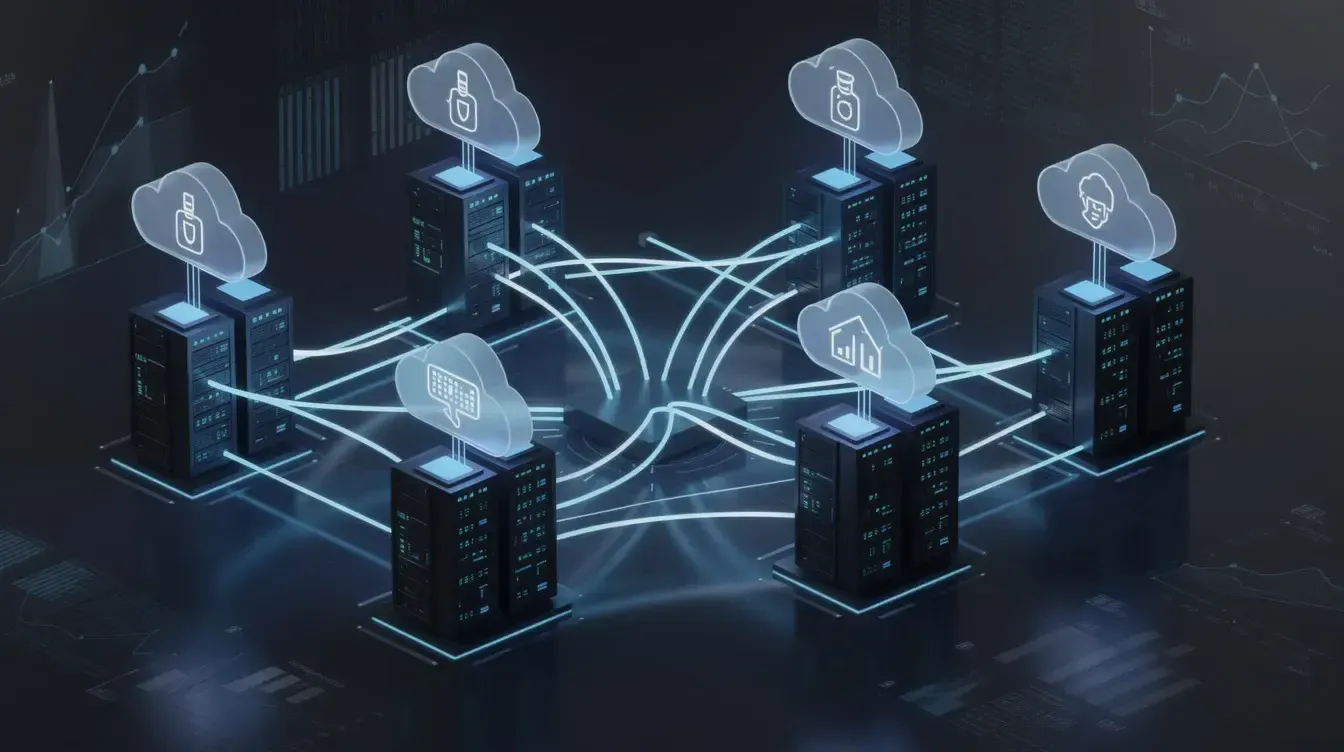
A lending platform should separate concerns into four core systems, each with clear APIs and data contracts. Microservices architecture allows decoupling of core systems to enhance scalability and flexibility, while a modular design allows scale and flexibility while integrating regulatory compliance features.
- Loan Origination System: The LOS captures borrower applications and validates eligibility. It orchestrates KYC/AML checks, triggers bureau pulls, and forwards enriched applications to the scoring engine via APIs. This is where the lending process begins.
- Credit Scoring Engine: Built as stateless APIs, the credit scoring engine makes underwriting decisions in under 5 seconds. It supports both bureau data and alternative data, returning a loan grade, approved interest rate, and reason codes. Credit scoring and underwriting engines integrate bureau data with AI for risk assessment.
- Loan Management System: The LMS tracks payments and manages loan lifecycles. It maintains a double entry loan ledger, computes interest and fees, handles payment allocations, and provides a real time exposure view used by finance teams and institutional investors for portfolio monitoring.
- Borrower Portal: The portal allows users to monitor loan status and make repayments. It uses secure token based access, mobile friendly UX, and tight integration with LOS and LMS for real time balances, statements, and payoff quotes. APIs facilitate integration with third-party partners and enable open banking functionalities.
Key Integrations and Data Sources for Credit Scoring
Integrations often consume 30 to 40% of project effort. Getting them right determines how well your platform integrate with external systems and how fast your lending operations can scale.
- Essential integrations: U.S. and Canadian credit bureaus (Experian, Equifax, TransUnion), identity verification services and KYC/AML providers (Jumio, Trulioo, Onfido), payment processing rails (ACH, EFT, Interac), and e-signature platforms compliant with ESIGN and Canadian e-sign laws.
- Alternative data sources for enhanced credit scoring include open banking APIs (Plaid, MX, Flinks), cash flow and payroll data, rent and utility payment history, and internal behavioral data like repayment patterns. Digital onboarding includes identity verification and KYC/AML compliance to enhance security across the lending process.
- Automated underwriting consumes these feeds for real time credit decisions and interest rate assignments while logging every input for audit and model monitoring. Identity verification providers play a critical role in protecting consumer information.
- SoftDoes typically designs an integration layer using an API gateway plus an event driven message bus to decouple third party services, avoid vendor lock in, and support data pipeline architecture that scales with your loan volume.
Compliance Checklist for U.S. and Canadian Lending Platforms
The regulatory landscape for digital lending spans federal law, state and provincial rules, and evolving regulations around AI and data privacy. Compliance requirements vary significantly by jurisdiction, and launching a digital lending product requires careful regulatory planning to avoid legal pitfalls.
U.S. Consumer Lending Rules
- Compliance with ECOA (Reg B) prohibits discrimination in lending and requires adverse action notices. The U.S. requires TILA disclosure before loan commitment, including full APR disclosure and cost of credit. Regulatory compliance includes adhering to lending laws such as the Truth in Lending Act.
- The Fair Credit Reporting Act governs how you handle credit data from credit bureaus. The Bank Secrecy Act requires financial institutions to file suspicious activity reports and maintain KYC/AML programs. GLBA sets data security and privacy standards that protect lenders and consumers alike.
- Automated adverse action notices are required in the U.S. for every declined application. Section 1071 small business lending reporting requirements take effect January 1, 2028, so platforms doing SMB lending should build data capture now.
Canadian Rules
- Federal AML rules under FINTRAC require reporting entities to verify clients, track beneficial ownership, and report suspicious transactions. Consumer protection and cost of borrowing disclosure rules apply federally. Provincial rules impact interest rate caps and collection practices.
Technical Compliance Design
- Compliance must be embedded in system design: data schemas carrying regulatory flags, timing controls for disclosures, and retention schedules. Data retention policies vary from 25 months to 10 years depending on the regulation.
- Maintaining an immutable audit trail is crucial for compliance and dispute resolution. Compliance architecture should include clear tracking of lending decisions and consumer data usage. Financial regulations require strict data lineage and auditability.
- Data protection regulations like CCPA and similar privacy laws govern consumer data handling in lending. Compliance programming involves integrating legal requirements into the software development lifecycle. Auditing and monitoring are key components of any compliance framework. KYC/AML integration is essential for monitoring suspicious activities in lending operations.
- Lending laws and disclosures must comply with regional mandates to ensure consumer protection. Budget for external legal counsel, ongoing compliance reviews, and compliance mapping that translates legal requirements into technical rules and workflows.
Designing the Tech Stack and Cloud Architecture
A realistic 2026 tech stack for a lending platform combines proven frameworks with cloud native infrastructure.
- Cloud: AWS is utilized for deployment and ML operations, though Azure and Google Cloud are viable alternatives. Separate environments for dev, staging, and production with managed databases and secrets management.
- Backend: Laravel (PHP) is used for the loan origination system. Python (Django) powers the loan management system core engine. FastAPI and XGBoost are used for the AI scoring engine, supporting machine learning model development and real time inference.
- Database: PostgreSQL is the database for secure loan records, providing ACID compliance for the loan ledger.
- Frontend: React JS is used for the borrower portal interface, with Vue as an alternative. React Native or Flutter work for mobile apps. User interface design should prioritize accessibility and fast load times.
- Architecture patterns: Modular monolith or microservices depending on scale, API gateway, event driven messaging (Kafka or AWS EventBridge), and centralized logging and monitoring for audit and resilience.
Development Roadmap: From Discovery to First Disbursement
Here is a realistic delivery timeline for a 2026 lending platform build.
- Phase 1 (3 to 5 weeks): Discovery workshops to define the business model, product structures, interest rate models, compliance mapping for U.S. and Canada, and initial architecture design.
- Phase 2 (4 to 6 weeks): Detailed solution design, UX/UI for borrower portal and internal tools, database design for loans and payments, and integration contracts with bureaus and KYC providers.
- Phase 3 (10 to 16 weeks): Core platform build of LOS, credit scoring engine, LMS core, and borrower portal with automated underwriting and document management ready for internal testing.
- Phase 4 (6 to 8 weeks): Integration testing, performance and security testing, regulatory scenario testing (APR disclosure timing, adverse action, data retention), and pilot launch with limited loan volume. This is where MVP development transitions to production readiness.
- Phase 5 (ongoing): Post launch optimization, adding advanced digital lending features like line of credit support, institutional investor tools, expanded analytics, regulatory reporting for evolving regulations, and ongoing support.
Cost of Building a Lending Platform in 2026
Cost drivers for digital lending platforms include compliance, legal fees, and technology development. Here is what to expect in 2026 USD.
Scope |
MVP (single loan product, basic borrower portal, automated underwriting, core compliance) | $90,000 to $140,000 |
Full production platform (LOS, LMS, borrower portal, document management, AI scoring, reporting) | $180,000 to $260,000 |
Enterprise builds (multi product, investor portal, advanced analytics) | $300,000+ |
Third party integrations (bureaus, KYC, open banking, e-sign) | $30,000 to $80,000 additional |
A minimum viable lending platform costs $70,000 to $110,000 to build when scope is tightly controlled. A full production lending platform costs $120,000 to $210,000 at baseline, scaling up with additional products and compliance scope. Monthly team costs range from $18,000 to $75,000 depending on tier and team composition.
Annual operating costs typically run 20 to 30% of the initial build for infrastructure, third party API fees, security audits, and compliance updates. Annual savings from in-house hiring versus maintaining a full time engineering team can exceed $1 million for organizations that use a flexible engagement model.
SoftDoes structures engagements to show cost drivers transparently so founders can phase features without compromising compliance obligations.
Benefits of Building Your Lending Platform with SoftDoes
- Regulated industry experience: SoftDoes builds custom software for finance and other regulated industries, translating U.S. and Canadian lending laws into technical rules, servicing operations, and compliance workflows.
- AI and ML capabilities: SoftDoes builds explainable credit scoring, automated underwriting pipelines using alternative data, and drift monitoring tools that support fair lending reviews. For lenders, embracing AI in finance is becoming mandatory to stay competitive. From AI solutions for small business lenders to enterprise scale scoring, the team delivers models that are auditable and production ready.
- Cloud and data engineering: Secure, audited architectures on major cloud providers, data pipelines for credit models, and analytics for portfolio performance are often part of broader digital transformation services that modernize lending operations end to end.
- Flexible engagement models: Dedicated product teams, architecture consulting, or compliance advisory, aligned with U.S. and Canadian regulatory expectations. Whether you are a scale up or an established financial institution, SoftDoes adapts to your digital transformation needs.













Comments (0)
No comments yet.