Building a payment app in the U.S. or Canada in 2026 means handling real money, real regulations, and real consequences for getting either one wrong. This guide walks through the cost ranges, architecture patterns, PCI DSS compliance requirements, and KYC/AML obligations that founders and CTOs need to plan for before writing a line of code.Key Takeaways
Any payment app development project targeting U.S. or Canadian users in 2026 must balance user experience, security, and strict compliance from day one. PCI DSS 4.x and KYC/AML rules are not features you bolt on later; they shape architecture, onboarding flows, and data storage from the earliest design decisions.
- Across U.S. vendors, payment app development cost ranges from roughly $80,000 for a focused MVP to $500,000+ for multi-rail wallets and banking style products. At SoftDoes, an e-wallet or payment app for iOS and Android starts from $61,000 (see our fintech app development cost page). PCI compliance costs alone add 20–40% to total development budgets.
- Architecture choices like tokenization, a minimized cardholder data environment, strong key management, and network segmentation can cut PCI DSS scope and reduce long-term costs.
- KYC/AML obligations in the U.S. (FinCEN, Bank Secrecy Act) and Canada (FINTRAC) drive onboarding UX, encrypted data storage, and continuous monitoring design for any app that moves or stores user funds.
- Compliance planning should start before development to avoid costly redesigns. Most compliance challenges arise from late planning, not from the complexity of the rules themselves.
- Working with a development partner like SoftDoes, experienced in fintech app development and compliance audits, reduces rework risk and speeds time to market.
What This Guide Covers and Who It's For
This guide is for founders, product leaders, and CTOs in the U.S. and Canada who are scoping a payment app development project in 2026. It covers four pillars:
- Realistic app development cost ranges for payment apps and digital wallet products
- Payment app architecture patterns that reduce risk and PCI DSS scope
- A PCI DSS compliance checklist tailored to mobile app and web app builds
- KYC/AML requirements for U.S. and Canadian markets
The focus is on payment apps that handle card payments, ACH, RTP, or stored value, not generic fintech apps that only display financial data. All guidance reflects PCI DSS v4.x timelines, current FinCEN expectations, and Canadian FINTRAC KYC rules as typically interpreted by fintech product teams. This is not legal advice. SoftDoes uses this same framework when scoping new fintech app development projects with enterprise and scale-up clients.
Payment App Types in 2026 and How They Shape Requirements
Defining your app type early is the single biggest lever for controlling architecture, security testing scope, and app development cost. The regulatory compliance exposure of a P2P wallet that moves $50 between friends is different from a merchant payment platform that stores balances and issues refunds.
Common categories include:
- P2P wallets (Venmo style): moderate KYC, lighter PCI scope if no card data is stored
- Merchant payment apps (Square or Shopify style): card acceptance, disputes, chargebacks, heavier PCI and licensing
- Bill pay and invoicing apps: narrower payment rails, potentially simpler compliance
- BNPL or installment apps: lending regulations on top of payment compliance
- Full banking style apps built on BaaS or banking partners: broadest regulatory exposure
Apps that only display transaction history or financial records, like read-only expense trackers, face development costs in the $40,000–$90,000 range. Apps that move or hold funds jump to $90,000–$500,000+ because they trigger money transmitter licensing, deeper KYC, and PCI scope.
Two mini-scenarios. A basic QR code wallet in Canada that uses a third-party processor for settlement and never stores card data might cost $90,000–$150,000 for an MVP. A multi-currency merchant app in the U.S. with card, ACH, and RTP rails, stored balances, and refund management could cost $200,000–$500,000+ and require state by state money transmitter licenses.
Core Architecture Patterns for Secure Payment Apps
Payment app architecture in 2026 is designed compliance first: clear separation of concerns, minimal card data exposure, and strong observability across every layer.
A modern reference architecture includes:
- Mobile and web clients communicating with an API gateway that handles authentication and rate limiting
- Microservices or modular services for payments, ledger, KYC, notifications, fraud detection, and admin operations
- A secure data layer with encryption at rest and in transit, audit logging, and strict access controls
The ledger or transaction service is often the most complex backend component. It must handle idempotent operations (preventing duplicate payments), reconciliation with external processors and banks, and correct balance tracking for stored value wallets. This service alone can consume 15–20% of total development costs.
Using BaaS platforms or payment processors like Stripe, Adyen, or Checkout.com can offload parts of compliance. When your app never touches raw card data because a processor's SDK handles it, your PCI DSS scope shrinks. But API integration complexity and per-transaction fees add up.
Cloud providers like AWS, Azure, and GCP offer managed key management systems, private networking, and VPCs that support the network segmentation PCI DSS requires. Role based access control and least privilege access are nonnegotiable for cloud infrastructure hosting financial transactions.
PCI DSS 4.x Fundamentals for Payment Apps
PCI DSS 4.0 was published in March 2022. PCI DSS v4.0.1 was published in June 2024 as an incremental update. Version 3.2.1 was retired at the end of 2024. Every new payment app build in 2026 must design to v4.0.x requirements from the start.
PCI DSS compliance protects cardholder data during transactions. An app is PCI compliant when it protects payment account data wherever that data is stored, processed, or transmitted, and maintains those controls continuously rather than only at audit time.
The standard is organized into 12 requirement families covering:
Area |
Network security | Firewalls, network security controls, segmentation |
Secure configs | Hardened system settings, no defaults |
Data protection | Encryption, masking, retention limits |
Key management | HSM usage, key rotation, separation of duties |
Access controls | Least privilege, unique IDs, MFA |
Logging and monitoring | Audit trails, centralized log analysis |
Security testing | Vulnerability scans, penetration testing |
Policies | Written security policies, risk assessments |
PCI DSS scope depends on actual payment data flows. Storing PANs in your own database creates maximum scope. Using tokenization with a payment gateway reduces it. Using hosted payment fields or complying with PCI standards through redirect flows minimizes the compliance burden on app developers.
Designing PCI Smart Payment Architectures
Architecture is the main lever to shrink PCI scope and long-term development costs. Design decisions in payment apps must minimize exposure to payment data for compliance. The cost of PCI compliance increases with the amount of card data handled.
Three patterns:
- App stores card data. The backend processes and stores PANs and sensitive payment data directly. Maximum PCI scope; most expensive to build and maintain. Requires full on-site assessment by a qualified security assessor.
- App uses tokenization with a gateway. Raw card data flows through the payment provider's vault. Your backend receives and stores only tokens. Tokenization can reduce PCI DSS compliance scope and cut compliance costs at the same time. You still must protect tokens, API keys, and any logs that could expose payment card data.
- App fully outsources via hosted payment pages or SDKs. The mobile app or web frontend embeds a secure iframe or SDK from the payment provider. Your servers never see raw card data. This allows a shorter Self Assessment Questionnaire and the smallest compliance footprint.
A PCI compliant app must encrypt card data during transmission and storage. PCI DSS requires encryption of card data during transmission using protocols like TLS 1.2+.
Data minimization rules: never store CVV or track data. Retain only what is required for chargebacks and refunds. Purge sensitive data on a strict schedule. Verify that no logs or error traces capture raw payment data.
Key management basics: use HSMs or cloud KMS with HSM-backed roots. Separate key encryption keys from data encryption keys. Rotate encryption keys at least annually. Limit key access to the smallest possible set of authorized personnel and audit all key usage.
KYC / AML Requirements and Their Impact on UX and Backend
Any U.S. or Canadian payment app that moves, stores, or lends money must treat KYC/AML as foundational. KYC/AML compliance should be planned from the app's design phase, not retrofitted after launch.
U.S. requirements. The Bank Secrecy Act sets baseline KYC/AML requirements in the U.S. FinCEN's Customer Identification Program requires collecting name, date of birth, address, and government ID for individuals. For entities, beneficial ownership rules apply to anyone with 25%+ equity or managerial control. Payment apps and wallets that transmit funds or hold stored value must register with FinCEN as a money services business. State money transmitter licenses add another layer.
Canadian requirements. FINTRAC registration as an MSB (or Foreign MSB) is mandatory before operations begin. Identity verification for clients, risk based due diligence, ongoing monitoring, and sanctions screening are all required. Canada recently levied a ~CAD $6 million fine against a virtual currency dealer that failed to register and report large transactions.
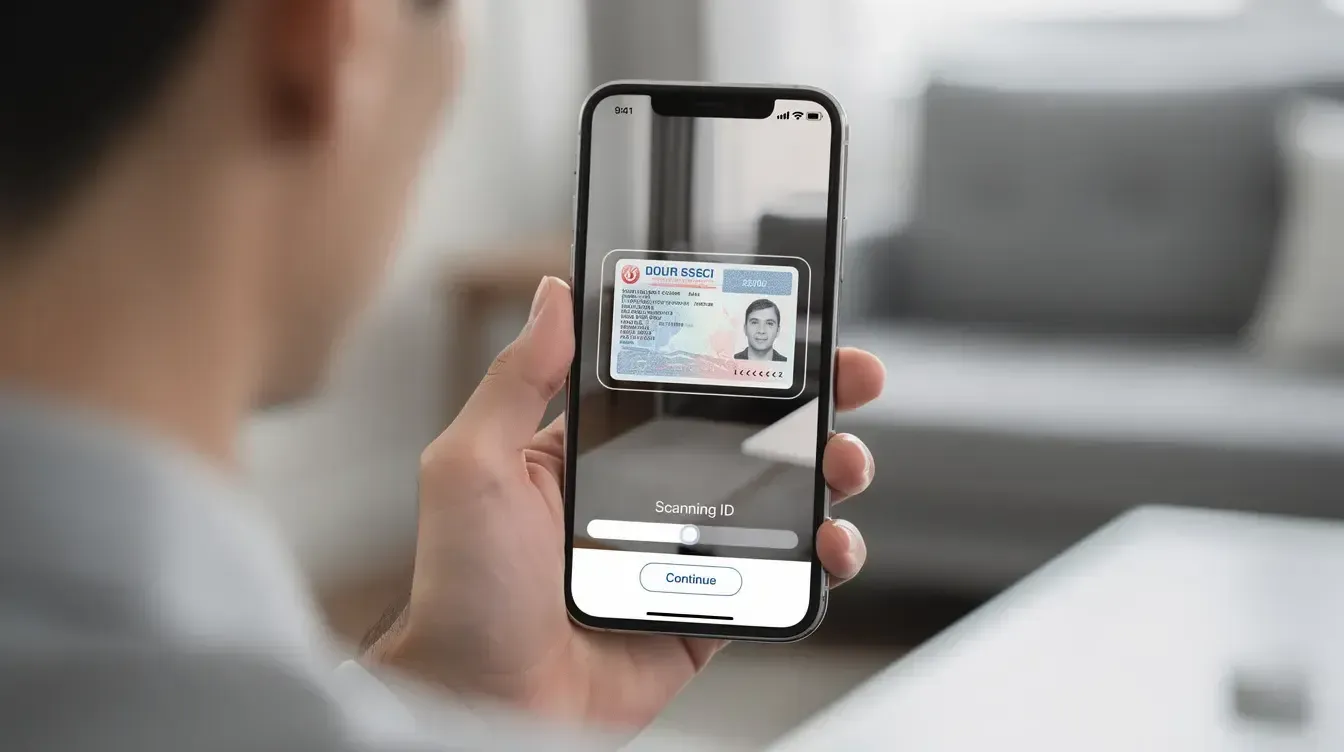
Practical KYC implementation. KYC requires identity verification for every user transaction above certain thresholds. Integrating identity verification providers like Jumio, Onfido, Persona, or Trulioo via APIs is common for KYC compliance. Using pre-built compliance APIs can save costs and reduce the burden of building in-house KYC systems. Your backend must handle document upload, selfie or liveness checks, manual review queues, and edge cases like document resubmission. Identity data must be handled according to privacy regulations and secured against unauthorized access.
AML regulations help reduce financial fraud in fintech apps. Transaction monitoring rules must cover velocity checks, geolocation anomalies, large transactions, and sanction screening. Case management tools support suspicious activity reporting. All KYC data must be retained with full audit trails for regulatory review.
Security Controls, Continuous Monitoring, and Testing for Payment Apps
Most fintech apps must combine preventive controls with continuous monitoring and regular security testing to satisfy PCI DSS and banking partners. PCI compliance must be integrated from the start of development, not layered on after features are built.
Authentication and authorization:
- Biometric login and MFA for high risk actions in the mobile app
- Fine grained role based access control for internal consoles
- Strict separation of duties between operations, development, and compliance teams
Logging and continuous monitoring: Payment apps must create immutable audit logs for compliance and forensic inquiries. Capture all payment events, admin actions, failed authentications, and configuration changes in a centralized system (SIEM preferred). Set up real-time alerts and clear incident response runbooks. Automated data integration pipelines can feed security events into monitoring dashboards.
Security testing: Developers need to implement secure software development lifecycle practices to meet PCI standards. Regular security testing is required to maintain PCI DSS compliance. Integrate SAST and DAST into CI/CD pipelines, run dependency scanning on every build, and schedule third party penetration testing at least annually. Card brands and acquirers often require quarterly vulnerability scans and written evidence of continuous monitoring as part of their ongoing oversight.
Payment App Development Cost in 2026: Ranges and Drivers
Payment apps cost more than standard apps because of backend correctness, regulatory compliance, and security engineering. A typical data breach cost around $6.08 million in 2024, which is why payment security spending is not optional.
2026 cost bands for North America:
App Type |
Read-only fintech app (expense tracker, dashboard) | $40,000–$90,000 |
Focused payment or wallet MVP (single rail, basic KYC) | $80,000–$200,000 |
Banking style or multi-rail payment app | $200,000–$500,000+ |
Major cost drivers:
- Whether the app moves or holds money (custody adds ledger, settlement, and insurance costs)
- Number of payment rails: cards, ACH, RTP, wires. Each payment integration multiplies testing and reconciliation work
- Complexity of payment gateways, KYC vendors, fraud detection tools, and other external integrations
- Development team location and seniority (U.S. and Canadian rates vs. nearshore)
Cost allocation by function: Backend and API development typically consume 30–40% of the budget. Security and compliance engineering take another 20–40%. Frontend development for mobile and web clients runs about 15–25%. UX design, QA, and security testing fill the remainder.
Hidden costs that catch fintech startups off guard: PCI DSS assessments ($5,000–$50,000 per year depending on scope), ongoing compliance reviews and transaction monitoring, legal counsel for regulatory compliance and state licensing, app store review delays for fintech features, and ongoing maintenance running 15–25% of the original development cost annually. App maintenance costs also include updating dependencies, patching vulnerabilities, and keeping up with regulatory changes.
Ongoing operational costs for payment apps include compliance reviews and transaction monitoring fees from payment providers and identity verification providers.
Choosing a Development Partner for PCI Compliant Payment Apps
Developing a payment application requires balancing robust security and strict regulatory adherence. An app development company without concrete PCI DSS and fintech experience will struggle to pass bank or card brand review. Teams that already specialize in secure mobile app development services are better equipped to embed compliance and performance from the first sprint. Ignoring compliance early leads to costly redesigns later.
Criteria to evaluate a development partner:
- History of shipping PCI compliant fintech apps
- Familiarity with KYC/AML flows for U.S. and Canadian markets
- Ability to design low scope PCI architectures using tokenization and hosted payment fields
- Experience integrating U.S. and Canadian payment processors and BaaS platforms
- A development team that practices secure SDLC and can support post-launch audits
Ask about continuous monitoring setup and vulnerability remediation support, not just initial build scope. Include early architecture and compliance workshops in any engagement so regulatory requirements are scoped before UI design and feature decisions are locked. Look for transparent discussions of development costs, risks, and timelines. App development cost calculators and generic marketing estimates are rarely accurate for complex apps in the financial software space.
Benefits of Working with SoftDoes on Payment and Fintech App Development
SoftDoes is a software engineering partner that has delivered compliant fintech app solutions for clients across the U.S. and Canada, often as part of broader digital transformation services that modernize legacy financial systems and processes. Here is what that looks like in practice.
- Compliance aware architecture from sprint one. SoftDoes maps payment data flows, identifies where the app stores, processes, or transmits cardholder data, and designs architectures that minimize PCI scope. Key management, audit logging, and access controls are built into the first sprint, not the last.
- Custom fintech solutions. SoftDoes has delivered payment apps, digital wallet products, lending platforms, and mobile banking apps using cloud native stacks and modern security controls.
- Security testing and continuous monitoring baked in. SoftDoes integrates security testing and monitoring infrastructure into the development lifecycle, helping clients stay PCI DSS compliant and audit ready after launch. Compliance documentation is maintained alongside code.
- Flexible engagement models. SoftDoes offers dedicated teams, co-development with in-house staff, or end to end delivery. Development costs and timelines are estimated through a structured discovery process, not guesswork.














Comments (0)
No comments yet.