

90+
Active Client Partnerships
80+Person
Product & Engineering Team
100%
Your Code & IP Ownership
U.S.-Led
Delivery & Accountability
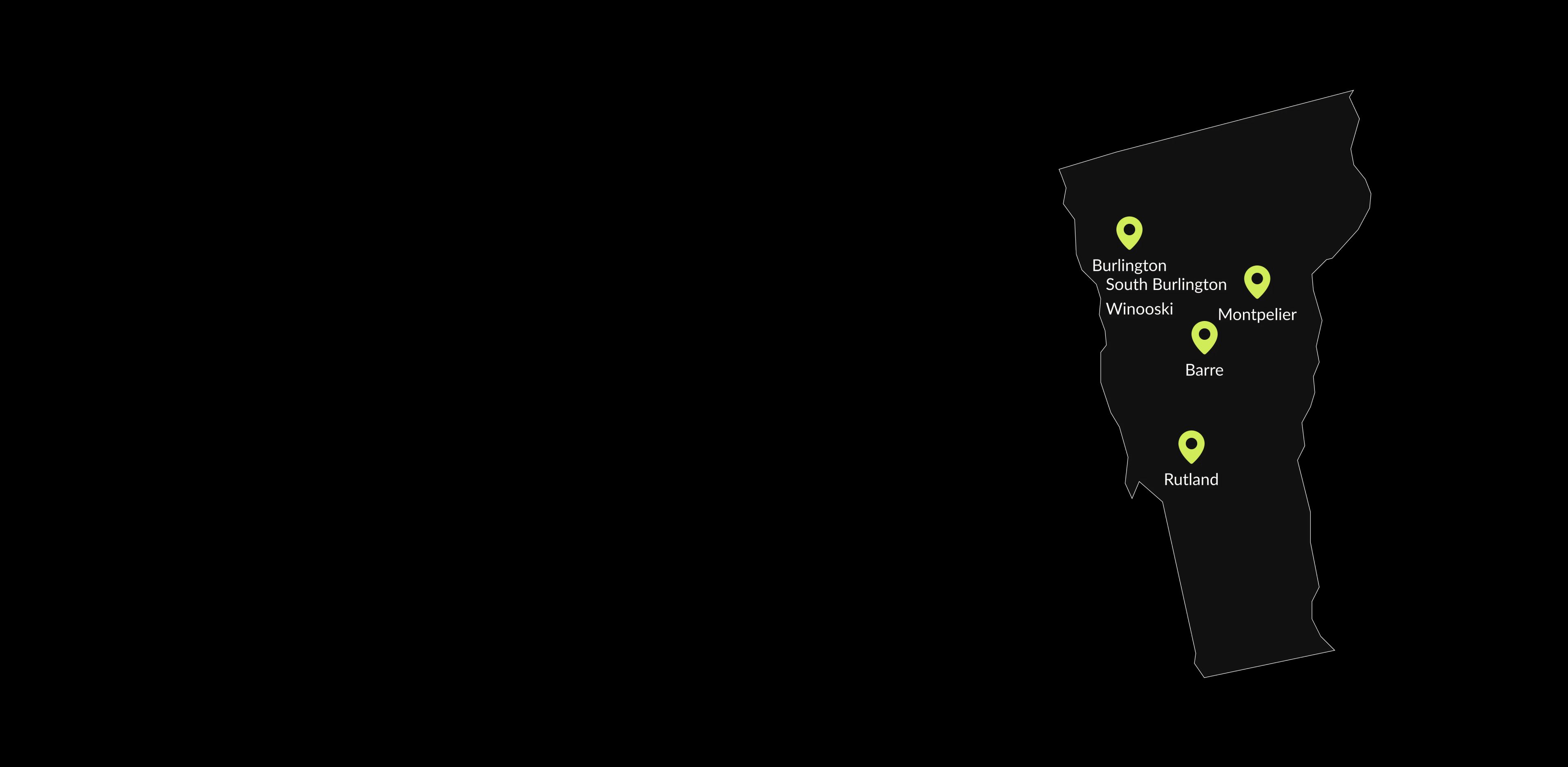
Where we operate
SoftDoes engineers work with organizations across Vermont, supporting both metropolitan and rural communities through remote collaboration and periodic visits. Our team understands the specific constraints of this market, including smaller talent pools, regulatory expectations and the reality that many Vermont businesses rely on systems that have been in place for years.
Burlington
Our engineers create modern applications and data platforms for organizations across the Burlington metro area, Vermont’s largest technology hub. SoftDoes works alongside local teams to refine architecture and improve product iteration.
Explore
South Burlington
Ongoing product evolution and performance tuning take center stage for companies investing in their next phase. In this area, our engineers collaborate closely with internal tech groups to diagnose bottlenecks, improve database queries and fine tune application responsiveness.
Explore
Rutland
Organizations here can access senior software engineers who refine existing platforms and orchestrate new AI features or data centric workflows. SoftDoes extends technical capacity for Rutland clients planning custom tools or preparing legacy systems for the future.
Explore
Barre
Teams in this community rethink aging applications, align separate tools under unified interfaces and strengthen system reliability. SoftDoes handles the complex engineering aspects while Barre organizations maintain full control of their roadmap, budget and scheduling priorities.
Explore
Montpelier
As the state capital, attention to compliance, audit readiness and reliability is especially important for organizations based in Montpelier. Our engineers clarify technical requirements, secure sensitive data flows and streamline operations for leadership teams and internal divisions alike.
Explore
Winooski
Fast moving teams here experiment with digital products and advance their platforms through focused engineering sprints. SoftDoes connects with Winooski organizations quickly, enabling meaningful progress without long onboarding cycles or unnecessary overhead.
Explore


Contact SoftDoes to start the conversation
If your organization anywhere across Vermont is facing a technical challenge, planning a system overhaul or simply wants a second opinion on its current architecture. Share your current priorities or schedule a call so we can explore how to move your technology in the right direction.

What We Solve

- 01
Fragmented digital systems and data
- 02
Unclear roadmap for complex software
- 03
Legacy platforms blocking change
- 04
Slow decisions from weak insight
- 05
User experience hurting adoption
Precise engineering, not generic outsourcing.
Senior engineers engage directly with client teams, translating strategy into architecture and code with attention to detail from the first discovery session through long term support. Vermont has a tight knit software engineering community, and SoftDoes respects that dynamic by working alongside local talent rather than replacing it. A significant percentage of Vermont software engineers work remotely for out of state companies, and SoftDoes understands how to complement internal teams that already operate in distributed setups.
Software development & architecture consulting
Transforms fragmented requirements into coherent, well documented systems that lower the frequency of production incidents and accelerate feature releases for Vermont organizations.
AI & ML integration
Equips decision makers with predictive models, automated classification and recommendation engines that surface actionable insight from operational data.
Data science, engineering & analytics platforms
Unify disparate information sources into structured pipelines and dashboards, enabling leadership teams to act on verified metrics instead of assumptions.
Cloud infrastructure & UI/UX design
Streamlines hosting, deployment and interface experiences so that applications remain responsive, accessible and cost efficient across every user touchpoint.
Frequently Asked Questions
Everything you need to know about working with SoftDoes. Can’t find an answer?
How does software engineering in Vermont projects usually start with SoftDoes?
Every engagement begins with a structured discovery phase. SoftDoes engineers schedule initial meetings with stakeholders, typically project owners, leadership and any internal technical staff, to understand the current state of systems, data flows and business objectives. This phase usually spans one to three weeks depending on complexity. During discovery, our team reviews existing applications, databases, cloud resources and integration points. We document the architecture as it stands today, noting areas of technical debt, security gaps and performance concerns. Vermont organizations often have a mix of custom tools, third party platforms and manual workflows, so mapping how these interact is critical before recommending any changes. After this assessment, SoftDoes presents findings in a clear technical report that includes a prioritized list of opportunities and risks. From there, the team collaborates with the client to define outcomes, select an engagement model and agree on a realistic timeline. This approach ensures that no implementation work starts without alignment on what matters most. For Vermont clients, this upfront clarity prevents wasted budget, misaligned expectations and scope drift. The premise is simple: understand first, then act.
Can Vermont teams keep their current tools while engaging new software engineering work?
Yes, and in most cases this is exactly what happens. Vermont organizations frequently rely on established CRM platforms, ERP systems, accounting tools, data warehouses and industry specific software that would be disruptive and expensive to replace. SoftDoes engineers assess which tools should remain, which need reconfiguration and which may eventually be retired. API development enhances operational efficiency for businesses, and custom REST APIs connect ERP, CRM and payment tools so that data moves automatically between systems without manual intervention. If a legacy database holds critical historical records, we can layer a modern interface over it rather than forcing a full migration. This approach reduces risk while still improving the experience for users and employees. Trade offs between extension and replacement are discussed openly. When a tool is truly obsolete or creating security concerns, SoftDoes will recommend a phased transition plan that keeps daily operations running throughout. Vermont teams maintain full control over which tools stay and which go. The goal is always to create a more coherent, integrated environment without unnecessary disruption to the workflows people depend on.
How are security and compliance handled for Vermont software projects?
Security is embedded throughout the engineering process, not treated as an afterthought. SoftDoes applies access control policies, encryption for data in transit and at rest, secure coding practices and regular vulnerability assessments during every phase of a project. Vermont organizations operating in regulated contexts require particular attention to data handling, and our engineers structure systems to support audit readiness and traceability. For projects involving sensitive information, role based access is configured so that only authorized users interact with specific data sets. Logging and monitoring capture relevant events for future compliance reviews. When Vermont laws or federal regulations apply, such as privacy rules or data retention requirements, these are factored into the architecture from the start. Remote collaboration introduces its own considerations. SoftDoes uses encrypted communication channels, secure code repositories and access controls that match or exceed typical office network protections. Video calls, shared documentation and code reviews all follow established protocols. No client data is stored on personal devices or unprotected environments. For Vermont clients, knowing that a remote partner treats cybersecurity with the same seriousness as an in house team is essential for maintaining confidence throughout the engagement.
What does collaboration look like between SoftDoes engineers and internal Vermont teams?
Collaboration follows a structured cadence tailored to the client's preferences. Most Vermont engagements include a shared project management tool, a version controlled code repository and regular check in meetings, whether daily standups, weekly syncs or milestone reviews. Communication happens through messaging platforms, video calls and documented decision logs. SoftDoes engineers work directly with both technical and non technical stakeholders. When discussing architecture or code changes, our team uses diagrams and plain language summaries alongside the technical detail, ensuring that leaders without an engineering background can make informed decisions. For Vermont teams with existing developers, SoftDoes operates within the same repository, follows agreed coding standards and participates in peer reviews. Documentation is treated as a first class output. Every decision, design rationale and system configuration is recorded so that knowledge is never locked inside a single person's memory. This is especially important for Vermont organizations with lean teams where continuity matters. When a project phase ends or a handover occurs, the client's internal staff can pick up exactly where things left off, supported by thorough reference materials and, if needed, structured training sessions.
How are AI and machine learning used responsibly in Vermont projects?
Responsible use of AI starts with honest evaluation. SoftDoes does not recommend artificial intelligence or machine learning for every problem. Before any model is trained, our engineers assess whether the available data is sufficient in volume and quality, whether the use case genuinely benefits from a predictive or automated approach, and whether the expected outcome justifies the investment. When AI is a fit, common implementations include demand forecasting, anomaly detection, text classification, recommendation engines and process automation. Each model goes through rigorous validation: test data sets, performance metrics and error analysis confirm that predictions are accurate and consistent before deployment. Monitoring continues after launch, tracking drift in model accuracy and flagging cases where human review is warranted. Vermont organizations also care about transparency. SoftDoes documents how models work, what data they consume and what limitations exist. Engaging a partner with disciplined AI practices helps organizations adopt these capabilities without introducing hidden risks.
What factors influence timelines for Vermont software initiatives?
Timelines depend on several interconnected variables. Project scope is the most obvious: a focused API integration or interface refresh takes weeks, while a full platform redesign may span months. Integration depth also matters. Connecting with legacy systems, third party vendors or complex data pipelines introduces additional effort and testing requirements. Decision speed on the client side is a significant factor. Vermont organizations, particularly those in regulated or public sector contexts, sometimes face longer approval cycles for procurement, architecture changes or data access. SoftDoes accounts for these realities in planning rather than presenting artificially compressed schedules. Availability of client subject matter experts affects pace as well. Our engineers need access to people who understand the business rules, data meanings and operational workflows. When those experts are engaged and responsive, projects move faster. Testing needs, including user acceptance testing, security reviews and performance benchmarks, also add time but are not optional if quality matters. SoftDoes helps define realistic phases for Vermont organizations so that leadership understands what each milestone requires, what dependencies exist and when outcomes will be visible.
How does SoftDoes support long term operation of systems for Vermont clients?
Long term support begins with how the system is engineered. Clean architecture, automated testing and thorough documentation reduce the frequency and severity of issues after launch. When Vermont clients need ongoing assistance, SoftDoes offers maintenance arrangements that include monitoring, incident response, periodic code reviews and continuous improvement cycles. Monitoring tools track application health, performance metrics and error rates in real time. When something unusual occurs, the team investigates and resolves it, often before users notice. Periodic reviews assess whether the system still aligns with business needs, whether dependencies like third party APIs or cloud services have changed, and whether new opportunities for efficiency exist. For Vermont organizations operating on smaller budgets, support can be structured as a retainer with defined hours rather than a full time commitment. Legacy software modernization can enhance system performance significantly, and ongoing support ensures that newly modernized systems do not gradually return to the same inefficiencies they replaced.



