

90+
Active Client Partnerships
80+Person
Product & Engineering Team
100%
Your Code & IP Ownership
U.S.-Led
Delivery & Accountability
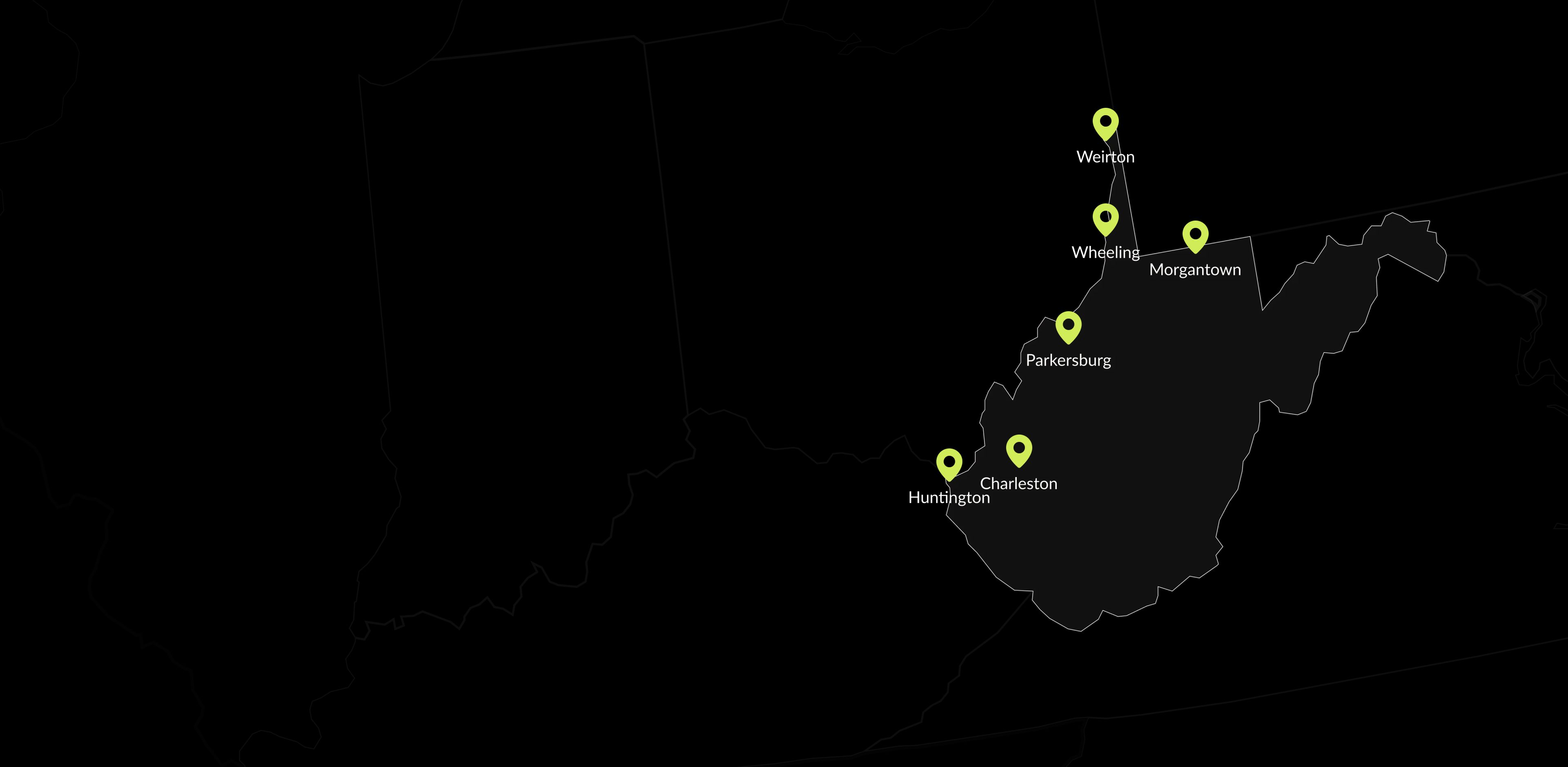
Where we operate
Digital product development across West Virginia requires more than technical skill. Regional infrastructure, legacy systems, and day to day operations all shape what works. SoftDoes partners with organizations statewide to align product strategy, architecture, and engineering, reducing uncertainty across complex platforms and data intensive systems.
Charleston
We orchestrate disconnected toolsets and scattered workflows into unified digital products that West Virginia companies in Charleston can actually rely on. SoftDoes aligns product vision with technical execution, ensuring each system component serves a clear purpose within the larger architecture.
Explore
Huntington
Our team helps Huntington organizations rethink aging internal platforms and customer facing products, stabilizing what exists while introducing modern capabilities. We streamline the path from outdated processes to responsive digital products that match current business needs.
Explore
Morgantown
SoftDoes coordinates data intensive product initiatives in Morgantown, where university research and experimentation create demand for sophisticated digital systems. We test assumptions early and account for real operational constraints across West Virginia.
Explore
Parkersburg
We uncover hidden dependencies and translate ambiguous requirements into organized product roadmaps for Parkersburg teams. SoftDoes helps local organizations move from scattered ideas to reliable digital products through structured planning and transparent decision making.
Explore
Wheeling
Our engineers link legacy tools with new product initiatives, synchronizing data flows and user experiences across distributed Wheeling operations. Digital product development in Wheeling often involves reshaping inherited architectures to work alongside modern cloud native components.
Explore
Weirton
SoftDoes helps steward digital products as long term assets for smaller and mid sized Weirton teams that cannot afford throwaway projects. We refine and extend existing platforms, connecting Weirton initiatives with the wider West Virginia digital product ecosystem.
Explore







What We Solve

- 01
From idea to working release
- 02
Eliminating integration blind spots
- 03
Clarifying product ownership and direction
- 04
Turning scattered data into usable assets
- 05
Sustaining momentum after initial launch
Why Digital Product Teams In West Virginia Choose SoftDoes
West Virginia organizations choose SoftDoes because clarity in complex systems is rare and they recognize the difference. Our team brings disciplined product work to engagements where other firms offer only generic development services. We are comfortable working within regulated environments, respecting existing investments in legacy systems while introducing modern capabilities that actually fit. Every collaboration reflects accumulated understanding of how West Virginia companies operate, what constraints they face, and what it takes to move a product from uncertain concept to trusted daily tool.
Product Engineering & Architecture
Rigorous engineering and disciplined architecture turn complex requirements into dependable digital products, reduce production incidents, and simplify future changes.
AI Driven & Data Centric Products
Integrating machine learning with structured data helps products respond to real usage patterns, improve output accuracy, and speed operational decisions.
Cloud Systems & Data Platforms
Modern cloud environments paired with well designed data platforms sustain West Virginia products over time, ensuring reliable access, controlled operating costs, and simplified day to day operations.
UI/UX & Product Experience
Thoughtful interface design and user centered experience planning elevate adoption rates and product effectiveness, cutting training effort and minimizing costly user mistakes.
Frequently Asked Questions
Everything you need to know about working with SoftDoes. Can’t find an answer?
How does digital product development in West Virginia usually start with SoftDoes?
The first step is always a focused discovery engagement designed to understand your current systems, organizational goals, and the operational realities that will shape the product. SoftDoes does not begin with a template or a predefined solution. Instead, the initial sessions involve mapping existing tools and data sources, identifying which processes are manual or fragmented, and clarifying which business objectives the product must support. Discovery typically involves structured workshops with stakeholders who understand daily operations, combined with technical reviews of infrastructure, databases, and integration points. For organizations in Charleston or Morgantown, these workshops can happen in person; for teams spread across the state, remote sessions work effectively. The goal is to surface hidden dependencies, assess risks early, and define the minimum scope needed to generate value quickly. This phase also reveals whether legacy systems need wrapping, replacing, or integrating, which directly influences the architecture and timeline. SoftDoes treats discovery as a working engagement, not a sales exercise. By the end, you receive a clear picture of technical constraints, recommended approaches, and a preliminary roadmap that your leadership team can evaluate before committing to larger investment. This approach is especially important in West Virginia, where infrastructure conditions and existing technology stacks vary significantly from one organization to the next.
What timelines can West Virginia organizations expect for a first digital product release?
Typical timelines for a first working release range from several weeks for a focused pilot to several months for more complex systems. The actual duration depends on a set of factors that are specific to each engagement and cannot be reliably compressed by adding more people. Integration depth is one of the strongest determinants. If the product must connect with legacy databases, third party platforms, or systems with undocumented interfaces, each connection point adds time for assessment, testing, and error handling. Decision speed within your organization matters too: teams that can review and approve direction quickly keep momentum, while prolonged internal reviews extend timelines proportionally. Data quality plays a significant role, particularly for products that incorporate AI or analytics. If data sources are inconsistent, incomplete, or siloed, the product team needs time to clean, structure, and validate inputs before they can power any intelligent features. For a small, well scoped initiative with clear requirements and cooperative stakeholders, a usable first increment can be ready in a matter of weeks. Mid sized efforts involving multiple integration points and user groups typically take a few months to reach a meaningful release. Larger platform initiatives with regulatory requirements, complex data flows, and multiple departments may require a phased approach spanning six months or more. SoftDoes avoids committing to artificial deadlines that undermine quality. Instead, the roadmap is structured so that value reaches users early and often.
How does SoftDoes handle system integration with existing tools used across West Virginia offices and sites?
Integration with existing systems is a standard and often central part of digital product development in West Virginia. Most organizations operate a mix of modern and legacy tools, and any new product must coexist with this environment or risk rejection by the people who rely on it. SoftDoes begins by assessing the current technology landscape: what tools are in use, how they exchange data, what interfaces they expose, and where manual workarounds fill gaps. This assessment often reveals undocumented connections between systems, inconsistent data formats, and permission structures that do not translate cleanly between platforms. From there, the team designs integration patterns using well defined data contracts, so each system communicates through clear, versioned interfaces rather than fragile point to point connections. Error handling strategies are part of the design from the beginning, not an afterthought. For organizations with legacy databases or mainframe components, SoftDoes uses wrappers and facade layers that allow modern services to interact with older systems without requiring full replacement. Third party platforms, whether SaaS tools or vendor specific software, are connected through API layers or middleware that isolate the product from changes in external services. This approach allows West Virginia businesses to preserve investments in existing infrastructure while introducing new product capabilities. It also reduces risk, because each integration point is tested independently before the product reaches users. The result is a system where data flows reliably between old and new components, and where changes to one system do not silently break another.
What security and compliance considerations apply to digital products in West Virginia?
Security is embedded in the architecture, implementation, and operations of every digital product from the outset. SoftDoes does not treat security as a separate layer applied after the product is functional. It is a structural decision that influences how data moves, who can access what, and how the system responds to unexpected behavior. Access control is designed around the principle of least privilege, meaning users and services receive only the permissions necessary for their specific tasks. Encryption protects data both at rest and in transit, and audit logging tracks actions across the system so that any anomaly can be traced and investigated. Environment segregation ensures that development, testing, and production systems remain isolated, preventing accidental data exposure or unauthorized changes. Cybersecurity threats challenge organizations across West Virginia, and strong cybersecurity protection is essential for long term resilience. SoftDoes incorporates risk assessments and incident response planning into the product lifecycle. Continuous monitoring and maintenance support ensures that vulnerabilities are identified and addressed proactively rather than reactively. The state supports digital identity and cybersecurity initiatives through technology hubs, and SoftDoes aligns its practices with the expectations of regulated environments. When specific compliance standards apply to your sector, the architecture is designed to meet those requirements without bolting on controls retroactively. Cybersecurity services help safeguard networks and sensitive data, and SoftDoes treats these requirements as first class constraints that shape the product rather than obstacles that slow it down.
Can smaller teams in West Virginia pursue serious digital product initiatives with SoftDoes?
Yes. Smaller organizations and startups in West Virginia can pursue meaningful digital product work by focusing scope intelligently and prioritizing the features that address the most pressing business needs first. SoftDoes adjusts the structure and intensity of each engagement to match the capacity and budget of the team involved. For smaller organizations, this often means starting with a narrow core: a single workflow, a specific data problem, or one user facing feature that creates immediate value. Rather than attempting a comprehensive platform from the start, the product is designed to expand over time as resources allow and as the organization learns from real usage. State backed programs like Vantage Ventures and TechConnect West Virginia support technology entrepreneurship and connect founders with industry partners, and SoftDoes can work alongside these programs to maximize available resources. The state also offers resources to assist entrepreneurs with business development and financing, and lower overhead costs for business operations compared to major tech hubs mean that investment goes further. Communication is straightforward: smaller teams typically have shorter decision cycles, which can accelerate progress if expectations are clear on both sides. SoftDoes maintains transparency about what each phase will accomplish, what it will cost, and what comes next. Affordable AI solutions are tailored for small businesses in West Virginia, ensuring that even teams with modest budgets can embed intelligent capabilities into their products. The goal is a product that works as a long term asset, not a rushed experiment that gets abandoned.
How are AI and machine learning used inside digital product development in West Virginia?
AI and machine learning appear in real products as components that handle specific tasks: predictions, recommendations, classification, anomaly detection, pattern recognition, and document processing. They are not standalone features. They are embedded capabilities that make the product more responsive and useful to the people who rely on it. For example, a product might use machine learning to forecast demand, route requests to the right team, flag unusual transactions, or automate repetitive data entry. AI agents can handle structured workflows that previously required manual intervention, freeing team members for higher judgment work. West Virginia businesses adopt AI to reduce manual workload, and AI can enhance accuracy and productivity in business operations across a range of contexts. The prerequisite for effective AI integration is usable data. If the organization's data is inconsistent, incomplete, or locked in systems that do not expose it, the first step is building reliable data pipelines before any model is trained or deployed. Feedback loops are essential: once a model is in production, its outputs must be monitored and evaluated continuously to catch drift, bias, or unexpected behavior. Responsible monitoring means knowing when the model is performing well and when it needs retraining or adjustment. West Virginia has a growing demand for AI technologies, and SoftDoes approaches AI driven solutions with a focus on measurable impact rather than speculative capability. Every AI component is justified by a concrete operational outcome, whether that is faster processing, fewer errors, or better informed decisions.
What does long term collaboration with SoftDoes look like for a West Virginia digital product?
Long term collaboration begins where the initial launch ends. After the first release, SoftDoes continues working with the organization to improve, adapt, and extend the product based on real usage data, changing business processes, and new technical opportunities. Product roadmaps are reviewed regularly, typically on a monthly or quarterly cadence depending on the organization's pace. New feature ideas, user feedback, and emerging requirements enter a shared queue where they are evaluated against business objectives, technical feasibility, and resource constraints. This structured approach prevents scope creep while ensuring that the product continues to serve evolving needs. Technical debt is managed explicitly. Rather than allowing shortcuts to accumulate silently, SoftDoes tracks areas where expedient decisions were made and schedules remediation alongside feature work. This keeps the product maintainable and reduces the risk of sudden failures or costly rewrites. Communication rhythms are established early: shared dashboards, regular check ins, and joint decision forums ensure that West Virginia leadership teams maintain full visibility into what is happening, what is next, and why. Organizations benefit from continuous monitoring and maintenance support, and SoftDoes ensures that engineers familiar with your product remain engaged over time, preserving context and institutional knowledge. The result is a partnership where the product improves steadily, the organization's capabilities grow, and decisions are always grounded in evidence rather than assumption.



