







































Too many companies discover their Databricks hire cannot actually handle Databricks the hard way: pipelines that break under real volume, clusters that quietly drain the budget, and a lakehouse that turns into an ungoverned pile of tables nobody trusts. The alternative is a platform that scales cleanly, ships reliable data products on schedule, and gives leadership confidence in every number that reaches a dashboard. This guide walks CEOs, CTOs, and VPs of Engineering through exactly how to define the role, source proven Databricks specialists, vet them properly, and bring them on board without wasting budget or momentum.
Why Databricks Expertise Shapes Your Data Platform Outcomes
What Databricks Engineers Actually Do Day to Day
Databricks work is not a single skill, it is a set of daily engineering decisions that determine whether a data platform stays reliable and affordable as it grows. In production environments, that work centers on the lakehouse architecture and the tools built around it.
- Building production data pipelines on Delta Lake, using ACID transactions, schema enforcement, and time travel so pipelines can run directly against data that once needed a separate warehouse load step, and so a bad batch can be rolled back without touching downstream tables.
- Sizing and tuning clusters and autoscaling policies so compute cost stays under control, since an oversized or always on cluster burns budget quietly while an undersized one causes jobs to queue, slow down, or fail once real production data volume hits the pipeline.
- Breaking notebook based development into modular jobs and reusable libraries, because notebooks are the primary development surface in Databricks, and without that discipline a codebase turns into a chain of manually run cells only the original author understands.
- Tracking experiments, versioning models, and managing deployment through MLflow, the platform native tool that turns a one off machine learning result into a pipeline other engineers can reproduce, audit, and safely retrain later.
- Setting up Unity Catalog for governance, access control, and lineage across workspaces early, so tables, permissions, and data ownership stay organized instead of sprawling into duplicated logic that nobody can safely untangle months later.
- Sequencing job orchestration and workflow scheduling with cluster startup latency and dependency chains in mind, so a pipeline is not silently paying for idle compute while it waits on a resource or an upstream job it does not need yet.
The Business Case for Hiring Deep Databricks Expertise
Deep Databricks expertise is not a nice to have for a data team, it is a direct driver of business outcomes that leadership actually feels.
- System stability: a team that understands Delta Lake transactions and cluster behavior builds pipelines that keep running when data volume spikes, instead of pipelines that quietly corrupt tables or fail during the exact reporting cycle leadership is relying on for a decision.
- Faster delivery cycles: engineers who know how to modularize notebooks into jobs and libraries ship new data products in days rather than weeks, because they are not manually rerunning cells or untangling code nobody else on the team can safely touch.
- Lower technical debt: correct Unity Catalog setup and disciplined orchestration from day one prevent the sprawl of ungoverned tables, duplicated permission logic, and undocumented pipelines that later require a costly rebuild just to keep the platform usable.
- Scalable architecture: a lakehouse built on sound Delta Lake and cluster design decisions absorbs new data sources and workloads as the business grows, without the constant reengineering that an undertrained team needs every time scope increases.
Preparing Your Organization Before You Hire
Defining What You Actually Need Before You Source Talent
Before you post a role or call a staffing partner, get internal clarity on what the Databricks work actually requires. Skipping this step is the single biggest reason companies end up interviewing candidates who look qualified on paper but do not match the real job. If your team needs support that extends beyond one hire, from ingestion through reporting, it is worth reviewing SoftDoes data analytics solutions alongside a dedicated Databricks hire, since some needs are better solved with a broader engagement than a single role.
Mapping Your Project Scope and Architecture Requirements
Start by writing down exactly what state your data architecture is in today and where it needs to go. Are you building a new lakehouse from scratch, migrating an existing warehouse onto Delta Lake, or stabilizing pipelines that already exist but keep failing under real production load. Each of these is a different job requiring a different profile of experience, and conflating them in a job description guarantees mismatched applicants and wasted interview time on both sides.
Matching Seniority to Your Stack and Complexity
Seniority should match the complexity of the actual problem, not an arbitrary title. A team building straightforward reporting pipelines has different needs than one managing multi workspace governance through Unity Catalog or production machine learning through MLflow. Also map the complementary stack: which cloud provider you run on, whether Spark SQL, PySpark, or Scala dominates your codebase, and what orchestration tools surround Databricks, since fluency there shortens ramp time considerably.
Choosing Between an In House Hire and a Dedicated Remote Pod
An in house hire makes sense when Databricks work is a permanent, growing part of your roadmap and you want that expertise embedded in daily planning long term. A dedicated remote pod makes more sense when you need a coordinated team fast, want built in redundancy so no single person becomes a point of failure, and prefer a model that can scale up or down as project scope changes without a fresh hiring cycle each time.
Writing a Requirement Profile That Attracts Real Databricks Experts
A strong requirement profile does more than list tools, it gives a serious candidate enough information to self select in or out honestly.
- The technical mission: state plainly what the person or pod will actually own, such as building a new lakehouse from scratch, migrating a legacy warehouse onto Delta Lake, or hardening an existing pipeline that keeps failing under production load. Vague missions produce vague candidates.
- The ecosystem and tooling: list the real stack, including the cloud provider, Unity Catalog status, orchestration tools, and whether the team leans on Spark SQL, PySpark, or Scala day to day, so applicants can honestly judge fit before a single interview happens.
- Team dynamics: describe who this hire reports to, works alongside, and hands work off to, including data scientists, analytics engineers, and platform teams, since Databricks work rarely happens in isolation and mismatched expectations here cause early attrition.
- System impact: explain what breaks today without this expertise, whether that is unreliable pipelines, ballooning cluster costs, or ungoverned tables, so the hire understands the business weight of the role rather than treating it as a generic data job.

Let’s Turn Your Idea into Scalable Software
Book a call with the representative to get answers to all the questions you may have.
Finding, Vetting, and Onboarding the Right Team
How the Hiring and Vetting Process Should Work
Once the requirement profile is clear, the process splits into two distinct problems: where you find candidates, and how rigorously you confirm they can actually do the work.
Sourcing Strategy: Outbound Recruiting Versus Pre Vetted Networks
Two paths exist for building this expertise. Standard outbound recruiting relies on job boards and generalist staffing agencies, where technical screening is often superficial and it can take months to separate real Databricks depth from a resume that lists it as a keyword. The faster, lower risk path runs through a talent network that has already technically vetted candidates against real Databricks work, including Delta Lake pipeline design, cluster cost management, and Unity Catalog governance. That difference alone can cut weeks off time to hire while giving you far more confidence in the person or pod joining a live production system.
Vetting Beyond the Resume
A resume cannot show whether someone actually understands Databricks architecture. Real vetting includes a conversation about specific design choices, such as when to reach for Delta Lake time travel versus a full reprocessing job, or how they would structure Unity Catalog permissions across multiple teams. It also includes a practical live coding or system design exercise built around a realistic pipeline problem, not a generic algorithm quiz. Add a scenario that tests problem solving under real constraints, such as a fixed compute budget or a tight deadline, plus a culture fit conversation, and you get a far clearer picture than any resume alone.
The 30, 60, and 90 Day Onboarding Plan for New Databricks Hires
- First 30 days: grant repository, workspace, and Unity Catalog access on day one, pair the new hire with an existing engineer to walk through cluster configurations and existing pipelines, and assign a small, well scoped task that touches real production code without carrying real production risk.
- Days 31 to 60: hand over ownership of a genuine pipeline or feature, let the engineer make and defend real architectural decisions such as cluster sizing or job orchestration sequencing, and start including them in planning conversations so they understand system wide impact, not just their own task.
- Days 61 to 90: expect independent delivery of production ready code, including proper Delta Lake schema handling, MLflow tracking where relevant, and Unity Catalog compliant access requests, while gathering feedback from the rest of the team on both technical output and day to day collaboration.
Making the Right Decision for Your Team
Red Flags and Green Flags to Watch for in Databricks Candidates
Red flags:
- They treat notebooks as the final product rather than a development step, with no plan for turning exploratory cells into modular jobs and libraries that the rest of the team can run, review, and maintain without them personally present.
- They cannot explain cluster sizing or autoscaling tradeoffs beyond picking the largest available option, a strong signal that past projects ran over budget quietly and nobody on that team noticed until the bill arrived.
- They describe Unity Catalog or data governance as something to configure later, once things are already running, rather than as a foundational decision that shapes every table and permission structure built on top of it.
- They cannot walk through a real MLflow experiment tracking setup or explain how they would debug a model that worked in a notebook but fails after deployment, revealing shallow exposure to production machine learning.
Green flags:
- They can explain, unprompted, why they chose Delta Lake time travel over a full reprocessing job in a past project, and describe the tradeoff in plain business terms rather than only in technical jargon.
- They talk about cluster cost management as an ongoing responsibility, describing specific autoscaling policies and job scheduling decisions made to keep compute spend predictable while still meeting real data volume demands.
- They have hands on Unity Catalog experience setting up governance and lineage across more than one workspace, and can describe a specific permission or access problem they solved before it became a larger mess.
- They default to matching the language, Spark SQL, PySpark, or Scala, to the actual job rather than to personal preference, and can explain with a specific example why that choice made the work faster or more reliable.
Why Partnering with SoftDoes Gives You a Real Edge
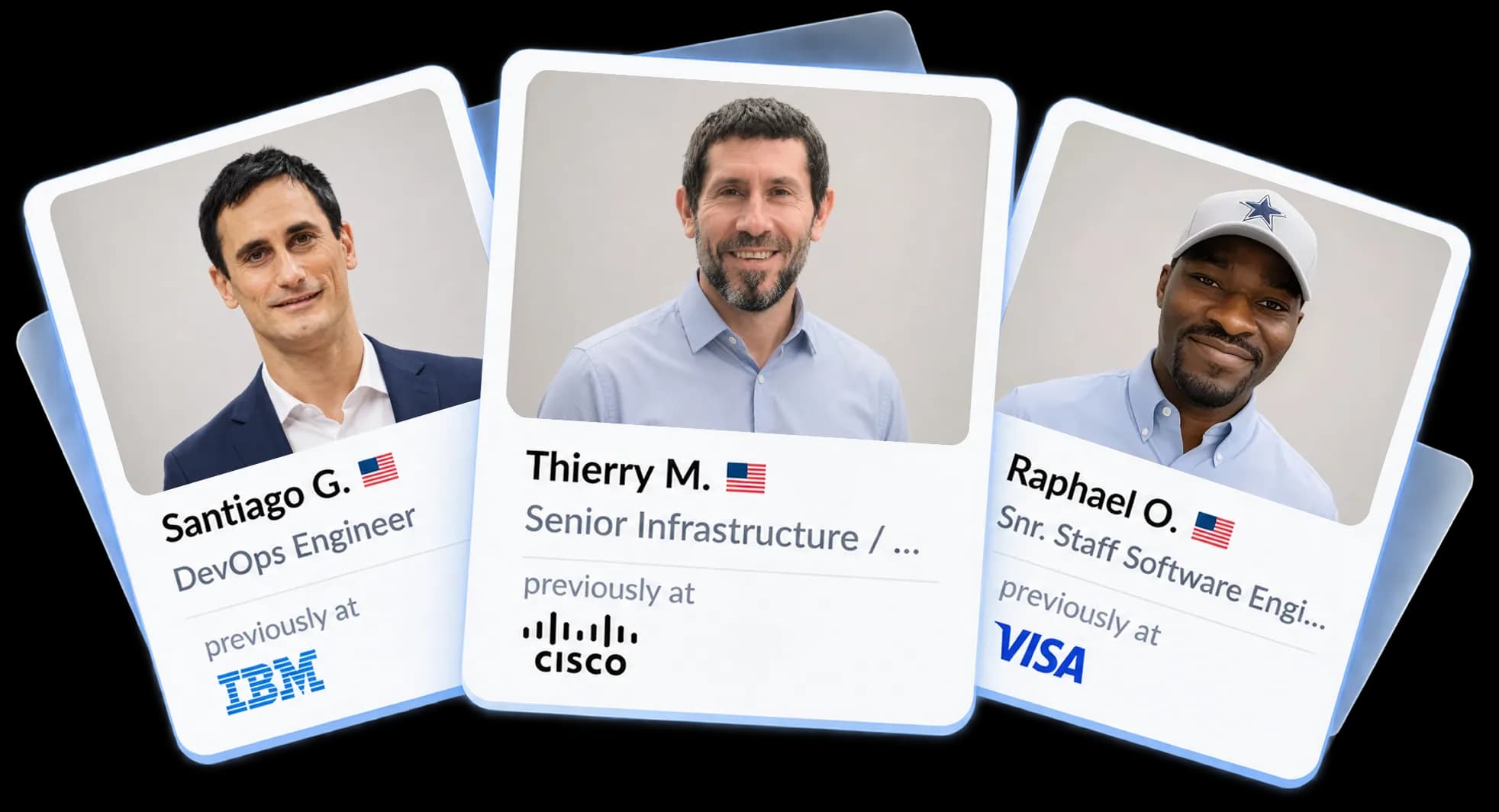
SoftDoes is a North America focused engineering and talent delivery partner built to remove the guesswork from hiring for platforms like Databricks. Instead of sorting through resumes and hoping a single freelancer works out, you get immediate access to senior talent already technically vetted against real Databricks work, delivered as part of a coordinated team rather than an isolated contractor. Engagement models flex from a single specialist embedded in your team to a full dedicated pod, backed by replacement and scaling guarantees so a bad fit or sudden growth in scope never stalls a project already in motion. Whether you need complementary expertise such as PostgreSQL developers for the serving layer or a pure Databricks pod, the model adapts to the work in front of you.
Ready to Hire Databricks Engineers for Your Team?
If your Databricks pipelines are costing more than they should, moving slower than the business needs, or held together by one person's tribal knowledge, it is time for a different approach. Schedule a discovery call with SoftDoes to walk through your architecture, your timeline, and your budget, and we will show you exactly which engagement model, a single specialist, a pod, or a full team, gets you reliable Databricks delivery the fastest.