If you are planning to build an education app for the U.S. or Canadian market, the first question on your mind is probably how much does it cost. The answer depends on what you are building, who you are building it for, and how complex the final product needs to be. This guide breaks down everything that influences education app development cost in 2026 so you can plan your budget with confidence.Key Takeaways
- Most education app development projects for the U.S. and Canada fall between $60,000 and $350,000, with lean MVPs starting around $40,000. Education app development costs range from $10,000 to $500,000 when you include the full spectrum from simple tools to enterprise platforms.
- Feature complexity, including live classes, AI recommendations, AR/VR, and analytics dashboards, is the single biggest driver of app development cost and timeline. Advanced features can increase development costs by 30 to 60 percent.
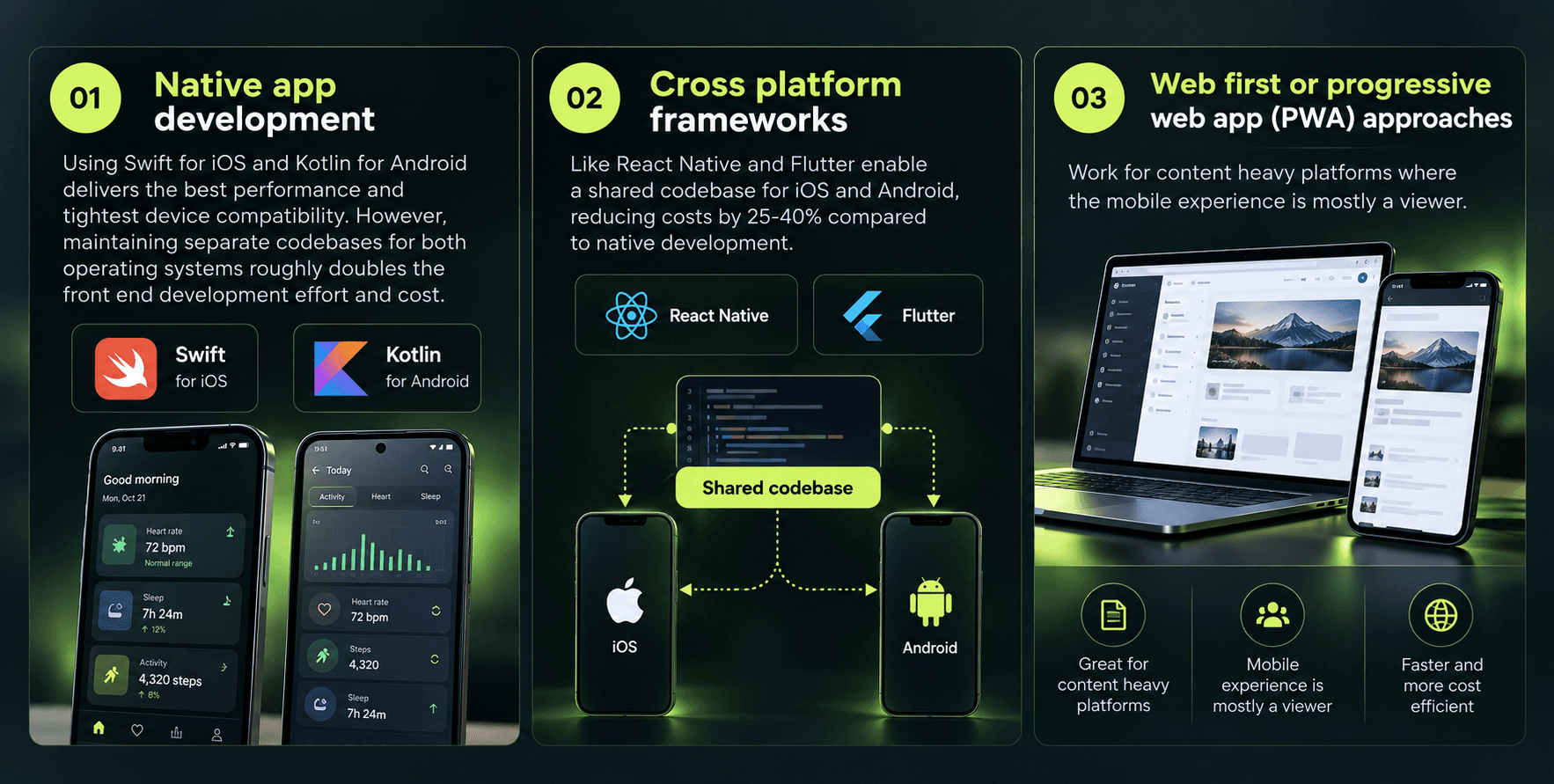
- Platform choice (native vs cross platform) and app complexity can change the budget by 40 to 60 percent either way. Cross platform development can reduce costs by 25 to 40 percent compared to building separate native apps.
- Ongoing maintenance and infrastructure costs, including cloud hosting, video streaming, and storage, typically run 20 to 30 percent of the initial build cost per year.
- SoftDoes is a U.S. and Canada focused engineering partner that can scope, design, and build custom education apps with clear cost and timeline estimates, helping you avoid the surprises that come from poorly defined projects.
EdTech Market Snapshot in 2026
North American edtech continues to grow, with rising demand across K through 12 districts, higher education, and corporate learning platforms. Schools, universities, and training providers are moving away from legacy web portals toward mobile first education apps that support live video, offline content, push notifications, and real time analytics.
Learning management system adoption is increasing as organizations centralize educational content, assessments, and reporting. Districts and institutions now expect integrations for grade sync, roster management, single sign on, and compliance with regulations like FERPA and COPPA. The education app market is no longer just about startups building flashy consumer products. Institutional buyers, corporate training teams, and government funded programs all need to understand total cost of ownership. That shift in technology adoption is why understanding education app development cost for long term ownership matters now more than ever.
How Much Does It Cost to Build an Education App in 2026?
Here is a direct answer. For U.S. and Canada based projects, education app development costs range from $20,000 to $500,000 depending on scope and ambition. Educational apps can range from $5,000 to over $300,000 in development costs for simpler builds, while educational apps with complex features can exceed $1 million in development costs for enterprise scale systems.
A practical breakdown for most projects looks like this:
App Tier |
Lean MVP | $30,000–$70,000 | Core learning flow, basic user management, simple quizzes, progress tracking |
Mid Range Product | $80,000–$180,000 | Multiple user roles, content management, payments, dashboards, standard integrations |
Enterprise Platform | $180,000–$350,000+ | Live classes, AI personalization, LMS/SIS integrations, offline sync, advanced compliance |
These ranges usually include product discovery, UI/UX design, mobile app development, backend development, QA testing, and launch support. App complexity, user roles (student, teacher, admin, parent), and compliance requirements shift a project from the low end to the high end of each range.
Types of Education Apps and Typical Cost Ranges
The type of product you are building is a major determinant of education app development cost. Here are the most common categories with realistic cost bands:
Learning Management System (LMS): Custom Learning Management Systems typically range from $100,000 to $500,000. Learning Management Systems start at $90,000 and can exceed $180,000 for mid complexity builds. These platforms involve multiple roles, reporting, grade sync, assessments, content upload, and integrations with SIS and SSO providers. A management system at this level often serves educational institutions with thousands of users.
Mobile Learning Apps: Subject learning apps cost between $50,000 and $200,000. These cover courses, video playback, quizzes, and progress tracking. A simple learning app or microlearning tool can start around $50,000 if the scope is tight.
Live Tutoring Platforms: Two sided marketplaces connecting tutors and students require scheduling, video streaming infrastructure, payments, and identity verification. These typically fall in the $120,000 to $250,000 range. Such apps demand scalable infrastructure and real time performance optimization.
Exam Prep Apps: Exam preparation apps average between $50,000 and $250,000 depending on the size of the question bank, analytics depth, and whether adaptive learning paths are included. AI based learning apps typically cost between $35,000 and $150,000 when AI is the primary feature.
Kids' Learning Games: Apps targeting children under 13 add COPPA compliance, parental controls, gamification, and custom illustrations. Costs typically run $50,000 to $130,000.
Lesson Planning and Grading Tools: Lesson planning apps cost between $10,000 and $30,000, while grading and assessment apps range from $20,000 to $50,000. Basic educational apps include user registration and simple quizzes at the entry level.
Many modern educational applications blend categories. An LMS combined with a mobile app, analytics, and AI pushes projects into the higher cost bands. The education app depends heavily on which of these categories it falls into, or whether it spans multiple.
App Complexity and Feature-Driven Cost
Feature complexity dominates app development cost more than visual design or the number of screens. Complex features increase education app development costs significantly, and feature complexity is a major cost driver in education app development.
Core features form the foundation and are relatively affordable to build:
- Authentication and user profiles
- Course catalog and content playback (video, PDF, audio)
- Quizzes and assessments
- Progress tracking and basic dashboards
- Push notifications
Advanced features raise costs substantially:
- Live classes and video streaming infrastructure
- Collaborative whiteboards and real time interactions
- AI recommendations and personalized learning paths
- Adaptive learning paths driven by machine learning
- Offline sync with conflict resolution
- Gamification with custom animations
Integrating custom AI features and solutions raises education app costs by 30 to 60 percent. Advanced features can double development timelines and costs when you stack several together. Adding live streaming infrastructure alone can add $40,000 to $100,000 and four to eight weeks of development effort. Advanced education apps can exceed $1,000,000 in development costs when they combine AI, live video, offline mode, and deep integrations across multiple platforms.
The lesson here is clear: define your must have features before layering on extras. Every advanced cluster adds real engineering costs and timeline.
Platform Choice: Native vs Cross Platform vs Web First
Platform choice is a major cost lever in mobile app development for educational platforms. You have three main paths, and each carries a different price tag.
For most educational app projects, cross platform development strikes the right balance between cost, performance, and reach across multiple platforms.
UI/UX Design and Accessibility Requirements
Good UI/UX design is not a nice to have in education app development. It directly influences student engagement, course completion rates, and support ticket volume. User journey mapping during the design phase helps teams build flows that match real user expectations.
Simple UI/UX with clean layouts and reusable components is relatively affordable. Highly custom designs with animations, illustrations, and adaptive layouts for children's apps cost more. UI/UX design costs rise with custom animations and interactive elements, sometimes adding 15 to 25 percent to the design budget.
Accessibility is a cost factor, especially for K through 12 and higher education apps. Compliance with WCAG 2.1 AA standards means supporting screen readers, keyboard navigation, color contrast, and large text. A full accessibility audit and remediation can add $20,000 to $60,000 depending on app size. For educational institutions receiving public funding, this is often non-negotiable.
Deeper UX research, including usability testing with real learners and iterative prototyping, adds time but typically reduces rework by 10 to 30 percent.
Backend, Integrations, and Infrastructure Costs
Backend development, including APIs, databases, and server logic, usually accounts for 40 to 50 percent of total app development cost in complex education apps. Backend architecture decisions made early in the project directly affect scalability and long term engineering costs, especially when you invest in custom software development services that match your infrastructure and integration needs.
Common integrations include:
- Video streaming and CDN providers
- Payment gateways for subscription plans
- SSO and identity providers
- LMS and SIS systems for grade sync
- Analytics and reporting tools
- Messaging and chat services
Integrating third party services can introduce additional costs for setup and usage. Using pre-made APIs can lower backend development costs, but each integration still requires custom mapping, security controls, and testing.
Infrastructure costs on AWS, Azure, or Google Cloud cover servers, databases, storage, CDN, and monitoring. These costs scale with active users and content volume. For U.S. and Canada education apps, data residency requirements and backup strategies can slightly raise infrastructure costs but improve reliability and compliance.
Security, Privacy, and Compliance in U.S. & Canada
Handling student data and training records in North America triggers compliance requirements that directly impact development costs. Educational apps must comply with COPPA, FERPA, and GDPR when handling sensitive data, with GDPR applying primarily when serving international users.
U.S. regulations like FERPA govern how student records are stored and shared. COPPA, with its amended rules now enforced in 2026, covers broader data types including biometrics and third party ad targeting for apps used by children under 13. These regulations influence data handling, parental consent workflows, and retention policies.
Compliance and security work can add 10 to 20 percent to the overall cost for many learning management system and institutional apps targeting schools and universities. Skipping this work is not an option if you want to sell to educational institutions.
Regional Cost Realities for U.S. and Canadian Projects
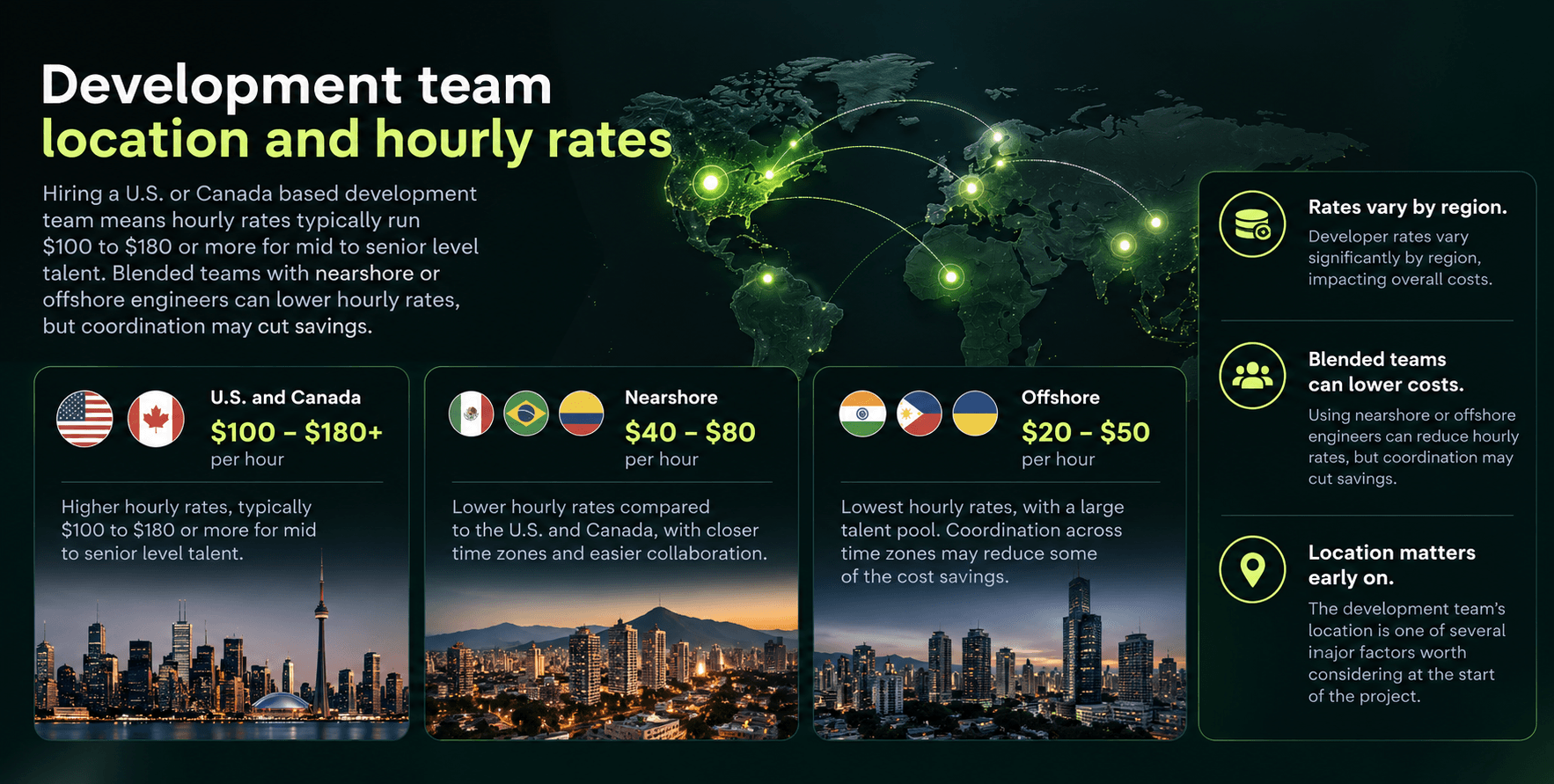
Hourly development rates vary significantly by geographic region. Within the U.S. and Canada, projects based in major tech hubs like the San Francisco Bay Area, New York, Toronto, or Vancouver tend to cost more than fully remote or blended teams. Development team location directly influences project budgets.
In Canada, Toronto and Vancouver command higher rates while Montreal and Ottawa offer slightly lower costs. A mid complexity education app in Toronto might run $60,000 to $120,000 while senior roles can command $120 to $180 per hour.
Mixed teams, with senior architects and product leads in North America and part of the engineering nearshore, can balance cost and expertise. Outsourcing non-core tasks can cut costs by 20 to 45 percent when managed well, particularly for organizations that already depend on custom operational software for construction and manufacturing and need reliable integration with their existing systems.
The risk of chasing the cheapest global option is real. Increased technical debt, poor device compatibility, and compliance gaps often cost more in the long run than they save upfront, especially for mission critical educational platforms.
Cost Breakdown by Project Stage
Here is how development costs depend on the project stage:
Stage |
Discovery and architecture | 5–10% | Requirements, technical planning, user research |
UI/UX design | 10–20% | Wireframes, prototypes, visual design, accessibility |
Development (frontend + backend) | 50–60% | Mobile app, APIs, integrations, content management |
QA and testing | 15–20% | Functional, performance, security, device testing |
Launch and deployment | 5–10% | App store submission, user onboarding, training |
Ongoing Maintenance, Scaling, and Hidden Costs
Many buyers underestimate ongoing maintenance costs after launch. Post-launch costs include cloud hosting and operational expenses, and maintenance costs can account for 15 to 25 percent of annual expenses. Most sources place recurring costs at 20 to 30 percent of initial development costs per year.
Expected recurring costs include:
- Cloud hosting and storage
- Third party API fees for video, chat, and AI tools
- Monitoring and performance optimization tools
- Bug fixes and security patches
- OS updates for device compatibility
- Minor feature improvements
Content creation often adds 40 to 80 percent on top of software development costs when you factor in producing educational content like video lessons, audio, illustrations, and interactive exercises.
Hidden costs also include app store fees, legal review for privacy compliance, analytics tooling, and marketing. Scaling costs creep up as user numbers grow, requiring database optimization, load balancing, and content delivery network upgrades to keep the app stable.
Budget for at least 6 to 12 months of post launch iteration, especially for data driven features like adaptive learning or analytics dashboards. Sustainable growth requires treating your education app as an ongoing product.
How to Reduce Development Costs Without Sacrificing Quality
Here are practical strategies to manage your education app development budget:
Start with a focused MVP. Building an MVP can save 20 to 35 percent on costs. Starting with a focused MVP helps validate ideas quickly. Define a core learning flow, such as enroll, consume content, complete quiz, view progress, before adding complex side features.
Choose cross platform when appropriate. If your app does not demand heavy native features like AR or advanced sensors, cross platform frameworks deliver strong results at lower initial development costs.
Leverage ready made APIs. Use third party services for authentication, payments, and video streaming instead of custom building everything.
Reuse proven components. Build with modular design in mind so you can reuse code across features and future projects.
Partner with an experienced team. Work with a mobile app development company that has edtech app development experience to avoid common architectural mistakes that inflate long term costs. The final cost of your educational app depends on how well you manage scope early.
Benefits of Working with SoftDoes on Education App Development
SoftDoes is a software development partner focused on custom software development, AI and ML, cloud infrastructure, data engineering, and ui ux design for U.S. and Canadian clients.
When it comes to education app development services, SoftDoes brings:
- EdTech experience: Building learning management systems, student and teacher mobile apps, analytics dashboards, and AI powered personalized learning platforms
- Engineering depth: Scalable infrastructure on cloud native architectures, secure APIs, both native app and cross platform mobile app development, and accessible design
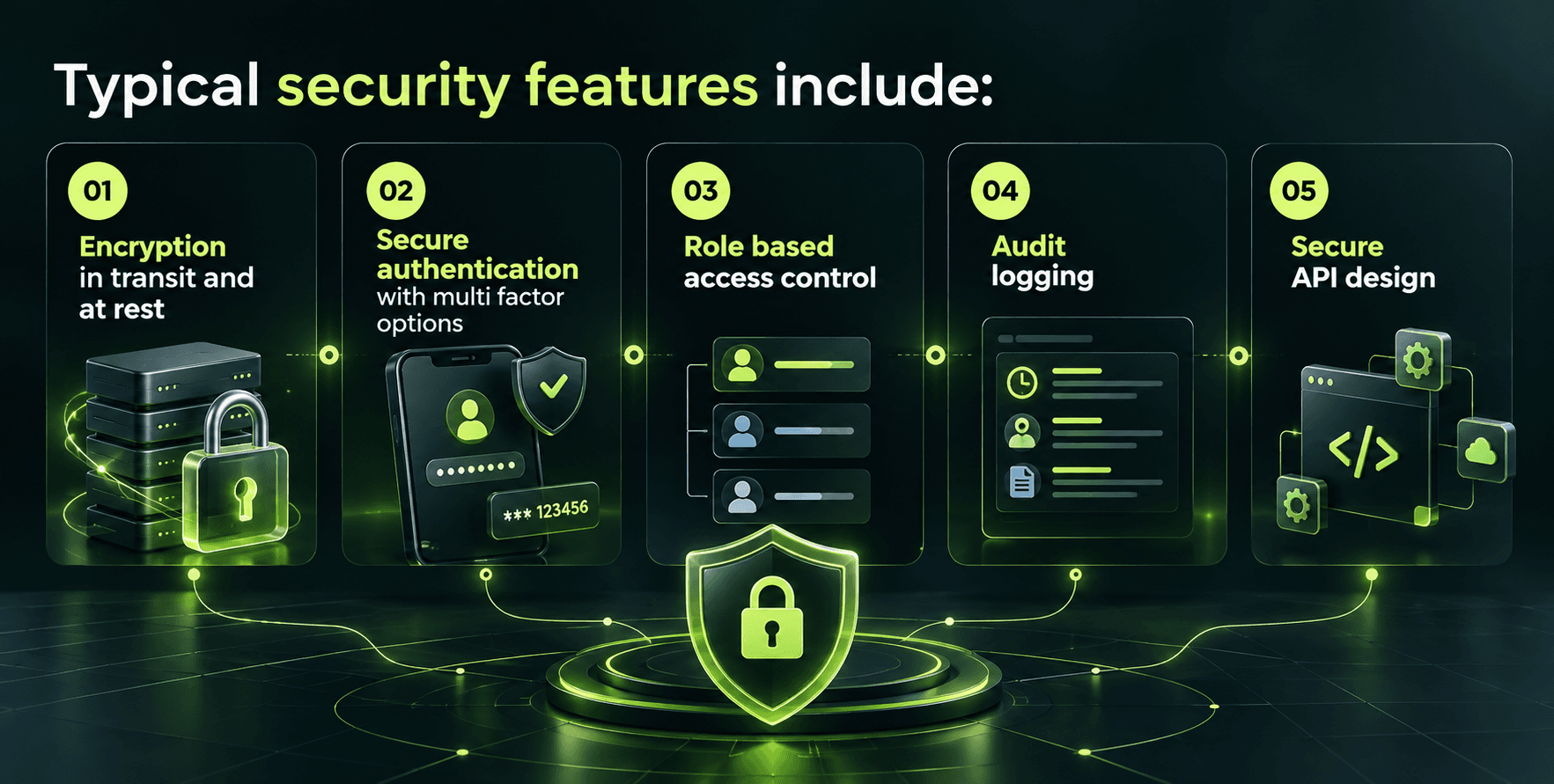
- Compliance awareness: Practical implementation of FERPA, COPPA, accessibility (WCAG), encryption, and audit logging for apps serving educational institutions
- Flexible engagement models: Full product teams, staff augmentation, or specialized roles in architecture, data, AI, and design with transparent pricing
Working with SoftDoes means you get engineering rigor without sacrificing project clarity. Whether you need a corporate training platform, a K through 12 e learning app, or a remote learning solution for higher education, the team can scope and build it.
How to Estimate Your Own Education App Budget with SoftDoes
If you are early in the planning process, here is a simple approach to start estimating your budget:
- Define your primary user. Is this for students, teachers, corporate learners, or all of the above?
- List must have workflows. Map out the user journey from registration through content consumption to assessment and reporting.
- Choose your platforms. Decide whether you need iOS, Android, web, or a combination.
- Prioritize features into MVP vs later phases. Separate what you need at launch from what can wait.
SoftDoes can turn this into a structured scope with estimated timelines and itemized app development cost ranges per module. Discovery workshops often clarify scope and reduce unnecessary development costs, even when you only have a high level idea.
Whether you are building a new education app or modernizing an existing one, an early conversation helps. U.S. and Canadian organizations can reach out to SoftDoes for a tailored estimate on their e learning apps or learning management system roadmap.












Comments (0)
No comments yet.