AI implementation cost for mid-size companies
A readiness assessment costs $2,500, a pilot $7,000 to $15,000, and a production rollout $13,000 to $60,000. Licenses go straight to the vendor.
Prices set November 2026 · Licenses billed by the vendor · You own the code
How an implementation moves from pilot to production
- 01 · Task inOne workflow is chosenThe readiness assessment ranks it by hours saved and cost.
- 02 · AI stepThe pilot does real workAI handles live cases with a review step for your team.
- 03 · Person checksOwners review the resultsHours saved, errors and run costs decide go or no-go.
- 04 · SystemProduction across teamsMonitoring, permissions and training follow the rollout.
AI implementation cost, in short
SoftDoes, a software and AI company in the Kansas City metro, implements AI for mid-size companies in stages. A readiness assessment costs $2,500, workspace rollouts $5,000 to $20,000, pilots $7,000 to $15,000 and production rollouts $13,000 to $60,000. Training costs $2,500 a session.
- First step$2,500 fixed
A two-week readiness assessment that ranks your AI projects, credited to your first build.
AI readiness assessment - Pilot$7,000 to $15,000
One workflow live with real users, then a production rollout from $13,000.
AI implementation
What AI implementation cost includes
AI implementation cost is what it takes to move AI from a plan into daily use: an assessment, a rollout or pilot, production work and training. Licenses and model usage are paid to the vendor on top.
Most of the cost is not the model. It is the work around it: choosing the workflow, connecting systems, setting permissions and training the people who use it.
The five stages and what each one buys
- Readiness assessment, $2,500 fixed: workflows, data and risks mapped, and AI projects ranked with costs, in 2 weeks
- Workspace rollout, $5,000 to $20,000: Claude, ChatGPT, Microsoft Copilot or Gemini set up with single sign-on, data rules and connectors
- Pilot, $7,000 to $15,000: one workflow live with real users and a review step
- Production rollout, $13,000 to $60,000: the pilot hardened, monitored and rolled out to every team
- Training, $2,500 a session: workshops built on your teams' real tasks
Implementation cost vs development cost
Development cost is the price of building one AI system. Implementation cost covers the whole path to daily use, including licenses, rollout and training. Our AI development cost guide prices single builds.
The work itself is sold on our AI implementation page, part of our AI services.
The cost to implement AI, stage by stage
Each stage has its own fixed price. The last column shows what moves it.
| Stage | What you get | Price | What moves the price |
|---|---|---|---|
| Readiness assessment | Workflows, data and risks mapped; AI projects ranked with costs | $2,500 fixed, 2 weeks | Fixed, and credited to your first build |
| Workspace rollout | Claude, ChatGPT, Copilot or Gemini with SSO, data rules, connectors and training | $5,000 to $20,000 | Teams, connectors and training sessions |
| Pilot | One workflow live with real users and a review step | $7,000 to $15,000 | Systems: 1 or 2 add $3,000, 3 or more add $9,000 |
| Production rollout | The pilot hardened, monitored and rolled out to every team | $13,000 to $60,000 | Systems, users and regulated data (+20%) |
| Training | Workshops built on your teams' real tasks | $2,500 a session | Half day for up to 25 people; full day $4,000 |
Licenses and model usage are billed by each vendor on your own accounts.
What drives the cost to implement AI
Six things move the cost to implement AI. They are the workflows in scope, the systems involved, your data, regulated records, the people to train and the licenses you buy.
1. Workflows in scope
Each workflow is its own pilot, at $7,000 to $15,000. Starting with one workflow keeps the first bill small and gives you real numbers before you fund more.
2. Systems and integrations
A ready connector costs $1,500 per app, and a custom integration or MCP server starts at $4,000. Inside a pilot or production build, one or two systems add $3,000, and three or more add $9,000.
3. Data readiness
AI needs current, reachable data. A data readiness review costs $3,500, and data pipelines start at $6,000 when records must move or be cleaned first.
4. Regulated data
Health or financial records add 20% to a build, as in healthcare and financial services. An AI risk assessment costs $6,000 fixed, and a compliance build for Colorado and California rules starts at $12,000.
5. People and training
Adoption is part of the cost. A half-day workshop for up to 25 people costs $2,500, a full day $4,000 and a 6-week program $12,000. See AI training for employees for the formats.
6. Licenses
Seats and usage go straight to the vendor. On claude.com/pricing, read November 8, 2026, a Claude Team standard seat costs $20 a month billed annually. Claude Enterprise costs $20 a seat plus usage at API rates, with a 20-seat minimum.
ChatGPT, Microsoft Copilot (formerly Microsoft 365 Copilot) and Gemini licenses are priced by each vendor. Our Claude Enterprise pricing guide explains the Claude plans, and our business AI pricing comparison covers the others.
AI integration cost by type of connection
AI integration cost depends mostly on whether a ready connector exists. A ready connector costs $1,500 per app, and a custom integration starts at $4,000.
| Connection | When it fits | Price |
|---|---|---|
| Ready connector, such as a Claude connector | The app already has an official connector | $1,500 per app |
| Custom integration or MCP server | No connector exists, or you need custom rules | From $4,000 |
| AI feature inside your software | AI should work inside a product you already run | From $4,000 |
| Workflow automation in n8n, Make or Zapier | Work moves between apps by hand | First workflow from $2,500; 3 workflows $6,500 |
| Copilot Studio agents | Your teams work in Microsoft 365 | From $7,000 |
| Salesforce Agentforce implementation | Your teams work in Salesforce | From $12,000 |
| Extra systems inside a build | A pilot or production build needs more connections | 1 or 2 add $3,000; 3 or more add $9,000 |
Care for workflow automations starts at $500 a month. Model usage and licenses are billed by each vendor on your own accounts.
Enterprise AI cost: three example budgets
Where companies spend first, and what each budget buys. Budgets run from $5,000 for a workspace rollout to $60,000 for a production rollout.
- Small budget
Workspace rollout
From $5,000Claude, ChatGPT, Copilot or Gemini set up for your company, with data rules in place. Includes: SSO and admin controls; Data rules and 2 connectors; 2 training sessions.
- Mid budget
A workflow pilot
$7,000 to $15,000One workflow live with real users, measured against the hours it saves. Includes: 1 or 2 connected systems; A review step for your team; A go or no-go report.
See AI implementation - Large budget
Production rollout
$13,000 to $60,000The pilot hardened, monitored and rolled out across teams and systems. Includes: 3 or more connected systems; Monitoring and cost controls; Audit logs and permissions.
See AI agent monitoring
What AI implementation costs in year one: three worked budgets
A first-year implementation budget adds the stages you need, the licenses you buy and the running costs. These examples use our list prices, Anthropic's published seat price and labeled assumptions.
Example 1: Claude for a 50-person company
Seat price from claude.com/pricing, read November 8, 2026; billed monthly, a standard seat costs $25. Assumed: 50 people on standard seats and four teams trained.
| Line | Price |
|---|---|
| Workspace rollout: setup, SSO, data rules, 2 connectors and 2 training sessions | From $5,000 |
| Two more training sessions for other teams | $2,500 each, or $5,000 |
| Claude Team licenses: 50 standard seats at $20 a month billed annually, paid to Anthropic | $12,000 a year |
| First-year total | From $22,000 |
Example 2: one workflow from pilot to production
Assumed: one intake workflow, two connected systems and a rollout after the pilot meets its targets. The assessment fee is credited, so it adds nothing to the total.
| Line | Price |
|---|---|
| AI readiness assessment, credited to the first build | $2,500 fixed |
| Pilot on one workflow, 1 or 2 systems | From $7,000 |
| Production rollout | From $13,000 |
| Agent monitoring and cost control: setup | $3,500 |
| Maintenance and support, 12 months | From $500 a month, or $6,000 |
| Monitoring, 12 months | From $500 a month, or $6,000 |
| First-year total | From $35,500, plus usage at cost |
Example 3: an enterprise program across departments
Assumed: a rollout at the top of its range, two workflows piloted and one rolled out company-wide.
| Line | Price |
|---|---|
| Workspace rollout for several departments | $20,000 |
| Two workflow pilots | $7,000 to $15,000 each |
| Production rollout of one workflow across teams | $13,000 to $60,000 |
| 6-week AI training program | $12,000 |
| One-time total | $59,000 to $122,000 |
| Licenses and model usage | Paid to each vendor |
Example budgets built from our list prices and assumed scope, not quotes or client results.
AI integration cost and monthly run costs
Connections are priced once. After launch, licenses and usage go to the vendor, and support is optional.
- We never resell seats or usage: they go on your own vendor accounts.
- Any project can start with Project Discovery: $490, credited to the build.
Connect a ready connector
$1,500 per appCustom integration or MCP server
From $4,000Licenses and model usage
Billed by the vendorMaintenance and support
From $500 a monthAgent monitoring and cost control
Setup $3,500, then from $500 a month
AI implementation costs to plan for after launch
After launch, an implementation costs licenses, model usage and hosting, all billed by the vendors. Maintenance from SoftDoes starts at $500 a month, and agents can add monitoring.
- Licenses: seats for each user, paid to the vendor. A Claude Team standard seat costs $20 a month billed annually (claude.com/pricing, November 8, 2026)
- Model usage and hosting: billed at cost on your own accounts, and growing with volume
- Maintenance and support: from $500 a month, covering model updates, prompt fixes and cost monitoring
- Agent monitoring and cost control: setup $3,500, then from $500 a month
- Refresher training: $2,500 for a half-day workshop when new teams join
- Red teaming retests: from $3,000 a quarter, for AI that outside users can reach
Keeping usage costs in check
Admins on Claude Enterprise can set spend limits for the whole organization and for each user. In custom builds, cost limits and alerts per feature do the same job.
For model calls, Anthropic reads cached input at 0.05 times the input price on Sonnet 5.5, and batch processing is 50% off (claude.com/pricing, November 8, 2026).
We never resell seats or usage: they go on your own vendor accounts, so finance sees every charge.
AI implementation cost-benefit analysis: a worked example
Compare the first-year cost with the hours the workflow saves. This example uses Example 2 above with assumed numbers, so swap in your own.
Example math with assumed numbers, not a client result.
| Line | Assumed value |
|---|---|
| Requests handled a month | 2,000 |
| Minutes saved per request | 6, or 200 hours a month |
| Loaded cost of a staff hour | $40 |
| Saving in the first year | 2,400 hours, or $96,000 |
| First-year cost, from Example 2 | From $35,500, plus usage at cost |
| Net first-year gain | About $60,500, before usage |
The saving only shows if you measure the starting point before the pilot. Time a sample of today's work, then compare the same measure after launch.
Run your own numbers in the AI ROI calculator, or score where you stand with the free AI readiness quiz.
How to compare AI implementation proposals
Put two proposals side by side and check what each price covers. These questions show which one includes the work that gets AI into daily use.
| Question to ask | What a good answer includes |
|---|---|
| Is each stage priced separately? | A fixed price per stage, in writing, before work starts |
| Are licenses included or resold? | Licenses billed by the vendor on your own accounts, with no markup |
| How will the pilot be measured? | Targets for accuracy, time and cost, agreed before the pilot starts |
| What happens if the pilot misses its targets? | You keep the code and the findings, and no rollout is forced |
| Is training in the price? | Sessions by role on your teams' real tasks, with the number of sessions stated |
| What will it cost to run each month? | Licenses, usage, hosting and maintenance, estimated line by line |
| Who owns the work? | You do: code, prompts, connectors and policies, with full admin access |
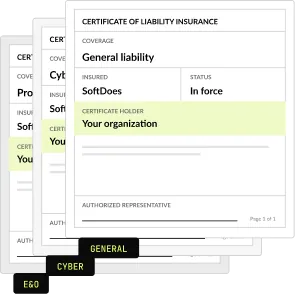
| What paperwork comes first? | An NDA and a certificate of insurance before the first call |
How to keep AI implementation cost down
Most savings come from proving value early and reusing what already exists. These four moves keep the first bill small.
Assess before you build
A $2,500 readiness assessment ranks projects by value, and the fee is credited to the build. Example: The assessment ranks three candidate workflows by hours saved, and the pilot starts with the top one.
Pilot one workflow
A pilot costs $7,000 to $15,000 and shows real results before you fund production. Example: Intake for one team goes first, and other teams follow once the scorecard meets its targets.
Use ready connectors
A ready connector costs $1,500 per app, while a custom integration starts at $4,000. Example: Google Drive and Slack connect through ready Claude connectors before anything custom is built.
Train on real tasks
A $2,500 half-day workshop for up to 25 people teaches each team its own use cases. Example: The finance team practices on its own month-end reports instead of generic prompts.
What every implementation includes
Every implementation, from a $2,500 assessment to a production rollout, includes these six things.
A fixed price per stage
Each stage has a written scope and price before work starts, so budgets hold.
Licenses on your accounts
Seats and usage go straight to the vendor, so you keep the contracts and see every charge.
You own the work
Code, prompts, connectors and policies are yours from day one, with full admin access.
Targets before the pilot
Accuracy, time and cost targets are agreed in writing before the pilot starts.
Permissions and an audit log
Access follows your existing roles, and the audit log runs from the start.
Vendor documents first
Our NDA and certificate of insurance reach your procurement team before the first call.
Related pages
- AI implementation
From pilot to production, with a partner that stays.
- AI readiness assessment
Two weeks, $2,500 fixed, credited to your first build.
- AI training for employees
Workshops and programs built on your teams' tasks.
AI implementation cost questions
Stages, integrations, enterprise budgets and payback. Can't find your answer?
How much does AI implementation cost?
For a mid-size company, AI implementation usually runs in stages. A readiness assessment costs $2,500, a workspace rollout $5,000 to $20,000, and a workflow pilot $7,000 to $15,000. Production rollouts cost $13,000 to $60,000, and training costs $2,500 a session. Licenses and model usage are billed by the vendor.
Why is AI expensive to implement?
Most of the cost is not the model. It is connecting AI to your systems, cleaning the data it reads, adding review steps and permissions, and training people to use it. One or two connected systems add $3,000, and three or more add $9,000. Regulated data adds 20%. Starting with one workflow keeps the first bill small.
How much does an AI program cost?
A company AI program usually combines an assessment, a workspace rollout, one or two pilots and training. For example, a $2,500 assessment, a $5,000 rollout, a $7,000 pilot and two $2,500 training sessions total $19,500. A 6-week training program for employees costs $12,000. Licenses and model usage are billed separately by each vendor.
How much does enterprise AI cost?
Enterprise AI platforms, with several agents, private models and governance across departments, cost $60,000 to $150,000+. You can start smaller, with a $7,000 to $15,000 pilot that proves one workflow first. Private AI on your own data starts at $15,000, plus cloud hosting at cost.
How much does AI integration cost?
Connecting AI to a system that already has a ready connector costs $1,500 per app. A custom integration or MCP server for a system without one starts at $4,000. Adding AI to software you already run starts at $4,000. Inside larger builds, one or two connected systems add $3,000, and three or more add $9,000.
Can AI implementation pay for itself?
It can when the workflow is chosen for the hours it saves. Measure the hours a task takes today, then compare them with the build price and monthly run costs. Our readiness assessment ranks projects by that math for $2,500, credited to your first build. The AI ROI calculator runs the same comparison.
What does it cost to implement AI in a mid-size business?
Most mid-size companies start with a $2,500 readiness assessment and one pilot at $7,000 to $15,000. A workspace rollout costs $5,000 to $20,000, and a production rollout $13,000 to $60,000. Licenses and model usage go to each vendor. The three worked budgets on this page show common paths, line by line.
How much do AI licenses cost?
Licenses are paid to each vendor, on top of implementation. On claude.com/pricing, read November 8, 2026, a Claude Team standard seat costs $20 a month billed annually, or $25 monthly. Claude Enterprise costs $20 a seat plus usage at API rates, with a 20-seat minimum. We never resell seats.
How long does AI implementation take?
It depends on the workflows, the systems and your approval process, so we set the schedule in the written plan, next to each stage's price. The readiness assessment has a fixed length of 2 weeks. A pilot moves to production only after it meets the targets agreed before it started.
What happens if the AI pilot fails?
You keep the code and the findings, and no rollout is forced. Because targets for accuracy, time and cost are agreed before the pilot starts, a miss shows early. That is why the pilot, at $7,000 to $15,000, comes before a production rollout of $13,000 to $60,000.
Is AI implementation a one-time cost?
The stages are one-time prices, each fixed in writing before work starts. After launch, licenses, model usage and hosting are ongoing and billed by each vendor. Maintenance from SoftDoes starts at $500 a month if you want us to run the system, and agent monitoring adds a $3,500 setup.
How much does AI training for employees cost?
A half-day workshop for up to 25 people costs $2,500, and a full day costs $4,000. A 6-week program costs $12,000. Every session is built on your teams' real tasks, so people practice on their own work. A workspace rollout from $5,000 already includes 2 training sessions. Formats are on our AI training for employees page.
Do we need our own AI team to implement AI?
No. We lead the work, build and connect the system, and train your teams. You need a sponsor who signs off on the rollout, a process owner who reviews pilot results, and IT and security people who grant access. Your team can run the system after handover, or we can maintain it from $500 a month.
What does a workspace AI rollout include?
A workspace rollout starts at $5,000 and covers setup, single sign-on, data rules, 2 connectors and 2 training sessions for Claude, ChatGPT, Microsoft Copilot or Gemini. Licenses go straight to the vendor. Larger rollouts with more teams, connectors and sessions run up to $20,000. See Claude implementation for a Claude rollout.