


U.S.-Based
AI governance consulting that ends in working controls
We find every AI system that shapes a decision about a person, then build the notices, human review and audit logs the new rules expect.
$6,000
AI risk assessment, fixed price
$12,000
Compliance builds from
5.0
Clutch rating from 40 reviews
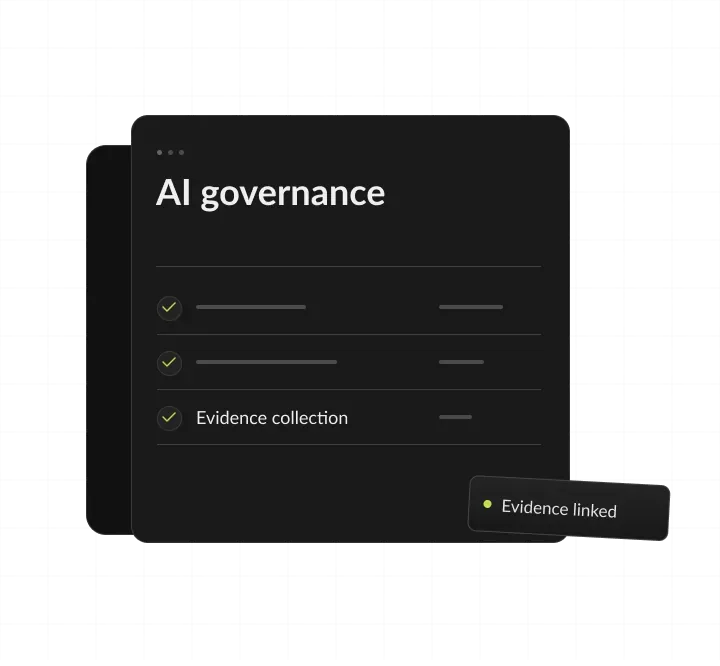















How a governed AI decision runs
One loan application: the model recommends, a person decides, and the notice and record are saved.
A loan application arrives
The file reaches the decision system.
The model recommends
It scores the file and logs its inputs.
An underwriter decides
They approve, change or override, with a reason.
Notice and record saved
Notices go out, and the record is kept.
AI governance consulting, in short
- Software and AI company in the Kansas City metro
- AI governance consulting for mid-market companies that use AI in hiring, lending, insurance, health care and customer service
- Work starts with a $6,000 fixed-price AI risk assessment
- Compliance builds start at $12,000

Find it. Rank it. Build the controls.
- 01AI risk assessment$6,000 fixed: an inventory of your AI systems, a risk ranking and a gap report
- 02Compliance buildFrom $12,000: notices, human review and decision logs in the systems that decide
- 03Who it's forCompanies where AI shapes decisions about people in Colorado, California or the EU
- 04You ownThe code, policies and logs, in your own systems
What is AI governance consulting?
AI governance consulting finds every AI system that shapes decisions in your company, ranks each one by risk and sets the rules around it. At SoftDoes, the work ends with those controls running inside your own systems.
What AI governance consulting includes
An inventory of AI systems
Most companies already use more AI than anyone has listed. Teams buy tools on their own, and vendors add AI features to software you already pay for. Governance starts by finding all of it, including vendor features and tools teams bought on their own.
A risk ranking
Each system then gets an owner, a risk level and the duties that apply to it. The ranking is based on the decisions each system shapes about people.
A gap report
New rules in Colorado, California and the EU make those duties specific: notices, explanations, human review and records. The gap report maps each system to the rules that apply, such as Colorado's SB 26-189.
Policies staff can follow
Rules written for the teams that use AI every day, starting with an AI acceptable use policy.
Controls built in code
Notices, human review queues, correction requests and decision logs, inside the systems that decide.
Tests before launch, then monthly checks
Tests for accuracy, outcomes by group and attacks before launch, then monthly checks.


Policy-only consulting vs controls in code
Many governance projects end with a policy deck and a list of recommendations. Ours end with working software: review screens, notices that go out on time and logs an auditor can sample. The NIST AI Risk Management Framework, released January 26, 2023 for voluntary use, organizes this work into four functions: Govern, Map, Measure and Manage. Our AI governance framework guide explains it next to ISO/IEC 42001.
Types of AI governance and compliance work
Most programs combine three or four of these services. Prices are starting points from our price list, agreed in writing before work starts. Model usage and hosting stay on your own accounts, billed at cost. Red team quarterly retests start at $3,000, and AIUC-1 quarterly retests are $4,000.

AI risk assessment
Inventory, risk ranking and gap report for your AI systems. Fits when you need to know what you run and which rules apply.
Compliance build
Notices, human review, correction requests and decision logs in your systems. Fits when AI shapes decisions about people in Colorado or California.
AI agent evaluation
Accuracy, safety and cost tests for an agent before and after launch. Fits when an agent is about to go live or change.
AI red teaming
Attack tests for prompt injection, data leaks and agent permissions. Fits when a chatbot or agent faces customers or reaches your data. Agent tests start at $16,000.
AIUC-1 pre-audit testing
The attacks the AIUC-1 evals cover, run before the audit. Fits when you sell AI agents to enterprise buyers.
AI training for employees
Training on approved tools, data rules and human review. Fits when staff use AI tools every day.
Monitoring and support
Monthly checks of logs, overrides and model changes. Fits when controls are live and must stay current.
Systems we connect governance controls to
Controls live where decisions happen and where your logs already go.
When AI governance consulting pays off
Governance work pays off when AI touches decisions about people, a new rule applies, or enterprise buyers ask how your AI is controlled.
Signs we see most often before a company asks for an AI risk assessment:
- AI helps screen applicants, score credit, price insurance or decide on care or benefits.
- You hire, lend, insure or rent to people in Colorado or California.
- Your product sells into the EU, or EU staff and customers use your AI.
- Enterprise buyers send security questionnaires with a new section on AI.
- Teams use ChatGPT, Claude or Copilot with no written rules on data.
- Your board or auditors asked who owns AI risk, and nobody had a clear answer.
When to wait
If AI only drafts emails and summaries, and never shapes a decision about a person, start smaller. An AI policy and staff training may cover you for now. If you have not picked your first AI use case yet, an AI readiness assessment comes first. The free AI readiness quiz gives a quick score.
What to prepare before the first call
A list of the AI tools and vendors you know about, even if it is incomplete; the decisions about people your teams make in software: hiring, credit, pricing, care or benefits; the states and countries where your applicants, customers and staff live; any customer, auditor or regulator questions about AI you have received; and one owner in legal, compliance or operations who will run the program.
AI compliance consulting that ends in code
Six pieces of work, from the first inventory to the evidence an auditor asks for.
AI risk assessment
We list every model, vendor feature and AI tool in use, then rank each one by the decisions it shapes. For example, a lender's inventory turns up an AI scoring feature inside its loan software that no one had reviewed.
Colorado and California rule mapping
We map each system to the duties that apply: notices, explanations, correction requests, human review and record keeping. For example, a hiring tool used for Colorado applicants is mapped to the notice, 30-day explanation and human review duties.
AI audit trails and evidence
Every AI decision gets a log: inputs, model version, reviewer, outcome and notice sent. Auditors get an evidence pack. For example, each decline records the model version, the reviewer and the date the notice went out, ready for an auditor's sample.
Human review and appeal flows
Review queues where a trained person can approve, change or override a decision, and consumers can ask for reconsideration. For example, an underwriter sees the score, its main factors and its known limits, then approves or overrides it with a reason.
Policies people follow
An AI use policy, model records and a review board charter, written for the teams that use AI every day. For example, an acceptable use policy that bans using chat tool output in hiring decisions, as Colorado's chat tool exclusion expects.
AI vendor and model reviews
We check the AI inside software you buy: data terms, admin settings and the documentation vendors now owe under Colorado's law. For example, before HR turns on a new AI ranking feature, we confirm the vendor's documentation, data terms and review step.
What you get from an AI risk assessment and compliance build
You get a written record of every AI system you run and the rules each one must meet. Then you get the controls that close the gaps, with the evidence to prove it.




AI governance ROI: a worked example
Governance pays back when ready evidence replaces hours of manual answers to buyers, auditors and regulators. This example uses assumed hours for buyer questionnaires and audits, not a client result, so swap in your own. At these numbers, the assessment and a starting build pay for themselves in a little over a year. That count leaves out the cost of a failed audit, a lost deal or an enforcement action. The larger gain is reuse: one inventory and one set of logs can serve Colorado, California and the EU, so each new rule costs less to meet. Run your own compliance hours in the AI ROI calculator. For a wider rollout budget, see our AI implementation cost guide.
Risks in AI governance, and how we handle them
Each risk gets a control inside your systems, so the answer to an auditor is a log entry rather than a promise.

How we keep data safe during an AI risk assessment
We review decision systems that hold personal data, so access is narrow and agreed in writing. Our NDA and certificate of insurance reach your team before the first call.
Health data and AI security
Health data follows its own rules. Our guide to HIPAA-compliant AI covers what changes for patient records. For the security side of chatbots and agents, see AI red teaming and our guide to AI agent security.
Access your team chooses
We work from read access or sample exports that your team chooses.
Only the fields we need
Only the fields a review needs are shared, and sensitive values are masked where the review allows it.
Role-based access
Access follows the roles your teams already use, and you remove it when the work ends.
Your vendor accounts
Any model calls run on your own vendor accounts, under your contracts with each vendor.
Your systems and repository
Findings, logs and code stay in your own systems and repository.
Insured
SoftDoes carries general liability, professional liability (errors and omissions) and cyber liability insurance. A certificate of insurance is available on request.
How an AI risk assessment becomes a compliance build
Four steps from the first call to controls running in production.
We find every AI system, including tools business units bought on their own and AI features inside vendor software. You get an AI system register.
We rank each system by the decisions it shapes and map it to Colorado, California, EU and NIST AI RMF requirements. You get a risk ranking and gap report.
We add notices, human review queues, correction requests and decision logs inside the systems that make decisions. You get controls running in production.
We test accuracy and outcomes by group before launch, then check logs, overrides and model changes every month. You get test results and a monthly report.
Compliance-ready software in production
Regulated builds from our case studies.

- Healthcare
Prior Authorization AI
Prior Authorization AI is a healthcare automation startup building AI-powered tools to streamline prior authorization for Medicare and Medicaid medical transportation providers in New Jersey.- 16Weekly hours saved
- 63%Admin time reduced
- 43%Fewer submission errors

- Startup
- Real Estate
Our Haus AI
A finance professional turned founder built Our Haus AI, an AI-powered collaborative workspace where homeowners and contractors scope, bid, contract, and document renovation projects together. SoftDoes took her prototype and made it production-ready.- 10XMVP scope delivered
- 2+years Ongoing partnership
- 1Fully owned Platform

- Real Estate
The building buyer
The Building Buyer is a Florida-based real estate investment firm co-founded by Dylan Troiano and Charles Hanlin. They acquire single-family, multifamily, and commercial properties across South Florida and beyond, with a focus on motivated seller opportunities.- 18Weekly hours saved
- 2+Years Ongoing partnership
- 1Fully owned Platform

- Healthcare
CareInTouch
CareInTouch is a Bay Area home health agency providing skilled nursing and therapy services to patients referred from hospitals and clinics. With over 100 staff, they operate in one of the most complex and compliance-driven healthcare markets in the country.- 40% Reduction In Billing Errors
- 100+Staff Operations Managed
- 0Missed Compliance Deadlines

- Startup
Sparkle The Cleaning Service
Sparkle The Cleaning Service is a Detroit-area residential cleaning company with 10 years in business, connecting homeowners with vetted, insured independent cleaners through a subscription-based marketplace platform.- 75% Platform Transparency
- 2XPlatform Growth
- 40%Higher User Retention

- Healthcare
FMY Orthodontics
FMY Orthodontics, a multi-location practice in West Tennessee, partnered with SoftDoes to replace a spreadsheet-based financial workflow with a custom web platform. The goal was to simplify how staff present treatment financing while allowing patients and families to review and complete decisions remotely.- 60%Workflow Reduction
- 75%Remote Adoption
- 5Locations Aligned

- Real Estate
Brizacorp
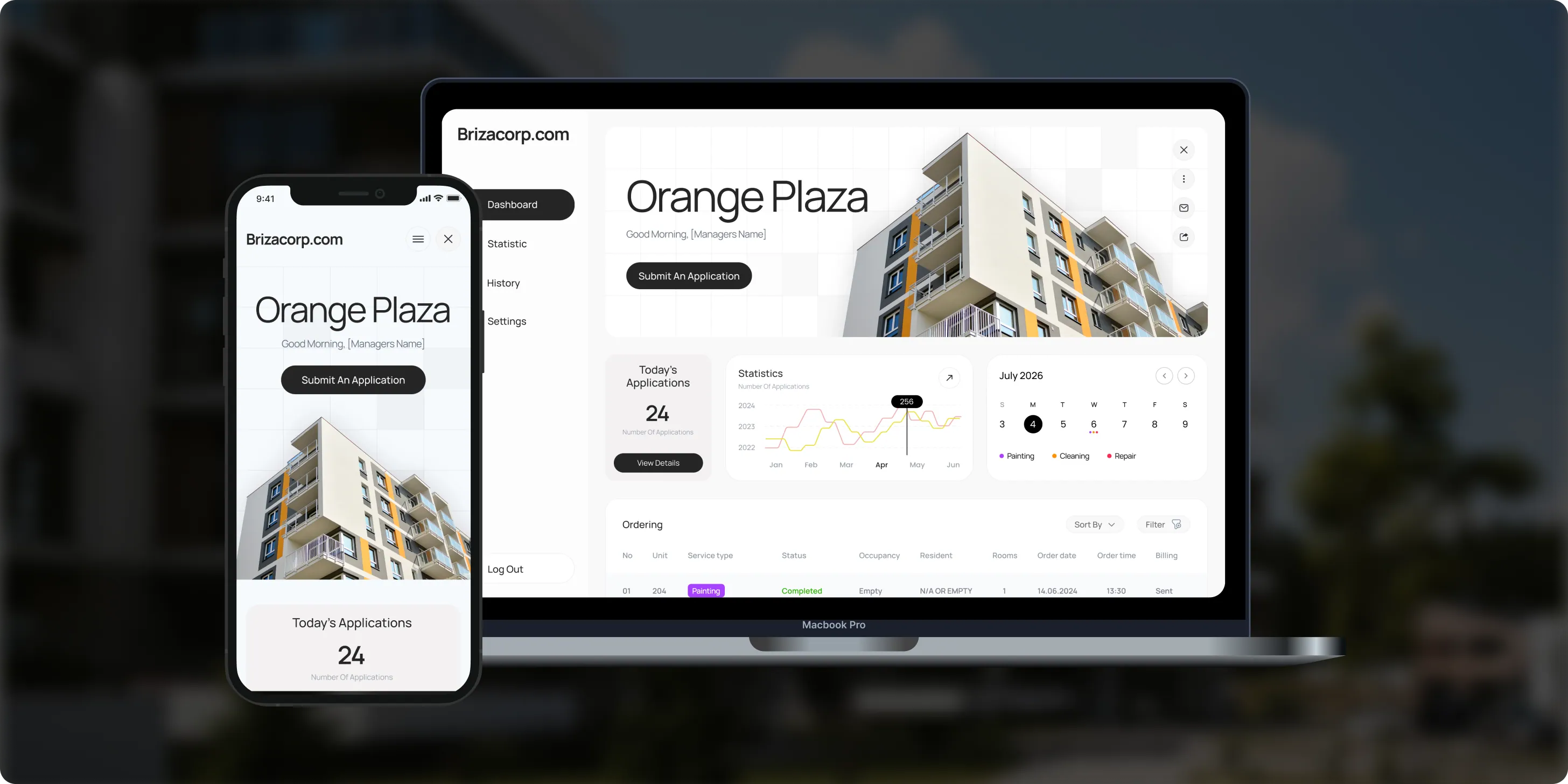
Brizacorp manages residential properties and coordinates the staff who handle painting, cleaning, and repair requests. Its team tracked work across messengers, phone calls, e-mail, and paper planners, with no single place to manage requests or measure performance.- 98%Application Stability
- 95%Utilization Rate
- 30%Faster Task Completion
How to choose an AI governance consulting firm
Ask these questions before you sign. A strong firm answers each one in writing, with examples from live systems.
Questions to ask, and what a good answer includes
- Do you build the controls, or only write policy? Engineers who build notices, review queues and logs inside your systems.
- How will you find AI we do not know about? An inventory that covers vendor features and tools teams bought on their own.
- Which rules will you map us to? Named rules with their dates, such as Colorado SB 26-189 and California's ADMT rules, plus the NIST AI RMF.
- How do you work with our counsel? Counsel decides how each law applies, while the firm does the technical work and evidence.
- What evidence will we have at the end? Decision logs, test results by group and an evidence pack an auditor can sample.
- What does it cost? A fixed price for the assessment and a written quote for the build.
- What paperwork comes first? An NDA and a certificate of insurance before the first call.
Why companies choose SoftDoes for responsible AI consulting
Companies choose SoftDoes for responsible AI consulting because our engineers build the notices, review queues and logs in code, inside the systems that decide. Legal teams get our NDA and certificate of insurance before the first call.

- 01
Controls written in code
Our engineers build the notices, review queues and logs themselves, inside the systems that make the decisions.
- 02
Vendor documents first
Our NDA and certificate of insurance reach your procurement and legal teams before the first call.
- 03
Partners of the model vendors
Claude Partner Network member and OpenAI Registered Partner, so vendor admin and data settings are part of every review.
- 04
Frontier AI lab experience
The team has worked with frontier AI labs and some of the largest data providers. We bring that testing discipline to the AI that decides about your customers.
- 05
40 AI projects since 2020
40 AI projects delivered since 2020, including AI prior authorization with a review before every filing.
- 06
Rated 5.0 on Clutch
5.0 from 40 client reviews. Clutch named SoftDoes a Top Artificial Intelligence Company in Kansas City for 2026.
- 07
Kansas City headquarters
Headquartered in Mission, KS, in the Kansas City metro. Call 800-909-2345 to reach the team.
AI governance by industry
The same governance controls, fitted to each industry's records and rules, with each industry page showing the use cases and compliance steps in detail.
Healthcare
In Colorado, HIPAA covered entities skip most duties except for employment decisions, and give patients a general notice of AI use. Providers get this path only when they operate from a Colorado location.
Financial services
Lenders can meet Colorado's disclosure duty with an ECOA or FCRA adverse action notice that also meets the new law.
Insurance
Colorado insurers already under the state's insurance AI statute are deemed compliant in the practice of insurance. Hiring decisions still count.
Real estate
Leasing or buying a home is a covered decision in Colorado, and housing is a significant decision under California's rules.
Education
Admissions and credentials are covered in both states. Colorado lets FERPA schools use their existing notice and review processes.
Government
Essential government services and public benefits are a covered domain in Colorado, including eligibility and renewal decisions.


What AI governance costs
A fixed price for the assessment, and a written quote for the build before work starts. Model usage and hosting stay on your own accounts, billed at cost.
AI risk assessment
Inventory, risk ranking, gap report
$6,000 fixed
Compliance build
For Colorado and California rules
From $12,000
AI agent evaluation
Before and after launch
From $3,500
Monitoring and support
Monthly checks of logs and models
From $500 a month
Project Discovery
Credited to the build
$490
Questions about AI governance consulting
Scope, cost, rules, frameworks and how we work with your counsel. Can't find your answer?
What does an AI governance consultant do?
An AI governance consultant finds where AI shapes decisions in your company and sets the rules and controls around it. At SoftDoes that means an inventory of every AI system, a risk ranking and a gap report. Then our engineers build the notices, human review, correction requests and audit logs that close the gaps, inside your own systems.
How much does an AI risk assessment cost?
Our AI risk assessment costs $6,000, fixed and agreed before work starts. It covers an inventory of your AI systems, a risk ranking and a gap report against the rules that apply to you. Compliance builds that add notices, human review and decision logs start at $12,000, and monitoring starts at $500 a month.
Do the Colorado and California AI rules apply to my company?
They can, if AI materially shapes decisions about people in those states. Colorado's SB 26-189 covers decisions on education, jobs, housing, lending, insurance, health care and government services made on or after January 1, 2027. California's ADMT rules apply to businesses that use the technology for significant decisions from the same date. Your counsel confirms the scope.
What is the difference between an AI audit and an AI risk assessment?
A risk assessment looks forward: which systems carry risk, which rules apply and what is missing. An AI audit looks back: it checks whether controls worked, using logs, test results and records of human review. We run the assessment first, build the controls, and set up the logs and evidence that make a later audit fast.
Which AI governance frameworks do you use?
We map controls to the NIST AI Risk Management Framework, a voluntary framework widely used in the US. We also map them to ISO/IEC 42001, the international standard for AI management systems. For companies selling into the EU we add the EU AI Act. Our AI governance framework guide compares all three. We prepare the records and evidence; certification, where you want it, comes from an accredited auditor.
Do you replace our lawyers or compliance team?
No. Your counsel decides how each law applies to your business, and your compliance team owns the program. We do the technical work: the system inventory, the risk ranking, the code for notices, review and logs, and the test evidence. Counsel then reviews finished controls instead of writing technical specifications for every system.
What is the difference between AI governance and AI compliance?
AI governance is your company's own program for AI: who may use it, for what purpose and with which checks. AI compliance is the part of that program that meets specific laws, such as Colorado's SB 26-189 or California's ADMT rules. Governance without compliance misses legal duties. Compliance without governance breaks the next time a team adds a tool. We build both from one inventory.
How do you do an AI risk assessment?
Start with an inventory of every AI system, including vendor features and tools teams bought on their own. Rank each system by the decisions it shapes about people. Map it to the rules that apply, then list the gaps: missing notices, review steps, logs or tests. Our $6,000 fixed assessment follows these steps and ends with a written quote for any build.
What are the four types of AI risk?
Under the EU AI Act, the four risk levels are unacceptable, high, transparency and minimal. Unacceptable practices, such as social scoring, are banned. High-risk uses, such as CV sorting and credit scoring, carry strict duties from December 2, 2027. Chatbots carry transparency duties, and most other AI has no new rules. US laws use different terms, so we map each system to every rule that applies.
How much does an AI audit cost?
It depends on what you mean by an audit. Our AI risk assessment, which reviews every system against the rules that apply, is $6,000 fixed. Building the logs and evidence an auditor samples starts at $12,000. A formal certification audit, such as AIUC-1 for AI agents, is a separate engagement with an accredited auditor. Our pre-audit testing for it starts at $12,000.
Can AI write a risk assessment?
AI can draft parts of one, such as a summary of each system, but people must own the judgments. California's rules require each risk assessment report to name the people who reviewed and approved it. The approver must have authority to decide whether the processing goes ahead. Use AI to speed up drafting, and keep every rating and sign-off with named people.
How long does an AI risk assessment take?
It depends on how many AI systems you run and how many rules apply to them. We agree the scope, price and schedule in writing before work starts, and the price stays fixed at $6,000 for that scope. Many teams start with Project Discovery for $490, which is credited to the build. The plan also lists the access and contacts we need.
Do we need AI governance if we only use ChatGPT or Claude?
Yes, in a lighter form. Staff still need rules on approved accounts, data and human review, and an AI acceptable use policy covers them. In Colorado, a chat tool stays outside the new law only if it is not meant for consequential decisions. It also needs a policy that bans that use. Our free AI policy template is a good start.
Which AI laws apply to US companies in 2027?
Three dates matter most. Colorado's SB 26-189 applies to consequential decisions made on or after January 1, 2027. California's ADMT rules apply to significant decisions from the same day. The EU AI Act's high-risk rules for uses such as hiring and credit scoring apply from December 2, 2027, where that AI reaches the EU. Colorado's chatbot law, HB 26-1263, also starts January 1, 2027.
Can you prepare us for AIUC-1 certification?
Yes. Our AIUC-1 pre-audit testing starts at $12,000 and runs the attacks the certification evals cover, so gaps surface before the audit. Quarterly retests cost $4,000. Only the Artificial Intelligence Underwriting Company issues AIUC-1 certificates, and an accredited auditor runs the audit. Our AIUC-1 guide explains the steps and how it pairs with SOC 2.
Updated · Reviewed by Orest Andrusyshyn, Founder and CEO


