


U.S.-Based
Claude Code training for engineering teams
We set up Claude Code with managed settings, shared CLAUDE.md files and MCP servers. Then we train up to 12 engineers in 2 days.
$4,500
Starting price of setup plus a 2-day course
12
Engineers per course
5.0
Clutch rating from 40 reviews





















How a team ships with Claude Code after the course
One bug ticket, from Jira to a merged pull request: Claude Code drafts the fix from the repo and CLAUDE.md, and an engineer reviews every diff.
A bug ticket lands
Support files a bug report in Jira.
Claude Code drafts the fix
It reads the repo, CLAUDE.md and the ticket.
An engineer reviews it
Tests run, and the engineer approves the diff.
A pull request opens
CI runs, and the team merges as usual.
Claude Code for teams, in short
- Kansas City metro software and AI company, Claude Partner Network member
- Claude Code, Anthropic's AI coding assistant, rolled out for teams
- Managed settings, shared CLAUDE.md files, MCP servers and a 2-day course
- From $4,500 for up to 12 engineers, seats billed by Anthropic

Set up first. Then train.
- 01Course priceFrom $4,500: setup plus a 2-day course for up to 12 engineers
- 02SeatsBilled by Anthropic or your cloud provider
- 03Before you chooseWhen a team needs Claude Cowork instead of Claude Code
- 04You keepSettings, CLAUDE.md files, skills and hooks
What is Claude Code training?
Claude Code training teaches engineers to plan, write, test and review code with Claude Code inside their own repositories. Good training pairs the course with a team setup, so everyone works with the same settings, permissions and shared files.
What the course covers
Daily work
Asking questions about an unfamiliar codebase and getting a plan before any edit. Fixing bugs, writing tests and opening pull requests from real tickets.
Team workflows
Writing CLAUDE.md files and shared skills the whole team can reuse. Subagents, hooks and automated code review in GitHub Actions or GitLab CI/CD.
Safe habits and cost
Permissions, safe habits and how to review AI-written code. Keeping usage in check: clearing context between tasks and matching the model to the job.



What is Claude Code, Anthropic's AI coding assistant for teams?
Claude Code is Anthropic's agentic coding tool. It reads your codebase, edits files, runs commands and works with your development tools. Engineers use it in the terminal, VS Code, JetBrains IDEs, a desktop app or the browser. Every surface runs on the same engine, so a repository's CLAUDE.md files, settings and MCP servers work across all of them.
Team training vs self-paced courses
Anthropic's Claude Academy offers free self-paced courses, including Claude Code 101 and Claude Code in Action. They teach the tool to one person at a time. Team training adds what a general course leaves out: your repositories, your security settings and shared files the team keeps. Engineers practice on tickets from your own backlog.
Claude Code training options, compared
Three ways teams learn Claude Code, from free courses to a rollout with setup. Our prices come from our price list; Claude seats are billed by Anthropic or your cloud provider, not by SoftDoes.

Claude Academy courses
Self-paced lessons such as Claude Code 101 and Claude Code in Action. Fits one engineer learning the basics alone.
Our Claude Code rollout
Setup, managed settings, shared files, MCP servers and a 2-day course in your repositories. Fits engineering teams, up to 12 engineers per course.
AI training for employees
Workshops and programs on AI tools for daily work. Fits people outside engineering.
Tools Claude Code connects to
Engineers use it where they already work, and MCP connects it to the rest of their tools.
When Claude Code training pays off
Claude Code training pays off when a team has seats, or is about to buy them. It turns scattered personal habits into one safe, shared way of working.
Signs we see before a team asks for training:
- Seats are bought, but only a few engineers use Claude Code every day.
- Results vary by engineer, because each one prompts and reviews differently.
- Security wants managed permissions in place before a wider rollout.
- A backlog of tests, small fixes and upgrades keeps growing.
- A pilot went well, and the whole team is next.
When to wait
If your security team has not approved AI coding tools yet, start with the policy; our AI policy template is a starting point. One or two engineers can start with Anthropic's free courses, and team training pays off once shared settings and files matter.
What to prepare before day one
The seat plan (Claude Team or Enterprise seats, or your cloud account); access to the repositories the team will practice in; 10 to 20 real tickets from your backlog, each small enough to finish in a session; your security rules on what Claude Code may read, run and change; and one engineering lead who owns the shared files after the course. On API or cloud billing, raise rate limits before the course days. Anthropic notes that live training sessions with large groups may need higher limits.
Claude Code enterprise setup: what we configure
Seats, sign-in and deployment
Team or Enterprise seats with single sign-on, or Claude Code through Amazon Bedrock, Google Cloud or Microsoft Foundry. For example, engineers sign in with single sign-on, and owners assign or reassign seats from the organization settings.
Managed settings and permissions
Organization-wide settings and managed permissions that local configuration can't override. For example, a managed deny rule stops Claude Code from reading .env files on every laptop, and local settings cannot undo it.
Shared CLAUDE.md files
Coding standards, architecture notes and review checklists that Claude Code reads at the start of every session. For example, the repository's CLAUDE.md lists the test command, the folder layout and the rule that every API change needs a migration note.
MCP servers for your tools
One shared .mcp.json in the repo, so Claude Code can read tickets, docs and error logs. For example, Claude Code reads the Jira ticket and the related error log before it proposes a fix.
Skills, hooks and CI
Shared skills such as /review-pr, hooks that run lint before commits, and code review in GitHub Actions. For example, a hook runs the linter after every edit, and a GitHub Action posts a Claude review on each pull request.
Usage and cost tracking
Spend limits, usage dashboards and OpenTelemetry metrics, so leads see adoption and cost by team. For example, the platform lead sees sessions, pull requests and cost per engineer in the company's own dashboard.
What your team keeps after the course
Your team keeps a working Claude Code setup in its own repositories and accounts, plus engineers who know how to use it.




Claude Code training ROI: a worked example
Claude Code training pays back when the engineering hours it saves cost more than the course and the added model usage. This example uses assumed numbers, not a client result: at these numbers, the course pays for itself within the first month, after model usage. On Claude Team plans, usage draws from each seat's allowance instead, with usage credits for anything beyond it. The usage line follows Anthropic's own figures: across enterprise deployments, Claude Code averages about $13 per engineer per active day and $150 to $250 per engineer a month. Run your own numbers in the AI ROI calculator. Track the real numbers after the course: Claude Code exports sessions, pull requests, commits and cost through OpenTelemetry.
How the 2-day Claude Code training works
Setup first, then two days of hands-on work in your own repositories.
We configure seats, managed settings, CLAUDE.md files and MCP servers before day one. Engineers install once and start in a working setup. You get a ready setup in your repositories.
Codebase questions, bug fixes, tests and pull requests, on tickets from your backlog. Engineers learn to ask for a plan first and to review every diff. You get fixes and tests from your own backlog.
Planning larger changes, subagents, skills, hooks and automated code review in CI. The team writes the shared skills it will keep using. You get shared skills and hooks the team keeps.
A check-in after two weeks to review usage, fix friction and update the shared files. Usage data shows where the team is stuck. You get updated CLAUDE.md files and next steps.
AI work in production
Two AI builds from our case studies, and the record behind them.

- Healthcare
Prior Authorization AI
Prior Authorization AI is a healthcare automation startup building AI-powered tools to streamline prior authorization for Medicare and Medicaid medical transportation providers in New Jersey.- 16Weekly hours saved
- 63%Admin time reduced
- 43%Fewer submission errors

- Startup
- Real Estate
Our Haus AI
A finance professional turned founder built Our Haus AI, an AI-powered collaborative workspace where homeowners and contractors scope, bid, contract, and document renovation projects together. SoftDoes took her prototype and made it production-ready.- 10XMVP scope delivered
- 2+years Ongoing partnership
- 1Fully owned Platform

- Real Estate
The building buyer
The Building Buyer is a Florida-based real estate investment firm co-founded by Dylan Troiano and Charles Hanlin. They acquire single-family, multifamily, and commercial properties across South Florida and beyond, with a focus on motivated seller opportunities.- 18Weekly hours saved
- 2+Years Ongoing partnership
- 1Fully owned Platform

- Healthcare
CareInTouch
CareInTouch is a Bay Area home health agency providing skilled nursing and therapy services to patients referred from hospitals and clinics. With over 100 staff, they operate in one of the most complex and compliance-driven healthcare markets in the country.- 40% Reduction In Billing Errors
- 100+Staff Operations Managed
- 0Missed Compliance Deadlines

- Startup
Sparkle The Cleaning Service
Sparkle The Cleaning Service is a Detroit-area residential cleaning company with 10 years in business, connecting homeowners with vetted, insured independent cleaners through a subscription-based marketplace platform.- 75% Platform Transparency
- 2XPlatform Growth
- 40%Higher User Retention

- Healthcare
FMY Orthodontics
FMY Orthodontics, a multi-location practice in West Tennessee, partnered with SoftDoes to replace a spreadsheet-based financial workflow with a custom web platform. The goal was to simplify how staff present treatment financing while allowing patients and families to review and complete decisions remotely.- 60%Workflow Reduction
- 75%Remote Adoption
- 5Locations Aligned

- Real Estate
Brizacorp
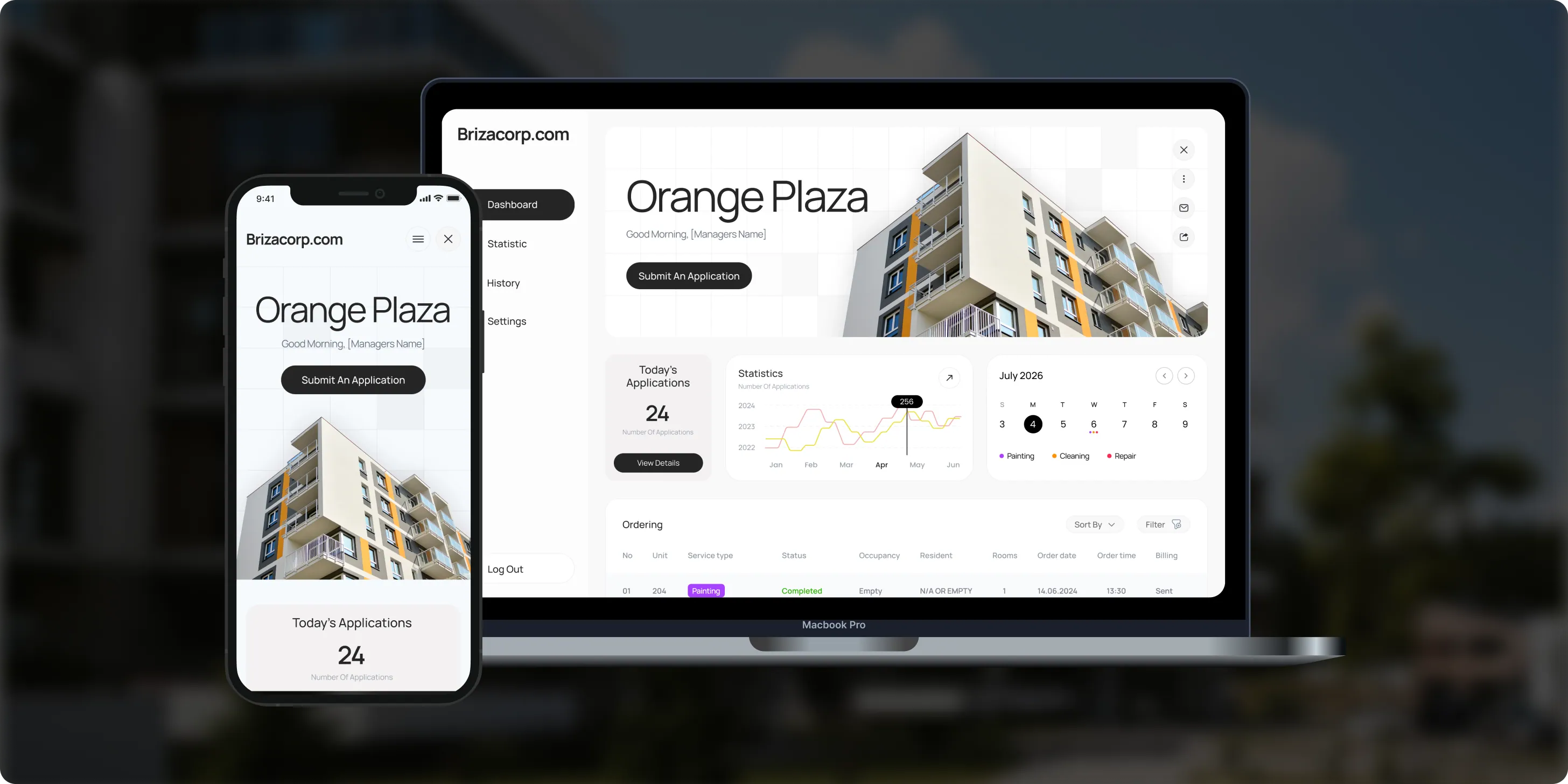
Brizacorp manages residential properties and coordinates the staff who handle painting, cleaning, and repair requests. Its team tracked work across messengers, phone calls, e-mail, and paper planners, with no single place to manage requests or measure performance.- 98%Application Stability
- 95%Utilization Rate
- 30%Faster Task Completion
Risks in a Claude Code rollout, and how we handle them
Each risk gets a setting or a habit before engineers use Claude Code on real work.

How we keep your code safe with Claude Code
Inside the permissions you set
Admins enforce managed settings that engineers cannot override, and every change still goes through your normal review and CI. For company rules on AI coding tools, see AI governance and compliance. SoftDoes carries general liability, professional liability (errors and omissions) and cyber liability insurance; a certificate of insurance is available on request.
Managed permissions
Managed permissions define what Claude Code may read, run and change, and local configuration cannot overwrite them.
Permission mode
Admins can set the default permission mode in managed settings and turn off auto mode for the organization.
Sandboxing
Sandboxing isolates shell commands at the file system and network level where you need it.
Routes and proxy
Managed settings can limit which deployment routes a machine may use, and traffic can run through your proxy.
Your own monitoring
OpenTelemetry export sends usage and cost data to your own monitoring, with prompt text redacted by default.
Commercial terms
Team, Enterprise and API use falls under Anthropic's Commercial Terms. Anthropic's Trust Center lists its SOC 2 Type 2 report and ISO 27001 certificate.
Claude Code enterprise deployment options
Companies run Claude Code through Anthropic's plans or through their own cloud. Anthropic recommends Claude for Teams or Enterprise for most organizations.
From Anthropic's Claude Code deployment guide, read November 2026. Only the Teams and Enterprise plans include Claude on the web.
How to choose a Claude Code consulting partner
Ask these questions before you book setup or training. A strong partner answers each one in writing.
Questions to ask, and what a good answer includes
- Will the course run in our repositories? Yes, on real tickets, with your settings and permissions in place.
- What will you configure before day one? Seats, managed settings, CLAUDE.md files and approved MCP servers.
- What is your relationship with Anthropic? Partner status they can show, such as Claude Partner Network membership.
- Who owns the settings and skills? You do, in your repositories and accounts.
- How will we measure adoption? Usage dashboards or OpenTelemetry metrics, reviewed at the follow-up.
- Can you set up Claude Code on our cloud? Yes, on Amazon Bedrock, Google Cloud or Microsoft Foundry, with pinned model versions.
- What paperwork comes first? An NDA and a certificate of insurance before the first call.
What Claude Code consulting costs
Fixed prices, agreed before work starts. Seats are billed by Anthropic, or by AWS, Google Cloud or Microsoft if Claude Code runs there.
Claude Code rollout
Setup plus a 2-day course, 12 engineers
From $4,500
Custom MCP server
For an internal tool
From $4,000
Code assessment
Before a modernization project
$4,500 fixed
Maintenance and support
After the course
From $500 a month
Project Discovery
Credited to the build
$490
Why teams pick SoftDoes as their Claude Code expert
Teams pick SoftDoes as their Claude Code expert because every setting, skill and MCP server we build stays in their own repositories. We are a Claude Partner Network member, rated 5.0 on Clutch from 40 client reviews.

- 01
Claude Partner Network member
We roll out Claude and build on the Claude API as a member of Anthropic's partner network.
- 02
Vendor documents first
Our NDA and certificate of insurance reach your procurement team before the first call.
- 03
You own the setup
Every setting, skill and MCP server we build lives in your repositories and accounts.
- 04
Rated 5.0 on Clutch
5.0 from 40 client reviews, 36 verified by Clutch. More than half of the reviewers are founders, executives or department heads.
- 05
Top AI Company in Kansas City
Clutch named SoftDoes a Top Artificial Intelligence Company and a Top Machine Learning Company in Kansas City for 2026.
- 06
Frontier AI experience
The team has worked with frontier AI labs and some of the largest data providers.
Claude Code for teams by industry
The same setup, adjusted to each industry's rules on code, data and audit. Each industry page shows our wider AI work there.
Healthcare
Deny rules for folders that hold patient data, and deployment through your own cloud account.
Financial services
Claude Code through your cloud, with the IAM policies and audit logs your reviewers already use.
Insurance
Managed permissions and pinned models for teams that maintain claims and policy systems.
Government
Deployment through an approved cloud account, with audit logs and a proxy for all traffic.
Logistics
Shared skills for the integration and data jobs that carrier and warehouse systems need.
Construction
Tests and small fixes on project, bid and contract apps, with code review unchanged.


Questions about Claude Code training
Plans, the course, security and cost. Can't find your answer?
Is Claude Code included in Claude Team and Enterprise plans?
Yes. Anthropic includes Claude Code with every Team plan seat, and premium seats add more usage for heavier workloads. New and self-serve Enterprise plans include it in the standard seat. Admins can also turn on usage credits, so engineers keep working after they reach their included limits. We help you choose the right seats.
What does Claude Code training cover?
Day one covers daily work: codebase questions, bug fixes, tests and pull requests from your own backlog. Day two covers team workflows: planning larger changes, subagents, shared skills, hooks and automated code review in CI. Every exercise runs in your repositories, with your CLAUDE.md files and permissions already in place.
Can we run Claude Code through AWS, Google Cloud or Azure?
Yes. Besides Claude Team and Enterprise plans, Claude Code can run through Amazon Bedrock, Google Cloud's Agent Platform or Microsoft Foundry, billed through that cloud. That route uses your cloud's identity, logging and cost tools. We set up the route your security team prefers and pin model versions, so upgrades happen when you decide.
How do we keep Claude Code safe in our codebase?
Security teams can set managed permissions for what Claude Code may and may not do, and local settings can't override them. We also limit which deployment routes each machine may use and send traffic through your proxy if required. Engineers still review every change before it merges, as they would for a colleague.
How much does Claude Code training cost?
Our Claude Code rollout starts at $4,500, covering setup and a 2-day course for up to 12 engineers. A custom MCP server for an internal tool starts at $4,000. Seats are billed by Anthropic, or by your cloud provider if you run Claude Code there. All prices are fixed before work starts.
Do we need Claude Code consulting or only training?
Most teams need both, in that order. Consulting sets up seats, managed permissions, CLAUDE.md files and MCP servers, so the tool works safely in your codebase. Training then teaches engineers to plan, review and automate with it. Our rollout covers both for up to 12 engineers, starting at $4,500.
What is Claude Code?
Claude Code is Anthropic's agentic coding tool. It reads your codebase, edits files, runs commands and works with tools such as git, GitHub and GitLab. Engineers use it in the terminal, VS Code, JetBrains IDEs, a desktop app or the browser. A CLAUDE.md file in each repository tells it your standards at the start of every session.
Is Claude Code free?
No. Claude Code is not part of the free Claude plan. Anthropic includes it in the paid Pro, Max and Ultra plans and in Team and Enterprise seats. Companies can also pay per token through the Anthropic Console, Amazon Bedrock, Google Cloud or Microsoft Foundry. Anthropic's Claude Academy courses on Claude Code are free.
How much does Claude Code cost per month?
On Anthropic's pricing page, a Claude Team standard seat costs $20 a month billed annually, or $25 monthly. A premium seat with 5 times the usage costs $100, or $125 monthly. Enterprise charges a seat price plus usage at API rates. Anthropic's cost guide puts the average across enterprise deployments at $150 to $250 per engineer a month.
Who should attend Claude Code training?
Engineers who will use Claude Code every day, plus the lead who owns your shared settings and files. Mixed levels work well, because exercises run on real tickets of different sizes. Product managers and QA engineers can join for the planning and review parts. People outside engineering fit better in our AI training for employees.
Can you train more than 12 engineers?
Yes. The rollout price covers setup and a 2-day course for up to 12 engineers, and larger teams train in more groups. The setup is shared, so later groups start from the same settings and files. We price extra groups in the written plan before work starts, so the full cost is fixed in advance.
Do engineers need AI experience before the course?
No. Engineers need to know your codebase and your normal workflow, not AI. Day one starts with codebase questions and small fixes, as Anthropic's deployment guide recommends for new users. Day two moves to larger changes, subagents, skills and automated review. Engineers who already use Claude Code learn the team setup and the shared files.
Does Claude Code work with our IDE?
Yes, for the common ones. Anthropic offers a VS Code extension, which also installs in Cursor, and a plugin for IntelliJ IDEA, PyCharm, WebStorm and other JetBrains IDEs. Engineers can also use the terminal, the desktop app or the browser. Every surface reads the same CLAUDE.md files, settings and MCP servers, so the team setup works everywhere.
How do we measure Claude Code adoption?
On Team and Enterprise plans, Anthropic's analytics dashboard shows daily active users, sessions and contribution metrics, with CSV export. On any plan or cloud, Claude Code can export OpenTelemetry metrics such as sessions, lines changed, pull requests, commits, tokens and cost. We set up the view your leads need and review it at the follow-up.
Updated · Reviewed by Orest Andrusyshyn, Founder and CEO


