
U.S.-Based
Claude API integration for your software
We build Claude into your products and back-office systems through the Anthropic API. It reads documents, calls your tools and updates records after a person approves.
$4,000
Starting price of a custom integration or MCP server
40
AI projects delivered since 2020
5.0
Clutch rating from 40 reviews



















How a Claude API integration runs
We approach AI and machine learning as engineering disciplines, not experiments. Our process is designed to move from clear business goals to production-ready models that deliver measurable results.
A contract arrives
A signed PDF lands in the shared inbox or upload folder.
Claude extracts the terms
It returns JSON that matches your schema and cites the source passage.
Legal checks the citations
A reviewer confirms each field against the quoted text.
The record updates
Terms and dates are saved to your CRM with a log entry.
Claude API integration, in short
- Kansas City metro software and AI company, Claude Partner Network member
- Claude API integrations for mid-market companies and software teams
- AI features, document extraction and agents
- Builds from $4,000, model usage billed at cost to your own account

Build in your code. Pay usage at cost.
- 01Build priceFrom $4,000: a custom integration or MCP server
- 02Model usageBilled at cost on your own Anthropic or cloud account
- 03Claude for your staffWorkspace rollout with single sign-on and data rules is a separate service
- 04You keepPrompts, tools, MCP servers and code in your repositories
What is the Anthropic API?
The Anthropic API, also called the Claude API, lets your software send requests to Claude models and act on the answers. Usage is billed per token, separately from Claude app subscriptions. A Claude API integration connects that API to your own product or back-office systems: Claude reads documents, calls the tools you define and returns data your code can check.
What a Claude API integration includes
Prompts, tool definitions and output schemas kept in your codebase. Access to your data through your APIs, databases or a custom MCP server.
Control and cost
Approval steps where a person signs off on risky changes, a log of every request, answer and model version, and spend limits, caching and batch jobs that keep usage costs in check.
Messages API or Claude Managed Agents
Anthropic offers two ways to build. The Messages API gives direct control of each request and suits custom agent loops. Claude Managed Agents runs a ready agent harness on Anthropic's infrastructure and suits long-running, asynchronous work.
Which Claude model to use
Fable 5.2 is for demanding reasoning and long-horizon agentic work, at $8 and $40 per million input and output tokens. Opus 5.5 is for long-running agentic coding and knowledge work, at $4 and $20; Anthropic suggests starting with it for most workloads. Sonnet 5.5 is the best combination of speed and intelligence, at $2 and $10. Haiku 5.5 is for high-volume, latency-sensitive tasks such as classification, extraction and routing, at $0.10 and $0.50 for prompts up to 100,000 tokens. Anthropic's list prices, read November 2026: batch requests cost 50% less, and cache reads cost a small fraction of the input price. We test two or three models on your real examples and compare accuracy and cost per task before we choose.


Types of Claude API development we deliver
Seven common Claude builds, what each one does and where it fits. Each price is a starting point from our price list; connecting an existing Claude connector costs $1,500 per app, and model usage and hosting are billed at cost on your own accounts.

AI feature in your product
Adds drafting, summaries or search to an existing screen. Fits when users repeat a writing or reading task.
Document extraction with citations
Reads PDFs and scans, then returns checked fields and the source passage. Fits when staff retype data from documents.
Chatbot on your documents
Answers staff or customers from your own content. Fits when the same questions arrive every day.
AI search over your documents
Finds answers in your files, with links to the sources. Fits when people hunt through shared drives.
Agent with tool use, 1 or 2 systems
Calls your APIs to look up or change records, with approvals. Fits when a task spans more than one system.
Agent with 3 or more systems
Coordinates work across several systems. Fits when a process crosses many teams' tools.
Custom MCP server
Opens your system to Claude and other AI tools. Fits when your team already works in Claude.
Where Claude runs and what it connects to
We call Claude on the Anthropic API or through your cloud, then connect it to your business systems.
When a Claude API integration pays off
A Claude API integration pays off when a text-heavy task repeats hundreds of times a month inside software you control. Reading, extracting and drafting are the usual first wins.
Signs we see before a team asks for a Claude build:
- Staff read long documents to pull out a few fields or dates.
- Answers must cite their source, for legal, audit or customer trust reasons.
- Your product competes with tools that now offer AI inside the app.
- A Claude prototype works in a demo but has no logging, limits or tests.
- Back-office work arrives in batches that don't need instant answers.
When to wait
If your staff mainly need a chat assistant, a Claude workspace costs less than a build; our Claude implementation service rolls it out with single sign-on and data rules. If your data sits in many places and nobody owns it, start with an AI readiness assessment before any Claude build.
What to prepare
A set of real examples (such as 50 past documents, tickets or forms), read access to the system's API or database or a sample export, a Claude Console organization on your company's account (or a plan to create one), one owner who can say what a good answer looks like, and the measure that matters: hours saved, turnaround time or error rate.
What we build with the Anthropic API
Six builds we deliver most, each tested on your own documents and data before launch.
AI features inside your product
Drafting, summaries, search and chat inside your web or mobile app. Prompt caching cuts the cost of repeated context. For example, a drafting button in your CRM that writes a follow-up email from the account history.
Document reading with citations
Claude reads PDFs, images and tables, returns JSON that matches your schema, and cites the passage behind each answer. For example, Claude reads a 40-page lease and returns the rent, term and notice dates, each with the clause it came from.
Tool use and agents
We define tools for your APIs. Claude asks to call them, your code runs them, and risky changes wait for approval. For example, Claude looks up an order through your API, drafts a refund and waits for a support lead to approve it.
MCP servers for your systems
Custom MCP servers give Claude scoped access to your CRM, ERP or database, under rules your IT team sets. For example, your team asks Claude for this week's open orders, and the MCP server reads them from your ERP.
Batch jobs at half price
Large back-office runs, such as tagging a year of support tickets, go through batch processing at half the standard price. For example, a year of support tickets tagged by topic in one batch job.
Long-document analysis
Current Claude models accept up to 1 million tokens in one request, roughly 555,000 words, so long files stay whole. For example, a full contract and all its amendments compared in one request, without splitting the files apart.
What you get from a Claude API build
You get a working Claude integration and everything needed to run it without us. The code, prompts, tests, dashboards and runbook all sit on your own accounts.




Claude API integration ROI: a worked example
A Claude integration pays back when the hours it saves cost more than the build and the model usage. This example uses assumed numbers and Anthropic's list prices, not a client result: at these numbers, the build pays for itself within the first month, and model usage is a small line. Running the same work through batch processing would cut that usage cost in half. Estimate Claude usage for your own volumes with the LLM cost calculator, then test the payback in the AI ROI calculator. After release we track quality and cost on the live integration, so you see the real saving next to this estimate.
How Claude API development runs
Four steps from the first call to a monitored production release.
We pick one workflow and define what Claude reads, what it writes and who approves it. You see the plan and the price before any code. You get a written scope and a fixed price.
We build the prompts, tools and output schema, then measure accuracy on samples of your real data. Two or three Claude models are compared on the same test set. You get an accuracy report on your own data.
We connect Claude to your systems through the API or an MCP server, with logs and approval steps. Each tool gets only the access its task needs. You get a working integration in your test environment.
We release to production, track cost and quality, and tune prompts and caching as volume grows. The first Claude release goes to a pilot group behind a flag. You get a production release with dashboards and a runbook.
AI work in production
Both builds below follow the pattern we use in Claude API work: the AI drafts, a person approves and the system records it.

- Healthcare
Prior Authorization AI
Prior Authorization AI is a healthcare automation startup building AI-powered tools to streamline prior authorization for Medicare and Medicaid medical transportation providers in New Jersey.- 16Weekly hours saved
- 63%Admin time reduced
- 43%Fewer submission errors

- Startup
- Real Estate
Our Haus AI
A finance professional turned founder built Our Haus AI, an AI-powered collaborative workspace where homeowners and contractors scope, bid, contract, and document renovation projects together. SoftDoes took her prototype and made it production-ready.- 10XMVP scope delivered
- 2+years Ongoing partnership
- 1Fully owned Platform

- Real Estate
The building buyer
The Building Buyer is a Florida-based real estate investment firm co-founded by Dylan Troiano and Charles Hanlin. They acquire single-family, multifamily, and commercial properties across South Florida and beyond, with a focus on motivated seller opportunities.- 18Weekly hours saved
- 2+Years Ongoing partnership
- 1Fully owned Platform

- Healthcare
CareInTouch
CareInTouch is a Bay Area home health agency providing skilled nursing and therapy services to patients referred from hospitals and clinics. With over 100 staff, they operate in one of the most complex and compliance-driven healthcare markets in the country.- 40% Reduction In Billing Errors
- 100+Staff Operations Managed
- 0Missed Compliance Deadlines

- Startup
Sparkle The Cleaning Service
Sparkle The Cleaning Service is a Detroit-area residential cleaning company with 10 years in business, connecting homeowners with vetted, insured independent cleaners through a subscription-based marketplace platform.- 75% Platform Transparency
- 2XPlatform Growth
- 40%Higher User Retention

- Healthcare
FMY Orthodontics
FMY Orthodontics, a multi-location practice in West Tennessee, partnered with SoftDoes to replace a spreadsheet-based financial workflow with a custom web platform. The goal was to simplify how staff present treatment financing while allowing patients and families to review and complete decisions remotely.- 60%Workflow Reduction
- 75%Remote Adoption
- 5Locations Aligned

- Real Estate
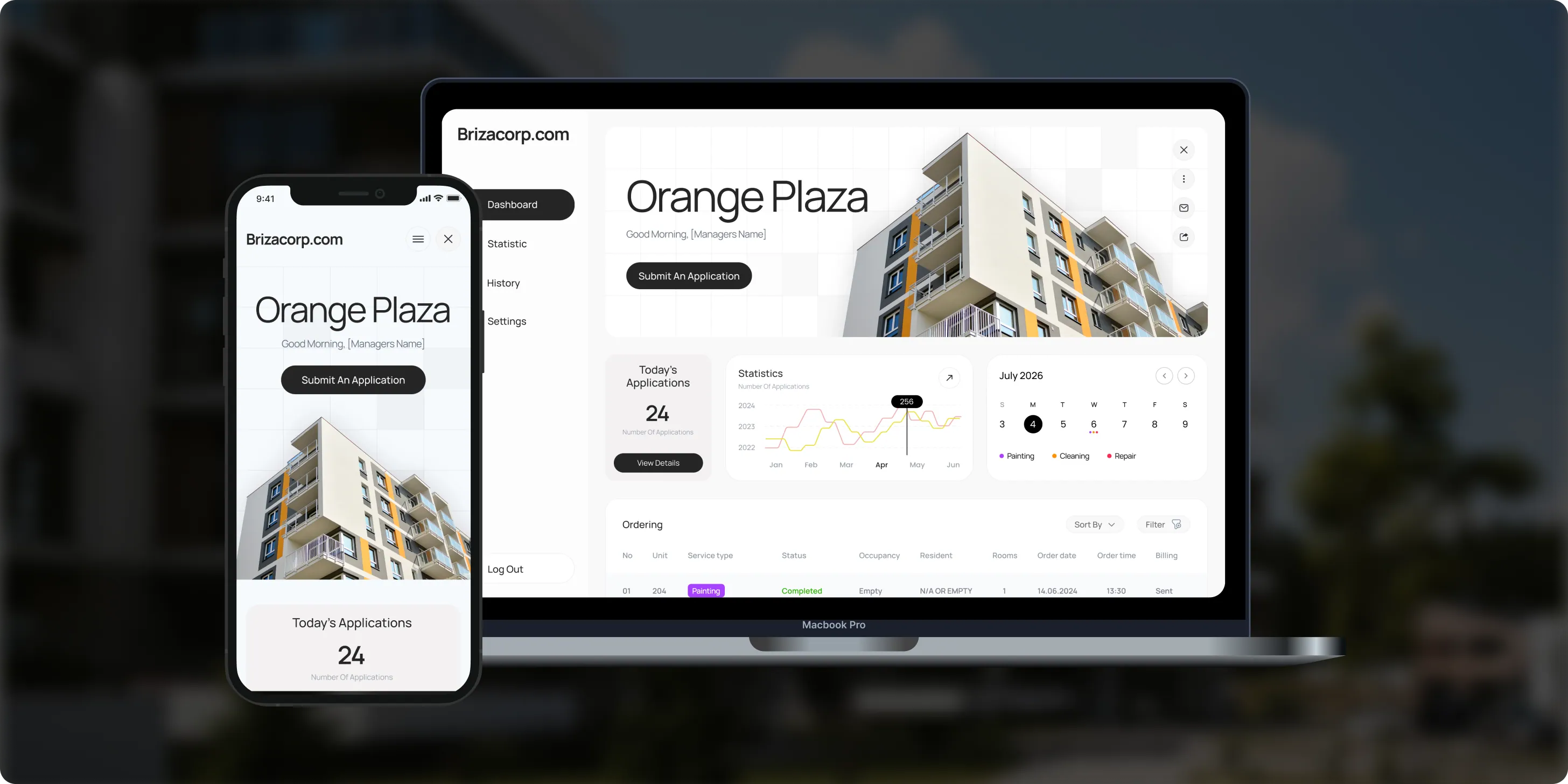
Brizacorp
Brizacorp manages residential properties and coordinates the staff who handle painting, cleaning, and repair requests. Its team tracked work across messengers, phone calls, e-mail, and paper planners, with no single place to manage requests or measure performance.- 98%Application Stability
- 95%Utilization Rate
- 30%Faster Task Completion
Risks in a Claude API integration, and how we handle them
Each risk gets a control in code before release, not a promise in a slide.

How we keep data safe with the Claude API
On your own account
Claude runs on your own Anthropic or cloud account, under your agreement with that provider, and each request sends only the data a task needs and leaves a log entry. On Amazon Bedrock, Anthropic says its staff have no access to the inference infrastructure. When data must stay inside your own cloud, see our private AI service. For company rules on how teams may use Claude, see AI governance and compliance.
No training on API data
Anthropic states that it does not use inputs or outputs from its API to train its models by default.
Zero data retention
Zero data retention is available for eligible features, by arrangement with Anthropic's sales team.
HIPAA-ready access
HIPAA-ready API access is available to eligible organizations that sign Anthropic's business associate agreement.
US-only inference
US-only inference is available on Claude 4.6 and later models, at 1.1 times the standard token price.
Separate workspaces
Workspaces separate projects and environments, each with its own API keys and limits.
API keys kept safe
API keys get an expiration date and stay in your secrets manager, never in code, prompts or browsers.
How to choose a Claude API development company
Ask any Claude API development company these questions before you sign, and expect written answers.
Questions to ask, and what a good answer includes
- Are you a Claude partner? Membership in Anthropic's Claude Partner Network.
- Whose account will usage run on? Yours, billed at cost, with no markup on tokens.
- How will you test accuracy? A written test set from your data and a pass mark agreed before the build.
- How will you control cost? Spend limits, caching, batch jobs and a cost estimate per task.
- What happens when Anthropic retires a model? Pinned versions, a test-set rerun and a planned switch.
- Where will the code live? In your repository from the first day, with prompts and tests.
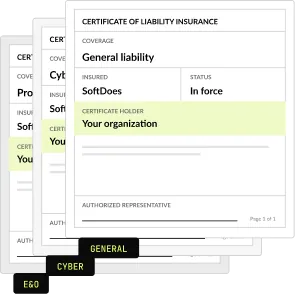
- What paperwork comes first? An NDA and a certificate of insurance before the first call.
What a Claude API integration costs
A fixed price for each build, agreed before work starts. We never resell usage: Claude runs on your own Anthropic or cloud account, billed at cost. See AI agent development cost.
Custom integration, AI feature or MCP server
One integration or feature
From $4,000
AI agent, 1 or 2 connected systems
With approval steps
From $7,000
Connect an existing Claude connector
Per app
$1,500
Maintenance and support
After launch
From $500 a month
Project Discovery
Credited to the build
$490
Why teams build on Claude with SoftDoes
Teams build on Claude with SoftDoes because we work on the Claude API as a Claude Partner Network member. Each team keeps every prompt, tool and MCP server we write.

- 01
Claude Partner Network member
We build on the Claude API and roll out Claude as a member of Anthropic's partner network.
- 02
Vendor documents first
Our NDA and certificate of insurance reach your procurement team before the first call.
- 03
You own the code
Prompts, tools, MCP servers and code live in your repositories and accounts, with full admin access.
- 04
40 AI projects since 2020
AI work in production since 2020, from document extraction to filing through Medicare's API.
- 05
Rated 5.0 on Clutch
5.0 from 40 client reviews. Clutch named SoftDoes a Top Artificial Intelligence Company and Top Machine Learning Company in Kansas City for 2026.
- 06
Kansas City headquarters
Headquartered in Mission, KS, in the Kansas City metro. Call 800-909-2345 to reach the team.
Claude API integration by industry
The same Claude patterns, built around each industry's records and rules. Each industry page shows its AI use cases and the compliance steps a Claude build must meet.
Healthcare
Prior authorization, intake and records work, on Anthropic's HIPAA-ready API access where your agreement covers it.
Financial services
Document checks, research summaries and reporting, with an audit log for every Claude step.
Legal
Contract review and intake, with a citation to the clause behind every extracted term.
Insurance
Claims documents read and summarized, with a person approving every payout decision.
Logistics
Shipment documents and exception emails read and routed across carrier and warehouse systems.
Construction
Scopes, bids and contracts drafted from project details, with both sides approving.


Questions about Claude API integration
Scope, cost, models, data and where Claude runs. Can't find your answer?
What does a Claude API integration involve?
Your software sends requests to Claude through the Anthropic API and acts on the answers. We design the prompts, define tools for your systems, set the output schema and add approval steps for risky changes. Then we test accuracy on your own samples, connect it to production systems and monitor cost and quality after launch.
How much does a Claude API integration cost?
Our builds start at $4,000 for a custom integration or MCP server, and AI agents with one or two connected systems start at $7,000. Model usage is billed separately by Anthropic or your cloud provider, at cost, on your own account. Maintenance starts at $500 a month. Any project can start with Project Discovery: $490, credited to the build.
What is the difference between the Claude API and the Claude app?
The Claude apps are for people: staff type questions and work with Claude directly. The Claude API is for software: your code sends requests, receives answers and runs tools, billed by usage. Many companies need both. We build on the API, and our Claude implementation service rolls out the apps to employees.
Can Claude connect to our internal systems?
Yes. Claude can call tools that you define, and your code runs each call against your own APIs. Anthropic's MCP connector reaches remote MCP servers, and MCP tunnels connect to servers inside a private network without opening inbound ports. We build the tools or MCP servers and scope each one to the data a task needs.
Can we run Claude on AWS, Google Cloud or Azure?
Yes. Claude models are available in Amazon Bedrock and on Google Cloud, and Microsoft Foundry lists Anthropic models in its catalog. Feature support differs by platform, so we check each feature you need before choosing. See our Amazon Bedrock and Vertex AI pages for cloud builds.
How do you keep our data safe with the Claude API?
Claude runs on your own account, under your agreement with Anthropic or your cloud provider. The Claude Platform offers data residency controls, and Anthropic lists which features qualify for zero data retention and HIPAA readiness. We add scoped tool access, approval steps for risky changes and a log of what Claude reads and changes.
What is the Anthropic API?
The Anthropic API, also called the Claude API, gives software access to Claude models. Your code sends a request with text, images or documents, and Claude returns an answer, a tool call or structured data. Anthropic bills usage per token. Companies use it to build AI features, document extraction and agents into their own systems.
Can I use the Anthropic API for free?
Only to test it. Anthropic gives new users a small amount of free credits, and Claude Max, Ultra and Team plans include monthly API credits. After that, most organizations buy prepaid credits, and some arrange monthly invoicing through Anthropic sales. Anthropic charges only for successful API calls, not for failed requests.
Is the Anthropic API expensive?
It depends on the model and the volume. Anthropic's list prices run from $0.10 per million input tokens on Claude Haiku 5.5 to $8 on Claude Fable 5.2. Batch requests cost half, and cache reads cost a small fraction of the input price. Estimate your own volumes with our LLM cost calculator.
Is Anthropic better than ChatGPT?
It depends on the task, your data rules and your budget. Anthropic and OpenAI both offer several models at different prices. We test both on your real examples and compare accuracy, speed and cost per task before you commit. Our Claude vs ChatGPT guide compares them for business use.
How do I get a Claude API key?
Create a Claude Console account for your organization, then create an API key on its API keys page. The Console is also where you add team members, set up billing and test prompts. Anthropic advises setting an expiration on each key and keeping it out of source control, client-side code and prompts.
Which Claude model should we use?
Anthropic suggests Claude Opus 5.5 for most workloads and Claude Fable 5.2 for the hardest reasoning and long agent runs. Claude Sonnet 5.5 balances speed and intelligence, and Claude Haiku 5.5 suits high-volume classification and extraction. We test two or three Claude models on your real examples before choosing.
What are the Claude API rate limits?
Anthropic sets limits by usage tier, and organizations move up tiers automatically as they build usage history. Each tier has a monthly spend cap: $500 on Start, $1,000 on Build and $200,000 on Scale. Higher limits can be requested in the Claude Console, and you can set lower spend limits per workspace.
Does Anthropic use our API data to train its models?
Not by default. Anthropic states that it does not use inputs or outputs from its commercial products, including the API, to train its models. Data can be used only if you choose to share it, for example by sending feedback. Zero data retention is also available by arrangement for eligible features.
Can Claude read long documents?
Yes. Current Claude models accept up to 1 million tokens in one request, which Anthropic puts at roughly 555,000 words. Claude can read PDFs with their text, tables and charts, and cite the passage behind each answer. For very large collections, we pair Claude with search, so each request reads only the relevant files.
Updated · Reviewed by Orest Andrusyshyn, Founder and CEO