
U.S.-Based
AI Tutor Software Development
AI tutor software development by SoftDoes: custom AI tutors grounded in your curriculum, with child-safe guardrails and teacher controls.

Let's build together.
Talk with a senior engineer about your product idea, architecture, and what it would take to build it.
90+
Active Client Partnerships
80+ Person
Product & Engineering Team
100%
Your Code & IP Ownership
U.S.-Led
Delivery & Accountability
We understand the challenges you're facing
Why does a general AI chatbot explain topics differently from our textbook and know nothing about where each student is struggling?
A general-purpose chatbot has no idea what your textbook says on page 47 or that a particular student has failed the same type of fraction problem three times this week. Custom AI tutor software development solves this by grounding the tutor in your own content - courses, textbooks, question banks, rubrics, video transcripts, and solution walk-throughs - through retrieval-augmented generation (RAG). SoftDoes builds a curriculum knowledge graph where nodes represent learning objectives, skills, and standards (Common Core, NGSS, CEFR, or your proprietary framework), edges capture prerequisites, and leaves link to tagged content chunks with source metadata and difficulty ratings. Learner data flows in from your LMS or platform - assignments submitted, quiz results, hints used, mastery levels - to feed a learner model that the tutor consults before generating every response. Effective AI tutors rely on personalized learning models that identify specific learner struggles and gaps, and this architecture ensures each explanation matches the curriculum, each answer cites where it came from, and the tutor adapts to where each student actually is. The result is an AI tutor experience that feels like a knowledgeable teaching assistant who has read every page of your course materials and reviewed every student's recent work.
Our learners include children, and schools ask hard questions about data and AI. How do we make an AI tutor they can trust?
Maintaining strict adherence to data privacy and compliance is crucial for platforms involving learners' data - especially when those learners are minors. SoftDoes builds safety into every layer: age-appropriate content filters that block harmful or adult topics, prompt-injection defenses, topic boundaries enforced by policy-driven rules, and escalation flows for concerning messages (self-harm signals, bullying language) agreed with the school or client before launch. Privacy controls include encryption in transit and at rest, configurable data retention windows, role-based access for teachers and administrators, parent visibility into usage summaries, and strict contractual rules against using learner data to train third-party models. We design for alignment with FERPA, COPPA, CIPA, state student privacy laws (including stricter state frameworks in California and New York), GDPR, the UK Age Appropriate Design Code, the EU AI Act's transparency and high-risk classification rules for AI systems that assess learners, and WCAG 2.1 AA accessibility standards, drawing on guidance from the NIST AI Risk Management Framework and ISO/IEC 42001 where relevant. Every conversation is logged with full audit trails, and documented model behaviors, content redaction, and pseudonymization practices give school boards, regulators, and parents the transparency they need before a single student logs in.
Can we add an AI tutor to our existing LMS or app without rebuilding everything or getting locked into one AI vendor?
You can. SoftDoes builds the AI tutor as an API-first service that embeds in your existing web or mobile apps through SDKs or web components, launches inside Canvas, Moodle, or Google Classroom via LTI 1.3, and authenticates learners through your existing SSO (SAML, OAuth). Underneath sits a model-agnostic layer that abstracts LLM providers - OpenAI, Anthropic, Google, Mistral, or open-source models like Llama served through Azure OpenAI, Amazon Bedrock, or Google Vertex AI - behind adapters driven by metadata on context window, cost, latency, region, and data residency requirements. AI coding platforms support languages like React, Node.js, and Ruby, and the same principle applies here: your content is prepared and tagged by skill, difficulty, and standard, with embeddings stored in vector databases such as pgvector, Pinecone, or Weaviate, and learner progress data connected through your APIs or xAPI. SoftDoes typically runs phased rollouts - start with one subject or grade band, pilot with selected classes, and scale to more subjects, programming languages, voice, and new modalities once integration is stable and teachers confirm the tutor behaves as expected.
Why do students use AI to copy answers, while teachers have no idea what the AI is telling their class?
This is a design problem, not a model problem. Socratic guidance in AI tutoring encourages learners to think independently instead of providing direct answers, and SoftDoes shapes this behavior through user and pedagogy research with learners of different ages, teachers, parents, and learning designers before writing a single prompt. AI tutors enhance learning by providing scaffolding to reinforce concepts before moving on to complex topics. The learner-facing UX offers a chat with hint ladders, worked examples, step-by-step feedback, adaptive practice, and voice mode for young learners and language practice, with clear signals that responses are AI-generated. Educators get a teacher dashboard where they set goals, topics, and answer-giving rules, review conversations, control exam and homework modes, and receive parent-facing summaries - so an instructor always knows what the AI is telling their class. SoftDoes UX practice includes tone tuned to age group, rich support for math (LaTeX rendering, step checking) and code, diagram layouts, accessible designs that meet WCAG standards, and interfaces that build confidence rather than dependence.
How do we know the tutor really improves learning, and will AI costs explode as usage grows?
To enhance educational effectiveness, AI tutors need to undergo continuous evaluation and development based on learner outcomes. SoftDoes builds an evaluation framework from the start: curated test sets per subject built with your experts, automated runs that check accuracy and safety before every model, prompt, or content index change, human review of sampled conversations, learning outcome tracking (mastery progression, grades, course completion), and A/B testing to compare tutor variants. Cost-control techniques include model routing - using smaller, cheaper models for simple hints and reserving powerful models for complex explanations or safety filtering - caching frequently asked questions, summarizing or truncating long session histories, and setting usage limits per learner, class, or school. Extensibility is built in: versioned APIs, feature flags, and plug-in points let teams add new subjects, languages, voice input, image input (photos of handwritten work), and AI agents for teachers without rebuilding the core. SoftDoes delivers documentation and configuration tools so your product and content teams can adjust prompts, content sources, skill tags, and teaching rules without needing a new development engagement each time.
You own the learning. We engineer the AI tutor behind it.

Custom AI tutors and learning assistants
We build custom AI tutors around your curriculum, brand voice, and pedagogy - not a thin skin over a general chatbot. Core components include a tutoring dialogue engine with hint ladders, RAG over vetted content, a learner model with mastery tracking, practice and quiz generation, step checking for math and code, voice I/O, a safety and moderation layer, and teacher and parent controls. AI Tutor supports programming in Python, JavaScript, and more, and the same grounding architecture works for any subject.
Step-by-step guidance that adapts to each learner's mistakes and pace.
Answers grounded in and citing approved course materials and question banks.
Teacher controls for topics, tutor strictness, answer-giving rules, and exam modes.

AI teaching assistants and content tools for educators
AI tools for educators generate lessons, practice sets, quizzes, and rubrics aligned to standards and your existing curriculum structure - saving teachers hours of preparation time. Workflows let AI draft feedback on student work, suggest interventions, and summarize class progress, always with human review before learners see outputs. AI Tutor reduces repetitive help requests for teachers, freeing them to focus on deeper instruction and individual support.
Standards-aligned question and lesson generation from your own materials.
Draft feedback on essays and code with rubric-based comments for teacher approval.
Dashboards summarizing common misconceptions and suggested reteaching topics.

AI evaluation, safety, and learning analytics
SoftDoes builds the systems that keep an AI tutor trustworthy over time: automated evaluation pipelines, safety red-teaming, conversation monitoring, and learning impact dashboards. Evaluation covers correctness (factual and procedural - no made-up facts or wrong math), adherence to teaching rules (does the tutor guide instead of giving answers?), and safety policy compliance, with clear escalation paths and human review loops.
Automated evaluation runs before every model, prompt, or content index change.
Safety dashboards with flagged conversations for educator or safety-team review.
Learning analytics linking tutor usage to mastery, grades, or course completion metrics.
Numbers Don’t Lie
Recent projects showcasing how we design, engineer, and deliver production-ready software solutions.

- Startup
- Real Estate
Our Haus AI
A finance professional turned founder built Our Haus AI, an AI-powered collaborative workspace where homeowners and contractors scope, bid, contract, and document renovation projects together. SoftDoes took her prototype and made it production-ready.- 10XMVP scope delivered
- 2+years Ongoing partnership
- 1Fully owned Platform

- Finance
- Energy
Deepwater Insights
Deepwater Insights delivers proprietary alternative data and niche research on the offshore drilling and energy sector to institutional investors, family offices, and high-net-worth individuals who require coverage that larger firms don't provide.- 100%Brand Continuity
- 2Platform Distribution
- 100%Paywall-Ready Content

- Real Estate
The building buyer
The Building Buyer is a Florida-based real estate investment firm co-founded by Dylan Troiano and Charles Hanlin. They acquire single-family, multifamily, and commercial properties across South Florida and beyond, with a focus on motivated seller opportunities.- 18Weekly hours saved
- 2+Years Ongoing partnership
- 1Fully owned Platform

- Education
- Non-Profit
WOVEN & NICE
Woven is a Spring Valley, NY nonprofit running the NICE program (New Training Inclusive Community Environment) in four Rockland County schools. Their team supports students through restorative practices, mediation, and professional development for teachers and administrators.- 4Schools Served
- 4Weeks to Launch
- 1STTime on Upwork

- Healthcare
CareInTouch
CareInTouch is a Bay Area home health agency providing skilled nursing and therapy services to patients referred from hospitals and clinics. With over 100 staff, they operate in one of the most complex and compliance-driven healthcare markets in the country.- 40% Reduction In Billing Errors
- 100+Staff Operations Managed
- 0Missed Compliance Deadlines

- Startup
Sparkle The Cleaning Service
Sparkle The Cleaning Service is a Detroit-area residential cleaning company with 10 years in business, connecting homeowners with vetted, insured independent cleaners through a subscription-based marketplace platform.- 75% Platform Transparency
- 2XPlatform Growth
- 40%Higher User Retention

- Startup
DineMate
DineMate is a Maryland-based dating and connecting platform built around verified profiles, restaurant reservations, and prepaid dining experiences. Founded to bring back authenticity to how people meet and connect.- 60% Time Saved
- 99%System Reliability
- 40%Higher User Retention

- Healthcare
Prior Authorization AI
Prior Authorization AI is a healthcare automation startup building AI-powered tools to streamline prior authorization for Medicare and Medicaid medical transportation providers in New Jersey.- 16Weekly hours saved
- 63%Admin time reduced
- 43%Fewer submission errors

- Education
Grand Central Language Services
Grand Central Language Services provides translation and interpretation for organizations operating in complex, multilingual environments. As demand grew, internal workflows became harder to manage. SoftDoes built a custom platform to streamline coordination, improve visibility, and support scalable operations.- 72%Workflow Reduction
- 48%Coordination Reduction
- 83%Visibility Increase

- Healthcare
FMY Orthodontics
FMY Orthodontics, a multi-location practice in West Tennessee, partnered with SoftDoes to replace a spreadsheet-based financial workflow with a custom web platform. The goal was to simplify how staff present treatment financing while allowing patients and families to review and complete decisions remotely.- 60%Workflow Reduction
- 75%Remote Adoption
- 5Locations Aligned

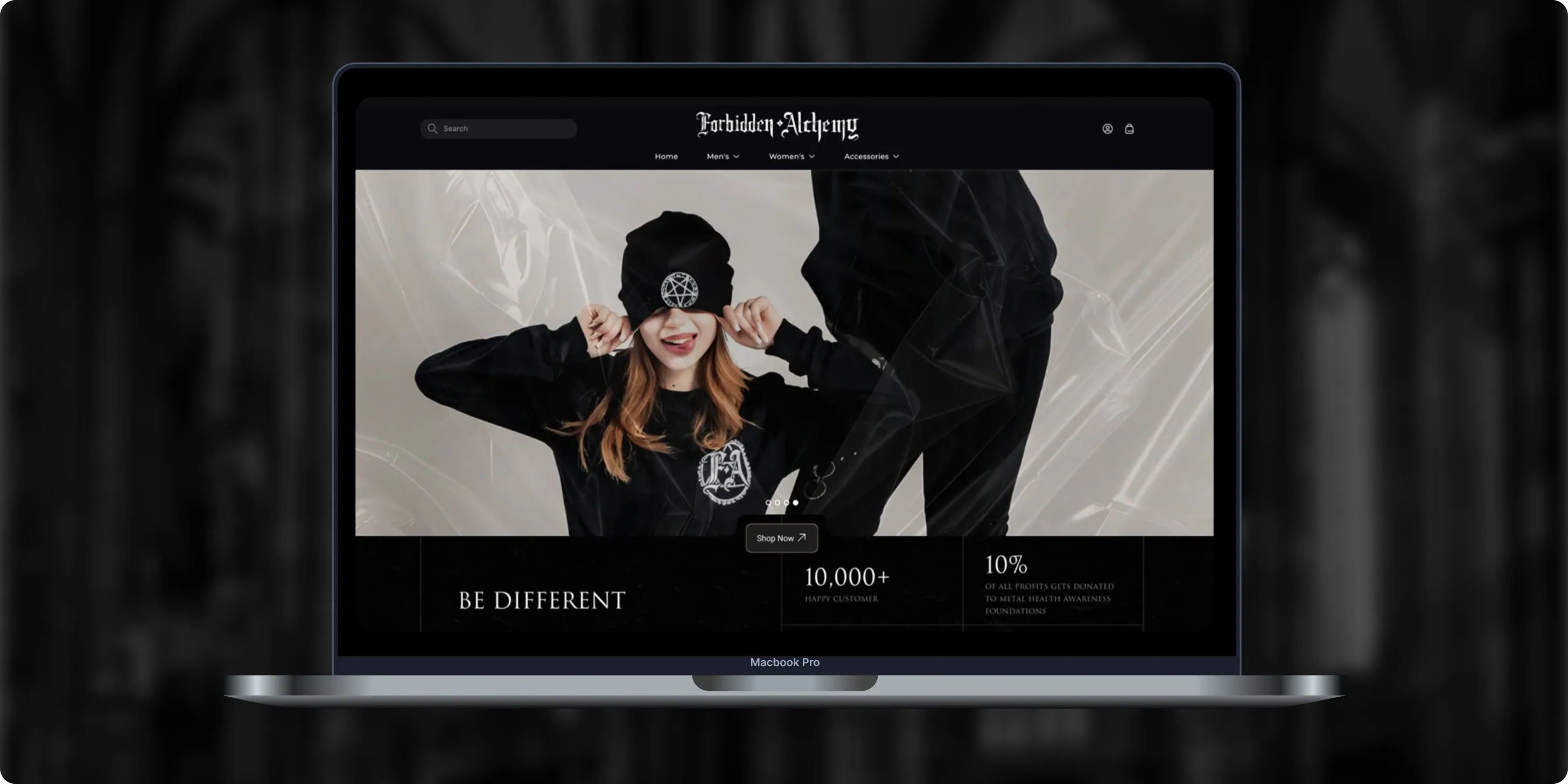
Forbidden Alchemy
Forbidden Alchemy is an alternative fashion brand creating dark, provocative clothing for the metalhead community, with 10% of profits donated to mental health awareness. Its mostly mobile audience struggled with a store that was hard to navigate and weak on functionality.- +44%Revenue Month Over Month
- 86%Design Satisfaction
- 2.8XUser Retention Growth
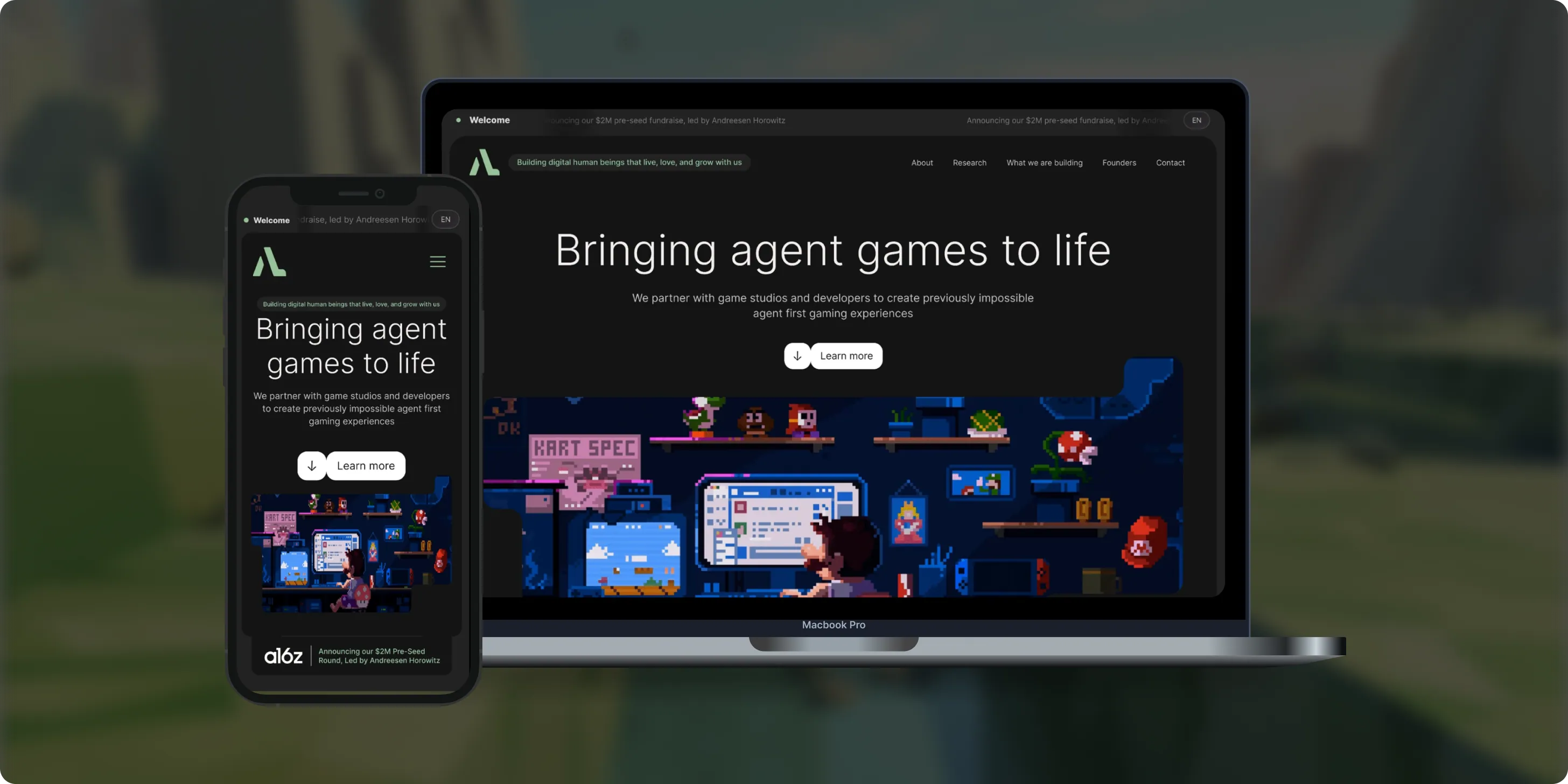
Altera
Altera builds on decades of computational neuroscience research to create digital human beings for gaming. Backed by a $2M pre-seed round led by Andreessen Horowitz, the team needed a landing page that could explain complex agent technology to players, partners, and investors.- 98%Dynamic Customization
- 100%Streamlined Navigation
- $2MPre-Seed Round
- Real Estate
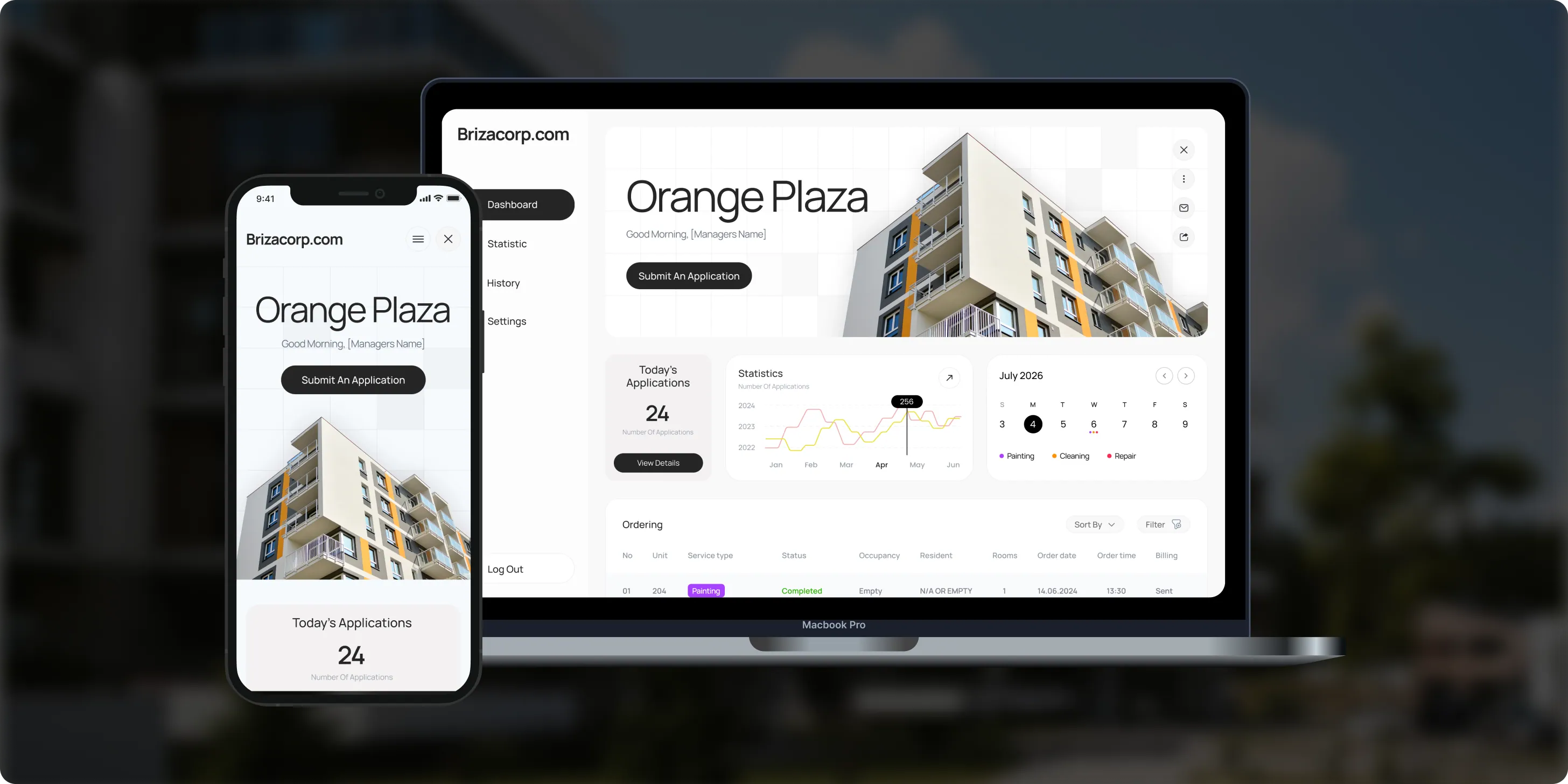
Brizacorp
Brizacorp manages residential properties and coordinates the staff who handle painting, cleaning, and repair requests. Its team tracked work across messengers, phone calls, e-mail, and paper planners, with no single place to manage requests or measure performance.- 98%Application Stability
- 95%Utilization Rate
- 30%Faster Task Completion
Color & Harmony
Color & Harmony is a Kentucky-based color consulting studio led by certified color strategist Diana Cartaya. The studio needed a website that reflects its refined aesthetic, showcases its portfolio, and explains a science-based color process in simple language.- 45%Conversion Rate Increase
- 50%Higher User Engagement
- 2Months to Launch

The Modern Gentlemen
The Modern Gentlemen sells premium men's skincare featured in Men's Health, GQ, and Men's Journal. Its customers wanted an efficient routine, but generic product suggestions and limited skincare knowledge made choosing the right products hard.- 30%Increase in Conversions
- 25%Higher Customer Retention
- 92%Mobile Purchases

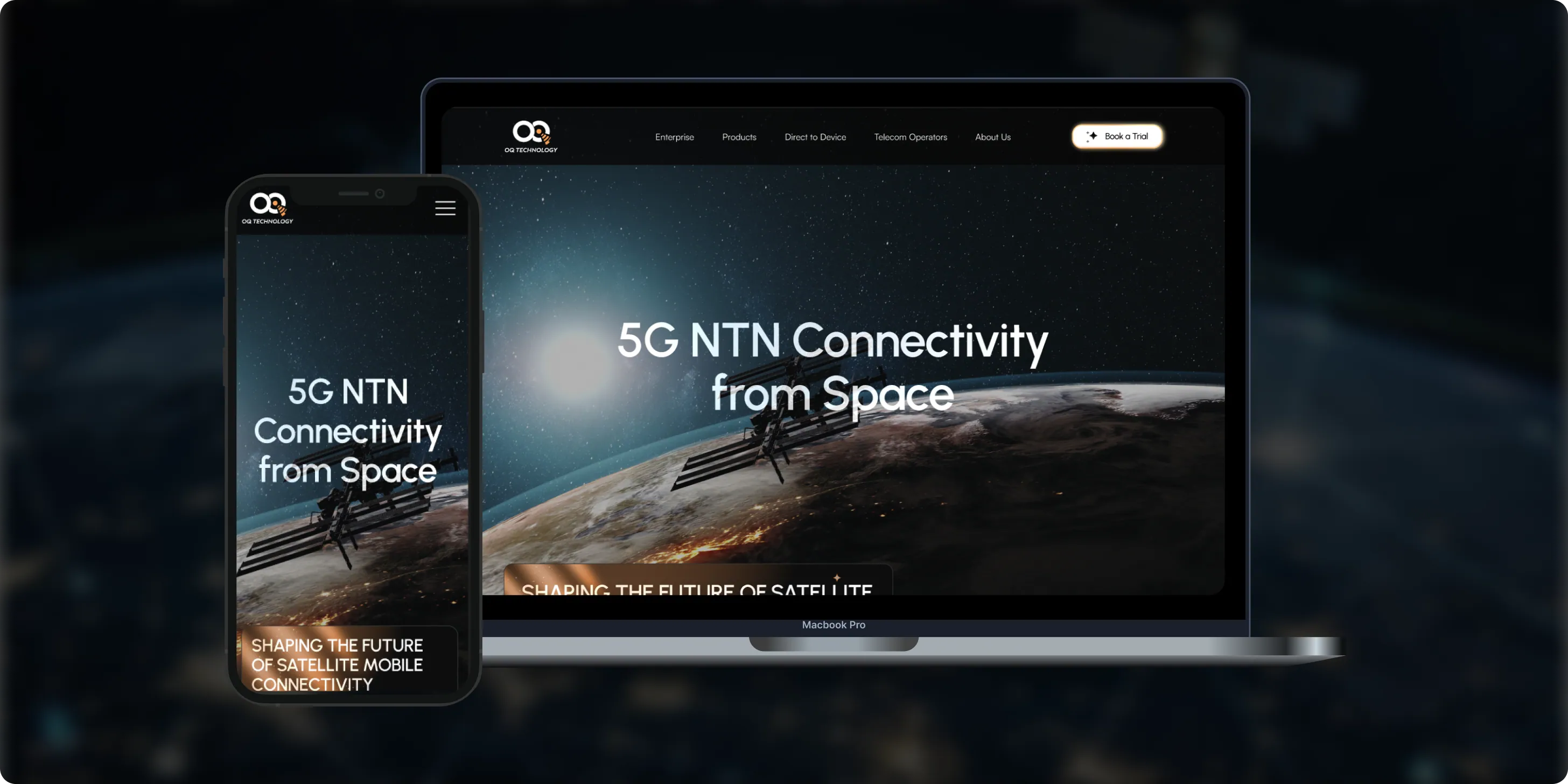
OQ Technology
OQ Technology connects IoT devices, machines, and people anywhere on the planet through its satellite network, serving energy, maritime, logistics, agriculture, and mobile operators. Its website made it hard to explore products and reach pricing plans.- 4Pricing Plans Clarified
- 3Dedicated User Flows
- 1Unified Platform
- Real Estate
- Finance
Stay Vest
Stay Vest is a private real estate investment firm that acquires, renovates, and operates boutique hotels for cash flow, tax benefits, and equity gain. It needed a platform that explains its strategy and earns the trust of passive investors.- 1,500+Guest Stays
- 200+Rooms Managed
- 5States Covered

Bokeyno Motorsports
Bokeyno Motorsports is the leading mobile installer of vertical doors for high-performance cars. This Shopify website isn’t just about services—it’s a bold statement of power, style, and expertise. With a sharp layout, strong visuals, and real-world case studies, the site delivers all the information car enthusiasts need to book confidently and instantly.- 54%Booking Requests
- 43%Lead Conversion
- 32%Qualified Inquiries

ai document processing platform
A comprehensive talent solution designed to help companies attract, hire, and retain top talent more effectively. The platform combines AI-powered recruitment technology with employee financial wellbeing programs, enabling smarter hiring decisions while supporting employees’ financial stability and long-term engagement.- 62%Faster Processing Time
- 78%Less Manual Work
- 35%Improved Accuracy

WHAT CLIENTS SAY
Independently verified reviews from real clients on Clutch.co


Client Story
Real feedback from
FMY Orthodontics

“Their perseverance and solution-oriented mindset. SoftDoes consistently found ways to make things work, added features we had not originally envisioned, and never became frustrated. It felt like working with a true partner who cared about the success of our practice.”
Dan Merwin
DDS, MS -- President, FMY Orthodontics

Client Story
Real feedback from
Prior Authorization AI
“Every time I sent a request, if there was anything that didn't work, they were able to turn it around quickly. Even when there were no updates yet, they always reached out to let me know they were working on it.”
Joseph Oluwo
Founder of Prior Authorization AI


Client Story
Real feedback from
WOVEN
“What stood out most was their commitment to understanding our needs before presenting solutions.”
Danna Pastran
Administrative Operations Manager, WOVEN

Client Story
Real feedback from
Grand Central Language Services
“The site performs as intended and provides the foundation for our company's digital presence.”
Joe Goldstein
QA Manager, Grand Central Language Services


Client Story
Real feedback from
DineMate
“They go above and beyond.”
Eric Snead
CEO, DineMate "Dating Connecting Platform"
Why they Choose SoftDoes
- 01SENIOR ENGINEERS, NOT LAYERS
AI tutor projects at SoftDoes are led by senior engineers and AI architects who have shipped production LLM applications with retrieval, evaluation, and safety layers - not demo prototypes that break under real student load. They can read curriculum frameworks, learning standards, institutional AI policies, and school procurement requirements and translate them into data models, retrieval strategies, safety rules, and evaluation plans. Client academic leads, product owners, and safeguarding teams work directly with SoftDoes engineers, eliminating the translation errors that happen when pedagogy passes through layers of project managers before reaching someone who writes code. This means detailed, productive conversations about model selection and routing, prompt and tool orchestration, knowledge graph design, evaluation approaches specific to learning outcomes and child safety, and the tradeoffs between cost, latency, and answer quality.
- 02PREDICTABLE DELIVERY
SoftDoes delivers AI tutors in phased releases aligned with school terms, content readiness, and procurement reviews - for example, starting with one subject or course and a pilot class, then expanding to more subjects, voice features, and teacher tools once results and approvals are in. Written specifications include acceptance criteria that explicitly cover answer accuracy on curated test sets, pedagogy rules (no direct answers in learning mode), safety behavior under adversarial prompts, performance targets, and accessibility. Regular demos use the client's real curriculum content and authentic learner scenarios, so stakeholders see how the tutor behaves in context - not on cherry-picked examples. SoftDoes coordinates with content teams, LMS admins, legal and privacy reviewers, and pilot teachers to de-risk the dependencies that routinely derail education technology projects where school approval timelines and content readiness matter as much as engineering velocity.
- 03BUILT TO LAST PAST LAUNCH
The architecture behind every SoftDoes AI tutor uses a model-agnostic AI layer, clean separation between tutoring logic, content indices, learner data, and moderation pipelines, documented APIs, and versioned prompts and content indexes. Monitoring tracks correctness on fixed evaluation sets, safety flag rates, response latency, and unit cost per session, with alerts when quality drifts or spend spikes - because AI tools can automate repetitive coding tasks and routine checks, but someone needs to watch the dashboard. Engineering discipline includes code reviews, automated evaluation suites run before every model or prompt change, regression tests for safety rules, and CI/CD pipelines with security scans. This lets clients swap to better or cheaper models, add new subjects and languages, integrate new capabilities (handwriting recognition, voice, image input), or scale to more learners without rewriting the core tutoring engine.
- 04NO BABYSITTING REQUIRED
SoftDoes onboards client teams with admin training, runbooks for support staff, and documentation covering architecture, prompts, content pipelines, safety configurations, and evaluation workflows. Intuitive admin consoles let client staff manage content sources, skill tags, tutor behavior settings (strictness, answer-giving rules, hint depth), safety thresholds, usage limits, and reporting - without touching code. Internal teams can review and update evaluation sets, inspect flagged conversations, adjust teaching rules, and add new content sources on their own schedule. SoftDoes can stay as a long-term partner for roadmap features and model upgrades if desired, but the system is designed so the client does not depend on the vendor for every small adjustment or content update.
How we work with your quality team
This is how SoftDoes partners with you from first conversation through long term support.




Experience Across K-12, Higher Education, Test Prep, and Workplace Learning
We build AI tutors where accuracy, learner safety, and real learning outcomes matter more than quick answers.
Dental Practices
Orthodontics
Oral Surgery
Specialty Dentistry
Dental Service
Complex systems, integrations, and internal platforms built to evolve. We step in when off-the-shelf tools stop being enough.
Healthcare
From first version to real traction without painting yourself into a corner. Built for speed now and hard decisions later.
Finance
Systems designed around controls, traceability, and change management. Built so audits don’t become fire drills.
Startups
Infrastructure software built for long timelines and high stakes. Reliable systems for assets that can’t afford guesswork.


Frequently Asked Questions
Everything you need to know about working with SoftDoes. Can’t find an answer?
How long does custom AI tutor software development take, and what drives the cost?
A focused pilot - for example, a text-based AI tutor for one course grounded in existing content with basic teacher controls - typically takes two to four months to reach production with real learners. A full intelligent tutoring system spanning multiple subjects, programming languages, voice interaction, teacher tools, analytics, and a formal evaluation program takes longer, often six to twelve months depending on content readiness and compliance requirements. The main cost drivers are content preparation and tagging, LMS and SSO integrations, evaluation and safety engineering, speech and multimodal services, and LLM usage costs at scale. School procurement cycles and approval processes often impact timelines as much as engineering itself.
Do we need to train our own AI model for our AI tutor?
Most AI tutors do not require training a model from scratch. They use strong existing LLMs grounded in your content through retrieval-augmented generation, with carefully designed instructions, tools, and safety rules. Fine-tuning or smaller self-hosted models make sense in specific situations - niche subject domains, strict data-residency requirements, or cost optimization at very high volume where AI can reduce coding time by up to 50% and you need to keep per-session costs minimal. SoftDoes designs a model-agnostic layer so you can switch between providers (OpenAI, Anthropic, Google, open-source alternatives) without redoing the product, and as better or cheaper models appear, the tutor benefits without a rewrite.
How do you stop the AI tutor from giving wrong answers or just doing homework for students?
Every response is grounded in your approved content with citations, and tool-based checking handles math step verification and code execution so the tutor does not rely on the LLM alone for correctness. Teaching rules - hint ladders, Socratic questioning, limits on giving final answers in learning mode, and teacher-controlled exam and homework settings - ensure the tutor guides rather than gives away solutions. AI Tutor provides just-in-time guidance to prevent student disengagement while still requiring learners to do the thinking. No AI is perfect, so the tutor surfaces sources, encourages learners to verify their work, and provides an easy way to report suspected mistakes to educators.
How do you keep children and their data safe in an AI tutoring platform?
Safety protections include age-appropriate content filters, blocked topic categories, escalation flows for self-harm or bullying signals agreed with the school or client, encryption in transit and at rest, role-based access, strict data retention limits, and contractual rules preventing AI providers from training on learner data. We design for alignment with FERPA, COPPA, GDPR, the UK Age Appropriate Design Code, relevant state student privacy and AI laws, and the EU AI Act, plus security practices informed by frameworks like SOC 2 and ISO 27001. SoftDoes works with your privacy, safeguarding, and security teams on risk assessments, data processing agreements, and red-team testing before any learner uses the system.
Who owns the source code, content, and intellectual property for our AI tutor?
Clients retain ownership of custom source code, prompts and configurations, evaluation sets, their curriculum content, and all learner data, unless a different arrangement is explicitly agreed. Third-party AI model terms, open-source library licenses, and any SoftDoes internal utilities are documented clearly so your legal team knows exactly what is in the tech stack. At project end, SoftDoes hands over repositories, infrastructure-as-code, documentation, evaluation artifacts, and deployment scripts so internal teams can continue development independently if they choose.
Can the AI tutor integrate with our existing LMS or learning app?
Yes. The tutor can be embedded in existing web and mobile apps through APIs and SDKs, launched inside LMSs like Canvas, Moodle, or Google Classroom via LTI 1.3, and authenticated through your existing SSO. It pulls context - current course, active assignment, past attempts, learner progress - to personalize support in real time. AI tutor software combines AI capabilities with live code execution for reliable feedback and learning support, and SoftDoes has experience layering AI features into existing iOS, Android, and web platforms without forcing a rebuild.
What kind of support do we get after launch?
SoftDoes offers a hypercare period around launch, ongoing support and improvement agreements, and regular evaluation runs whenever AI models, prompts, or content indexes change. Incidents and safety concerns are treated as top priority, with defined response times and escalation paths; bug fixes and minor enhancements follow a structured backlog process. Monitoring dashboards track answer accuracy on test sets, safety rule triggers, response latency, cost per learner session, and teacher and learner feedback scores - giving you and SoftDoes a shared view of tutor health at all times. AI tutors support 24/7 availability for instant feedback, aiding continuous learning during coding and study sessions, and post-launch support ensures that availability stays reliable.
How do you reduce risk on an AI tutor software development initiative?
Risk reduction starts with a pilot scoped to selected classes, learner segments, or a single subject, combined with feature flags and staged rollout so exposure is controlled and reversible. SoftDoes creates a clear tutor behavior policy up front, builds evaluation suites and red-team scenarios with your team, and maintains rollback plans if behavior drifts or regulations change. Over 1,000 tutoring sessions have been conducted using AI tools in real classroom pilots, and the lessons from those sessions - what works, what fails, what surprises teachers - inform every project. Throughout the engagement, SoftDoes maintains transparent communication about tradeoffs (model choice versus cost versus privacy, answer quality versus latency, strictness versus learner frustration) so leadership can make informed decisions at each stage rather than discovering surprises after launch.