
U.S.-Based
Smart Grid Software Development
Software engineering for electric utilities, municipal utilities, grid operators, and energy retailers. Systems that run in control centers, not just in demos.

Let's build together.
Talk with a senior engineer about your product idea, architecture, and what it would take to build it.
90+
Active Client Partnerships
80+ Person
Product & Engineering Team
100%
Your Code & IP Ownership
U.S.-Led
Delivery & Accountability
We understand the challenges you're facing
Why do our SCADA, AMI, GIS, and OMS still sit in separate silos?
Most utilities inherited their control systems one at a time over decades. SCADA handles substation telemetry. Advanced metering infrastructure handles meter reads. GIS holds the network model. OMS tracks outages. None of them share a single version of truth about your feeders, and that gap slows every switching decision and masks blind spots across distribution lines. Custom smart grid software development can unify these sources into a modern data platform with clean APIs, mapping AMI, SCADA, PMU, and GIS data into a consistent model that supports ADMS, DERMS, and capacity planning tools. Smart grid software integrates data from AMI meters, SCADA devices, and GIS models so dispatchers see a coherent grid state instead of toggling between five screens. Software in smart grids must handle legacy system integration and interoperability issues, and that is exactly where a purpose engineered layer adds the most value.
Rooftop solar and EV fleets keep growing, and our tools can't keep up with two way flows.
The traditional grid was designed for one way flow from centralized power generation to passive consumers. Distributed energy resources like solar panels, battery storage, and electric vehicles have changed that equation entirely. Smart grids enable integration of distributed energy resources like solar and wind, but your existing infrastructure may lack the forecasting and orchestration logic to manage curtailment, storage dispatch, and demand response events at the feeder level. Custom smart grid software development lets you layer DER management and load forecasting directly onto your actual network topology and tariff structure, predicting solar and wind output, EV charging profiles, and flexible demand hour by hour. Artificial intelligence can improve demand forecasting in smart grid systems, helping power systems operators avoid thermal and voltage violations before they occur. Smart grid software supports demand response by managing distributed energy resources, and it does so while respecting your customer programs and interconnection rules. Demand response adjusts electricity consumption based on grid conditions and prices, and the orchestration layer we engineer handles that coordination without requiring you to replace your DMS or EMS.
Outage response still relies on phone calls and spreadsheet switching plans.
When a fault hits, minutes matter. Yet many utility companies still piece together outage location from customer calls, then manually assemble a switching sequence. Smart grid software enables automated outage management and restoration by using AMI last gasp signals, feeder sensor data, and historical data on fault patterns to narrow faulted segments in seconds. Advanced outage management tools integrated with crew management, work management, and customer communications software let dispatchers focus on decisions rather than data collection. Smart grid technologies can reduce outages by improving fault detection, and real time monitoring with automated fault detection enhances grid reliability. Average outage duration drops, and regulator facing metrics like SAIDI and SAIFI improve. EPB's smart grid reduced outages by 60%, demonstrating what is possible when outage intelligence is woven into everyday grid operations rather than bolted on as a side dashboard.
How do we protect substations, AMI networks, and control centers from cyber threats?
Cybersecurity is critical in smart grid development to prevent operational disruptions. The more connected your grid edge becomes, the more attack surface exists across distribution automation endpoints, smart meters, and remote access pathways. Custom smart grid software can implement Zero Trust principles, strong authentication, role based access, audit trails, and encryption for operational technology without crippling the latency your control systems require. Legislation and compliance requirements shape smart grid software architecture and features, so these controls are not optional add ons. SoftDoes incorporates threat modeling and security testing into every phase of smart grid software development, treating compliance as a design input rather than a post launch audit exercise.
We've run three pilots in two years. None of them made it to the control room.
According to the 2026 Utility Innovation Survey, 84% of utilities say it takes more than a year to move new technology from pilot to rollout, and 32% of projects stall after becoming scale ready. That is not a technology problem. It is an engineering and workflow alignment problem. Pilots fail to reach production because they were never designed around actual dispatcher screens, switching procedures, or EMS and DMS constraints. SoftDoes engineers production grade smart grid applications that connect to real control room workflows from day one. We plan for performance, redundancy, and fallbacks so operators trust new tools enough to rely on them. Staged rollouts, shadow modes, and hands on operator training turn a proof of concept into a system that runs 24x7 without drama.
You run the grid. We engineer the software behind it.

Custom ADMS and DERMS Extensions
Complex switching rules, topology validation, and real time constraints are encoded in software that matches how your protection engineers think. Distribution automation logic designed around your network model gives your dispatchers actionable insights rather than generic alerts.
Feeder level grid visibility with congestion alerts
Automated switching suggestions tied to real constraints
DER curtailment and dispatch coordination per zone

Grid Data Platforms and Digital Twins
Digital twins help in simulating smart grid operations and evaluating different scenarios, from DER growth projections to capacity planning under new load patterns. A CIM based data model becomes the backbone for state estimation, what if analysis, and long horizon planning.
Near real time sync from operational systems
Scenario simulation for DER integration and load balancing
Equipment health and predictive maintenance analytics

Customer and Program Facing Smart Grid Apps
We build portals linking demand response, dynamic tariffs, EV charging, and distributed resource participation to your grid data. Smart grid software enables two way communication between energy providers and consumers.
Self service enrollment flows for DR and EV programs
Event notifications tied to grid conditions
Behind the meter device integration for solar and storage
Numbers Don’t Lie
Recent projects showcasing how we design, engineer, and deliver production-ready software solutions.

- Startup
- Real Estate
Our Haus AI
A finance professional turned founder built Our Haus AI, an AI-powered collaborative workspace where homeowners and contractors scope, bid, contract, and document renovation projects together. SoftDoes took her prototype and made it production-ready.- 10XMVP scope delivered
- 2+years Ongoing partnership
- 1Fully owned Platform

- Finance
- Energy
Deepwater Insights
Deepwater Insights delivers proprietary alternative data and niche research on the offshore drilling and energy sector to institutional investors, family offices, and high-net-worth individuals who require coverage that larger firms don't provide.- 100%Brand Continuity
- 2Platform Distribution
- 100%Paywall-Ready Content

- Real Estate
The building buyer
The Building Buyer is a Florida-based real estate investment firm co-founded by Dylan Troiano and Charles Hanlin. They acquire single-family, multifamily, and commercial properties across South Florida and beyond, with a focus on motivated seller opportunities.- 18Weekly hours saved
- 2+Years Ongoing partnership
- 1Fully owned Platform

- Education
- Non-Profit
WOVEN & NICE
Woven is a Spring Valley, NY nonprofit running the NICE program (New Training Inclusive Community Environment) in four Rockland County schools. Their team supports students through restorative practices, mediation, and professional development for teachers and administrators.- 4Schools Served
- 4Weeks to Launch
- 1STTime on Upwork

- Healthcare
CareInTouch
CareInTouch is a Bay Area home health agency providing skilled nursing and therapy services to patients referred from hospitals and clinics. With over 100 staff, they operate in one of the most complex and compliance-driven healthcare markets in the country.- 40% Reduction In Billing Errors
- 100+Staff Operations Managed
- 0Missed Compliance Deadlines

- Startup
Sparkle The Cleaning Service
Sparkle The Cleaning Service is a Detroit-area residential cleaning company with 10 years in business, connecting homeowners with vetted, insured independent cleaners through a subscription-based marketplace platform.- 75% Platform Transparency
- 2XPlatform Growth
- 40%Higher User Retention

- Startup
DineMate
DineMate is a Maryland-based dating and connecting platform built around verified profiles, restaurant reservations, and prepaid dining experiences. Founded to bring back authenticity to how people meet and connect.- 60% Time Saved
- 99%System Reliability
- 40%Higher User Retention

- Healthcare
Prior Authorization AI
Prior Authorization AI is a healthcare automation startup building AI-powered tools to streamline prior authorization for Medicare and Medicaid medical transportation providers in New Jersey.- 16Weekly hours saved
- 63%Admin time reduced
- 43%Fewer submission errors

- Education
Grand Central Language Services
Grand Central Language Services provides translation and interpretation for organizations operating in complex, multilingual environments. As demand grew, internal workflows became harder to manage. SoftDoes built a custom platform to streamline coordination, improve visibility, and support scalable operations.- 72%Workflow Reduction
- 48%Coordination Reduction
- 83%Visibility Increase

- Healthcare
FMY Orthodontics
FMY Orthodontics, a multi-location practice in West Tennessee, partnered with SoftDoes to replace a spreadsheet-based financial workflow with a custom web platform. The goal was to simplify how staff present treatment financing while allowing patients and families to review and complete decisions remotely.- 60%Workflow Reduction
- 75%Remote Adoption
- 5Locations Aligned

Forbidden Alchemy
Forbidden Alchemy is an alternative fashion brand creating dark, provocative clothing for the metalhead community, with 10% of profits donated to mental health awareness. Its mostly mobile audience struggled with a store that was hard to navigate and weak on functionality.- +44%Revenue Month Over Month
- 86%Design Satisfaction
- 2.8XUser Retention Growth

Altera
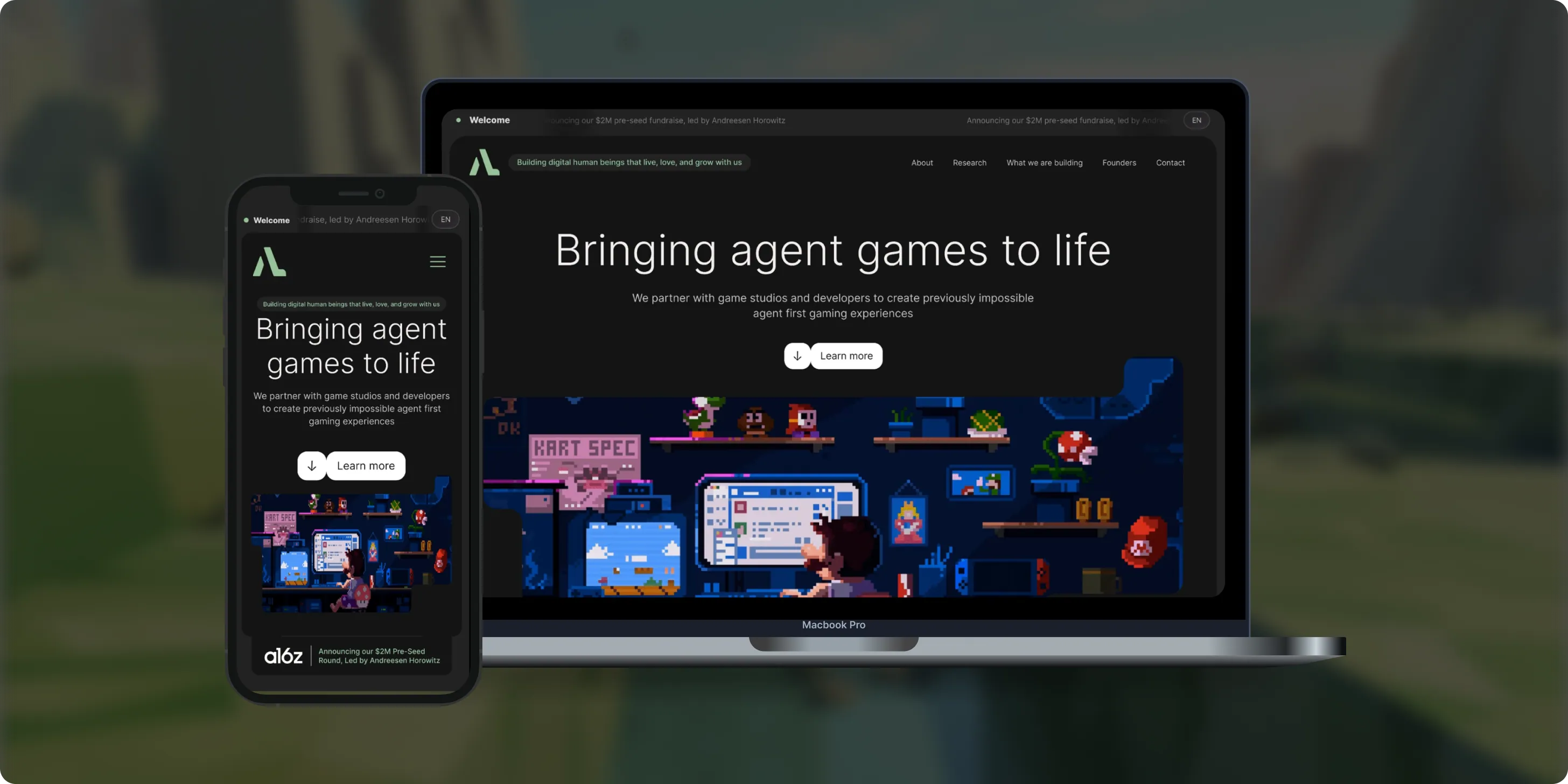
Altera builds on decades of computational neuroscience research to create digital human beings for gaming. Backed by a $2M pre-seed round led by Andreessen Horowitz, the team needed a landing page that could explain complex agent technology to players, partners, and investors.- 98%Dynamic Customization
- 100%Streamlined Navigation
- $2MPre-Seed Round
- Real Estate
Brizacorp
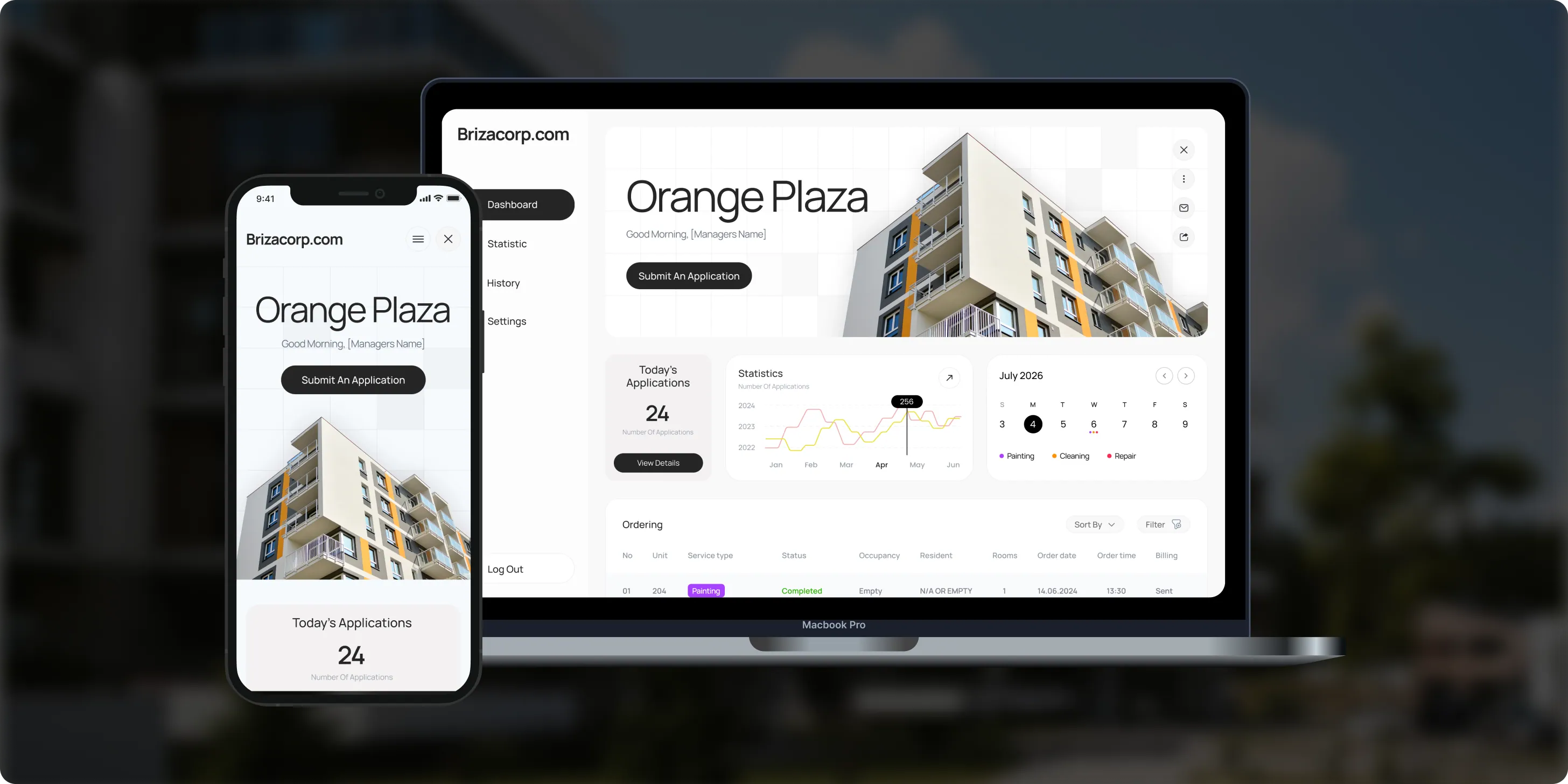
Brizacorp manages residential properties and coordinates the staff who handle painting, cleaning, and repair requests. Its team tracked work across messengers, phone calls, e-mail, and paper planners, with no single place to manage requests or measure performance.- 98%Application Stability
- 95%Utilization Rate
- 30%Faster Task Completion
Color & Harmony
Color & Harmony is a Kentucky-based color consulting studio led by certified color strategist Diana Cartaya. The studio needed a website that reflects its refined aesthetic, showcases its portfolio, and explains a science-based color process in simple language.- 45%Conversion Rate Increase
- 50%Higher User Engagement
- 2Months to Launch

The Modern Gentlemen
The Modern Gentlemen sells premium men's skincare featured in Men's Health, GQ, and Men's Journal. Its customers wanted an efficient routine, but generic product suggestions and limited skincare knowledge made choosing the right products hard.- 30%Increase in Conversions
- 25%Higher Customer Retention
- 92%Mobile Purchases

OQ Technology
OQ Technology connects IoT devices, machines, and people anywhere on the planet through its satellite network, serving energy, maritime, logistics, agriculture, and mobile operators. Its website made it hard to explore products and reach pricing plans.- 4Pricing Plans Clarified
- 3Dedicated User Flows
- 1Unified Platform

- Real Estate
- Finance
Stay Vest
Stay Vest is a private real estate investment firm that acquires, renovates, and operates boutique hotels for cash flow, tax benefits, and equity gain. It needed a platform that explains its strategy and earns the trust of passive investors.- 1,500+Guest Stays
- 200+Rooms Managed
- 5States Covered

Bokeyno Motorsports
Bokeyno Motorsports is the leading mobile installer of vertical doors for high-performance cars. This Shopify website isn’t just about services—it’s a bold statement of power, style, and expertise. With a sharp layout, strong visuals, and real-world case studies, the site delivers all the information car enthusiasts need to book confidently and instantly.- 54%Booking Requests
- 43%Lead Conversion
- 32%Qualified Inquiries

ai document processing platform
A comprehensive talent solution designed to help companies attract, hire, and retain top talent more effectively. The platform combines AI-powered recruitment technology with employee financial wellbeing programs, enabling smarter hiring decisions while supporting employees’ financial stability and long-term engagement.- 62%Faster Processing Time
- 78%Less Manual Work
- 35%Improved Accuracy

WHAT CLIENTS SAY
Independently verified reviews from real clients on Clutch.co


Client Story
Real feedback from
FMY Orthodontics
“Their perseverance and solution-oriented mindset. SoftDoes consistently found ways to make things work, added features we had not originally envisioned, and never became frustrated. It felt like working with a true partner who cared about the success of our practice.”
Dan Merwin
DDS, MS -- President, FMY Orthodontics

Client Story
Real feedback from
Prior Authorization AI
“Every time I sent a request, if there was anything that didn't work, they were able to turn it around quickly. Even when there were no updates yet, they always reached out to let me know they were working on it.”
Joseph Oluwo
Founder of Prior Authorization AI


Client Story
Real feedback from
WOVEN
“What stood out most was their commitment to understanding our needs before presenting solutions.”
Danna Pastran
Administrative Operations Manager, WOVEN

Client Story
Real feedback from
Grand Central Language Services
“The site performs as intended and provides the foundation for our company's digital presence.”
Joe Goldstein
QA Manager, Grand Central Language Services


Client Story
Real feedback from
DineMate
“They go above and beyond.”
Eric Snead
CEO, DineMate "Dating Connecting Platform"
Why they Choose SoftDoes
- 01SENIOR ENGINEERS, NOT LAYERS
Smart grid work touches critical energy infrastructure: substations, distribution feeders, transmission and distribution lines, AMI networks, and the SCADA backbone. SoftDoes assigns senior engineers who understand power systems concepts, not project managers who relay questions. You get direct access to the people writing code for ADMS plugins, grid data pipelines, and API integrations with EMS and SCADA. Our team reads IEC and IEEE documentation without needing a translator, preventing rework from misinterpreted data models or protocol quirks. Architects participate in design discussions with your protection engineers and grid operations teams, not just your IT department.
- 02PREDICTABLE DELIVERY
We break smart grid software development into clear phases with defined integration points to your EMS, DMS, AMI, and GIS systems. Each phase has realistic test environments with representative feeder models, event streams, and historical data, because testing against synthetic data produces synthetic confidence. Go live timing aligns with your change windows, regulatory milestones, and seasonal load patterns. We identify risks early, whether it is a vendor specific SCADA interface, incomplete GIS topology, or a missing meter population, and manage them before they become schedule surprises.
- 03BUILT TO LAST PAST LAUNCH
Smart grid software from SoftDoes is designed for continuous use by dispatchers, planning analysts, and field teams, not for a single demo. Modular architecture, clean APIs, and thorough documentation let your internal IT and operations staff understand, extend, and maintain the system over years. We test edge cases that matter in real grid operations: bad meter data, communication delays, intermittent DER telemetry, and sudden topology changes. The codebase is prepared for future standards updates, new DER programs, and additional devices without requiring a rewrite of core modules.
- 04NO BABYSITTING REQUIRED
Once objectives, data access, and OT constraints are clear, SoftDoes teams move forward with minimal hand holding. We communicate proactively about integration issues, data quality gaps, and operational constraints before they surface as problems in your control room. Our engineers are comfortable working with your cyber, OT, and IT teams to resolve firewall rules, VPN access, and DMZ configurations. We understand the complexities of coordinating between multiple departments and ensure that communication flows smoothly to prevent delays. Operations leaders can focus on running the power grid while we handle the software engineering work, confident that we are managing technical challenges efficiently. Our approach minimizes disruption to daily operations and accelerates project timelines, allowing your teams to see tangible progress early and often.
What you can count on
Smart grid software is mission critical. Our working relationship reflects that, from the first workshop through years of post launch support.




Experience Across Manufacturing, Life Sciences, Healthcare, and Other Regulated Industries
We build quality software for organizations where audit readiness, traceability, and consistent processes are non-negotiable.
Oil Gas & Software
Reneweble Energy
Utility Billing
Energy Management
EV Charging Software
Complex systems, integrations, and internal platforms built to evolve. We step in when off-the-shelf tools stop being enough.
Energy Trading Risk
From first version to real traction without painting yourself into a corner. Built for speed now and hard decisions later.
Asset Management
Systems designed around controls, traceability, and change management. Built so audits don’t become fire drills.
Energy Utilities
Infrastructure software built for long timelines and high stakes. Reliable systems for assets that can’t afford guesswork.


Frequently Asked Questions
Everything you need to know about working with SoftDoes. Can’t find an answer?
How long does custom smart grid software development usually take, and what phases are involved?
A focused MVP such as a forecasting dashboard or a single integration module typically takes 3 to 6 months. A mid sized module like a DERMS component or ADMS extension runs 8 to 16 months. Larger enterprise platforms with multiple system integrations and full rollout can span 14 to 30 months. Every engagement follows discovery, architecture, iterative engineering, testing, staged rollout, and post launch support phases. Each phase is carefully planned to align with your operational calendars and regulatory deadlines to minimize disruption. Discovery involves deep workshops with your grid operations and IT teams to capture workflows and data sources. Architecture defines interfaces to your EMS, DMS, AMI, and GIS systems, ensuring compatibility with your existing infrastructure. Iterative engineering delivers incremental features for early feedback and integration testing. Testing uses realistic feeder models and event streams to validate performance and reliability under real world conditions. Staged rollout includes shadow modes and operator training to build confidence before full production use. Post launch support covers bug fixes, enhancements, and knowledge transfer to internal teams for sustainable maintenance.
Can you integrate with our existing SCADA, EMS, or ADMS without forcing a platform change?
Yes. We engineer extensions and integration layers that connect to your existing systems through standard protocols and vendor APIs. The goal is to add grid visibility and operational efficiency without replacing what already works. We respect your investment in current platforms and design software that complements rather than competes with them. Our approach includes building clean API layers that unify data from SCADA telemetry, EMS control, and ADMS switching logic into a coherent operational picture. We also factor in legacy system constraints, such as limited data formats or communication latencies, to ensure smooth interoperability. This way, your operators can continue using familiar tools enhanced by new capabilities developed specifically for your grid.
How do you handle data security, NERC CIP expectations, and network segmentation in smart grid projects?
Security is a design input, not a post launch checklist. Smart grid development requires balancing real time reliability, cybersecurity, and data scalability, and our architecture decisions reflect all three constraints. We incorporate Zero Trust principles, strong authentication, role based access control, audit trails, and end to end encryption tailored for operational technology environments. Our teams work closely with your cyber and OT security staff to align with NERC CIP standards and any state or federal compliance requirements. Network segmentation is carefully planned to isolate control systems from corporate IT while maintaining necessary data flows. We also embed threat modeling and continuous security testing throughout development to identify and mitigate vulnerabilities early. Our secure software solutions protect critical assets such as substations, AMI networks, and control centers without compromising the low latency and high availability your grid demands.
Who owns the source code and data pipelines after the project is complete?
You do. SoftDoes writes code for your organization, and all source code, documentation, and data pipeline configurations transfer to you at project completion. There are no license fees on work we engineer for you, and no dependencies that force you to come back. We provide comprehensive documentation, run books, and architecture diagrams to empower your internal IT and operations staff. Knowledge transfer sessions and training workshops are included to build confidence in managing the system. Our goal is to enable your organization to fully control the smart grid software environment without vendor lock in or ongoing royalty payments.
Can you work with our current AMI, GIS, and OMS vendors and their proprietary interfaces?
Yes. Most utility environments include products from vendors like Schneider Electric, Oracle Utilities, Esri, Itron, Landis+Gyr, and others. We connect to their APIs, data exports, and messaging protocols. Smart grid systems require compliance with industry standards to ensure security and interoperability, and we design for that from day one. Our engineers have experience integrating with a wide range of vendor systems, handling quirks and proprietary formats to create a unified data platform. We also design data validation and reconciliation processes to handle inconsistencies and gaps common in real world utility data. By bridging these diverse systems, we help your teams achieve operational efficiency and improved grid stability without disruptive rip and replace projects.
What happens if our network model or meter data is incomplete or inconsistent?
We identify data quality gaps during discovery and factor remediation into the project plan. Incomplete topology or missing meter records are common, especially in utilities that have operated with legacy GIS for years. We design software to handle known gaps gracefully, flagging inconsistencies for your data team rather than failing silently. Smart meters can measure electricity consumption and communicate usage data to utilities, but that data is only useful if the software processing it accounts for real world imperfections.
How do you test smart grid software before it touches live operations?
We use representative feeder models, historical event streams, and simulated telemetry to test in a safe environment that mirrors your production setup. This approach ensures that the software behaves correctly under real world conditions and can handle the complexities of your specific grid topology. Shadow modes let new modules run alongside existing systems without affecting grid operations, providing a risk free way to validate new features. EPRI's grid simulator can model outages to minimize downtime, and we leverage similar advanced simulation approaches to anticipate and prevent operational disruptions. Our testing includes performance under peak load, fault scenarios, and communication delays to confirm reliability. Only after passing control room validation and operator training does software move to live use, ensuring operators are confident and fully prepared for new tools.
What kind of support do you offer once the smart grid software is in everyday use?
We offer ongoing support for defect resolution, minor enhancements, and operational questions from your dispatchers and planning teams. Monitoring dashboards and alerting are part of every production deployment. As your priorities evolve, whether it is the clean energy transition, new demand response programs, or expanding renewable energy capacity, we adapt the software to match. Grid modernization involves integrating AI driven solutions for predictive analytics and predictive maintenance, and our support model ensures those capabilities grow with your needs rather than stagnating after launch.