



U.S.-Based
EHR/EMR Software Development
EHR/EMR software development by SoftDoes: custom, clinician-friendly health record systems with FHIR interoperability and HIPAA-ready security.

Let's build together.
Talk with a senior engineer about your product idea, architecture, and what it would take to build it.
90+
Active Client Partnerships
80+ Person
Product & Engineering Team
100%
Your Code & IP Ownership
U.S.-Led
Delivery & Accountability
We understand the challenges you're facing
Why do our clinicians still hunt for labs, imaging, and outside records in different systems before every visit?
A custom EHR system - or a purpose‑built extension to your current one - aggregates clinical data from labs, imaging (PACS/RIS), pharmacies, remote patient monitoring devices, other healthcare providers, health information exchanges, and billing into a single longitudinal patient record. SoftDoes structures that record using standards‑based data models: HL7 FHIR resources (Patient, Encounter, Observation, DiagnosticReport, MedicationRequest, Condition, CarePlan), USCDI data classes, and clinical terminologies including SNOMED CT for conditions, LOINC for lab results, ICD‑10 for diagnoses, RxNorm for medications, and CPT for procedures. Behind those screens, we build data pipelines and patient‑matching logic - combining deterministic and probabilistic algorithms - that deduplicate medical records and keep provenance visible for every data element. The payoff for healthcare practitioners is immediate: one clean, traceable record per patient, whether the visit is in person, via telehealth, or supported by remote monitoring data, with no hunting across portals before a procedure or follow‑up.
Can we add new EHR capabilities or move off our legacy system without losing data or stopping patient care?
Yes. SoftDoes uses an API‑first architecture built on HL7 FHIR and HL7 v2 interfaces, paired with integration engines like Mirth Connect or Rhapsody, to connect new EHR capabilities to your existing healthcare systems. For teams that want to extend rather than replace, we build SMART on FHIR apps that plug directly into a current EHR. When full data migration is necessary, we extract and map historical charts, scanned documents, medications, problem lists, allergies, and patient demographics - mapping local codes to standard vocabularies and validating migrated data with selected clinicians before go‑live. Data migration from legacy systems requires careful planning to avoid errors, so we run rehearsal migrations, validate 5–10 percent or more of charts, and maintain read‑only access to the legacy EMR system during transition so no clinician loses access to a patient's medical history mid‑visit. Go‑live is phased by department or location, with cutover windows planned around clinic schedules and on‑site or remote floor support. Integration with existing healthcare systems is a significant challenge in EHR development, and SoftDoes has hands‑on experience working with Epic, Oracle Health/Cerner, athenahealth, eClinicalWorks, NextGen, Meditech, lab and imaging systems (LIS, RIS, PACS), Surescripts for e‑prescribing, HIEs, clearinghouses, and custom in‑house tools.
Why do our physicians spend evenings finishing notes, and why does every screen feel built for billing instead of care?
User experience design is critical to prevent clinician burnout, and poorly designed EHR systems can lead to clinical errors and workflow disruptions. SoftDoes starts every EHR development project with workflow shadowing - following physicians, nurses, therapists, medical assistants, coders, and front desk staff through real visits from scheduling and intake through clinical documentation, orders, results, billing, and follow‑up. From that research, we design role‑specific interfaces: a one‑screen patient summary for the physician, specialty‑specific templates and smart forms for clinical documentation, order sets for common conditions, nurse task lists, coding and billing review queues, and mobile views for rounding and home visits. Our UX practice targets fewer clicks per task, keyboard shortcuts, integrated voice dictation and ambient documentation options, and carefully tuned clinical alerts that surface only what matters - reducing the alert fatigue that leads medical professionals to dismiss warnings. The goal is concrete: healthcare practitioners finish notes before leaving the clinic, duplicate data entry between EHR screens disappears, and the record supports patient care rather than fighting it.
If we add new specialties, value‑based care contracts, or new reporting rules next year, are we stuck rebuilding our EHR again?
No. SoftDoes designs EHR and EMR systems with modular architecture - separate services for patients, encounters, orders, results, and billing - so adding a new specialty, care model, or reporting program doesn't require a ground‑up rewrite. Clinical content is configuration‑driven: templates, order sets, treatment plans, care pathways, and quality measures can be updated by informatics teams through admin tools rather than code changes. Extension points and feature toggles let you activate new modules - telehealth, remote patient monitoring, chronic care management, population health dashboards - without destabilizing what's already running. We use versioned FHIR APIs and event‑driven patterns so partners and internal teams can plug in new applications or analytics safely. And we create thorough technical and operational documentation so your healthcare teams can adjust rules, measures, and clinical content without filing a vendor ticket for every change.
You deliver the care. We engineer the record behind it.

Custom EHR/EMR systems and modules
We build full custom EHR software and targeted modules shaped around your specialty, care model, and clinical workflows - oncology, behavioral health, pediatrics, dermatology, physical therapy, dental, or any niche poorly served by off‑the‑shelf products. Core modules include patient charting and clinical documentation, problem and medication lists, computerized provider order entry (CPOE), e‑prescribing with EPCS support, scheduling, care plans, clinical decision support, a patient portal, and billing and coding support.
Specialty‑specific templates and smart forms co‑designed with your clinicians
E‑prescribing workflows with controlled substance support and pharmacy integration via Surescripts
Role‑based dashboards for physicians, nursing, front office, and administrators

Interoperability and clinical data analytics
SoftDoes connects EHR systems with labs, imaging centers, pharmacies, remote monitoring devices, HIEs, and payers using HL7 FHIR, HL7 v2, C‑CDA documents, and vendor APIs. Custom EHR development includes over 50 pre‑built connectors for integration, and we consolidate healthcare data into clinical data warehouses with terminology services and BI dashboards that track care gaps, quality measures, utilization, and documentation completeness.
FHIR APIs for secure patient and partner access to key record segments
Automated quality measure, registry, and value‑based program reporting
Population health dashboards highlighting high‑risk cohorts and care gaps for healthcare teams and leadership

AI enhanced clinical workflows
AI features embedded in EHR and EMR software include ambient listening that drafts visit notes, summarization of complex medical histories, coding suggestions, inbox triage, and risk predictions for readmission, clinical deterioration, and no‑shows. AI integration boosted productivity for 100% of U.S. physicians in recent surveys, AI reduces documentation time by 40% in EHR systems, and AI improves coding accuracy by 10–20% in EHR applications. AI‑powered tools automate routine tasks in EHR systems while keeping clinicians in control: every AI output is explainable, validated on client data, and reviewed and signed by a clinician before it enters the patient record, with PHI handled in HIPAA‑aligned environments.
Pre‑visit natural language summaries of each patient's chart for clinicians
Predictive risk scores surfaced directly in worklists to prioritize follow‑up
Smart suggestions for diagnosis and procedure codes, orders, and care gaps that enhance clinical decision making
Numbers Don’t Lie
Recent projects showcasing how we design, engineer, and deliver production-ready software solutions.

- Startup
- Real Estate
Our Haus AI
A finance professional turned founder built Our Haus AI, an AI-powered collaborative workspace where homeowners and contractors scope, bid, contract, and document renovation projects together. SoftDoes took her prototype and made it production-ready.- 10XMVP scope delivered
- 2+years Ongoing partnership
- 1Fully owned Platform

- Finance
- Energy
Deepwater Insights
Deepwater Insights delivers proprietary alternative data and niche research on the offshore drilling and energy sector to institutional investors, family offices, and high-net-worth individuals who require coverage that larger firms don't provide.- 100%Brand Continuity
- 2Platform Distribution
- 100%Paywall-Ready Content

- Real Estate
The building buyer
The Building Buyer is a Florida-based real estate investment firm co-founded by Dylan Troiano and Charles Hanlin. They acquire single-family, multifamily, and commercial properties across South Florida and beyond, with a focus on motivated seller opportunities.- 18Weekly hours saved
- 2+Years Ongoing partnership
- 1Fully owned Platform

- Education
- Non-Profit
WOVEN & NICE
Woven is a Spring Valley, NY nonprofit running the NICE program (New Training Inclusive Community Environment) in four Rockland County schools. Their team supports students through restorative practices, mediation, and professional development for teachers and administrators.- 4Schools Served
- 4Weeks to Launch
- 1STTime on Upwork

- Healthcare
CareInTouch
CareInTouch is a Bay Area home health agency providing skilled nursing and therapy services to patients referred from hospitals and clinics. With over 100 staff, they operate in one of the most complex and compliance-driven healthcare markets in the country.- 40% Reduction In Billing Errors
- 100+Staff Operations Managed
- 0Missed Compliance Deadlines

- Startup
Sparkle The Cleaning Service
Sparkle The Cleaning Service is a Detroit-area residential cleaning company with 10 years in business, connecting homeowners with vetted, insured independent cleaners through a subscription-based marketplace platform.- 75% Platform Transparency
- 2XPlatform Growth
- 40%Higher User Retention

- Startup
DineMate
DineMate is a Maryland-based dating and connecting platform built around verified profiles, restaurant reservations, and prepaid dining experiences. Founded to bring back authenticity to how people meet and connect.- 60% Time Saved
- 99%System Reliability
- 40%Higher User Retention

- Healthcare
Prior Authorization AI
Prior Authorization AI is a healthcare automation startup building AI-powered tools to streamline prior authorization for Medicare and Medicaid medical transportation providers in New Jersey.- 16Weekly hours saved
- 63%Admin time reduced
- 43%Fewer submission errors

- Education
Grand Central Language Services
Grand Central Language Services provides translation and interpretation for organizations operating in complex, multilingual environments. As demand grew, internal workflows became harder to manage. SoftDoes built a custom platform to streamline coordination, improve visibility, and support scalable operations.- 72%Workflow Reduction
- 48%Coordination Reduction
- 83%Visibility Increase

- Healthcare
FMY Orthodontics
FMY Orthodontics, a multi-location practice in West Tennessee, partnered with SoftDoes to replace a spreadsheet-based financial workflow with a custom web platform. The goal was to simplify how staff present treatment financing while allowing patients and families to review and complete decisions remotely.- 60%Workflow Reduction
- 75%Remote Adoption
- 5Locations Aligned

Forbidden Alchemy
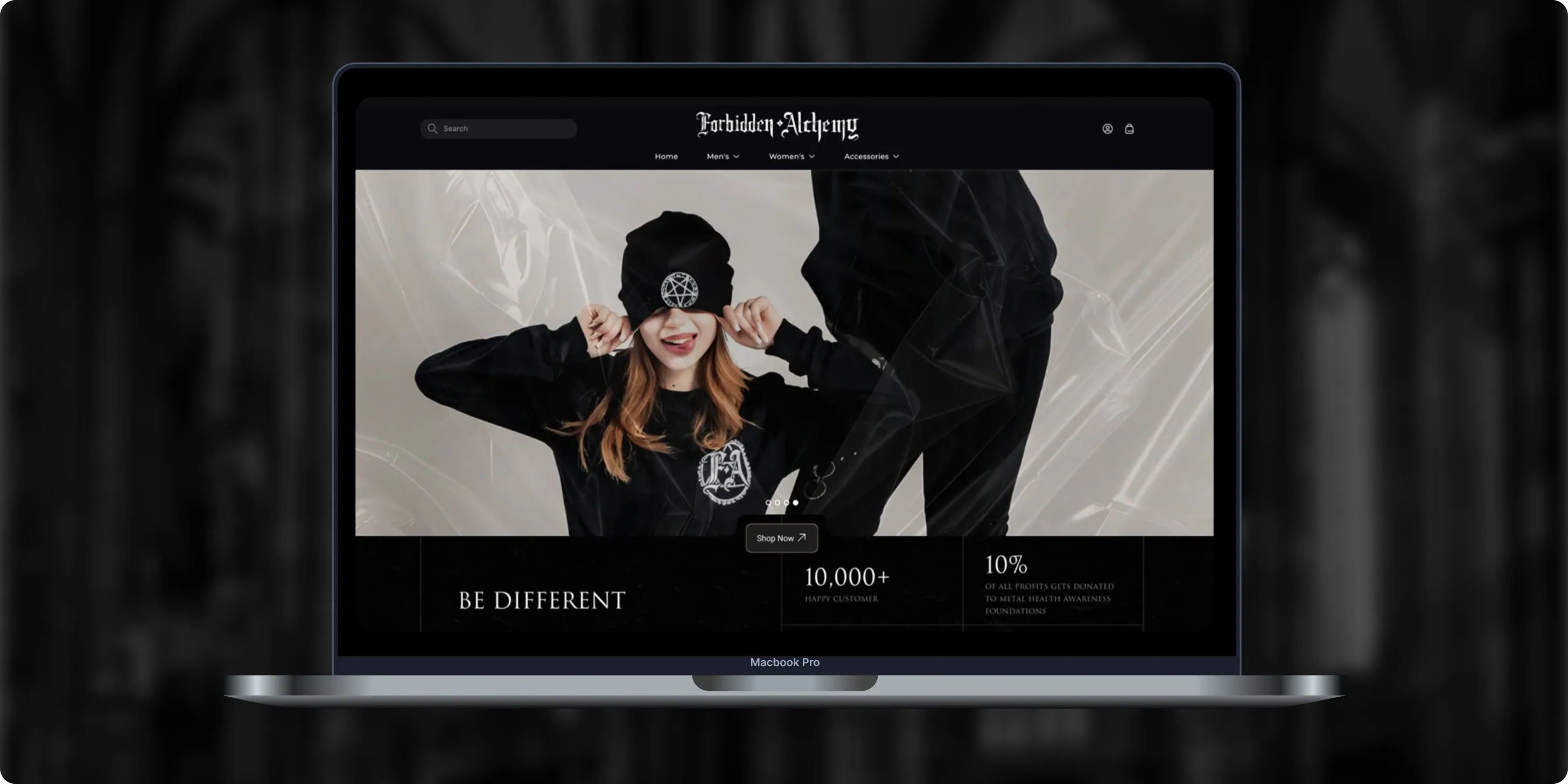
Forbidden Alchemy is an alternative fashion brand creating dark, provocative clothing for the metalhead community, with 10% of profits donated to mental health awareness. Its mostly mobile audience struggled with a store that was hard to navigate and weak on functionality.- +44%Revenue Month Over Month
- 86%Design Satisfaction
- 2.8XUser Retention Growth
Altera
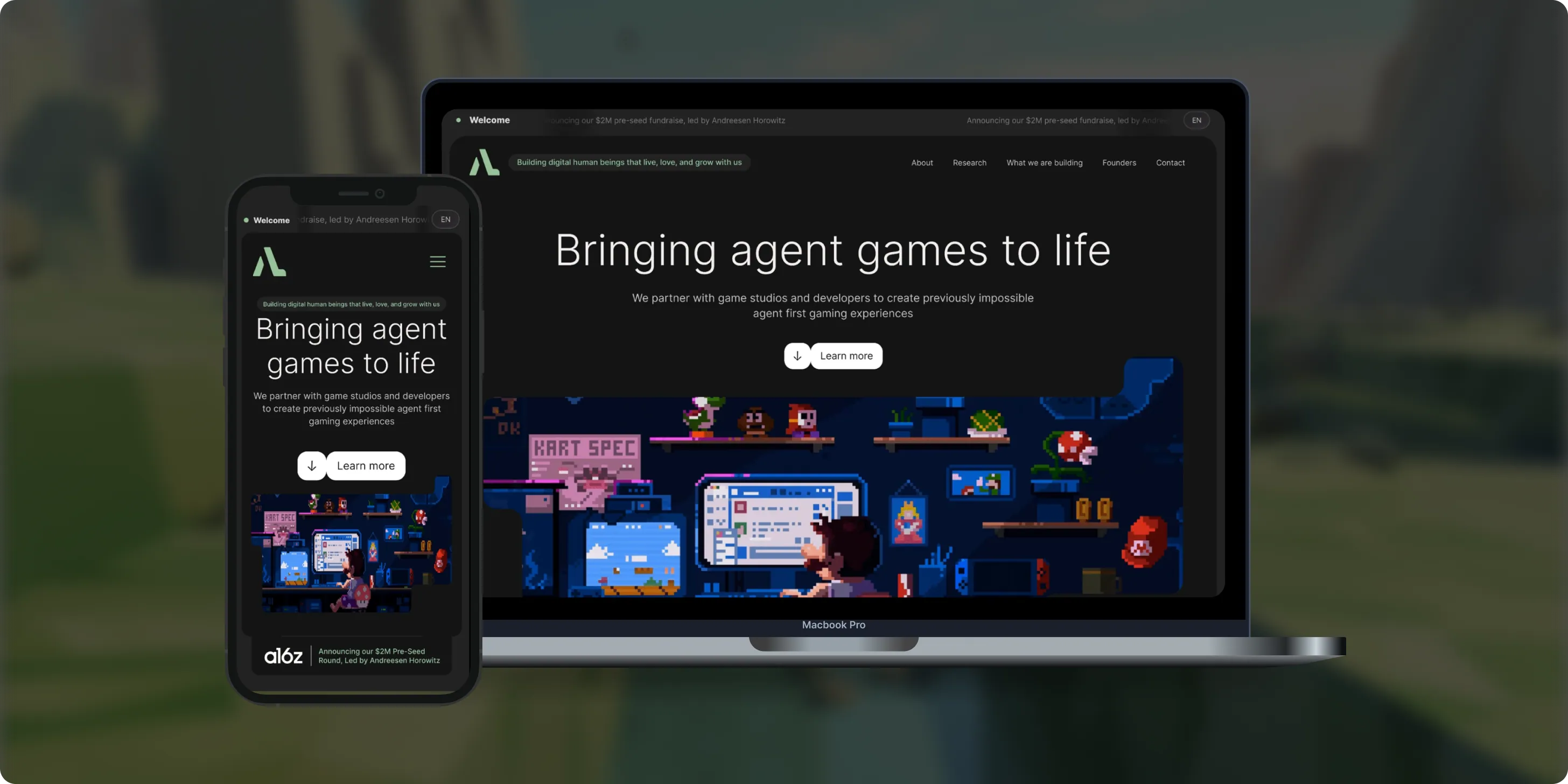
Altera builds on decades of computational neuroscience research to create digital human beings for gaming. Backed by a $2M pre-seed round led by Andreessen Horowitz, the team needed a landing page that could explain complex agent technology to players, partners, and investors.- 98%Dynamic Customization
- 100%Streamlined Navigation
- $2MPre-Seed Round
- Real Estate
Brizacorp
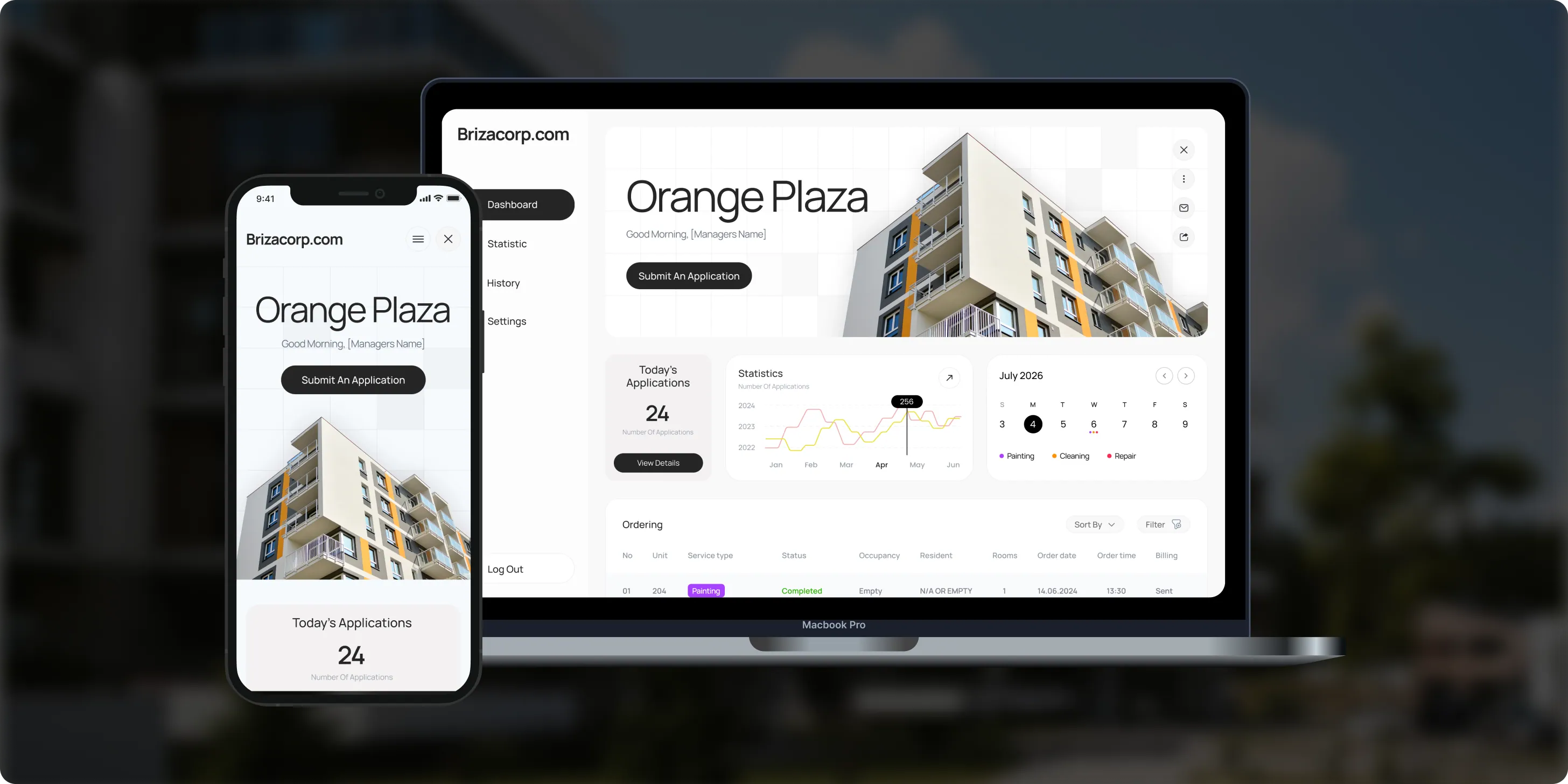
Brizacorp manages residential properties and coordinates the staff who handle painting, cleaning, and repair requests. Its team tracked work across messengers, phone calls, e-mail, and paper planners, with no single place to manage requests or measure performance.- 98%Application Stability
- 95%Utilization Rate
- 30%Faster Task Completion
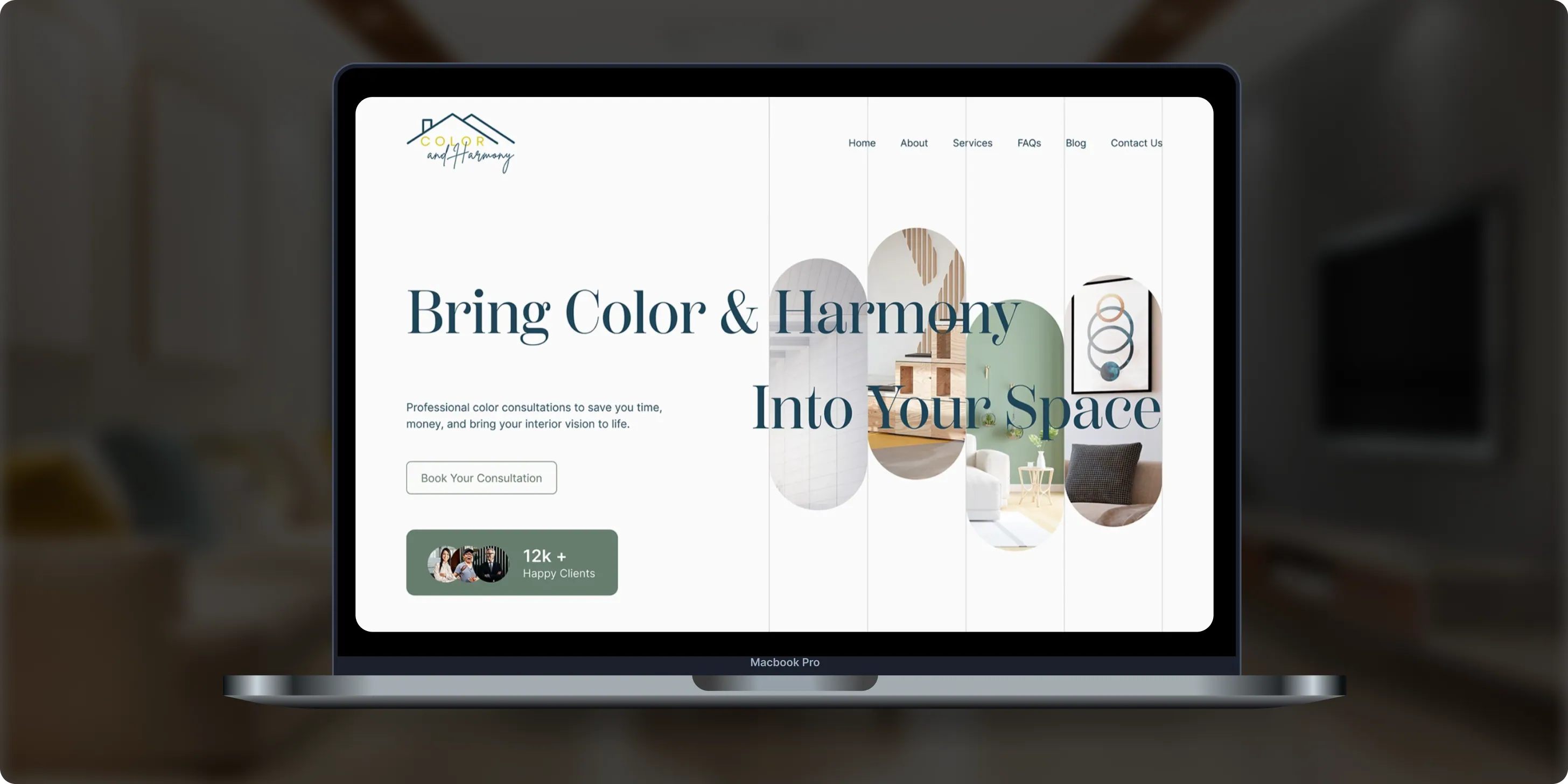
Color & Harmony
Color & Harmony is a Kentucky-based color consulting studio led by certified color strategist Diana Cartaya. The studio needed a website that reflects its refined aesthetic, showcases its portfolio, and explains a science-based color process in simple language.- 45%Conversion Rate Increase
- 50%Higher User Engagement
- 2Months to Launch
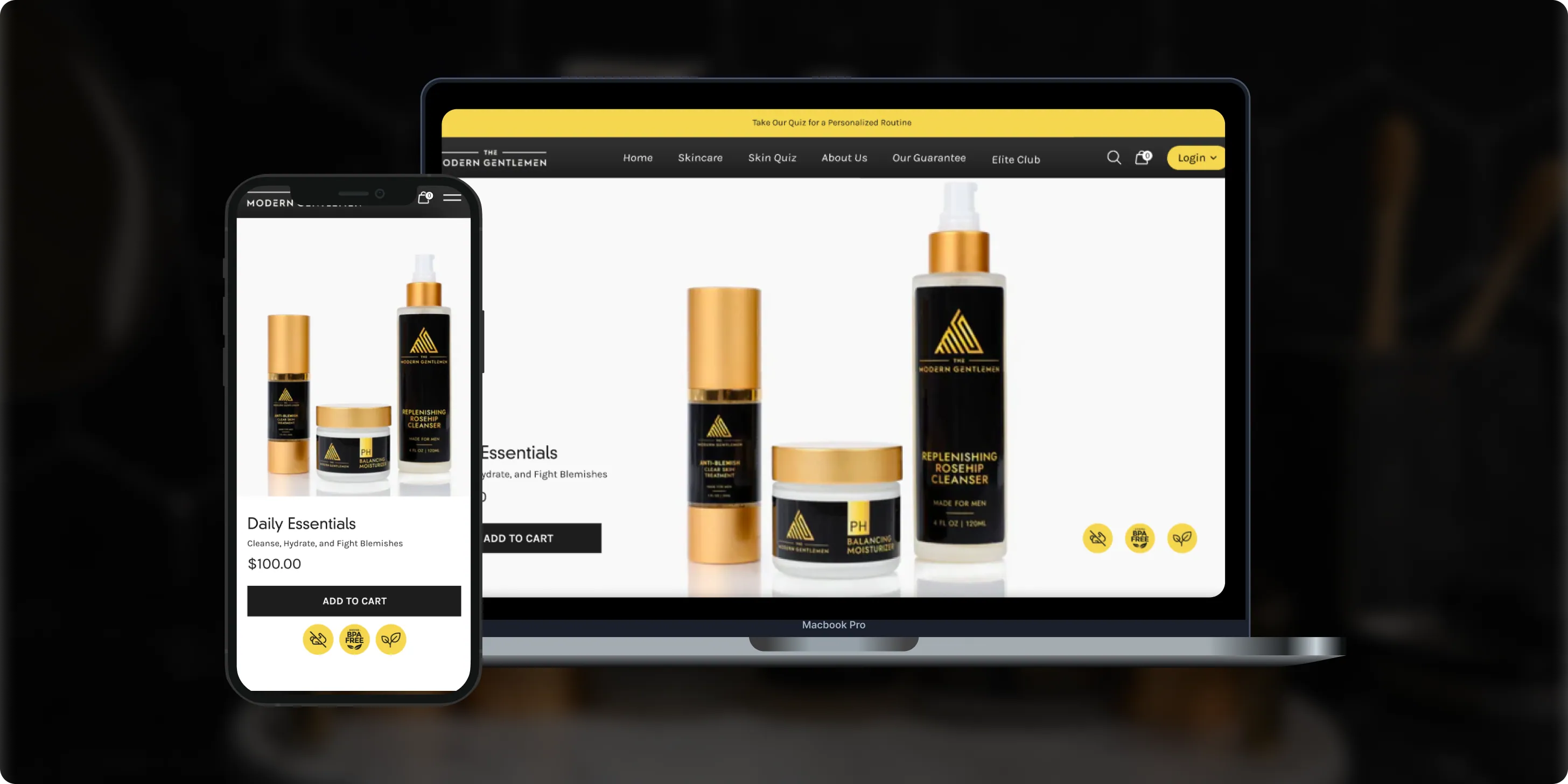
The Modern Gentlemen
The Modern Gentlemen sells premium men's skincare featured in Men's Health, GQ, and Men's Journal. Its customers wanted an efficient routine, but generic product suggestions and limited skincare knowledge made choosing the right products hard.- 30%Increase in Conversions
- 25%Higher Customer Retention
- 92%Mobile Purchases
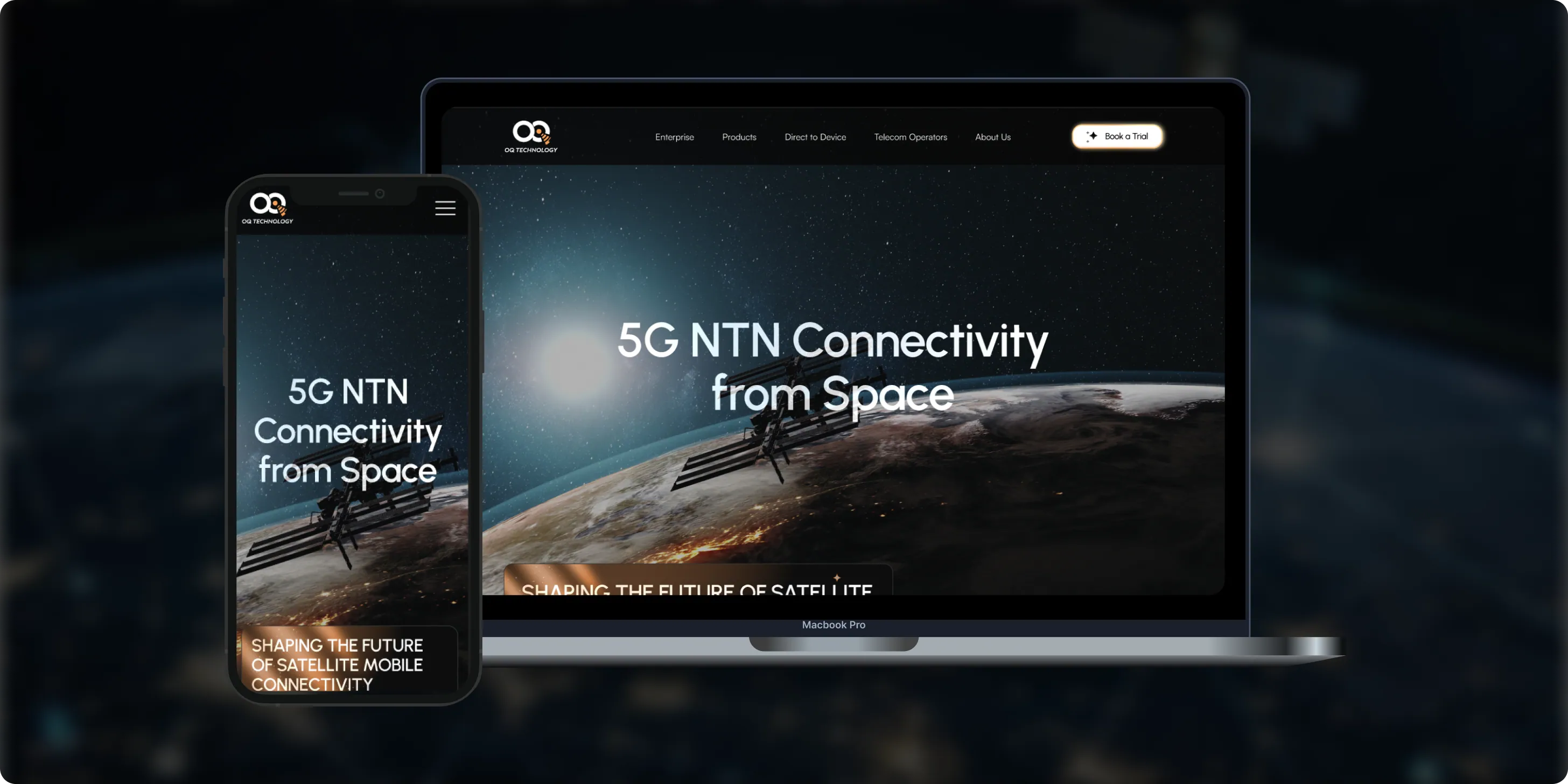
OQ Technology
OQ Technology connects IoT devices, machines, and people anywhere on the planet through its satellite network, serving energy, maritime, logistics, agriculture, and mobile operators. Its website made it hard to explore products and reach pricing plans.- 4Pricing Plans Clarified
- 3Dedicated User Flows
- 1Unified Platform
- Real Estate
- Finance
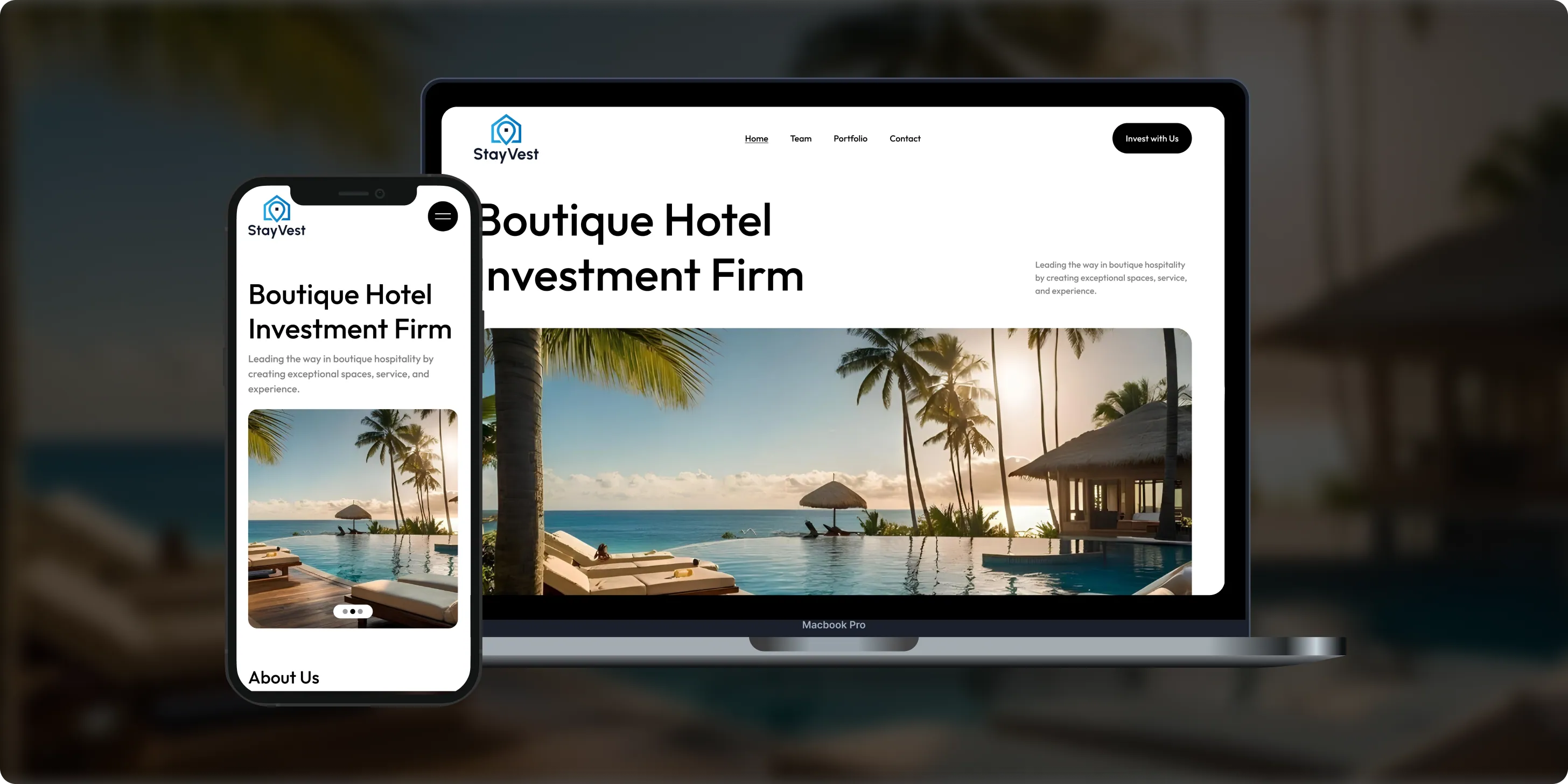
Stay Vest
Stay Vest is a private real estate investment firm that acquires, renovates, and operates boutique hotels for cash flow, tax benefits, and equity gain. It needed a platform that explains its strategy and earns the trust of passive investors.- 1,500+Guest Stays
- 200+Rooms Managed
- 5States Covered
Bokeyno Motorsports
Bokeyno Motorsports is the leading mobile installer of vertical doors for high-performance cars. This Shopify website isn’t just about services—it’s a bold statement of power, style, and expertise. With a sharp layout, strong visuals, and real-world case studies, the site delivers all the information car enthusiasts need to book confidently and instantly.- 54%Booking Requests
- 43%Lead Conversion
- 32%Qualified Inquiries

ai document processing platform
A comprehensive talent solution designed to help companies attract, hire, and retain top talent more effectively. The platform combines AI-powered recruitment technology with employee financial wellbeing programs, enabling smarter hiring decisions while supporting employees’ financial stability and long-term engagement.- 62%Faster Processing Time
- 78%Less Manual Work
- 35%Improved Accuracy

WHAT CLIENTS SAY
Independently verified reviews from real clients on Clutch.co


Client Story
Real feedback from
FMY Orthodontics

“Their perseverance and solution-oriented mindset. SoftDoes consistently found ways to make things work, added features we had not originally envisioned, and never became frustrated. It felt like working with a true partner who cared about the success of our practice.”
Dan Merwin
DDS, MS -- President, FMY Orthodontics

Client Story
Real feedback from
Prior Authorization AI
“Every time I sent a request, if there was anything that didn't work, they were able to turn it around quickly. Even when there were no updates yet, they always reached out to let me know they were working on it.”
Joseph Oluwo
Founder of Prior Authorization AI


Client Story
Real feedback from
WOVEN
“What stood out most was their commitment to understanding our needs before presenting solutions.”
Danna Pastran
Administrative Operations Manager, WOVEN

Client Story
Real feedback from
Grand Central Language Services
“The site performs as intended and provides the foundation for our company's digital presence.”
Joe Goldstein
QA Manager, Grand Central Language Services


Client Story
Real feedback from
DineMate
“They go above and beyond.”
Eric Snead
CEO, DineMate "Dating Connecting Platform"
Why they Choose SoftDoes
- 01SENIOR ENGINEERS, NOT LAYERS
SoftDoes EHR projects are led by senior engineers and architects who have previously shipped HIPAA‑compliant clinical systems, handled FHIR and HL7 integrations, and worked inside real hospital and clinic environments. They read clinical workflows, FHIR implementation guides (including the US Core Implementation Guide, currently at STU 9.0.0 reflecting USCDI v6), HL7 v2 interface specifications, ONC certification criteria, and privacy policies - then translate those into robust architectures and actionable backlog items. Clinicians, CMIOs, informaticists, and IT leads talk directly with the engineers doing the work, which eliminates the translation errors and delays caused by intermediary layers. These engineers are comfortable discussing patient matching strategies, terminology mapping between SNOMED CT and ICD‑10, interface throttling, and EHR vendor integration constraints in the same room as clinical stakeholders. That senior‑led model reduces rework and ensures the built EHR system behaves as healthcare professionals expect in live care settings.
- 02PREDICTABLE DELIVERY
SoftDoes structures EHR software implementation as phased releases: core charting and ordering workflows ship first, followed by e‑prescribing, billing, analytics, and mobile access in deliberate increments aligned with clinic schedules, reporting periods, and staff training capacity. Every phase starts with written specifications, user stories, and acceptance criteria tied to realistic clinical scenarios - a new patient visit, a chronic disease follow‑up, an urgent abnormal lab result. Regular demos run on synthetic or de‑identified patient data so healthcare practitioners can validate each feature before it reaches production. SoftDoes coordinates dependencies with client IT, compliance officers, EHR vendor teams, and external partners like labs, HIEs, and pharmacies to manage cutovers and interface handoffs. This predictability is vital when software development touches direct patient care, where downtime, regressions, or missing data are unacceptable.
- 03BUILT TO LAST PAST LAUNCH
Architectural choices like modular services, FHIR‑based internal data models, and clearly documented REST and FHIR APIs around domains - patients, encounters, orders, results, notes, billing events - mean the EHR solution can grow with new specialties, locations, and patient volumes without constant rewrites. Logging and monitoring patterns include per‑interface health dashboards, dead‑letter queues for failed messages, and alerting when lab feeds, e‑prescriptions, or HIE connections back up - so failed results or prescriptions are caught before they affect patient safety. Maintainability is enforced through code reviews, automated test suites for critical clinical logic (medication and allergy checks, drug–drug interactions, access rules), and CI pipelines that include security and regression testing. Documentation covers both technical and operational aspects so future teams - internal or external - can maintain and extend the electronic health records platform safely.
- 04NO BABYSITTING REQUIRED
SoftDoes onboards client teams with runbooks, admin and super‑user documentation, and targeted training for clinical and IT champions who will own the EHR day to day. The system includes intuitive admin consoles where internal teams manage users, roles, permissions, templates, order sets, code sets, clinical rules, and reference data without filing developer tickets. Environments and responsibilities are clearly separated so client IT knows what they can safely support and what requires SoftDoes involvement. Clients can choose ongoing partnership for enhancements and roadmap features, but daily operations and configuration never depend on constant vendor engagement. The goal is a sustainable EHR platform the healthcare organization controls - not one it must continuously babysit with external help.
How we work with your quality team
This is how SoftDoes partners with you from first conversation through long term support.




Experience Across Clinical Specialties and Care Settings
We build health record systems where patient safety, clinician time, and seamless data exchange come first.
Dental Practices
Patient Portal
Telemedicine
RPM Software
Remote Patient Monitoring software development
Prior Authorization
Complex systems, integrations, and internal platforms built to evolve. We step in when off-the-shelf tools stop being enough.
Healthcare CRM
From first version to real traction without painting yourself into a corner. Built for speed now and hard decisions later.
Bilimg RCM
Systems designed around controls, traceability, and change management. Built so audits don’t become fire drills.
Healthcare
Infrastructure software built for long timelines and high stakes. Reliable systems for assets that can’t afford guesswork.


Frequently Asked Questions
Everything you need to know about working with SoftDoes. Can’t find an answer?
What is the difference between EHR and EMR?
An EMR (electronic medical record) is a digital version of a paper chart used within a single healthcare facility - EMRs are limited to a single healthcare facility's records and primarily manage records within specific clinics or hospitals. An EHR (electronic health record) is designed to share a patient's health information across multiple healthcare providers and settings through interoperability standards like HL7 FHIR and C‑CDA. EHRs enable data sharing across multiple healthcare providers and provide continuous data interchange between healthcare systems. Most 2026 projects lean toward EHRs because patients, payers, and regulators expect medical data to move across organizations, but SoftDoes builds both EHR and EMR solutions depending on the client's care model and partner ecosystem.
How long does a custom EHR software development project take, and what drives the cost?
A focused module or SMART on FHIR app added to an existing EHR typically takes 3–6 months; a full custom EHR covering charting, orders, e‑prescribing, billing, and reporting ranges from 9–18 months depending on scope and certification needs. EHR development typically takes 8 to 10 weeks for lighter implementations, and custom EHR systems can go live in about 10 weeks when scope is tightly focused.
Can a custom EHR integrate with labs, pharmacies, other EHRs, and billing systems?
Yes. SoftDoes uses HL7 FHIR, HL7 v2 messaging, C‑CDA documents, Direct messaging, e‑prescribing networks, HIE connections, and clearinghouse interfaces to connect your EHR with the systems your healthcare organization already depends on. EHR integration enhances interoperability across healthcare systems, and EHR systems support integration with telehealth and remote monitoring tools. We handle patient matching, code and terminology mapping, reconciliation of duplicate medical records, sync frequency configuration, and robust error handling for clinical‑critical data flows like lab results and prescriptions. SoftDoes has practical experience integrating with Epic, Oracle Health/Cerner, athenahealth, Surescripts, major lab networks, imaging systems, and billing services - all while minimizing disruption to patient care.
How do you make an EHR HIPAA compliant and secure?
We implement encryption of PHI at rest and in transit, multi‑factor authentication, role‑based access with "break‑the‑glass" audit, detailed logging of every access and change, secure backups, and disaster recovery. Regulatory compliance includes following HIPAA in the US and GDPR in Europe, and EHR software must meet ONC certification standards for interoperability and implement HL7 and FHIR standards for data exchange. SoftDoes signs a business associate agreement, performs a HIPAA risk analysis, and collaborates with client security teams on threat modeling and penetration testing. We align with HIPAA, HITECH, the Cures Act information‑blocking rules, ONC certification criteria, and SOC 2 or HITRUST frameworks where clients require them - ensuring patient data security is built into the system rather than added as an afterthought.
Who owns the source code, data, and intellectual property in a custom EHR?
In SoftDoes projects, clients own their custom EHR source code, configurations, clinical content, and all patient data unless a different arrangement is explicitly agreed in writing. Third‑party components - licensed drug databases, terminology sets, open‑source libraries, and any SoftDoes internal utilities - are documented with their own licensing terms so there are no surprises. Final delivery includes code repositories, documentation, deployment scripts, and data export capabilities, ensuring the healthcare organization is never locked into a single vendor relationship.
Should we build a custom EHR or extend the EHR we already have?
Extending a major EHR with SMART on FHIR apps, specialty modules, or integrations often makes sense when the core system handles general workflows well but falls short in areas like specialty clinical documentation, care management, AI note drafting, or analytics. Full custom EHR/EMR software development is warranted when you have a unique care model, a niche specialty poorly supported by major vendors, or when you're building an EHR product for resale. EHR integration can reduce administrative burdens and improve workflows even without a full replacement. Part of SoftDoes discovery process is evaluating both options honestly and often recommending an incremental extension approach before a full replacement where feasible.
What kind of support do we get after our EHR goes live?
SoftDoes offers go‑live floor support, a hypercare period with real‑time monitoring and fast response to issues, and help desk collaboration during the first weeks of production. Ongoing support models include SLAs for incident response, enhancement backlogs, and regular maintenance releases. Priority is always given to issues affecting patient safety and critical clinical workflows - orders, lab results, e‑prescribing, and clinical documentation - and monitoring covers uptime, interface queue health, system response times, and failed prescriptions. EHR systems enable real‑time access to patient data, and our support model ensures that access stays uninterrupted as your healthcare organization grows.
How do you reduce risk on a complex EHR or EMR software development project?
SoftDoes uses phased rollouts by department or location, proofs of concept for complex integrations, and early migrations in test environments so problems are caught before they touch patient care. Developing EHR or EMR software involves complex technical and regulatory challenges, and developers must navigate complex clinical workflows unique to different healthcare specialties, so we rely on automated regression tests, sandbox connections to partners, data migration rehearsals with clinician validation, and read‑only access to legacy health records during transition. Clinical safety is a critical consideration throughout the EHR software development process, and transparent risk communication is built into every sprint review so leadership can make informed trade‑offs about scope, timeline, and change management. 75% of physicians report improved patient care with EHRs, and EHR systems reduce medical errors through detailed patient information - but those benefits only materialize when the rollout is managed carefully enough that clinicians trust the new system from day one.


