
U.S.-Based
Real Estate Marketplace Development for PropTech Businesses
Real estate marketplace development by SoftDoes: property portals and rental platforms with fast map search, verified listings, and built-in revenue.

Let's build together.
Talk with a senior engineer about your product idea, architecture, and what it would take to build it.
90+
Active Client Partnerships
80+ Person
Product & Engineering Team
100%
Your Code & IP Ownership
U.S.-Led
Delivery & Accountability
We understand the challenges you're facing
Users complain about listings that are already sold or rented, duplicates, and missing details. How do we keep inventory accurate?
Data quality is the foundation of every successful real estate marketplace. Surveys consistently show that 20–25% of users on property portals encounter listings that are already sold or rented, and a similar share report duplicate or outright fake listings - problems that directly destroy trust and engagement. Accurate listings increase user trust and engagement, and data accuracy and real-time sync are crucial for user trust in real estate listings. A custom marketplace solves this with a multi-source ingestion pipeline. Listings flow in from real estate agents, brokers, property managers, builders, property owners, and MLS or syndication data feeds, then pass through normalization, deduplication, enrichment, and automatic expiry. The data model we build covers properties, listings, listing versions, media (photos, videos, 3D tours), floor plans, prices and price history, availability, listers, agencies, neighborhoods, points of interest, inquiries, and bookings - structured data aligned with the RESO Data Dictionary where MLS data is used. With over 500 active MLSs in the U.S. having varying data standards, standardized property information is crucial for improving search quality. Listing deduplication is crucial for maintaining data integrity, and data validation prevents displaying incorrect property listings. Enrichment adds real value: we integrate sources like ATTOM or CoreLogic property data, school and transit APIs, and open government datasets so that every listing carries the context potential buyers and renters need. Quality scores reward complete listings - those with high-quality visuals, detailed property descriptions, and accurate pricing - pushing them higher in search results while flagging incomplete or suspicious entries for review. Real estate data management involves handling heavy data like high-resolution photos and pricing, so these pipelines are engineered for throughput and reliability.
Our search is slow and our map view struggles with large areas. How do we match the experience of the biggest portals?
Users search for homes and apartments on mobile devices and expect instant results. When your property search lags or your map pins collapse into chaos over a large geography, users leave - and they rarely come back. Advanced filter-based searches are integral to real estate platforms, and advanced search filters improve user experience significantly. We build search architecture specialized for the real estate market: geospatial indexing with Elasticsearch or OpenSearch, PostGIS for relational spatial queries, and Mapbox or Google Maps for map display. The result is draw-on-map search, commute-time and school-district filters, neighborhood boundaries, pin clustering, and faceted filters by property type, price, beds, amenities, and more - the kind of advanced features that enable users to evaluate properties based on their own search criteria. Property discovery must include search by various criteria like location and price, and integrating maps helps users evaluate property locations effectively. Buyers seek frictionless, hyper-local search functionality. Vector search for natural language queries ("loft in Brooklyn with exposed brick under $1M") is an emerging layer we implement on top of the core stack. User profiles allow personalized interactions and saved searches, so renters and buyers can save search criteria and get instant alerts when matching listings appear. CDN image delivery and server-side rendering keep listing and location pages fast and SEO-friendly, bringing organic traffic at scale. Sub-200ms response times and robust caching directly affect engagement, conversion, and search engine ranking for every real estate website and real estate app in competitive markets.
Rental scams and fake listings hurt our brand, and we face strict rules on advertising and personal data. How do we protect users and ourselves?
Trust is fragile in the real estate industry. According to FTC data, from 2020 through mid-2025, nearly 65,000 rental scams were reported in the U.S., resulting in roughly $65 million in losses - and the true scale is almost certainly larger. A 2026 ALTA survey found that 59% of title insurance firms reported at least one attempt at seller impersonation fraud in the prior year, up from 28% in 2024, with average paid claims exceeding $100,000. Property Shield, a fraud monitoring service, identified 4,050 fraudulent rental listings in New Mexico over just 18 months, with 72.9% of detected fakes originating on Facebook and roughly 6.5% on TikTok. Identity verification and listing authenticity are vital for marketplace trust. Platform security starts with lister and user verification - KYC checks, license verification for agents, and ownership documentation where applicable. Automated fraud signals scan for text patterns, photo reuse, price anomalies, and mismatched geolocations. Secure in-platform messaging and optional in-platform payments reduce off-platform risk. User-generated reviews increase trust and transparency, but reviews require moderation to prevent manipulation. Clear reporting tools let users flag abuse or discrimination quickly. AI can detect listing fraud and duplicates effectively, adding another defensive layer. Regulatory compliance includes adhering to fair housing laws and data handling policies: the Fair Housing Act and HUD guidance on housing advertising, MLS and IDX display rules, FTC rules on fake reviews, the EU Digital Services Act and UK online safety and consumer protection rules, KYC and AML for payments, PCI DSS, GDPR and CCPA/CPRA, and ADA and WCAG 2.2 accessibility. Real estate platforms need compliance with local advertising laws and data privacy regulations - and these rules change. Maryland's 2026 settlement with Bay Management Group, for instance, banned certain screening language previously considered standard. We build configurable policy engines and audit logs so that the platform enforces your legal team's decisions and documents every action.
We need listings from MLSs and partners, leads delivered to agents' CRMs, tours, and payments. Can one platform handle all of that?
Building a real estate marketplace requires multi-layered development, and integration complexity is where many platforms stall. An API-first architecture lets a single platform handle listing ingestion from the RESO Web API, XML and CSV feeds, and partner APIs - plus lead routing into CRMs, tour and showing scheduling, rental applications and screening, contracts and e-sign, and marketplace payments with split payouts to landlords and agents. Connecting to Multiple Listing Services is essential for real estate platforms in the U.S. market. We work with MLS systems through the RESO Web API, listing syndication feeds, Matterport and other 3D tour tools, ShowingTime for scheduling, TransUnion and other screening services, Stripe Connect, Adyen, and Plaid for payments, DocuSign for contracts, Twilio and SendGrid for communications, Salesforce and HubSpot for CRM, Google Analytics for tracking, and custom in-house systems. Sellers and agents need robust listing management tools, and the platform delivers them alongside consumer-facing search and discovery. Migration from an existing portal is a common scenario. We move listings, users, saved searches, and SEO-critical URLs so that traffic and rankings are maintained - no 404 avalanche, no lost domain authority. Content marketing can help build SEO authority for real estate platforms, but only if URLs, canonical tags, and structured data survive the transition intact.
How do we attract enough listings to bring in users, and enough users to make listers pay?
A marketplace requires both supply and demand to function effectively - the classic liquidity challenge. Marketplace liquidity is a challenge needing effective strategies to attract both listings and buyers. Effective marketplaces often start with a focused, hyper-local strategy: one city, one property type, one user segment, then expand once the flywheel turns. We run discovery with buyers, renters, real estate agents, landlords, and builders to shape features for both sides. The platform includes role-specific interfaces: a consumer site and real estate marketplace app optimized for mobile devices, lister dashboards with performance stats and lead quality insights, team views for agencies, moderation consoles for operations, and admin monetization tools. Successful real estate platforms must establish clear monetization strategies - subscription models charge agents recurring fees for access, lead generation fees charge for qualified inquiries from brokers, featured listings provide increased visibility for a fee, transaction success fees take a percentage of completed deals, and advertising revenue comes from service providers purchasing ad space. SoftDoes UX practice means mobile-first design, fast media-rich listing pages with high-quality visuals and virtual tours, simple listing creation flows, A/B tested paywalls and pricing tables, and inclusive accessible design. User experience should be optimized for mobile as a majority uses smartphones for searches. High-quality imagery and virtual tours are essential for modern real estate listings, and 3D virtual tours enhance user experience by allowing remote property exploration. Property listings management is essential for user engagement on both sides of the marketplace.
You connect people with property. We engineer the marketplace behind it.

Custom real estate marketplace platforms
We build fully custom property marketplace platforms tailored to each client's business model, target market, and audience - not template sites with limited customization options. Custom-built marketplaces allow full ownership of the platform and can be tailored to specific business models, covering residential portals, long-term rental marketplaces, student housing and co-living platforms, commercial real estate marketplace platforms, new development and builder portals, vacation rental platforms, FSBO, auction, and instant-offer models. Custom platforms require higher upfront investment than white-label, but white-label solutions incur recurring license fees and have limited customization options - custom development pays off where competitive positioning and unique selling points matter.
Map-based search with draw-on-map, commute, and school filters
Self-serve listing creation with photo upload, media validation, and quality checks
Built-in monetization through subscriptions, featured listings, leads, or transaction fees

Listing data pipelines and marketplace analytics
SoftDoes builds the data foundation that keeps inventory correct and gives operators clear market insights. We design ETL and streaming pipelines, search indexes optimized for real estate, data warehouses, and BI dashboards - so every listing is current and every business decision is informed by real data analytics.
Automatic listing updates and expiry
Market analytics: price trends, days on market, market demand by area or property type, and inventory gaps by neighborhood
Dashboards for operators and listers

AI-enhanced search, trust, and personalization
AI features can enhance user engagement and differentiate platforms in the market, but only when applied carefully. Modern users expect AI-driven recommendations in digital marketplaces. We apply AI to improve property discovery, content, and fraud prevention - always under fair housing and privacy constraints.
Conversational and natural language search
AI-generated listing descriptions and auto-tagged photos
Fraud and scam detection
Numbers Don’t Lie
Recent projects showcasing how we design, engineer, and deliver production-ready software solutions.

- Startup
- Real Estate
Our Haus AI
A finance professional turned founder built Our Haus AI, an AI-powered collaborative workspace where homeowners and contractors scope, bid, contract, and document renovation projects together. SoftDoes took her prototype and made it production-ready.- 10XMVP scope delivered
- 2+years Ongoing partnership
- 1Fully owned Platform

- Finance
- Energy
Deepwater Insights
Deepwater Insights delivers proprietary alternative data and niche research on the offshore drilling and energy sector to institutional investors, family offices, and high-net-worth individuals who require coverage that larger firms don't provide.- 100%Brand Continuity
- 2Platform Distribution
- 100%Paywall-Ready Content

- Real Estate
The building buyer
The Building Buyer is a Florida-based real estate investment firm co-founded by Dylan Troiano and Charles Hanlin. They acquire single-family, multifamily, and commercial properties across South Florida and beyond, with a focus on motivated seller opportunities.- 18Weekly hours saved
- 2+Years Ongoing partnership
- 1Fully owned Platform

- Education
- Non-Profit
WOVEN & NICE
Woven is a Spring Valley, NY nonprofit running the NICE program (New Training Inclusive Community Environment) in four Rockland County schools. Their team supports students through restorative practices, mediation, and professional development for teachers and administrators.- 4Schools Served
- 4Weeks to Launch
- 1STTime on Upwork

- Healthcare
CareInTouch
CareInTouch is a Bay Area home health agency providing skilled nursing and therapy services to patients referred from hospitals and clinics. With over 100 staff, they operate in one of the most complex and compliance-driven healthcare markets in the country.- 40% Reduction In Billing Errors
- 100+Staff Operations Managed
- 0Missed Compliance Deadlines

- Startup
Sparkle The Cleaning Service
Sparkle The Cleaning Service is a Detroit-area residential cleaning company with 10 years in business, connecting homeowners with vetted, insured independent cleaners through a subscription-based marketplace platform.- 75% Platform Transparency
- 2XPlatform Growth
- 40%Higher User Retention

- Startup
DineMate
DineMate is a Maryland-based dating and connecting platform built around verified profiles, restaurant reservations, and prepaid dining experiences. Founded to bring back authenticity to how people meet and connect.- 60% Time Saved
- 99%System Reliability
- 40%Higher User Retention

- Healthcare
Prior Authorization AI
Prior Authorization AI is a healthcare automation startup building AI-powered tools to streamline prior authorization for Medicare and Medicaid medical transportation providers in New Jersey.- 16Weekly hours saved
- 63%Admin time reduced
- 43%Fewer submission errors

- Education
Grand Central Language Services
Grand Central Language Services provides translation and interpretation for organizations operating in complex, multilingual environments. As demand grew, internal workflows became harder to manage. SoftDoes built a custom platform to streamline coordination, improve visibility, and support scalable operations.- 72%Workflow Reduction
- 48%Coordination Reduction
- 83%Visibility Increase

- Healthcare
FMY Orthodontics
FMY Orthodontics, a multi-location practice in West Tennessee, partnered with SoftDoes to replace a spreadsheet-based financial workflow with a custom web platform. The goal was to simplify how staff present treatment financing while allowing patients and families to review and complete decisions remotely.- 60%Workflow Reduction
- 75%Remote Adoption
- 5Locations Aligned

Forbidden Alchemy
Forbidden Alchemy is an alternative fashion brand creating dark, provocative clothing for the metalhead community, with 10% of profits donated to mental health awareness. Its mostly mobile audience struggled with a store that was hard to navigate and weak on functionality.- +44%Revenue Month Over Month
- 86%Design Satisfaction
- 2.8XUser Retention Growth

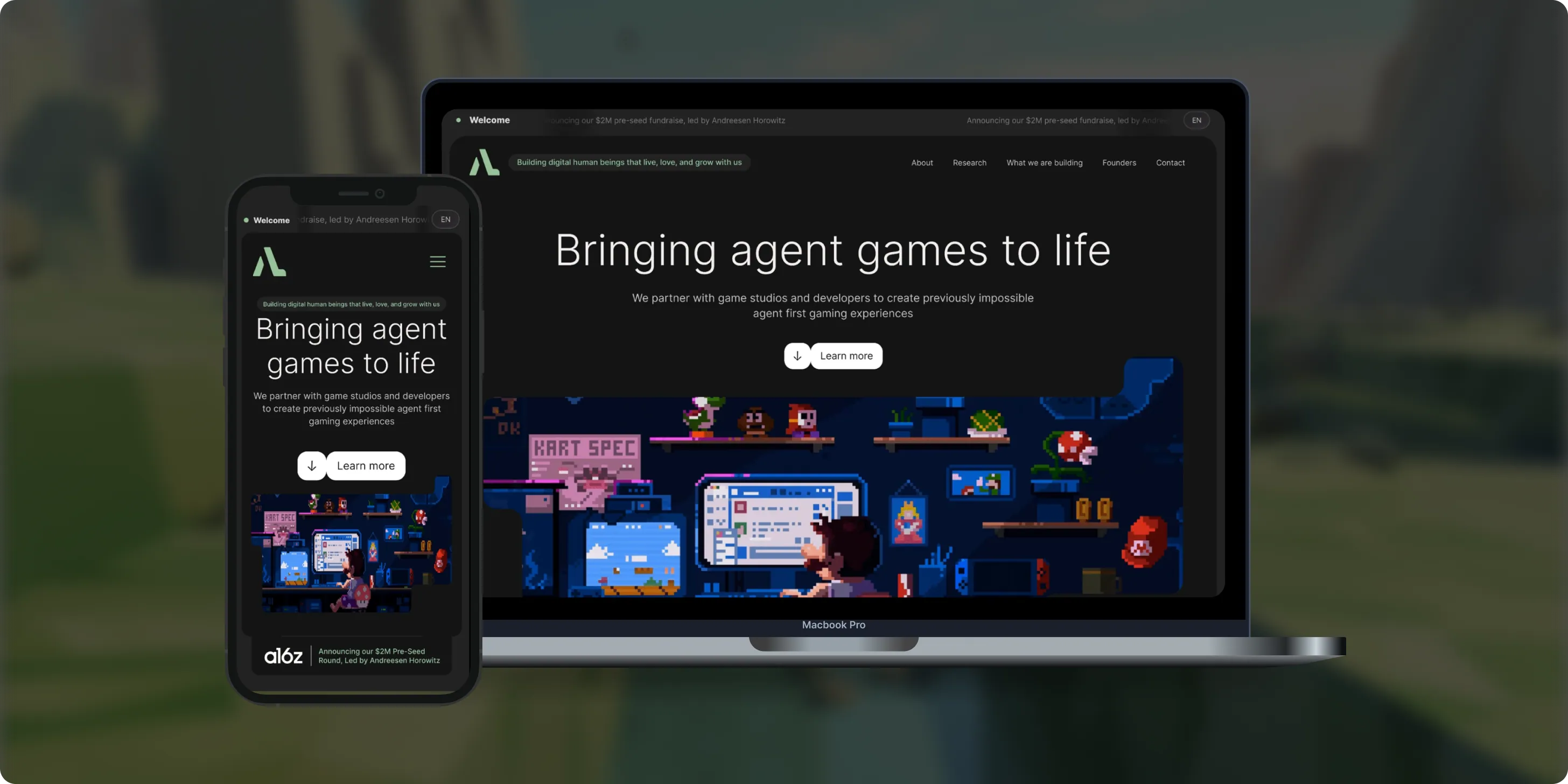
Altera
Altera builds on decades of computational neuroscience research to create digital human beings for gaming. Backed by a $2M pre-seed round led by Andreessen Horowitz, the team needed a landing page that could explain complex agent technology to players, partners, and investors.- 98%Dynamic Customization
- 100%Streamlined Navigation
- $2MPre-Seed Round
- Real Estate
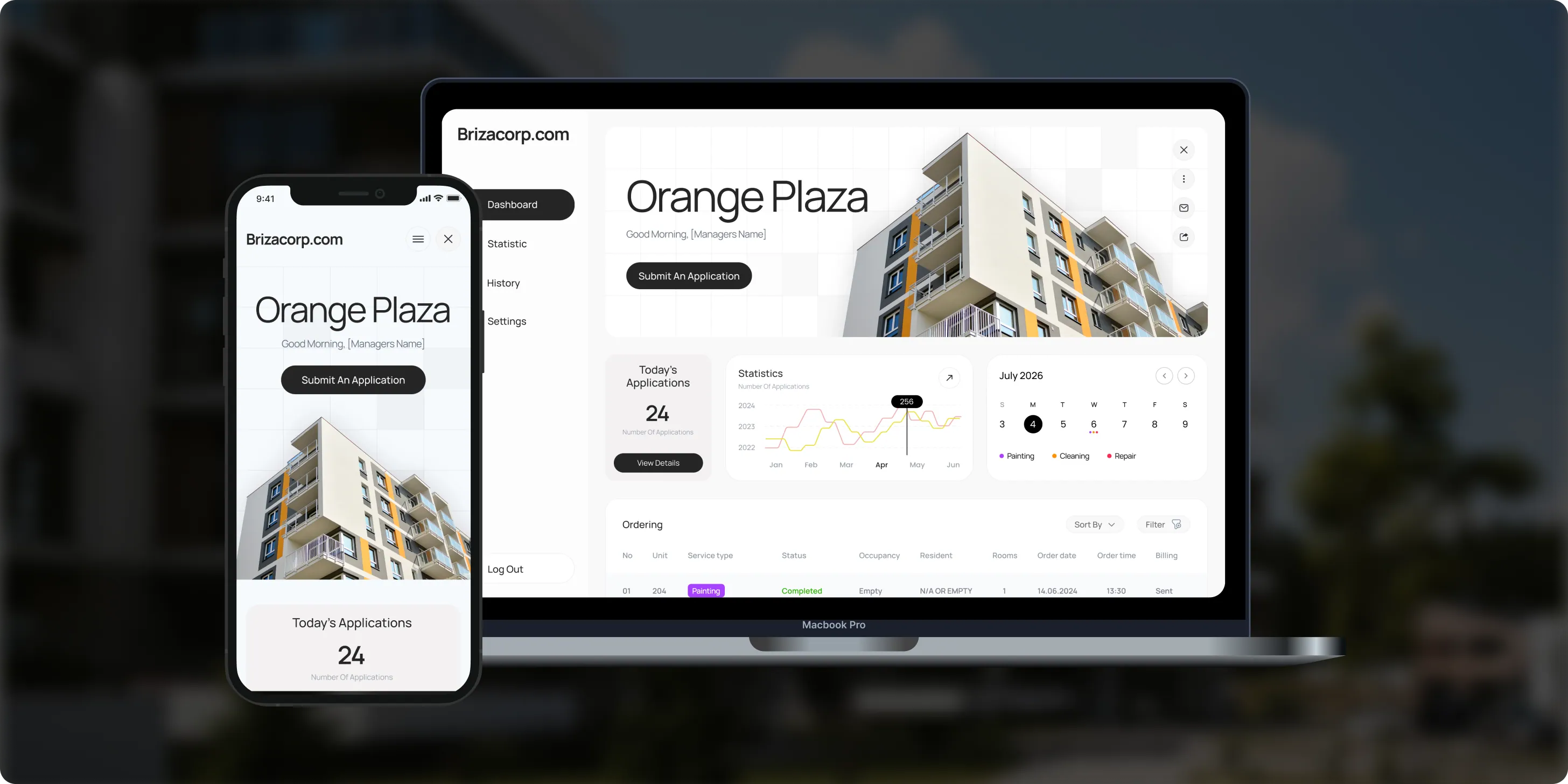
Brizacorp
Brizacorp manages residential properties and coordinates the staff who handle painting, cleaning, and repair requests. Its team tracked work across messengers, phone calls, e-mail, and paper planners, with no single place to manage requests or measure performance.- 98%Application Stability
- 95%Utilization Rate
- 30%Faster Task Completion
Color & Harmony
Color & Harmony is a Kentucky-based color consulting studio led by certified color strategist Diana Cartaya. The studio needed a website that reflects its refined aesthetic, showcases its portfolio, and explains a science-based color process in simple language.- 45%Conversion Rate Increase
- 50%Higher User Engagement
- 2Months to Launch

The Modern Gentlemen
The Modern Gentlemen sells premium men's skincare featured in Men's Health, GQ, and Men's Journal. Its customers wanted an efficient routine, but generic product suggestions and limited skincare knowledge made choosing the right products hard.- 30%Increase in Conversions
- 25%Higher Customer Retention
- 92%Mobile Purchases

OQ Technology
OQ Technology connects IoT devices, machines, and people anywhere on the planet through its satellite network, serving energy, maritime, logistics, agriculture, and mobile operators. Its website made it hard to explore products and reach pricing plans.- 4Pricing Plans Clarified
- 3Dedicated User Flows
- 1Unified Platform

- Real Estate
- Finance
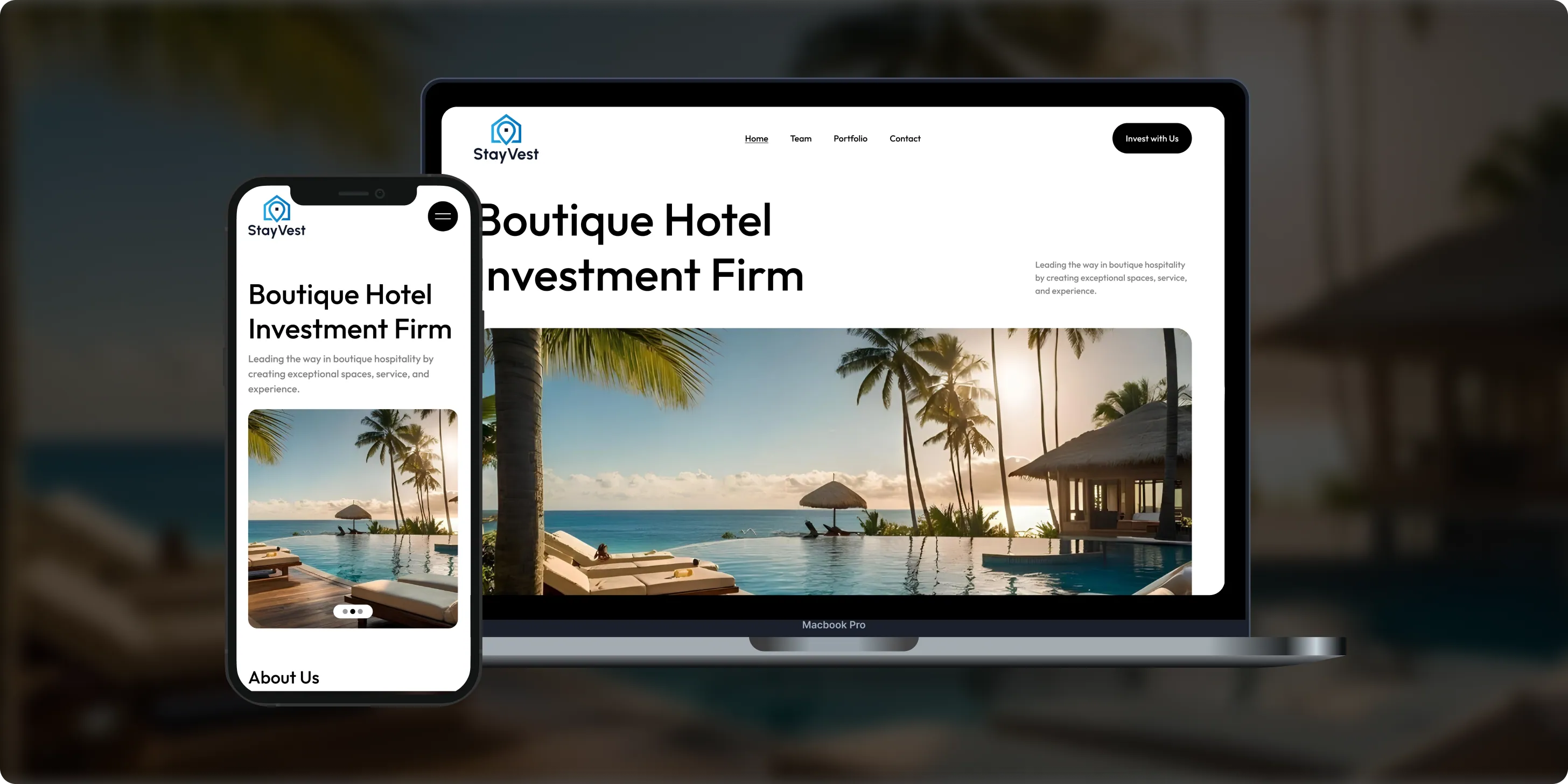
Stay Vest
Stay Vest is a private real estate investment firm that acquires, renovates, and operates boutique hotels for cash flow, tax benefits, and equity gain. It needed a platform that explains its strategy and earns the trust of passive investors.- 1,500+Guest Stays
- 200+Rooms Managed
- 5States Covered
Bokeyno Motorsports
Bokeyno Motorsports is the leading mobile installer of vertical doors for high-performance cars. This Shopify website isn’t just about services—it’s a bold statement of power, style, and expertise. With a sharp layout, strong visuals, and real-world case studies, the site delivers all the information car enthusiasts need to book confidently and instantly.- 54%Booking Requests
- 43%Lead Conversion
- 32%Qualified Inquiries

ai document processing platform
A comprehensive talent solution designed to help companies attract, hire, and retain top talent more effectively. The platform combines AI-powered recruitment technology with employee financial wellbeing programs, enabling smarter hiring decisions while supporting employees’ financial stability and long-term engagement.- 62%Faster Processing Time
- 78%Less Manual Work
- 35%Improved Accuracy

WHAT CLIENTS SAY
Independently verified reviews from real clients on Clutch.co


Client Story
Real feedback from
FMY Orthodontics

“SoftDoes consistently found ways to make things work, added features we had not originally envisioned, and never became frustrated. It felt like working with a true partner who cared about the success of our practice.”
Dan Merwin
DDS, MS, President, FMY Orthodontics

Client Story
Real feedback from
Prior Authorization AI
“Every time I sent a request, if there was anything that didn't work, they were able to turn it around quickly. Even when there were no updates yet, they always reached out to let me know they were working on it.”
Joseph Oluwo
Founder of Prior Authorization AI


Client Story
Real feedback from
WOVEN
“What stood out most was their commitment to understanding our needs before presenting solutions.”
Danna Pastran
Administrative Operations Manager, WOVEN

Client Story
Real feedback from
Grand Central Language Services
“The site performs as intended and provides the foundation for our company's digital presence.”
Joe Goldstein
QA Manager, Grand Central Language Services


Client Story
Real feedback from
DineMate
“They go above and beyond.”
Eric Snead
CEO, DineMate "Dating Connecting Platform"
Why they Choose SoftDoes
- 01SENIOR ENGINEERS, NOT LAYERS
Every project is led by senior engineers and architects who have shipped high-traffic marketplaces, search systems, payments, and mobile apps - not junior teams hidden behind account managers. They understand the real estate industry's data landscape: listing feeds, RESO standards (including the RESO Web API and Data Dictionary versions 2.0 and 2.1), geospatial data, MLS display rules, and syndication rights. Client founders, heads of product, and growth teams communicate directly with SoftDoes technical leads, reducing translation errors and accelerating decisions. These engineers go deep on topics like index design for millions of residential listings, deduplication strategies, fraud models, marketplace payments, SEO at scale, and ADA/WCAG accessibility for property pages - the kind of detail that determines whether a real estate platform succeeds or stalls.
- 02PREDICTABLE DELIVERY
We follow an MVP-first approach: clearly defined scope for a first launchable marketplace, then iterative releases guided by user feedback, user behavior data, and growth goals. Written specifications and acceptance criteria tied to real journeys - "renter finds and books a viewing on mobile in under two minutes" - keep everyone aligned, with recurring demos so the client team sees progress, not just reports. Timelines are planned around marketing campaigns, seasonality in housing markets (spring rush, academic rental cycles), and data partner onboarding. This predictability matters when fundraising milestones, partnership agreements, and growth targets depend on specific launch windows.
- 03BUILT TO LAST PAST LAUNCH
We make architectural decisions for the long term: scalable cloud infrastructure, separate services for ingest, search, and payments, caching and CDN, documented APIs, and multi-market and multi-language support from day one - including currency handling and localized content. Logging, monitoring, and alerts surface feed failures, slow queries, and payment errors before users notice. Maintainability practices include code reviews, automated testing, CI/CD, load testing with realistic search and browsing patterns, and security testing. Platforms built this way scale from one city to many countries and millions of multiple properties without constant rewrites - real estate software development that supports future growth.
- 04NO BABYSITTING REQUIRED
Handover includes full documentation, runbooks, admin guides, and training for the client's product and support teams. Admin tools let client teams manage listings, users, moderation rules, pricing plans, promotions, content pages, and SEO settings - no developer needed for everyday operations. We design systems with scalable technologies and clean APIs so the client can maintain and extend the platform independently, avoiding vendor lock-in. Ongoing partnership, enhancement, and post launch support are available but never mandatory for every configuration change - your team stays in control.
How we work with your quality team
This is how SoftDoes partners with you from first conversation through long term support.




Experience Across Property Portals, Rental Platforms, Commercial Real Estate, and Proptech Startups
We build real estate marketplaces where accurate listings, fast search, and user trust are non-negotiable.


Frequently Asked Questions
Everything you need to know about working with SoftDoes. Can’t find an answer?
How long does real estate marketplace development take, and what does it cost?
A focused MVP - one city, one property type, core search and listing features - can launch in a few months, typically three to six. A full multi-market, multi-language platform with MLS feeds, AI features, marketplace payments, and mobile apps may take nine to eighteen months. Cost is driven by the number and variety of listing sources (MLS agreements, data licensing), search and map complexity, payment and payout integrations, verification and moderation depth, AI features, and the number of markets and languages. A single-city rental marketplace and a nationwide residential portal with advanced features and apps are fundamentally different scopes.
Can you build a platform like Zillow, Rightmove, or Airbnb?
SoftDoes can build platforms with similar capabilities - search, maps, alerts, monetization, apps - but the best results come from designing for your niche, target market, and business model rather than cloning a giant. Starting with the core features that matter most to your target users, then growing the platform step by step, is how the best real estate app experiences are built. Access to listing data and partnerships (MLS access, builder relationships, property manager networks) is often the real competitive advantage, and we help plan the technology around them.
Where do the listings come from, and can we use MLS data?
Common sources include direct uploads by listers, partner and syndication feeds, MLS data through the RESO Web API where the client has the right license, and integrations with builders and property managers. MLS data comes with strict display and usage rules - attribution, update cadence, allowed use - and the platform enforces them. SoftDoes implements rule-compliant display logic; for broker-focused MLS and IDX systems, see the SoftDoes MLS & IDX Software Development page.
How do you prevent scams and protect user data?
The platform supports layered protections: lister verification (identity, license, ownership), listing moderation with automated fraud signals, secure in-app messaging and payments, and easy reporting. Encryption covers data in transit and at rest, role-based access control limits exposure, and payment providers are PCI DSS compliant. Privacy controls align with GDPR and CCPA/CPRA, and where relevant, the EU Digital Services Act. Hyperlocal data improves user decision-making in property searches, but personal data handling must be airtight.
Who owns the source code and intellectual property?
Under standard SoftDoes contracts, the client owns the custom source code and IP for their real estate platform. Third-party components - maps, analytics, property data - are documented under their own licenses, and open-source libraries are used under standard licenses. At handover, the client receives source code, full documentation, and CI/CD configurations so they can run and extend the platform independently.
How can AI improve a real estate marketplace?
AI delivers concrete value: natural language search ("three-bed near a subway under $3,000"), personalized recommendations based on user behavior, listing description and photo tag drafts for listers, price estimates based on market trends, and fraud detection for fake listings and scam messages. AI models provide accurate property valuations based on market trends, and among surveyed realtors, 92% are using or planning to use AI - though 63% worry about accuracy. Safeguards matter: no ranking or targeting by protected characteristics, explainable pricing models, human review of fraud flags, and visible labels on AI-generated content. Blockchain enables fractional ownership in real estate marketplaces and smart contracts automate real estate transactions using blockchain technology - emerging capabilities we can integrate when the business model calls for them.
How will the marketplace make money?
Common models include subscriptions for agents or landlords, featured listings with increased visibility, pay-per-lead fees, booking or transaction fees, advertising from service providers, and data products. SoftDoes builds flexible billing so the client can test combinations and pricing tiers over time - generate revenue from the model that fits, then evolve. After launch, we help analyze conversion and revenue metrics to refine monetization strategies and support experiments like A/B tested pricing tables.
How do you reduce risk on a real estate marketplace development project?
MVP-first delivery, early prototypes tested with real users, and soft launches in one market are the primary levers. Engineering controls include automated tests, load testing, observability, and rollback strategies. Transparent communication - regular status reports, visible risk registers, and clear trade-off discussions - ensures founders and leadership make informed decisions throughout the development process. A clear roadmap with milestones is essential for project success, and defining business objectives early influences every development decision downstream.