
U.S.-Based
Custom Property Valuation & Appraisal Software Development
Property valuation software development by SoftDoes: appraisal management, review automation, and explainable AVMs built for USPAP and UAD rules.

Let's build together.
Talk with a senior engineer about your product idea, architecture, and what it would take to build it.
90+
Active Client Partnerships
80+ Person
Product & Engineering Team
100%
Your Code & IP Ownership
U.S.-Led
Delivery & Accountability
We understand the challenges you're facing
Orders, assignments, revisions, and reviews still move by email and phone. How do we shorten turn times without losing quality?
A custom valuation management platform handles the full appraisal process from order intake to delivery. SoftDoes engineers end-to-end systems that accept orders from loan origination systems and lender portals, manage appraiser panels and licenses, automate assignment, enforce fee and due-date agreements, track status in real time, receive report uploads, run automated and manual reviews, manage revisions, and deliver final reports and invoices. The underlying data model defines consistent entities for orders, properties, borrowers, lenders, appraisers and their licenses, assignments, inspections, reports, comparable sales, adjustments, review findings, revisions, and invoices. The assignment engine applies rules based on license type and state, coverage area, current capacity, historical turn-time performance, and appraiser independence requirements-structurally separating loan production staff from appraiser selection and logging all communication. Automated pre-checks catch missing fields, inconsistent data, and basic USPAP and UAD formatting issues before any human appraiser or reviewer has to intervene, while dashboards give operations, lenders, and borrowers a live view of the pipeline. Workflow management features help appraisers track multiple assignments efficiently, and automated workflows reduce manual assessment time across the board.
Appraisers spend hours pulling public records, MLS data, and comparables. How do we give them better data faster without taking away professional judgment?
Traditional appraisals often involve hours of manual data collection, and tracking comparable properties manually is tedious and time-consuming. SoftDoes integrates MLS data, public records, tax assessor and deed data, flood and hazard maps, zoning layers, market trend feeds, and prior valuation history into a single workspace, eliminating the need for appraisers to toggle between a dozen sources. Comparable search tools let appraisers filter by distance, GLA, date range, construction type, and property type on a map-based interface, with similarity scoring and adjustment support grounded in market-derived statistics-paired sales analysis, regression, and trend analysis. Inspection and data collection apps support photo capture, sketching and floor plans, 3D scanning, and measurement under ANSI Z765 standards for residential square footage, with offline mode for fieldwork. The platform surfaces better property data and analytical support to back the narrative and workfile, but appraisers keep full control over comp selection, adjustments, and the final opinion of value-because appraisal software integrates data from MLS and public records to accelerate the process, not to replace professional judgment.
Report formats, agency requirements, and fair lending scrutiny keep changing. How do we stay compliant and prove our valuations are unbiased?
The Uniform Standards of Professional Appraisal Practice (USPAP) governs appraisal practices in the U.S., and beyond USPAP, valuation professionals face Appraiser Independence Requirements (AIR), Dodd-Frank appraisal independence rules, the Interagency Appraisal and Evaluation Guidelines, and lender-specific overlays that all need enforcement. SoftDoes builds configurable rule engines that validate compliance at every stage-standardized templates ensure compliance with industry appraisal standards, while data exports align with the Uniform Appraisal Dataset (UAD), the redesigned URAR, and MISMO XML structures for UCDP and FHA EAD submissions. Choosing software should consider UAD 3.6 compliance requirements: the redesigned UAD 3.6 format becomes mandatory for all GSE-conforming appraisals submitted to UCDP on November 2, 2026, with UAD 2.6 fully retiring by June 28, 2027. For commercial and international appraisal work, the platform supports IVS and RICS Red Book formats, plus IAAO-aligned capabilities for mass appraisal where relevant. Bias and fair lending safeguards check for problematic language, unsupported adjustments, and neighborhood descriptions referencing protected classes, producing data outputs that support ECOA and Fair Housing Act reviews. SoftDoes works with the client's compliance and chief appraiser teams to encode their specific policies, and the software maintains audit trails on every change, override, and communication for regulators and investors. Ensuring comprehensive data integration helps mitigate biases in property assessments, and automated reporting features comply with established appraisal standards while providing full audit trails.
We want to use AVMs and hybrid appraisals more, but regulators and investors expect them to be tested, explainable, and fair. How do we build them right?
Automated valuation models reduce manual errors in appraisals and use complex algorithms for property valuation, but building them right requires more than a model-it requires governance. SoftDoes develops AVMs using statistical and machine learning methods such as hedonic regression, gradient-boosted trees, and geospatial models to produce value estimates with confidence scores and feature-level explanations. Each AVM includes back-testing against actual sales using metrics like median absolute percentage error (MdAPE) and the share of estimates within ±10% of sale price (PE10)-industry benchmarks expect PE10 values of 70–80% or higher for residential lending use, while leading providers report MdAPE figures as low as 2.7% in data-rich markets. Governance features include challenger versus champion models, performance dashboards segmented by geography and property type, bias and disparate impact testing, version control, and detailed model documentation for risk teams and regulators. Hybrid workflows combine property data collection by an inspector using standardized checklists with a desktop appraisal interface where appraisers merge AVM output, subject data, and targeted comparable analysis. AVMs analyze large datasets for residential and commercial properties, and the platform supports integration with third-party AVMs and data providers so clients can cascade or blend internal and external models based on property type, value band, and risk appetite. AI should assist rather than replace human judgment in appraisals-licensed appraisers or trained reviewers always make final determinations where regulations require it. Historical transaction data should be used to validate valuation model accuracy, and transparent analytical approaches enable users to challenge valuations and adjust methodologies during appraisals.
Our appraisers use their own form software, and our lenders each have different loan systems. Can a new platform connect everyone without disrupting them?
SoftDoes designs an API-first architecture with secure REST and GraphQL APIs and webhooks that integrate with loan origination systems such as ICE Encompass, appraisal form tools like a la mode TOTAL, ACI One (which supports cloud-based appraisal workflows and report creation), Bradford ClickFORMS, and Freedom Appraise (a cloud-based platform for mobile appraisal tasks), as well as agency submission portals and payment processors. The platform can route orders to external networks like Mercury Network, Reggora, and Anow, and connect to valuation data systems including Clear Capital, CoreLogic (Cotality), HouseCanary, Veros, ATTOM, CoStar, ARGUS Enterprise, Valcre, and local MLS vendors. DataMaster Pro integrates MLS and public-record data, TrueTracts automates market analysis and comparable selection, and Appraiser Toolkit centralizes assignment management and report generation-SoftDoes builds integrations that let these tools work as part of a cohesive ecosystem rather than isolated silos. Rollout happens in phases: running side-by-side with legacy systems, migrating order history, panels, and templates in stages, and training appraisers and reviewers without forcing them off their preferred desktop tools overnight. SoftDoes also has experience integrating geographic information system tools such as Esri, CAMA systems like Tyler iasWorld, and floor plan and 3D capture tools including CubiCasa and Matterport into valuation ecosystems. Data integration from multiple sources enhances appraisal accuracy, and appraisal software should match your specific workflow needs rather than forcing a generic process on your team.
You deliver the value. We engineer the software behind it.

Custom valuation and appraisal management platforms
SoftDoes engineers end-to-end appraisal data management software tailored to each client's order types, panel structure, SLAs, and review standards-not a one-size-fits-all workflow tool. Typical modules include order intake from LOS and portals, appraiser panel and license management, an assignment engine, fee and scheduling management, inspection apps, report upload and validation, review and QC tools, revision workflows, lender and agency delivery, invoicing, and performance reporting.
Rule-based assignment engine enforcing license, coverage, capacity, and appraisal independence
Automated data and formatting checks before human review to cut rework and revision requests
Real-time status tracking and notifications for lenders, appraisers, and borrowers

Valuation data platforms and analytics
SoftDoes builds unified data layers combining property characteristics, comparable sales and listings, tax and deed records, hazard and zoning data, market indices, and internal valuation history into trusted datasets that valuation professionals, reviewers, and analysts can rely on. The architecture uses ETL/ELT pipelines, geospatial databases, cloud data warehouses, and BI dashboards designed for chief appraisers, reviewers, analysts, and executives.
Map-based comparable search with similarity scoring and export to reports
Market trend and adjustment analysis tools to support defensible grids and narratives
Dashboards on turn times, revision rates, review findings, and appraiser performance

AI-enhanced and automated valuation
AI improves property valuations by analyzing vast data sets-SoftDoes builds AVMs with confidence scores and explainability, computer vision models for photo-based condition and quality hints, NLP to extract data from appraisal PDFs and leases, and AI review agents that flag inconsistencies or potentially biased language. AI features follow valuation and fair lending expectations: documented model governance, bias testing, and licensed appraisers or trained reviewers always making final determinations where regulations require human judgment.
Explainable AVMs with back-testing and monitoring dashboards built in
Computer vision support for condition and quality scoring from photos and floor plans
AI-assisted report review that checks every file before human QC touches it
Numbers Don’t Lie
Recent projects showcasing how we design, engineer, and deliver production-ready software solutions.

- Startup
- Real Estate
Our Haus AI
A finance professional turned founder built Our Haus AI, an AI-powered collaborative workspace where homeowners and contractors scope, bid, contract, and document renovation projects together. SoftDoes took her prototype and made it production-ready.- 10XMVP scope delivered
- 2+years Ongoing partnership
- 1Fully owned Platform

- Finance
- Energy
Deepwater Insights
Deepwater Insights delivers proprietary alternative data and niche research on the offshore drilling and energy sector to institutional investors, family offices, and high-net-worth individuals who require coverage that larger firms don't provide.- 100%Brand Continuity
- 2Platform Distribution
- 100%Paywall-Ready Content

- Real Estate
The building buyer
The Building Buyer is a Florida-based real estate investment firm co-founded by Dylan Troiano and Charles Hanlin. They acquire single-family, multifamily, and commercial properties across South Florida and beyond, with a focus on motivated seller opportunities.- 18Weekly hours saved
- 2+Years Ongoing partnership
- 1Fully owned Platform

- Education
- Non-Profit
WOVEN & NICE
Woven is a Spring Valley, NY nonprofit running the NICE program (New Training Inclusive Community Environment) in four Rockland County schools. Their team supports students through restorative practices, mediation, and professional development for teachers and administrators.- 4Schools Served
- 4Weeks to Launch
- 1STTime on Upwork

- Healthcare
CareInTouch
CareInTouch is a Bay Area home health agency providing skilled nursing and therapy services to patients referred from hospitals and clinics. With over 100 staff, they operate in one of the most complex and compliance-driven healthcare markets in the country.- 40% Reduction In Billing Errors
- 100+Staff Operations Managed
- 0Missed Compliance Deadlines

- Startup
Sparkle The Cleaning Service
Sparkle The Cleaning Service is a Detroit-area residential cleaning company with 10 years in business, connecting homeowners with vetted, insured independent cleaners through a subscription-based marketplace platform.- 75% Platform Transparency
- 2XPlatform Growth
- 40%Higher User Retention

- Startup
DineMate
DineMate is a Maryland-based dating and connecting platform built around verified profiles, restaurant reservations, and prepaid dining experiences. Founded to bring back authenticity to how people meet and connect.- 60% Time Saved
- 99%System Reliability
- 40%Higher User Retention

- Healthcare
Prior Authorization AI
Prior Authorization AI is a healthcare automation startup building AI-powered tools to streamline prior authorization for Medicare and Medicaid medical transportation providers in New Jersey.- 16Weekly hours saved
- 63%Admin time reduced
- 43%Fewer submission errors

- Education
Grand Central Language Services
Grand Central Language Services provides translation and interpretation for organizations operating in complex, multilingual environments. As demand grew, internal workflows became harder to manage. SoftDoes built a custom platform to streamline coordination, improve visibility, and support scalable operations.- 72%Workflow Reduction
- 48%Coordination Reduction
- 83%Visibility Increase

- Healthcare
FMY Orthodontics
FMY Orthodontics, a multi-location practice in West Tennessee, partnered with SoftDoes to replace a spreadsheet-based financial workflow with a custom web platform. The goal was to simplify how staff present treatment financing while allowing patients and families to review and complete decisions remotely.- 60%Workflow Reduction
- 75%Remote Adoption
- 5Locations Aligned

Forbidden Alchemy
Forbidden Alchemy is an alternative fashion brand creating dark, provocative clothing for the metalhead community, with 10% of profits donated to mental health awareness. Its mostly mobile audience struggled with a store that was hard to navigate and weak on functionality.- +44%Revenue Month Over Month
- 86%Design Satisfaction
- 2.8XUser Retention Growth

Altera
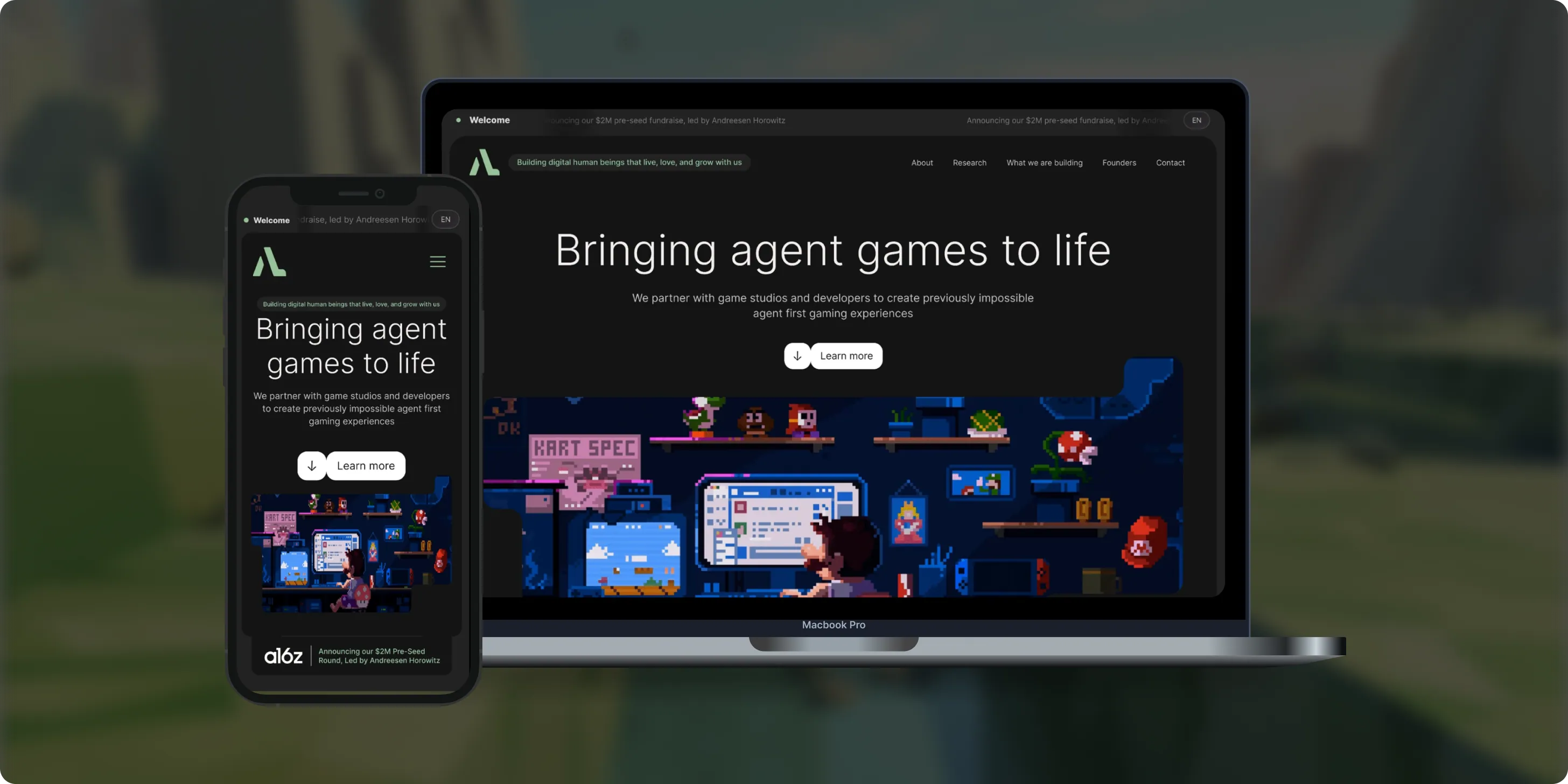
Altera builds on decades of computational neuroscience research to create digital human beings for gaming. Backed by a $2M pre-seed round led by Andreessen Horowitz, the team needed a landing page that could explain complex agent technology to players, partners, and investors.- 98%Dynamic Customization
- 100%Streamlined Navigation
- $2MPre-Seed Round
- Real Estate
Brizacorp
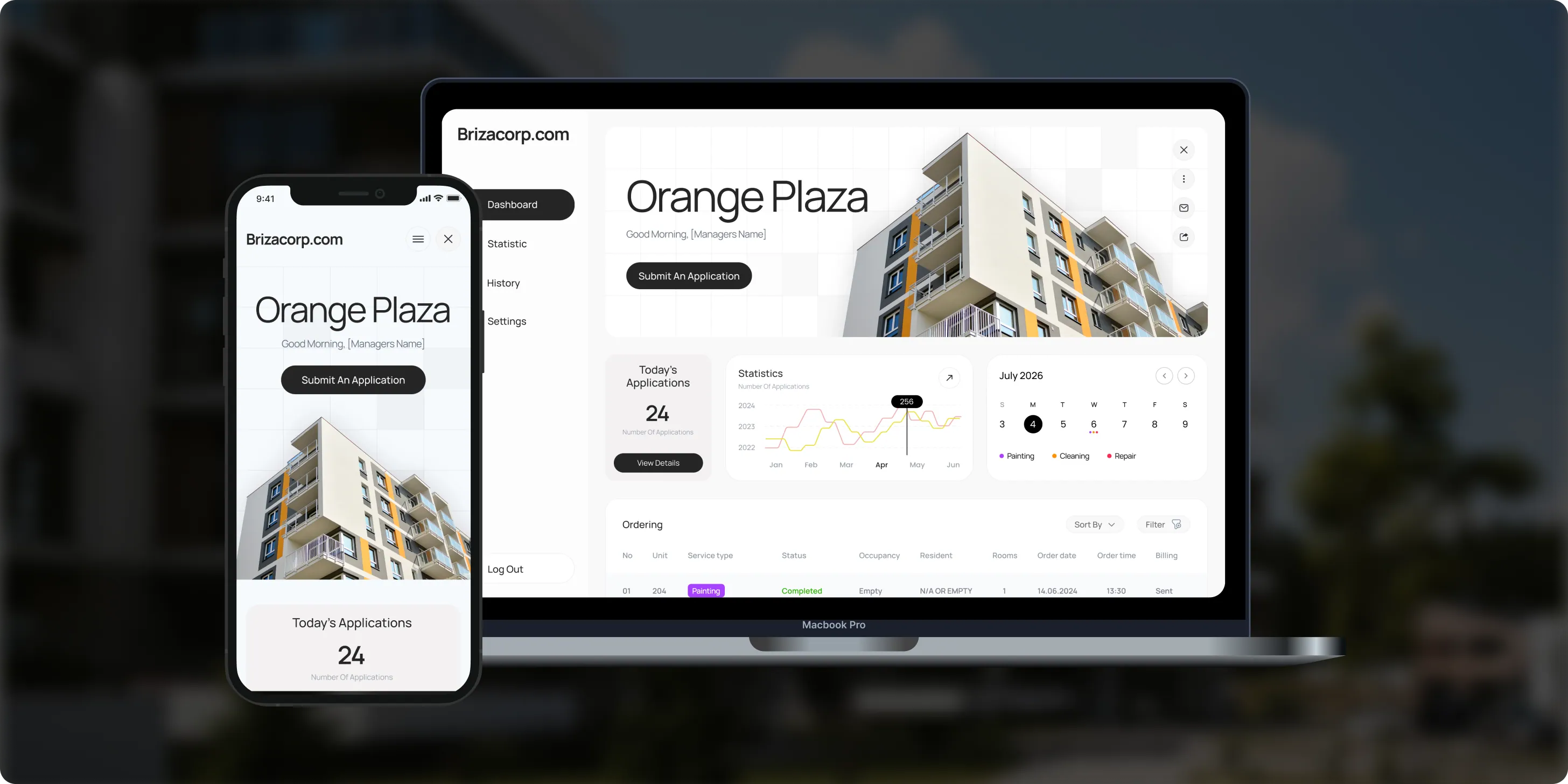
Brizacorp manages residential properties and coordinates the staff who handle painting, cleaning, and repair requests. Its team tracked work across messengers, phone calls, e-mail, and paper planners, with no single place to manage requests or measure performance.- 98%Application Stability
- 95%Utilization Rate
- 30%Faster Task Completion
Color & Harmony
Color & Harmony is a Kentucky-based color consulting studio led by certified color strategist Diana Cartaya. The studio needed a website that reflects its refined aesthetic, showcases its portfolio, and explains a science-based color process in simple language.- 45%Conversion Rate Increase
- 50%Higher User Engagement
- 2Months to Launch

The Modern Gentlemen
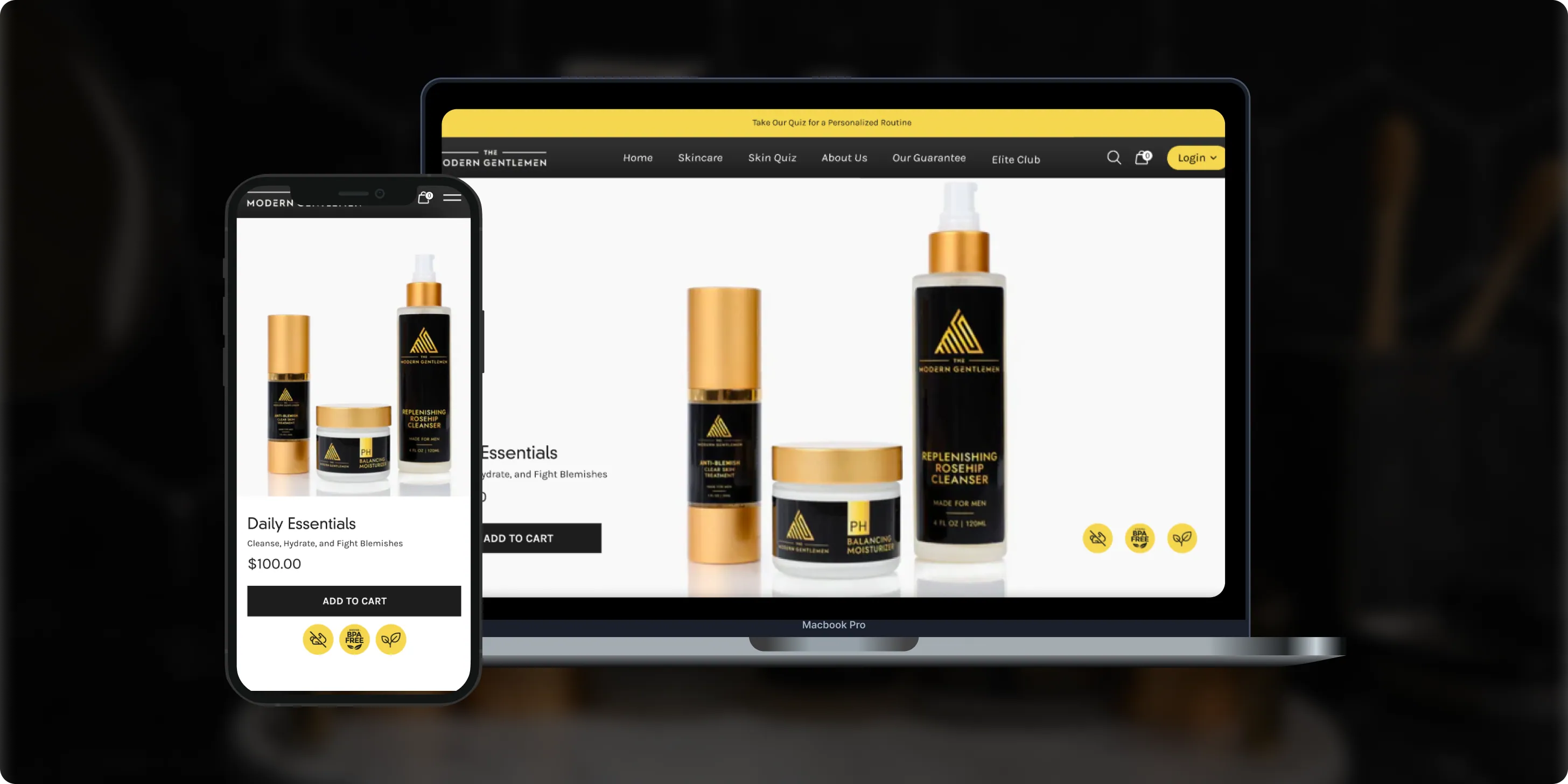
The Modern Gentlemen sells premium men's skincare featured in Men's Health, GQ, and Men's Journal. Its customers wanted an efficient routine, but generic product suggestions and limited skincare knowledge made choosing the right products hard.- 30%Increase in Conversions
- 25%Higher Customer Retention
- 92%Mobile Purchases
OQ Technology
OQ Technology connects IoT devices, machines, and people anywhere on the planet through its satellite network, serving energy, maritime, logistics, agriculture, and mobile operators. Its website made it hard to explore products and reach pricing plans.- 4Pricing Plans Clarified
- 3Dedicated User Flows
- 1Unified Platform

- Real Estate
- Finance
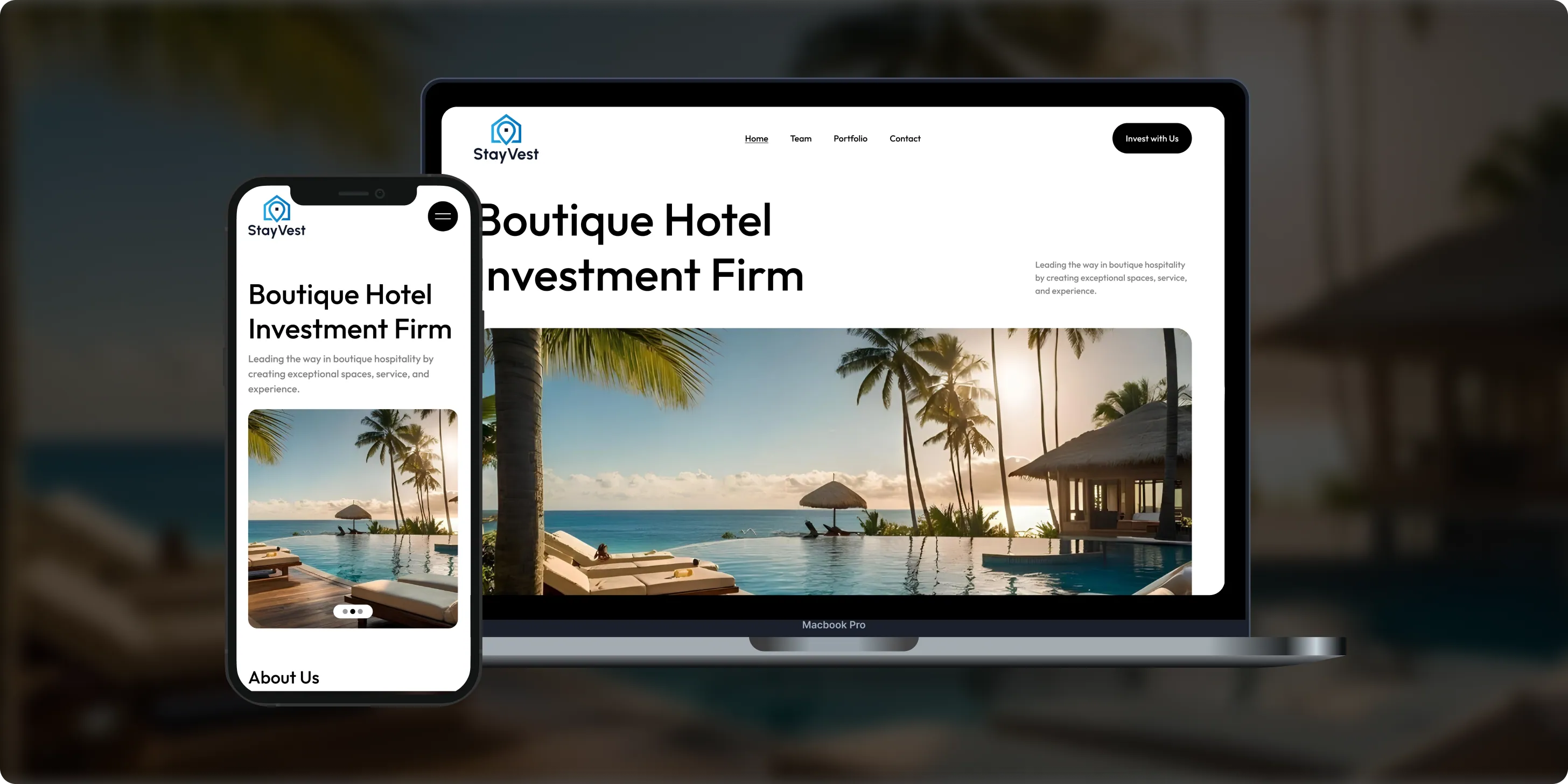
Stay Vest
Stay Vest is a private real estate investment firm that acquires, renovates, and operates boutique hotels for cash flow, tax benefits, and equity gain. It needed a platform that explains its strategy and earns the trust of passive investors.- 1,500+Guest Stays
- 200+Rooms Managed
- 5States Covered
Bokeyno Motorsports
Bokeyno Motorsports is the leading mobile installer of vertical doors for high-performance cars. This Shopify website isn’t just about services—it’s a bold statement of power, style, and expertise. With a sharp layout, strong visuals, and real-world case studies, the site delivers all the information car enthusiasts need to book confidently and instantly.- 54%Booking Requests
- 43%Lead Conversion
- 32%Qualified Inquiries

ai document processing platform
A comprehensive talent solution designed to help companies attract, hire, and retain top talent more effectively. The platform combines AI-powered recruitment technology with employee financial wellbeing programs, enabling smarter hiring decisions while supporting employees’ financial stability and long-term engagement.- 62%Faster Processing Time
- 78%Less Manual Work
- 35%Improved Accuracy

WHAT CLIENTS SAY
Independently verified reviews from real clients on Clutch.co


Client Story
Real feedback from
FMY Orthodontics

“SoftDoes consistently found ways to make things work, added features we had not originally envisioned, and never became frustrated. It felt like working with a true partner who cared about the success of our practice.”
Dan Merwin
DDS, MS, President, FMY Orthodontics

Client Story
Real feedback from
Prior Authorization AI
“Every time I sent a request, if there was anything that didn't work, they were able to turn it around quickly. Even when there were no updates yet, they always reached out to let me know they were working on it.”
Joseph Oluwo
Founder of Prior Authorization AI


Client Story
Real feedback from
WOVEN
“What stood out most was their commitment to understanding our needs before presenting solutions.”
Danna Pastran
Administrative Operations Manager, WOVEN

Client Story
Real feedback from
Grand Central Language Services
“The site performs as intended and provides the foundation for our company's digital presence.”
Joe Goldstein
QA Manager, Grand Central Language Services


Client Story
Real feedback from
DineMate
“They go above and beyond.”
Eric Snead
CEO, DineMate "Dating Connecting Platform"
Why they Choose SoftDoes
- 01SENIOR ENGINEERS, NOT LAYERS
Projects are led by senior engineers, architects, and data scientists who have shipped workflow platforms, geospatial data systems, and production machine learning models in regulated financial industries-not junior teams shielded by layers of management. They understand valuation methods: sales comparison, income and cost approaches, comparable selection and adjustment logic, review checklists, UAD and MISMO formats, and model risk management frameworks. SoftDoes technical leads work directly with client chief appraisers, reviewers, compliance officers, and data science teams, reducing the translation errors that plague projects where business requirements pass through multiple layers before reaching the engineer who writes the code. They can discuss UAD 3.6 schema changes, redesigned URAR structures, AVM back-testing metrics, fair-lending bias tests, and residual land value calculations in concrete terms-because developing software for property valuation involves compliance with regulatory standards that require real domain fluency.
- 02PREDICTABLE DELIVERY
SoftDoes follows an incremental, milestone-based approach aligned with client release calendars, agency format changes, and busy lending or tax cycles. Written specifications and acceptance criteria are tied to real appraisal scenarios-specific order types, report templates, UCDP and EAD submission files, and AVM governance documents. Regular demos use working software with anonymized or test orders so appraisers, reviewers, and operations staff can validate usability and rules before launch. Model validation, documentation, and compliance checks are part of the delivery plan from the start-not rushed at the end when regulators are already asking questions. This predictability matters when loan closings, tax assessment rolls, and regulatory exams depend on accurate, timely valuation data.
- 03BUILT TO LAST PAST LAUNCH
Architectural decisions prioritize longevity: configurable rules engines for assignment and review, modular services for order management, data ingestion, and analytics, and well-documented APIs for LOS and data partners. Property valuation applications utilize modern software architectures for scalability and performance, with logging and monitoring designed for valuation realities-alerts on stalled orders, failed data feeds from MLS or public records, AVM performance drift, or submission errors to UCDP and EAD. Code quality practices include code review, automated tests (including regression tests for rules and formats), CI/CD pipelines, and regular security testing. Platforms can expand to new property types, markets, and products-hybrids, evaluations, mass appraisal, scenario analysis for property developers-without rewriting the core every year. Cloud-based solutions enhance accessibility from any internet-connected device, and cloud storage reduces the risk of data loss for appraisers.
- 04NO BABYSITTING REQUIRED
SoftDoes delivers full technical and administrative documentation, model documentation, and configuration guides so clients can manage day-to-day operations in-house. Admin interfaces let client teams manage appraiser panels, assignment criteria, lender rules, review checklists, report templates, and AVM/model settings without developer involvement. Structured training resources are provided for operations staff, reviewers, and IT so they can own releases, minor enhancements, and onboarding of new users or lender clients. SoftDoes offers ongoing partnership and support options, but systems are built to streamline operations and empower client satisfaction-not to create lock-in or dependence for every small configuration change.
How we work with your quality team
This is how SoftDoes partners with you from first conversation through long term support.




Experience Across Appraisal Firms, AMCs, Mortgage Lending, and Real Estate Data Companies
SoftDoes builds property valuation software for organizations where accurate property values, appraisal independence, and fair outcomes are non-negotiable.


Frequently Asked Questions
Everything you need to know about working with SoftDoes. Can’t find an answer?
How long does property valuation software development take, and what does it cost?
Timelines depend on scope: a focused module such as a review tool, inspection app, or valuation API can reach production in a few months, while a full appraisal management platform or AVM product with multiple integrations takes longer. Key cost drivers include the number and type of integrations (LOS, MLS, data providers, form software), breadth of appraisal workflows supported, degree of automation in review and compliance, AVM or AI scope, and data migration needs. SoftDoes typically proposes a transparent MVP estimate with a roadmap for subsequent phases, so you can compare scenarios and prioritize based on business impact.
Can you build an AVM, and how accurate will it be?
SoftDoes designs and implements AVMs using statistical and machine learning methods, but accuracy depends on data quality, market depth, property types, and use-case constraints-so it is measured, not promised. Back-testing against actual sales uses metrics like median absolute percentage error and PPE10, with clear coverage definitions and confidence scores that guide when a full appraisal or hybrid is required. Machine learning models can improve prediction accuracy and speed in property valuation, and AI technology adapts and improves accuracy with each assessment. We support interagency AVM quality control expectations, bias testing, and documentation for model risk teams and independent validators.
Can the platform work with our LOS, form software, and data providers?
Integration is a core part of every appraisal software development project SoftDoes undertakes, covering LOS platforms, appraisal form tools, agency submission portals, MLS and public record data, flood and hazard feeds, and third-party AVMs. We support standard formats such as UAD and MISMO XML for residential appraisals, plus custom formats and reporting tools for commercial appraisal work. Order history, appraiser panels, property records, and report archives can be migrated in stages to reduce disruption, and integrating GIS data helps assess location impacts on property value.
How do you support appraisal independence and fair valuation rules?
The software structurally separates loan production staff from appraiser assignment and communications, enforces rule-based panel selection, and logs all contacts to support AIR and Dodd-Frank requirements. Built-in review tools flag unsupported adjustments, inconsistent comp choices, and potentially biased or prohibited language in narratives, plus bias testing for any valuation models. Implementing security measures and compliance standards is vital for valuation software, and specific rules are configured with the client's compliance team to align with USPAP, the Interagency Appraisal and Evaluation Guidelines, ECOA, and the Fair Housing Act.
Who owns the source code, models, and intellectual property?
Under standard SoftDoes contracts, the client owns the custom source code, valuation models, and IP created for their project. Third-party data licenses, commercial components, and open source libraries are documented so ownership and obligations are transparent. Handover includes code repositories, model artifacts, training pipelines, deployment scripts, and relevant documentation-so your team has everything needed to maintain, extend, or audit the system independently.
Will AI replace appraisers?
AI and AVMs do not replace licensed appraisers for assignments where a human opinion of value is required-AI-powered models can predict future property prices accurately and speed up data gathering, review, and report drafting, but a human appraiser remains responsible for the final determination. Safeguards include explainable outputs linked back to source data, bias checks, and human-in-the-loop review on critical decisions. AI integration enhances data-driven decision-making in valuations while remaining consistent with USPAP, agency guidance, and each client's internal policies on use of automated valuation tools. Cloud solutions facilitate easier collaboration among team members, but the licensed appraiser's professional reporting and judgment remain central to every appraisal.
What kind of support do we get after launch?
Support packages can include launch hypercare, ongoing maintenance, performance and security monitoring, help desk for critical issues, and regular updates for regulatory or format changes such as UAD revisions. For AVM and analytics support, we monitor for model drift, schedule retraining, and help prepare materials for model risk reviews. Enhancement requests and new features are prioritized jointly based on business impact, risk, and effort-so your team can focus on appraisal work and client satisfaction rather than software firefighting.
How do you reduce risk on an appraisal software development project?
SoftDoes starts with a clearly defined MVP, early clickable prototypes tested with appraisers and reviewers, and pilot launches with selected branches, regions, or product lines. Technical controls include automated tests, regression suites for rules and formats, AVM back-testing and rollback strategies, and careful cutover planning from legacy systems. We communicate risks, trade-offs, and dependencies transparently so chief appraisers, COOs, and technology leaders can make informed decisions throughout the project-because data quality is critical for effective property valuation software, and the right software development partner treats risk reduction as a continuous practice, not a one-time checkbox.