
U.S.-Based
Multi agent systems for work too big for one agent
We design teams of AI agents that split a job, check each other's work and hand decisions to people. You own the orchestration code, the prompts and every log.
$13,000
Starting price of a multi-agent system
40
AI projects delivered since 2020
5.0
Clutch rating from 40 reviews





















How a multi-agent system handles a request
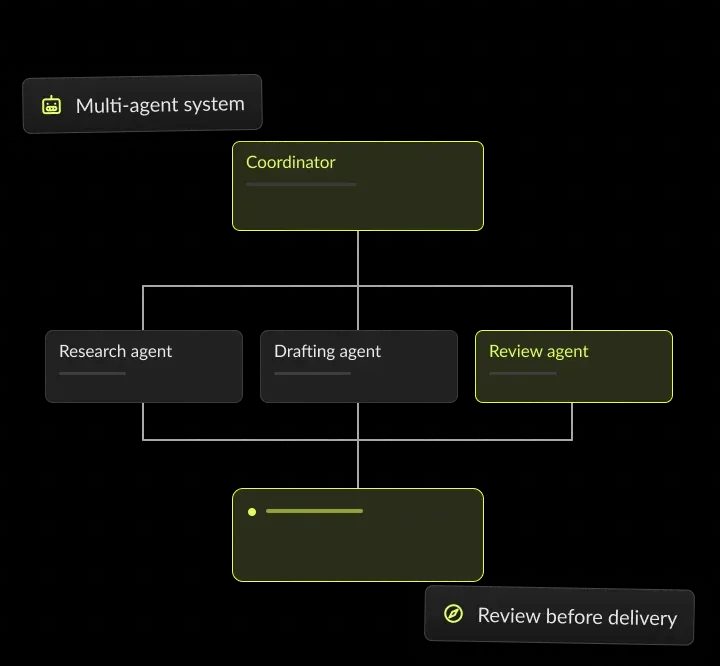
One RFP: a planner splits the questions, a checker verifies the drafts, a manager approves, and the response is filed.
An RFP arrives
Dozens of questions land in the sales inbox.
Agents split the work
A planner assigns sections and a checker verifies.
A manager approves
Flagged answers and the final draft wait for review.
The response is filed
Saved to SharePoint and the CRM.
Multi agent systems, in short
- Kansas City metro software and AI company
- Multi agent systems for mid-market and enterprise teams
- Specialized agents plan, research, draft and check a task together, and a person approves the result
- Builds from $13,000, and you own the code and the orchestration

Agents split the work. People decide.
- 01Build priceFrom $13,000: orchestration, monitoring and approval steps; model usage at cost
- 02When it fitsMulti-step work that needs several skills or sources, such as RFPs or claims reviews
- 03One-agent jobsA single agent with 1 or 2 connected systems, from $7,000
- 04You ownThe orchestration code, prompts and every log
What are multi agent systems?
Multi agent systems are teams of AI agents that share one job, each with its own role, instructions and tools. Orchestration code passes work between them and sends key decisions to a person.
What multi-agent means in AI
The work is split across several model-driven agents instead of one. A planner breaks a request into parts, specialists handle each part with the tools it needs, and a checker reviews the result. The agents run inside your software and data, not in a chat window. They read and write through your APIs, and every step lands in one log.
How a multi-agent system works
A request arrives, such as an RFP, a claim or a support case. A planner agent splits it into tasks and decides which agent takes each one. Specialist agents do their part, each limited to its own tools and data.
Checks, approvals and limits
A checker agent compares the results with the sources and flags gaps or conflicts. A person approves anything that carries risk, and the result is saved to your systems. Orchestration code tracks every step, retries failures and stops runs that hit their limits.
Multi-agent AI vs a single agent
A single agent fits one goal with a few tools; a multi-agent system fits work that needs several skills, sources or an independent check. A single agent holds everything in one context window, and its steps run one after another. In a multi-agent system, each agent keeps its own context, so less crowds the model, and independent parts can run in parallel.
Testing and failure points
A single agent needs one set of test cases. A multi-agent system needs tests for each agent and for the whole run, because more hand-offs mean errors can compound without checks.
Model usage, and when one agent is enough
Anthropic's engineering write-up on its multi-agent research system (June 2025) puts single agents at about 4 times the tokens of a chat, and multi-agent systems at about 15 times. Many jobs that sound like multi-agent work run better as one agent with good tools. We test the simpler design first and add agents only when a test case needs them.



Types of multi-agent systems
Five patterns cover most business builds. Many systems combine two, such as a planner that hands drafts to a writer and checker pair. Every pattern is built as a multi-agent system from $13,000; a single agent with 1 or 2 connected systems starts at $7,000.

Hierarchical (planner and specialists)
A planner splits the job, assigns the parts and merges the results. Fits when the parts are hard to predict in advance, such as an RFP response split by section.
Sequential (pipeline)
Each agent hands its output to the next in a fixed order. Fits when the job splits cleanly into fixed steps: extract, check, then file an invoice.
Router
A first step classifies the request and sends it to one specialist. Fits when requests fall into clear types, such as billing, technical and account emails.
Parallel
Several agents work at once on separate parts, or on the same question. Fits when speed matters, or several views raise confidence, such as vendor due diligence across many sources.
Collaborative (writer and checker)
One agent drafts, another reviews, and they loop until the checks pass. Fits when quality rules are clear and a second pass helps, such as claims summaries checked against source files.
Frameworks and systems we work with
When multi agent systems pay off
Multi agent systems pay off when one job needs several skills or sources and parts of it can run in parallel. They also pay off when an independent check is worth its extra model cost.
Signs we see before a team asks for more than one agent:
- One agent's instructions have grown so long that it mixes up steps or tools.
- The job pulls from more sources than fit in one model's context at once.
- Parts of the work are independent, such as sections of an RFP or files in a review.
- Errors cost enough that a second agent should check the first one's work.
- Different teams own different steps and want to change them separately.
When to wait
If the task has one goal and a few tools, a single agent is cheaper and easier to test: AI agents with 1 or 2 connected systems start at $7,000. Tightly linked steps are a poor fit too: Anthropic's engineers found multi-agent designs a poor fit where agents must share a lot of context or depend heavily on each other. The free AI readiness quiz is a first read on your data and processes.
What to prepare before the first call
A plain description of the job, step by step, as your team does it today; 20 to 50 real examples, each with the result your team would accept; the systems each step reads or changes, and who can grant access; the decisions a person must keep, such as approvals, payments or sign-offs; and the measure that matters: hours saved, turnaround time or error rate.
Multi-agent AI we build
Four patterns we use, picked by how the work splits and where people must decide.
Planner and specialists
A planner breaks the task into parts and assigns each to an agent with the right tools. For example, an RFP planner assigns pricing, security and product sections to three specialist agents, then merges their drafts.
Writer and checker pairs
One agent drafts while another verifies facts and sources, and disagreements go to a person. For example, a writer drafts a claims summary, a checker matches every figure to the source file, and mismatches go to an adjuster.
Agent orchestration across systems
Agents pass work between your CRM, ERP and document stores, with one shared log. For example, an intake agent reads an order email, a second agent checks stock in the ERP, and a third updates the CRM.
The right multi agent framework
LangGraph, CrewAI or the Claude and OpenAI agent SDKs, picked for your stack. For example, a claims flow with fixed approval points built in LangGraph, with the state of every step saved.
What you get when the system ships
You get a working team of agents and everything needed to run it without us. The orchestration code, prompts, tests, traces and runbook all live in your accounts.




Multi-agent system ROI: a worked example
A multi-agent system pays back when the hours it saves on a repeated job cost more than the build, monitoring and model usage. This example uses assumed job volumes and review times, not a client result: at these numbers, the system pays for itself in under three months, after monitoring and before model usage. Model usage runs higher than for one agent, because each agent makes its own calls: estimate it with the LLM cost calculator, and test the savings in the AI ROI calculator. During testing we report cost per task for every agent, so you see the real running cost before go-live.
How we design the agent orchestration
Four steps take you from the first call to a team of agents working in production.
We break the task into steps and decide which need an agent, a tool or a person. You see the agent map, the test cases and a fixed price before any code. You get an agent map and a fixed price.
We build the smallest team of agents that completes real examples end to end. If one agent passes the tests, we stop there and tell you. You get a working prototype on your cases.
We test failure cases, loops and costs, and limit each agent's tools. Each agent and the full run must pass the agreed tests. You get test results and cost per task.
We deploy on your cloud with tracing on every agent and a monthly review. Releases go to a pilot group first, then widen as results hold. You get a production system with full traces.
Multi-step AI in production
AI builds from our case studies that chain several AI steps, and our record.

- Healthcare
Prior Authorization AI
Prior Authorization AI is a healthcare automation startup building AI-powered tools to streamline prior authorization for Medicare and Medicaid medical transportation providers in New Jersey.- 16Weekly hours saved
- 63%Admin time reduced
- 43%Fewer submission errors

- Startup
- Real Estate
Our Haus AI
A finance professional turned founder built Our Haus AI, an AI-powered collaborative workspace where homeowners and contractors scope, bid, contract, and document renovation projects together. SoftDoes took her prototype and made it production-ready.- 10XMVP scope delivered
- 2+years Ongoing partnership
- 1Fully owned Platform

- Real Estate
The building buyer
The Building Buyer is a Florida-based real estate investment firm co-founded by Dylan Troiano and Charles Hanlin. They acquire single-family, multifamily, and commercial properties across South Florida and beyond, with a focus on motivated seller opportunities.- 18Weekly hours saved
- 2+Years Ongoing partnership
- 1Fully owned Platform

- Healthcare
CareInTouch
CareInTouch is a Bay Area home health agency providing skilled nursing and therapy services to patients referred from hospitals and clinics. With over 100 staff, they operate in one of the most complex and compliance-driven healthcare markets in the country.- 40% Reduction In Billing Errors
- 100+Staff Operations Managed
- 0Missed Compliance Deadlines

- Startup
Sparkle The Cleaning Service
Sparkle The Cleaning Service is a Detroit-area residential cleaning company with 10 years in business, connecting homeowners with vetted, insured independent cleaners through a subscription-based marketplace platform.- 75% Platform Transparency
- 2XPlatform Growth
- 40%Higher User Retention

- Healthcare
FMY Orthodontics
FMY Orthodontics, a multi-location practice in West Tennessee, partnered with SoftDoes to replace a spreadsheet-based financial workflow with a custom web platform. The goal was to simplify how staff present treatment financing while allowing patients and families to review and complete decisions remotely.- 60%Workflow Reduction
- 75%Remote Adoption
- 5Locations Aligned

- Real Estate
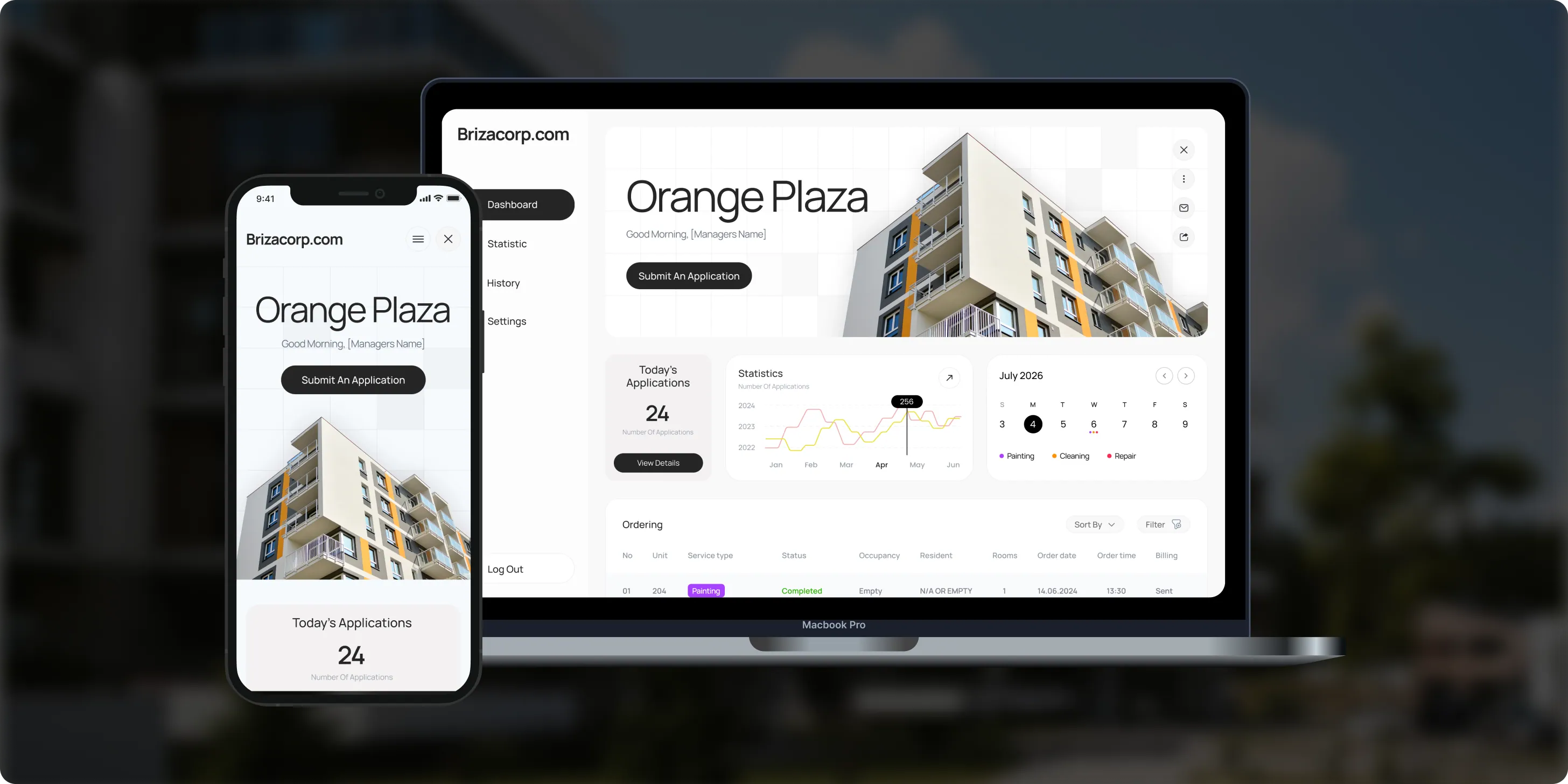
Brizacorp
Brizacorp manages residential properties and coordinates the staff who handle painting, cleaning, and repair requests. Its team tracked work across messengers, phone calls, e-mail, and paper planners, with no single place to manage requests or measure performance.- 98%Application Stability
- 95%Utilization Rate
- 30%Faster Task Completion
Risks in multi-agent systems, and how we handle them
More agents mean more hand-offs, so each risk gets a control in code before release.

How we keep data safe in a multi-agent system
Each agent sees only what its step needs
Model calls run on your own vendor accounts, and every agent step leaves an entry in one log. Before launch, AI red teaming tests whether documents or emails can steer an agent past its limits, and AI governance and compliance documents those limits for your compliance team. For data that must stay inside your own cloud, see private AI.
A scope per agent
Each agent gets its own tool list and data scope, so a research agent cannot change records.
Your permissions
Access follows the permissions your users already have, and actions that change records wait for a named person.
Your vendor accounts
Model calls for every agent run on your own Anthropic, OpenAI, Google or cloud accounts, under your terms with each vendor.
Keys out of code
Each agent's API keys stay in your secrets manager, never in code or prompts.
Every hand-off logged
Every hand-off, tool call and model version is logged for audits and incident review.
Insured
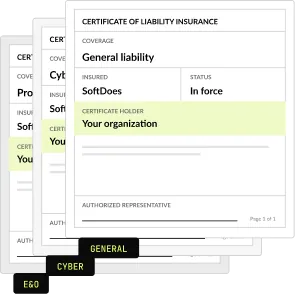
SoftDoes carries general liability, professional liability (errors and omissions) and cyber liability insurance. A certificate of insurance is available on request.
Multi agent frameworks compared
We pick the framework per project, by how much control the flow needs and which models you use. Each description follows the vendor's own documentation.
Anthropic's guide to building agents suggests starting with the model APIs directly, because many patterns need only a few lines of code. Whichever we use, agents reach your systems through your APIs or MCP servers.
How to choose a multi-agent systems partner
Ask these questions before you sign. A strong multi-agent systems partner answers each one in writing.
Questions to ask, and what a good answer includes
- Will you test a single agent first? Yes, with more agents added only when a test case needs them.
- How will you test the whole system? Tests for each agent and for the full run, with a pass mark agreed before the build.
- How do you cap cost per task? Step and cost limits per run, alerts, and a cost report from testing.
- How will we see what each agent did? Tracing on every agent step, in one log your team can search.
- What can agents never do alone? A written list of actions that wait for a person, enforced in code.
- Which framework will you use, and why? A choice made for your flow and models, written down with the reasons.
- Who owns the orchestration code? You do, in your repository, with the prompts and tests next to it.
- What paperwork comes first? An NDA and a certificate of insurance before the first call.
What a multi-agent system costs
A fixed build price agreed before work starts, with model usage and cloud hosting billed at cost on your own accounts. See AI agent development cost.
Multi-agent system
Orchestration, tools, approvals and tracing
From $13,000
Agent monitoring setup
Tracing, quality checks, cost alerts
$3,500
Monitoring after launch
Monthly review and alerts
From $500 a month
AI agent evaluation
Before launch
From $3,500
Project Discovery
Credited to the build
$490
Why teams build agent systems with SoftDoes
Teams build multi agent systems with SoftDoes because our team has worked with frontier AI labs. The agents, orchestration code and logs stay in their own accounts.

- 01
Claude and OpenAI partners
A Claude Partner Network member and an OpenAI Registered Partner, with 40 AI projects delivered since 2020.
- 02
Vendor documents first
Our NDA and certificate of insurance reach your procurement team before the first call.
- 03
You own the orchestration
Agents, prompts, orchestration code and logs live in your accounts, and you own all of it.
- 04
Rated 5.0 on Clutch
5.0 from 40 client reviews, 36 verified by Clutch. More than half of the reviewers are founders, executives or department heads.
- 05
Top AI Company in Kansas City
Clutch named SoftDoes a Top Artificial Intelligence Company and a Top Machine Learning Company in Kansas City for 2026.
- 06
Frontier AI experience
The team has worked with frontier AI labs and some of the largest data providers.
Multi agent systems by industry
The same multi-agent patterns, built around each industry's systems, records and approval rules. Each industry page shows the use cases in detail.
Insurance
Claims review split across intake, policy and fraud-check agents, with an adjuster approving every payout.
Financial services
Document checks and reporting split across agents, with an audit log of every hand-off.
Healthcare
Prior authorization split into document intake, form filling and review before filing, with HIPAA controls.
Legal
Contract review with clause-finding, comparison and drafting agents, and a lawyer approving every change.
Construction
Scopes, bids and contracts drafted by separate agents, with both sides approving.
Logistics
Shipment exceptions handled by agents that read carrier, warehouse and order systems.


Questions about multi agent systems
Patterns, frameworks, cost and risk. Can't find your answer?
What is a multi-agent system?
A multi-agent system is a group of AI agents that work on one task, each with its own role, tools and instructions. A planner splits the work, specialists handle the parts and a checker reviews the result. Orchestration code decides who acts next, passes information between agents and stops the run when limits are reached.
What are the different types of multi-agent systems?
The common patterns are hierarchical, sequential and collaborative. In a hierarchical system, a planner directs specialist agents. In a sequential one, each agent hands its output to the next, and in a collaborative one, agents review each other’s work. Business systems often mix them, such as a planner with writer and checker pairs.
Is ChatGPT an agent or an LLM?
ChatGPT is an application built on OpenAI's large language models, or LLMs. An LLM on its own predicts text. It becomes an agent when software lets it use tools, take actions and decide its next step. A multi-agent system connects several of these agents, each with its own tools and permissions, to finish work in your systems.
When do you need multiple agents instead of one?
Use one agent when the task has a single goal and a few tools. Use several when the work needs different skills, many sources or an independent check, such as drafting and verifying an RFP. More agents add cost and failure points, so we start with the smallest design that passes your test cases.
Which multi agent framework do you use?
We choose per project. LangGraph suits workflows that need explicit control and state, and CrewAI suits role-based teams. The Claude Agent SDK and OpenAI Agents SDK suit agents built around one vendor's models. We connect agents to your systems through MCP servers. Our CrewAI page covers that framework in depth.
How much does a multi-agent system cost?
Multi-agent systems start at $13,000, including orchestration, tool connections, approval steps and tracing. Monitoring setup costs $3,500, with monitoring from $500 a month after launch. Model usage is billed at cost on your accounts, and we report cost per task during testing, so you know the running cost before go-live.
What is an example of a multi-agent system?
A common business example is an RFP response. A planner agent splits the questions by topic. Specialist agents draft pricing, security and product answers from your past responses, and a checker matches each answer to its source. A manager approves the final draft before it is filed in SharePoint and the CRM. Our AI agent examples guide shows more.
How many types of AI agents are there?
The classic AI textbook list has five types: simple reflex, model-based, goal-based, utility-based and learning agents. Business systems are easier to plan by role instead. Planners split work, specialists do one task with their own tools, checkers review results and routers send requests to the right agent. One multi-agent system can combine several of these roles.
Is ChatGPT a multi-agent system?
For the people using it, ChatGPT works as one assistant built on OpenAI's models. A multi-agent system is something you design for one job. It runs several agents with separate roles, tools and permissions, coordinated by orchestration code you own. You decide what each agent may read and change, and where a person signs off.
What is agent orchestration?
Agent orchestration is the code that decides which agent acts next, what information it receives and when a run must stop. It also retries failed steps, enforces cost and step limits, and pauses for a person at approval points. Good orchestration logs every hand-off, so you can replay a run and see why each decision was made.
Do multi-agent systems cost more to run than one agent?
Yes, usually. Each agent makes its own model calls, so token use grows with the number of agents and steps. Anthropic's engineers found that multi-agent systems used about 15 times more tokens than chats, against about 4 times for single agents. We report cost per task during testing and set limits per run.
What are the risks of multi-agent systems?
The main risks are errors that compound across hand-offs and loops that burn model budget. Agents can also misuse tools, and failed runs can be hard to debug. We handle them with a checker agent, step and cost limits, a tool list per agent and tracing on every step. A person approves risky outputs.
How long does it take to build a multi-agent system?
It depends on the number of agents, the systems they touch and your review process. We set the scope, price and schedule in a written plan for the agent team before the build starts. Many teams begin with Project Discovery for $490, which is credited to the build. The plan also lists the access and examples we need from you.
Can we start with one agent and add more later?
Yes, and it is often the right order. A single agent proves the tools, data access, logging and cost controls on real work. Adding agents later reuses that base, so each new role needs less new work. Agents with 1 or 2 connected systems start at $7,000, and multi-agent systems start at $13,000.
Updated · Reviewed by Orest Andrusyshyn, Founder and CEO