
U.S.-Based
LangChain development company for agents and RAG
We build RAG systems and multi-step agents with LangChain and LangGraph. Every run is traced and tested in LangSmith before it reaches users.
$7,000
Starting price of an agent with 1 or 2 connected systems
40
AI projects delivered since 2020
5.0
Clutch rating from 40 reviews






How a LangGraph agent runs
We approach AI and machine learning as engineering disciplines, not experiments. Our process is designed to move from clear business goals to production-ready models that deliver measurable results.
A refund request arrives
A customer emails support about a damaged order.
The agent gathers facts
LangGraph steps pull the order, policy and payment history.
A manager approves
The graph pauses at a human-in-the-loop checkpoint.
The refund is issued
Payment and CRM records update, and LangSmith logs the run.
LangChain development, in short
- Kansas City metro software and AI company that builds production applications with LangChain and LangGraph
- RAG systems, internal copilots and multi-step agents for mid-market companies and software teams
- Builds from $7,000, model usage billed at cost on your own accounts

Traced, tested, in your repo.
- 01Build priceAgents with 1 or 2 connected systems from $7,000, 3 or more from $13,000
- 02Model usageBilled at cost on your own accounts
- 03Stuck in a prototype?We turn LangChain prototypes and scripts into tested, traced services your team can run, as in our AI agent development
- 04You keepChains, graphs, prompts and evaluations in your repositories
What is LangChain development?
LangChain development is building production apps and agents with LangChain's open-source frameworks. LangChain gives one interface to models from OpenAI, Anthropic, Google and others, and its agents run on LangGraph, its framework for stateful, long-running work. LangChain and LangGraph are MIT-licensed on GitHub; LangSmith has Developer, Plus and Enterprise plans.
LangChain
An open-source framework with create_agent, a minimal, configurable agent harness, and a standard model interface. We use it for agents and RAG apps that need many integrations.
LangGraph
An open-source orchestration framework and runtime for long-running, stateful agents. We use it for multi-step work with branching, pauses for approval and recovery after failures.
LangSmith
LangChain's platform for tracing, evaluation and deployment. We use it in every production app, to trace runs and catch regressions.
What a LangChain development company does
A LangChain development company decides where a framework helps, and where a direct model API call is simpler. Retrieval, tools and agent graphs built around your data and business rules, with answers tested on your real examples and every run traced in LangSmith. Deployed to your cloud with logging, permissions and cost alerts. A prototype or notebook becomes a tested, documented service.


Types of LangChain builds
Five builds we deliver with LangChain and LangGraph, what each one does and where it fits. Every price is a starting point from our price list; model usage and hosting are billed at cost on your own accounts, and maintenance starts at $500 a month.

LangGraph agent, 1 or 2 systems
Takes steps in your systems, with checkpoints and approval. Fits when a task spans one or two systems.
Chatbot that takes actions
Answers and updates records, such as a booking or a refund. Fits when customers expect the chat to finish the job.
Permission-aware RAG search
Answers from company documents, filtered by each user's access. Fits when staff need answers from many sources.
LangGraph agent, 3 or more systems
Coordinates work across several systems. Fits when a process touches many tools.
Multi-agent system
Several agents split and check a complex job. Fits when one agent can't hold the whole task.
Models and tools we use with LangChain
We choose the model and vector store per project, by accuracy, cost and hosting needs.
When LangChain pays off
LangChain pays off when an app needs several tools, data sources or model providers, or an agent that keeps state across many steps. For one model call, a direct API is simpler.
Signs we see before a team asks for a LangChain build:
- A prototype in a notebook works, but nobody can trace why it fails in production.
- The app must call three or more tools, such as your CRM, a database and a search index.
- A task pauses for approval or runs for minutes, and must resume after a failure.
- You want to switch between OpenAI, Claude and other models without rewriting the app.
- Answers must come from your documents, with sources a reviewer can check.
When to wait
If the feature is a single prompt with no tools, call the model API directly; our AI integration service covers that. If the work needs several agents that check each other, see multi-agent systems.
What to prepare before the first call
Your prototype code or notebook if you have one, access to the data sources and APIs the app must use, about 50 real examples with the answers or outcomes you expect, and one owner on your side who decides which steps need approval.
LangChain and LangGraph development we deliver
We build, modernize and support LangChain applications around your data and workflows.
LangChain application development
Custom LLM applications, from prototype to production, built around your data, tools and business rules. For example, a sales assistant that reads the CRM, drafts a follow-up and logs it, with prompts and tools kept in your repository.
RAG systems
Retrieval pipelines with Pinecone, Chroma or FAISS that ground every answer in your own sources. For example, staff ask about a benefits policy and get the answer with links to the two documents it came from.
LangGraph agents
Stateful agents with branching, retries and human-in-the-loop checkpoints for work that runs in several steps. For example, a claims graph that gathers documents, pauses for an adjuster to approve, then resumes where it stopped.
Tracing and evaluation in LangSmith
We trace each request, debug agent behavior and score output quality to catch regressions early. For example, a set of real customer questions scored after every change, so a prompt edit that lowers accuracy never ships.
LangChain modernization
We move prototype scripts to production-grade chains, or clean up and speed up an existing setup. For example, a notebook prototype rebuilt as a tested service with tracing, retries and a deployment pipeline.
What you get when the LangChain app ships
You get a working app or agent in your cloud and everything needed to run it without us: code, graphs, prompts, evaluations and documentation.




LangChain ROI: a worked example
A LangChain agent pays back when the hours it saves cost more than the build and the model usage. This example uses assumed numbers for refund and return requests, not a client result: at these numbers, the agent pays for itself in a little over a month, before model and hosting usage, both billed at cost on your own accounts. Put your own request volumes into the AI ROI calculator, and estimate the model calls per request with the LLM cost calculator. After release we track accuracy and cost per request in LangSmith, so you can compare the real saving with this estimate.
How LangChain consulting works
Four steps, and we confirm LangChain fits before development starts.
We review your data sources, tool integrations, latency needs and team experience. You get a recommendation and a fixed price.
We map the graph, tools, retrieval and approval points for each step of the task. You get an agent design your team can review.
We build the chains and graph, then score answers in LangSmith on your real samples. You get evaluation results on your own data.
We deploy to your cloud, trace every run and tune prompts and retrieval. You get a production release and a runbook.
AI work in production
Ask any LangChain development company for production work. Ours includes these two AI builds from our case studies.

- Healthcare
Prior Authorization AI
Prior Authorization AI is a healthcare automation startup building AI-powered tools to streamline prior authorization for Medicare and Medicaid medical transportation providers in New Jersey.- 16Weekly hours saved
- 63%Admin time reduced
- 43%Fewer submission errors

- Startup
- Real Estate
Our Haus AI
A finance professional turned founder built Our Haus AI, an AI-powered collaborative workspace where homeowners and contractors scope, bid, contract, and document renovation projects together. SoftDoes took her prototype and made it production-ready.- 10XMVP scope delivered
- 2+years Ongoing partnership
- 1Fully owned Platform

- Real Estate
The building buyer
The Building Buyer is a Florida-based real estate investment firm co-founded by Dylan Troiano and Charles Hanlin. They acquire single-family, multifamily, and commercial properties across South Florida and beyond, with a focus on motivated seller opportunities.- 18Weekly hours saved
- 2+Years Ongoing partnership
- 1Fully owned Platform

- Healthcare
CareInTouch
CareInTouch is a Bay Area home health agency providing skilled nursing and therapy services to patients referred from hospitals and clinics. With over 100 staff, they operate in one of the most complex and compliance-driven healthcare markets in the country.- 40% Reduction In Billing Errors
- 100+Staff Operations Managed
- 0Missed Compliance Deadlines

- Startup
Sparkle The Cleaning Service
Sparkle The Cleaning Service is a Detroit-area residential cleaning company with 10 years in business, connecting homeowners with vetted, insured independent cleaners through a subscription-based marketplace platform.- 75% Platform Transparency
- 2XPlatform Growth
- 40%Higher User Retention

- Healthcare
FMY Orthodontics
FMY Orthodontics, a multi-location practice in West Tennessee, partnered with SoftDoes to replace a spreadsheet-based financial workflow with a custom web platform. The goal was to simplify how staff present treatment financing while allowing patients and families to review and complete decisions remotely.- 60%Workflow Reduction
- 75%Remote Adoption
- 5Locations Aligned

- Real Estate
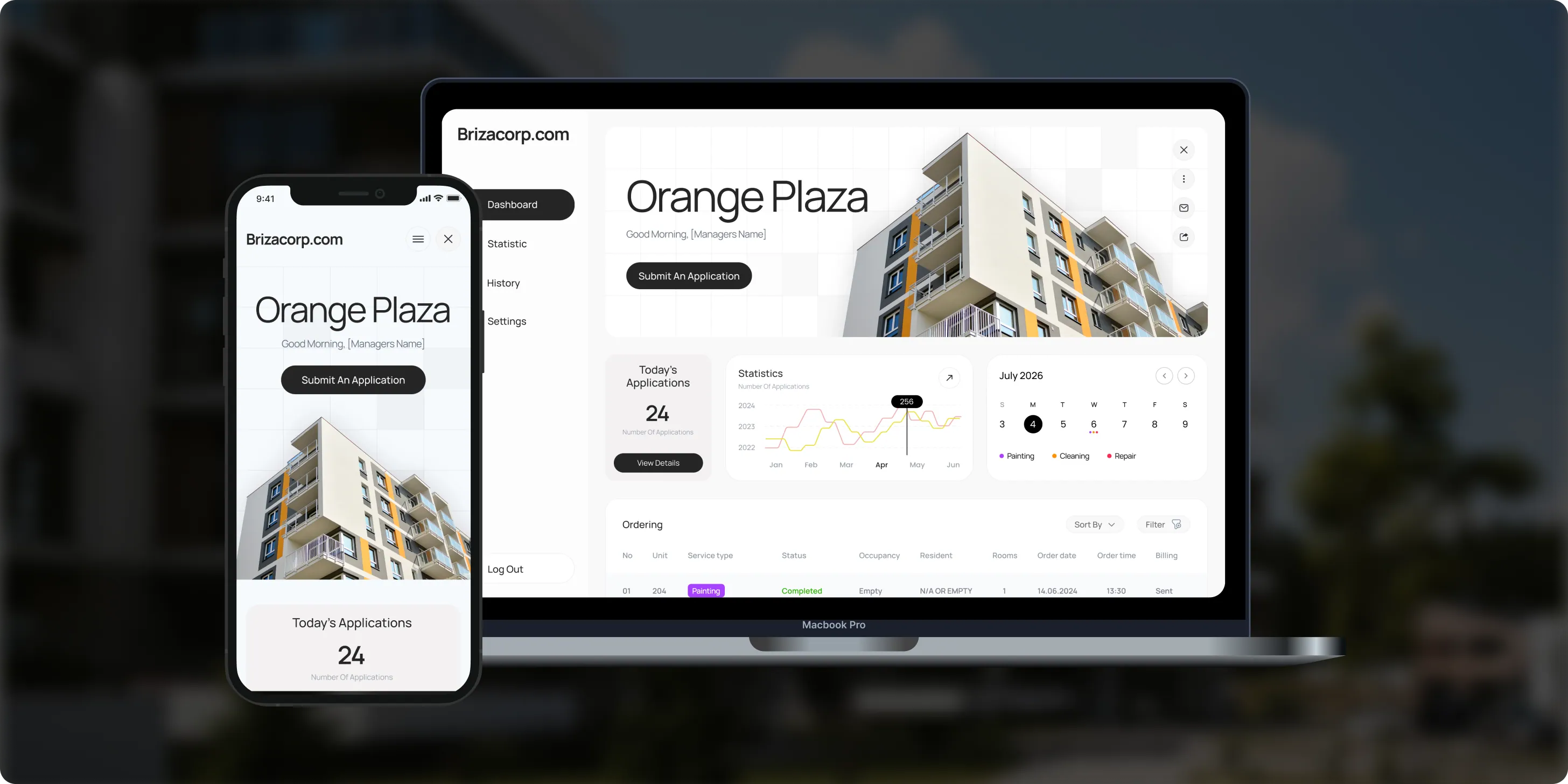
Brizacorp
Brizacorp manages residential properties and coordinates the staff who handle painting, cleaning, and repair requests. Its team tracked work across messengers, phone calls, e-mail, and paper planners, with no single place to manage requests or measure performance.- 98%Application Stability
- 95%Utilization Rate
- 30%Faster Task Completion
Risks in LangChain projects, and how we handle them
Each risk gets a control in code before release, not a promise in a slide.

How we keep data safe in LangChain apps
Under your own contracts
Your data stays under your own contracts. Model calls run on your vendor accounts, and LangSmith states it does not use your data to train models; traces stay private to your organization. For models that never leave your own cloud, see private AI. For company-wide rules on agents built with LangChain, see AI governance and compliance. Health data has its own rules. Our guide to HIPAA-compliant AI explains what changes when a LangChain agent reads patient records.
Where LangSmith runs
LangSmith Cloud runs in the US or the EU. Enterprise plans add hybrid and fully self-hosted options, with the data plane in your own VPC.
Libraries in your code
LangChain and LangGraph are libraries that run in your own code and cloud.
Only needed fields
Each model call sends only the fields a task needs, and sensitive values are masked where the task allows it.
Keys kept safe
Model and tool API keys stay in your secrets manager, never in code or prompts.
Full traces
Every request, tool call and model version is traced for audits and incident review.
LangGraph development: when an agent needs a graph
LangGraph or a LangChain agent
LangGraph is LangChain's low-level framework for agents that run for a long time and keep state. Use it when a task needs checkpoints, pauses for a person's approval, branching logic or recovery after a failure.
LangChain's create_agent is built on LangGraph, so simple agents get its runtime without extra code. LangChain recommends LangGraph itself for advanced needs that mix fixed workflow steps with agent steps. LangGraph also works without LangChain.
A refund or claims process that pauses for approval is a typical LangGraph case. Summarizing one document is not: a plain call to the model is simpler to run.
What LangGraph adds
Deterministic and agentic steps: hand-coded nodes and model-driven nodes in one graph
Persistence: state is checkpointed, so a run resumes after a failure or a pause
Human-in-the-loop: a run pauses so a person can inspect or edit state, then continues
Memory: short-term state per thread and longer-term memory across sessions
Streaming: tokens and state updates stream to the user as the graph runs
How to choose a LangChain development company
Ask any LangChain development company these questions before you sign, and get each answer in writing.
Questions to ask, and what a good answer includes
- When would you skip LangChain? A clear rule, such as a direct API call for single-step features.
- How will you test the app before launch? An evaluation set from your real examples and a pass mark agreed before the build.
- How do you handle framework upgrades? Pinned versions, a rerun of the evaluation set and a planned upgrade.
- Where will traces and data live? LangSmith in the region or hosting option your rules require.
- What will it cost to run each month? An estimate of model, hosting and LangSmith usage, billed at cost on your accounts.
- Can we see production work? Case studies of live LangChain or agent systems, not only demos.
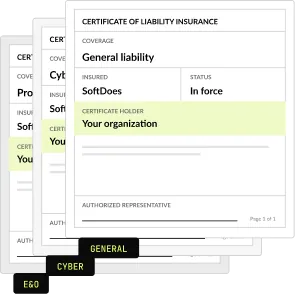
- What paperwork comes first? An NDA and a certificate of insurance before the first call.
What a LangChain build costs
A fixed price per build, agreed before work starts. We never resell usage: model and hosting costs are billed at cost on your accounts. Connecting a LangChain agent to 1 or 2 more systems adds $3,000, and 3 or more add $9,000. See AI agent development cost.
AI agent, 1 or 2 connected systems
With approval checkpoints
From $7,000
AI agent, 3 or more connected systems
Across several systems
From $13,000
Multi-agent systems
Agents that split and check work
From $13,000
Permission-aware company search (RAG)
Filtered by each user's access
From $11,000
Maintenance and support
After launch
From $500 a month
Project Discovery
Credited to the build
$490
Why teams build on LangChain with SoftDoes
Teams build on LangChain with SoftDoes because we test models from both Anthropic and OpenAI on their task first. Every chain, graph, prompt and evaluation we write stays in their own repositories.

- 01
Partners with both model vendors
A Claude Partner Network member and an OpenAI Registered Partner, so we test models on your task first.
- 02
Vendor documents first
Our NDA and certificate of insurance reach your procurement team before the first call.
- 03
You own the code
Chains, graphs, prompts and evaluations live in your repositories and accounts.
- 04
40 AI projects since 2020
AI work in production since 2020, from document extraction to filing through Medicare's API.
- 05
Rated 5.0 on Clutch
5.0 from 40 client reviews. Clutch named SoftDoes a Top Artificial Intelligence Company and Top Machine Learning Company in Kansas City for 2026.
- 06
Kansas City headquarters
Headquartered in Mission, KS, in the Kansas City metro. Call 800-909-2345 to reach the team.
LangChain apps by industry
The same agents and RAG systems, built around each industry's systems, records and rules. Each industry page covers the agent and RAG use cases, with the compliance rules for that field.
Healthcare
Prior authorization, intake and records work, with HIPAA controls and a person approving each filing.
Insurance
Claims graphs that gather documents and pause for an adjuster before any payout decision.
Financial services
Document checks, research answers and reporting, with a trace for every agent step.
Legal
Intake, document review and drafting, written into the case management system.
Logistics
Shipment exceptions and carrier updates handled across ERP and warehouse systems.
Accounting
Client questions, document requests and research memos answered from firm files.


Questions about LangChain and LangGraph
Fit, frameworks, models and cost. Can't find your answer?
Is LangChain still relevant?
Yes, for many production apps. LangChain's maker still ships the open-source LangChain and LangGraph frameworks, plus LangSmith for tracing, evaluation and deployment. We use LangChain when a project needs many integrations or a stateful agent. For a single model call, we often skip the framework and call the model's API directly, which keeps the code smaller.
Which company developed LangChain?
LangChain is built by the company of the same name. It publishes the open-source LangChain and LangGraph frameworks and offers LangSmith, its agent engineering platform for observability, evaluation and deployment. We build client applications with all three tools and choose the parts each project needs.
When do you use LangGraph instead of a simple chain?
We use LangGraph when a task needs stateful, multi-step behavior: branching logic, retries, long-running work or human-in-the-loop checkpoints. A refund or claims workflow that pauses for approval is a typical case. For a single linear step, such as summarizing a document, a plain chain or a direct API call is simpler to run.
Which models and vector databases do you work with?
We build with OpenAI, Anthropic Claude and Hugging Face models, and pair them with vector databases such as Pinecone, Chroma or FAISS. The choice depends on your scale, hosting rules and budget. Because LangChain separates the model layer, we can test two models on your task before you commit to one.
How do you monitor a LangChain application in production?
We use LangSmith to trace each request, debug agent behavior and evaluate output quality. Evaluations run on a fixed set of your real examples, so we catch regressions when prompts, models or retrieval change. Your team gets access to the same traces and dashboards we use.
How much does a LangChain project cost?
LangChain agents with one or two connected systems start at $7,000, and agents with three or more start at $13,000. Multi-agent systems also start at $13,000. Model and hosting usage are billed separately, at cost, on your own accounts. Maintenance starts at $500 a month. Any project can start with Project Discovery: $490, credited to the build.
What is LangGraph used for?
LangGraph is used for agents that run in several steps and keep state, such as claims, refunds or onboarding flows. Its graphs checkpoint state, pause for a person's approval, branch on conditions and resume after failures. We use it when a task can't be a single prompt, and when someone must approve the risky steps.
Why use LangGraph instead of LangChain?
You often use both. LangChain's create_agent is built on LangGraph and suits standard agents with tools. LangChain recommends LangGraph itself for advanced needs that combine fixed workflow steps with agent steps. LangGraph also works on its own, so we use it directly when a process needs custom branching, checkpoints or long runs.
Is LangGraph free or paid?
The LangGraph library is free and open source under the MIT license, like LangChain. LangSmith, the company's platform for tracing, evaluation and deployment, has Developer, Plus and Enterprise plans, with usage-based charges for traces and deployments. Our build price is separate, and model usage is billed at cost on your accounts.
Can you take over our LangChain prototype?
Yes. We review the code, pin versions and build an evaluation set from your real examples. Then we add tracing, error handling, permissions and cost alerts, and deploy it to your cloud. You keep every line in your repository. If the framework adds nothing for part of the app, we replace that part with plain model calls.
Do we need LangSmith?
Not strictly, but we recommend it for production. LangSmith traces each request and tool call and scores output quality on a fixed set of your examples, so regressions show up before users see them. LangSmith states it does not use your data to train models, and Enterprise plans can run it inside your own VPC.
Can LangChain run on our own cloud and models?
Yes. LangChain and LangGraph are libraries that run in your own code, so they deploy to your cloud like any other service. LangChain's model interface supports OpenAI, Anthropic, Google and others, plus open models through providers such as Ollama and Hugging Face. We pick the model for each LangChain task by accuracy, cost and data rules.
Who owns the code?
You do. Chains, graphs, prompts, evaluations and documentation live in your repositories and accounts from the first commit. Nothing runs on a SoftDoes account, so your team can take over at any time. If you prefer us to run it, maintenance starts at $500 a month, including prompt fixes and framework upgrades.
How long does a LangChain project take?
It depends on the task, the data and your release process. We set the scope, price and schedule for the LangChain build in a written plan before work starts. Many teams begin with Project Discovery for $490, which is credited to the build. The plan also lists what we need from you, such as API access and real examples.
Updated · Reviewed by Orest Andrusyshyn, Founder and CEO