
U.S.-Based
AI recruiting software built around your ATS
It screens resumes against your criteria and books interviews, and recruiters make every decision.
$7,000
Starting price of a recruiting agent build
40
AI projects delivered since 2020
5.0
Clutch rating from 40 reviews






















How the agent handles an applicant
One application: AI checks the must-haves and writes a summary, a recruiter decides who moves forward, and the ATS is updated with the invite.
An application arrives
Through your careers page.
AI screens the resume
Must-haves checked, summary written.
A recruiter decides
They choose who moves forward.
The ATS is updated
Stage, notes and invite saved.
AI recruiting software, in short
- Kansas City metro software and AI company
- AI recruiting software for HR teams
- Screens resumes and books interviews in your ATS, and recruiters make every decision
- Builds from $7,000 for one or two connected systems

AI screens. Recruiters decide.
- 01Build priceFrom $7,000; three or more connected systems from $13,000
- 02Who it's forHR and talent teams screening high applicant volumes for repeat roles
- 03People decideEvery advance or decline, every offer and every pay number
- 04You ownThe criteria, prompts and code
What is AI recruiting software?
AI recruiting software uses AI models to screen resumes against your criteria, schedule interviews, answer candidate questions and keep the ATS current. Recruiters and hiring managers keep every decision about a candidate.
Inside the ATS you use
A recruiting agent is one kind of AI agent. A custom build runs inside the applicant tracking system you already pay for, such as Greenhouse, Lever, Workday or iCIMS. Candidates apply as before. Recruiters see the AI's work in the candidate record, next to their own notes.
How an AI recruiting agent screens an application
It reads the resume and the answers to your application questions, checks each must-have your recruiters approved, such as a license or a skill, and writes a two-line summary with the criteria met or missed. It saves the summary and the reasons to the candidate's ATS record.
Recruiters decide, the agent books
It waits for a recruiter to decide who moves forward. Then it books the next step from the panel's calendars and sends the invite.
AI screening vs keyword filters
Keyword filters pass or block resumes on exact words. An AI model reads what a candidate actually did, then checks it against your written criteria. Every result lists its reasons, so a recruiter can confirm it at a glance.
A custom agent vs recruiting software
Recruiting software runs the work on the vendor's platform, with its own data model and scoring. A custom agent works inside your ATS with your criteria and data rules, and you own the code. Our guide to custom AI vs off-the-shelf tools sets out the trade-offs.



Types of AI recruiting and HR automation we build
Six common builds, from resume screening to onboarding forms. Prices for each recruiting build are starting points from our price list. Model usage is billed at cost on your account, and maintenance starts at $500 a month.

Resume screening agent
Checks applications against your criteria and writes summaries in the ATS. Fits when volume is high and criteria are clear.
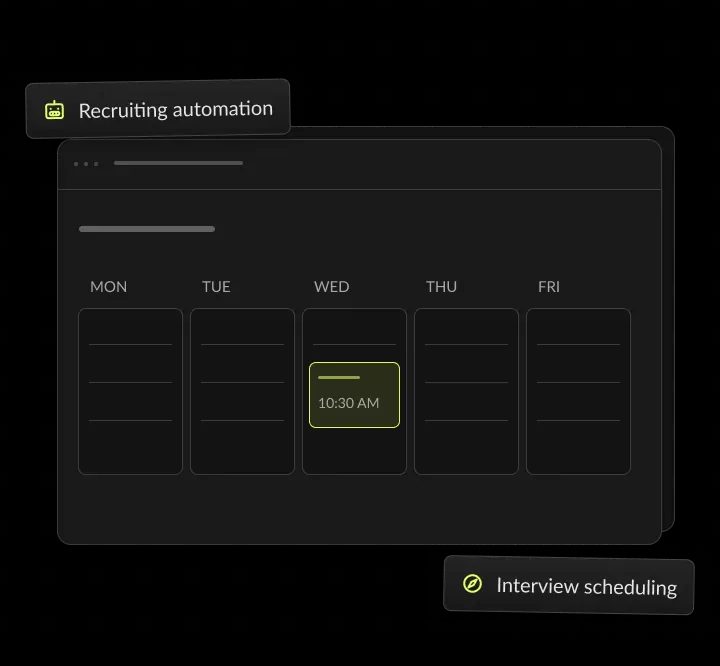
Interview scheduling agent
Books interviews from panel calendars and updates ATS stages. Fits when scheduling takes recruiter hours.
Candidate and HR questions chatbot
Answers from approved job details or your handbook. Fits when the same questions arrive every day.
Onboarding forms automation
Checks new-starter forms and enters them into your HR system. Fits when HR retypes forms into the HRIS.
Recruiting agent across 3 or more systems
Works across ATS, calendars, HRIS and email. Fits when recruiting runs through several tools.
Agent monitoring and cost control
Traces every screening result and action, with cost alerts, then from $500 a month. Fits when agents run in production.
ATS and HR systems it connects to
We connect through each system's standard API, and the agent's access follows your existing ATS roles.
When AI recruiting software pays off
AI recruiting software pays off when your team screens hundreds of applications a month for repeat roles. It works best when the criteria for a strong candidate can be written down.
Signs we see before an HR team asks for an agent:
- Recruiters read hundreds of applications for the same roles each month.
- Strong candidates wait days for a reply and accept other offers.
- Booking a panel takes several emails per candidate.
- Candidates ask the same questions about location, shifts and next steps.
- ATS stages fall behind because updates are typed by hand.
When to wait
If you fill a few roles a year, or every role is senior and unique, the build rarely pays back. If your criteria live only in recruiters' heads, write them down first, because the agent screens only against approved criteria. The free AI readiness quiz checks your HR team's data, processes, people and security in 12 questions.
What to prepare before the first call
Job descriptions and must-haves for your highest-volume roles; admin access to the ATS, or an admin who can grant it; a sample of past applicants with your recruiters' decisions; calendar access for the people who interview; and an HR or legal owner who reviews the criteria.
AI for HR and recruiting teams
AI resume screening
Checks each resume against the must-haves you set and writes a two-line summary. For example, for a warehouse lead role, each summary shows the forklift certification, the shift preference and any missing must-have.
AI recruiting agent for scheduling
Offers slots from the panel's calendars, books interviews and sends reminders. For example, a candidate picks one of three offered slots, and the panel gets the invite with the resume and summary attached.
Candidate questions
Answers questions about the role and process from approved job details. For example, a candidate asks whether the role allows remote work, and the agent answers from the approved posting and links it.
Onboarding paperwork
Collects new-hire forms, checks them for gaps and files them in your HR system. For example, a new starter uploads a form without a signature, and the agent asks for the fix before anything is filed.
HR policy answers
Answers employee questions about leave, benefits and policies from your approved handbook, and sends the rest to HR. For example, an employee asks how many vacation days carry over. The agent quotes the handbook section and links it.
Daily pipeline summaries
Sends recruiters and hiring managers new applicants, stage changes and candidates waiting on feedback. For example, the morning summary shows four candidates waiting on hiring manager feedback, each linked.
What you get at launch
You get a working recruiting agent in your ATS and everything needed to run it. Criteria, prompts, tests, logs and reports all sit in your accounts.




AI recruiting software ROI: a worked example
A recruiting agent pays back when the recruiter hours it saves cost more than the build, maintenance and model usage. This example uses assumed application volumes and recruiter costs, not a client result: at these numbers, the agent pays for itself in under three months, after maintenance and before model usage. Faster replies to strong candidates are a second gain this math leaves out. Run your own application volumes in the AI ROI calculator, and estimate model usage per application with the LLM cost calculator.
How we build your recruiting agent
Four steps from written criteria to a live agent, with recruiters in charge of every decision.
We write job-related criteria with your recruiters and check them for bias. Your HR or legal owner signs off on them before any build. You get criteria your legal team can review.
We connect your ATS and compare picks with past recruiter decisions. Where they differ, we review each case with your team and adjust the criteria. You get a test on past applicants.
Recruiters see every summary, and we review screening results with you monthly. Nothing moves a candidate forward or back without a recruiter. You get a monthly screening report.
We add roles one at a time, each with its own criteria and test. Your team learns to update criteria and templates without us. You get criteria and a test for each role.
Document review and onboarding in production
Builds from our case studies, and our record.

- Healthcare
Prior Authorization AI
Prior Authorization AI is a healthcare automation startup building AI-powered tools to streamline prior authorization for Medicare and Medicaid medical transportation providers in New Jersey.- 16Weekly hours saved
- 63%Admin time reduced
- 43%Fewer submission errors

- Startup
- Real Estate
Our Haus AI
A finance professional turned founder built Our Haus AI, an AI-powered collaborative workspace where homeowners and contractors scope, bid, contract, and document renovation projects together. SoftDoes took her prototype and made it production-ready.- 10XMVP scope delivered
- 2+years Ongoing partnership
- 1Fully owned Platform

- Real Estate
The building buyer
The Building Buyer is a Florida-based real estate investment firm co-founded by Dylan Troiano and Charles Hanlin. They acquire single-family, multifamily, and commercial properties across South Florida and beyond, with a focus on motivated seller opportunities.- 18Weekly hours saved
- 2+Years Ongoing partnership
- 1Fully owned Platform

- Healthcare
CareInTouch
CareInTouch is a Bay Area home health agency providing skilled nursing and therapy services to patients referred from hospitals and clinics. With over 100 staff, they operate in one of the most complex and compliance-driven healthcare markets in the country.- 40% Reduction In Billing Errors
- 100+Staff Operations Managed
- 0Missed Compliance Deadlines

- Startup
Sparkle The Cleaning Service
Sparkle The Cleaning Service is a Detroit-area residential cleaning company with 10 years in business, connecting homeowners with vetted, insured independent cleaners through a subscription-based marketplace platform.- 75% Platform Transparency
- 2XPlatform Growth
- 40%Higher User Retention

- Healthcare
FMY Orthodontics
FMY Orthodontics, a multi-location practice in West Tennessee, partnered with SoftDoes to replace a spreadsheet-based financial workflow with a custom web platform. The goal was to simplify how staff present treatment financing while allowing patients and families to review and complete decisions remotely.- 60%Workflow Reduction
- 75%Remote Adoption
- 5Locations Aligned

- Real Estate
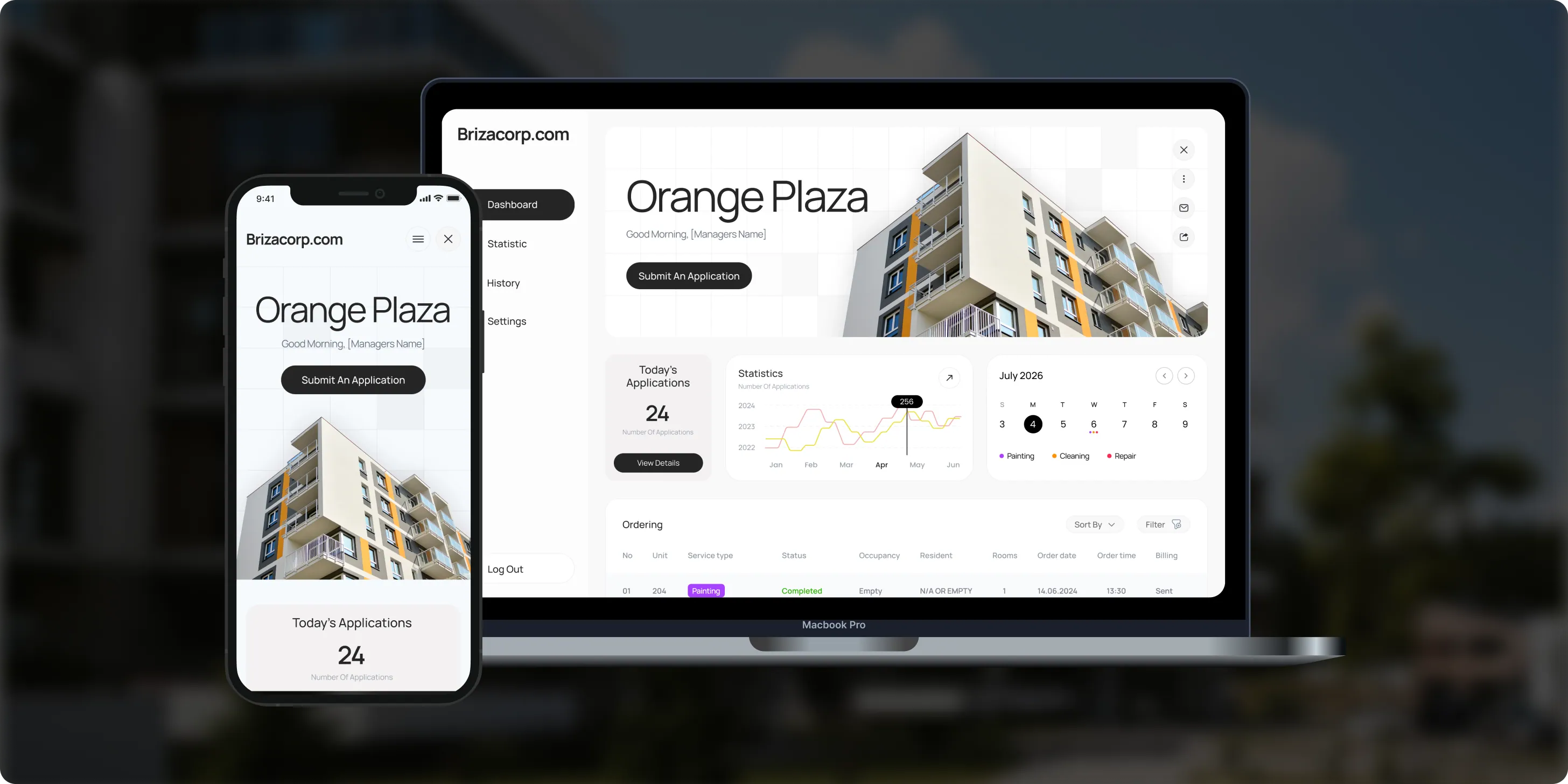
Brizacorp
Brizacorp manages residential properties and coordinates the staff who handle painting, cleaning, and repair requests. Its team tracked work across messengers, phone calls, e-mail, and paper planners, with no single place to manage requests or measure performance.- 98%Application Stability
- 95%Utilization Rate
- 30%Faster Task Completion
A day with the recruiting agent

7 AM · Agent
What the agent does alone, and where people sign off. Screens overnight applications against the must-haves.
9 AM · Person approves
A recruiter picks the candidates who move to a phone screen.
10 AM · Agent
Sends invites and books times from the panel's calendars.
3 PM · Person approves
The hiring manager approves an offer letter.
5 PM · Agent
Updates every ATS stage and sends a daily pipeline summary.
Risks in AI recruiting, and how we handle them
Each risk gets a control before launch, tested on your past applicants.

How we keep candidate data safe
Candidate data stays in your ATS
Candidate data stays in your ATS and your own vendor accounts. The agent reads only what screening needs, never scores protected traits and logs every result. Before launch, our AI red teaming service tries to push the agent past its limits, such as scoring on a protected trait, and our governance service documents those limits for your legal team.
Your vendor accounts
Model calls for each application run on your own Anthropic, OpenAI or cloud accounts, under your terms with each vendor.
Only the fields it needs
The agent reads only the resume and application fields that screening needs, and never protected traits.
Access follows your ATS
The agent never shows a candidate record a user cannot open, and records stay under your ATS retention settings.
Keys out of code
ATS and calendar API keys stay in your secrets manager, never in code or prompts.
Every result logged
Every screening result, its reasons and the decision are logged for audits.
Insured
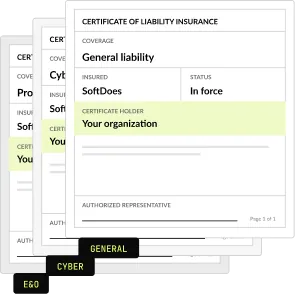
SoftDoes carries general liability, professional liability (errors and omissions) and cyber liability insurance. A certificate of insurance is available on request.
Guardrails: what the recruiting agent never does alone
We test each limit through AI red teaming and document it with our AI governance service.
> No rejections alone <
> No protected traits <
> No offers or pay promises <
> No unexplained scores <
AI resume screening rules to check before launch
Several rules now cover AI in recruiting. Most ask for notice to candidates, a person who can review or change decisions, and records of how the tool works. A planning summary, not legal advice.
New York City's guidance adds that the notice must reach candidates 10 business days before the tool is used. Our builds keep a person on every decision, log the criteria behind each result and leave protected traits out of the criteria, which gives your legal team the records to work from. Our AI governance service maps the rules for your locations; an AI risk assessment costs $6,000 fixed.
How to choose AI recruiting software
Ask these questions of any AI recruiting product or builder before you sign. A strong recruiting vendor answers each one in writing.
Questions to ask, and what a good answer includes
- Does it work inside our ATS? Yes, writing summaries, stages and notes where recruiters already work.
- Who sets the screening criteria? Your recruiters, in writing, with a bias review before launch.
- Can it reject candidates alone? No. A person makes every advance or decline decision.
- How is screening quality measured? A test on past applicants, compared with your recruiters' decisions.
- Can it explain each result? Yes, with the criteria met or missed for every candidate.
- Which rules apply to our locations? A written check of local rules, such as notices and bias audits, before launch.
- Who owns the criteria, prompts and code? You do: criteria and prompts in your repository, data in your ATS.
- What paperwork comes first? An NDA and a certificate of insurance before the first call.
What AI recruiting software costs to run
The build, maintenance and model usage, each set out in writing before work starts. Each extra connected system, such as an HRIS, adds $3,000 for 1 or 2 systems, or $9,000 for 3 or more; monitoring and cost control is optional: setup $3,500, then from $500 a month. See AI agent development cost.
Build: 1 or 2 connected systems
ATS plus calendars
From $7,000
Build: 3 or more systems
ATS, calendars, HRIS and email
From $13,000
Maintenance and support
After launch
From $500 a month
AI model usage
On your own account, no markup
At cost
Project Discovery
Credited to the build
$490
Why HR teams build with SoftDoes
SoftDoes is a Claude Partner Network member and an OpenAI Registered Partner, rated 5.0 on Clutch. Your code and candidate data stay in your own accounts.

- 01
Claude and OpenAI partners
A Claude Partner Network member and an OpenAI Registered Partner, with 40 AI projects delivered since 2020.
- 02
Vendor documents first
Our NDA and certificate of insurance reach your procurement team before the first call.
- 03
You own the agent and data
Criteria, prompts and candidate data stay in your accounts, and you own the code.
- 04
Rated 5.0 on Clutch
5.0 from 40 client reviews, 36 verified by Clutch. More than half of the reviewers are founders, executives or department heads.
- 05
Top AI Company in Kansas City
Clutch named SoftDoes a Top AI Company and a Top Machine Learning Company in Kansas City for 2026.
- 06
Kansas City headquarters
Headquartered in Mission, KS, in the Kansas City metro. Call 800-909-2345 to reach the team.
AI recruiting by industry
The same recruiting agent, built around each industry's roles, credentials and rules. Each industry page shows the use cases in detail.
Healthcare
Clinical and front-desk roles screened, with required licenses listed in every summary.
Logistics
High-volume driver and warehouse roles, screened against certifications and shift needs.
Manufacturing
Plant roles screened for certifications and shifts, with interviews booked around production.
Financial services
Branch and operations roles, with an audit log for every screening result.
Government
Published job criteria applied the same way to every applicant, with a record of each decision.
Construction
Field and trade roles screened for certifications, with interviews booked around site schedules.


Questions about AI recruiting software
Fairness, rules, cost, data and buying versus building.
What is AI recruitment software?
AI recruiting software uses AI models for repeat recruiting tasks: screening resumes, scheduling interviews, answering candidate questions and keeping the ATS current. Off-the-shelf tools run these jobs on the vendor's platform. A custom build runs them inside your own ATS with your criteria, and leaves every decision about a candidate to a recruiter.
What type of AI is used in recruiting?
Large language models, such as Claude and GPT models, do the reading. They compare resumes and job descriptions with your criteria and write summaries. Scheduling and reminders use standard automation connected to calendars. Keyword matching, the older approach, misses qualified people who describe their skills in different words.
Are companies actually using AI recruiters?
Yes, mainly for screening, scheduling and candidate questions, where volume is high and rules are clear. Final decisions stay with recruiters and hiring managers. Our builds keep a person on every advance or decline decision and log the reason, so your team can explain each outcome later.
Is AI resume screening fair and legal?
It can be, when the criteria are job-related and a person makes the decision. We write criteria with your recruiters, keep protected traits out of scoring and log why each candidate advanced. State rules on automated decisions can apply to hiring, so see our Colorado AI Act guide and California rules guide.
Should we buy an AI recruiting tool or build one?
Buy when your ATS vendor's AI covers your roles and your data rules allow it. Build when you recruit for specialized roles, need your own criteria or must keep candidate data in your systems. A custom agent starts at $7,000, works inside the ATS you already pay for, and you own the code.
What does AI resume screening look for?
In our builds, it checks only the job-related criteria your recruiters approve, such as a license, a skill or similar experience. Each summary lists the criteria met or missed, with the resume line that matched. Criteria never use age, gender, race or other protected traits. A recruiter makes every decision.
Which AI is good for HR?
It depends on the task. General assistants such as Claude or ChatGPT suit drafting job posts, policies and emails. If your ATS offers AI features, they can suit basic screening when their rules match yours. A custom agent suits teams with their own criteria, several systems or strict data rules, and it starts at $7,000.
What is ChatGPT for HR?
It usually means HR staff using ChatGPT, or a tool like Claude, to draft job descriptions, policies, interview questions and emails. It works well for drafting. Candidate data and decisions need rules on what may go in, who reviews outputs and where logs live. We set those up in a workspace rollout from $5,000.
Is AI eliminating HR jobs?
AI takes over repeat work such as screening, scheduling and form checks, while HR keeps the judgment calls. Hiring decisions, employee relations, pay and investigations stay with people. In our builds, a person makes every decision about a candidate. Teams can move the saved hours to interviews, onboarding and retention.
How much does AI recruiting software cost?
A custom recruiting agent starts at $7,000 when it connects to one or two systems, such as your ATS and calendars. With three or more systems, such as an HRIS too, it starts at $13,000. Maintenance of the recruiting agent starts at $500 a month, and model usage is billed at cost. Our AI agent cost guide shows more examples.
Do candidates know they are dealing with AI?
Yes, in our builds. The agent says it is AI in its first message, and a recruiter takes over whenever a candidate asks. Some rules, such as New York City's Local Law 144, require notice before an automated tool is used. We build those notices into your application flow and keep a record that each one was sent.
Which applicant tracking systems does it work with?
We connect through standard APIs, so the agent works with Greenhouse, Lever, Workday, iCIMS and BambooHR, among others, plus Outlook and Google calendars. It writes summaries, stages and notes to the candidate record. If your ATS limits what its API exposes, we say so in the plan before any build.
Who owns the candidate data and the agent?
You do. Candidate data stays in your ATS and your own vendor accounts, under the retention settings you already use. The code, prompts, criteria and test sets live in your repository. Your team can run the agent without us, or we maintain it from $500 a month.
How long does it take to set up an AI recruiting agent?
It depends on your ATS, the number of roles and how many systems the agent touches. We set the scope, price and schedule in a written recruiting plan before the build starts. Many teams begin with Project Discovery for $490, which is credited to the build. The plan lists what we need from you, such as ATS access and past applicant decisions.
Updated · Reviewed by Orest Andrusyshyn, Founder and CEO