The energy sector is going through one of the most significant technology shifts in decades. Utilities are modernizing legacy systems, renewable developers need smarter forecasting tools, and grid operators face growing pressure to manage distributed energy resources at scale. With the energy software market projected to exceed $50 billion by 2027, choosing the right development partner matters more than ever. This guide breaks down the top energy software development companies serving U.S. and Canadian organizations in 2026 and helps you match the right vendor to your specific needs.What Are the Top Energy Software Development Companies in 2026?
The companies listed here focus on U.S. and Canada delivery for utilities, renewables, and oil and gas clients. Each has proven custom energy software experience, and maintains active North American clients with verifiable project histories.
The list includes both specialized engineering partners like SoftDoes and larger firms, but the common thread is real energy domain work: energy management systems, DER orchestration, grid control systems, EV charging platforms, and operational analytics. Energy software companies on this list offer grid management and operations services, and several also cover energy trading, carbon tracking, and asset monitoring platforms.
The ranking is based on energy focus and fit for U.S. and Canadian utilities and energy innovators in 2026. The energy software sector encompasses industrial grid management and renewable optimization, so we prioritized vendors that demonstrate depth in those areas.
How We Chose the Best Energy Software Development Companies
This comparison is based on market research as of Q4 2026, drawing from Clutch listings, published client stories, public case studies, and each vendor's stated technology focus. Only firms with verifiable energy software projects, covering utilities, renewables, grid operations, oil and gas, storage, EV, or trading, were included.
Clutch lists over 1,860 energy software development companies as of September 2026. We narrowed that field significantly by selecting vendors that actively serve U.S. and Canadian organizations or have strong North American delivery capability. Companies like Zoolatech, which has delivered over 300 projects for 100+ clients, and N-iX, which employs over 2,400 engineers across multiple countries and uses AI to modernize QA across engineering teams, were evaluated alongside the final selections. The companies that made the list stood out on the criteria below.
Core Evaluation Criteria
We assessed each vendor against these factors:
- Domain expertise in energy: utility operations, distributed energy resources, smart grid, EMS, SCADA and OT integration, ISO/RTO markets, EV, and storage.
- Technical depth: custom software engineering, cloud architecture, data platforms, AI and machine learning solutions, IoT, and real time data systems appropriate for energy workloads. Energy software projects often use cloud computing and IoT technologies, so vendors must demonstrate hands on capability here.
- Regulatory and security literacy: familiarity with NERC CIP, FERC rules, state and provincial regulators, SOC 2, ISO 27001, and related privacy and cyber requirements. Energy systems require knowledge of regulations like NERC CIP and FERC, and energy software must comply with industry specific protocols and regulations. Cybersecurity measures are critical for energy infrastructure and software solutions. Data privacy and access control are essential in energy software management.
- Scalability and reliability: ability to run high availability, low latency platforms for mission critical energy operations. Energy software requires scalable architectures to accommodate future growth.
- Project track record: number and size of energy projects, references, public case studies, and long term relationships with utilities and energy developers. Regulatory compliance and environmental standards are key considerations in energy software development.
- Fit for different buyers: coverage from investor backed startups and IPPs to municipal utilities and large vertically integrated utilities.
- Value and flexibility: transparent engagement models (dedicated teams, fixed scope, staff augmentation) and budget fit for North American rates.
Best Energy Software Development Companies for U.S. and Canadian Energy Projects
Each profile explains why the company stands out, its typical client profile, key strengths, and a few limitations to keep expectations realistic.
The list intentionally avoids an arbitrary "Top 10" format and instead highlights the most meaningful options across different segments: specialized agencies, large engineering houses, and niche experts.
1. SoftDoes - Best for Custom, AI Driven Energy Platforms and Modernization
SoftDoes is a U.S. and Canada oriented custom software engineering partner with strong experience in regulated industries including finance, healthcare, and energy. The company emphasizes reliability, scalability, and compliance in every engagement, making it well positioned for the demands of North American energy infrastructure.
SoftDoes focuses on building and modernizing mission critical energy platforms: custom energy management systems, DER orchestration tools, asset monitoring platforms, and analytics solutions for utilities and energy operators. Its role as an energy and utilities software development company includes custom energy management systems as a key offering, and energy software development includes legacy modernization services across the SoftDoes portfolio.
Why It Stands Out
SoftDoes combines energy domain understanding with deep capabilities in AI and machine learning, data engineering, and cloud native platforms. AI models can improve operational efficiency in energy platforms, and SoftDoes applies that principle across forecasting, anomaly detection, and resource dispatch.
SoftDoes' experience in other regulated sectors translates into strong governance, documentation, and compliance practices that are valuable for energy companies in North America operating under strict oversight.
Best For
- U.S. and Canadian utilities (investor owned, municipal, and cooperatives) modernizing legacy portals, field apps, or EMS platforms.
- Renewable developers, storage operators, and community solar providers needing custom renewable energy software development services for platforms covering demand forecasting, dispatch, or portfolio analytics.
- Energy and climate tech scale ups building new data heavy products that must meet enterprise grade reliability and security expectations.
Key Strengths
- Custom energy software development: from greenfield EMS and DER management to modernization of existing energy applications.
- AI and machine learning: load and price forecasting, predictive maintenance platforms, anomaly detection for generation, storage, and grid assets.
- Data and cloud engineering: building unified data platforms across AMI, SCADA, IoT sensors, and market data on AWS, Azure, or GCP.
- UI/UX design: designing intuitive portals for customers, field crews, and control room staff with a focus on clarity and speed.
- Regulated industry discipline: processes and documentation aligned with the expectations of utilities, regulators, and auditors.
Possible Limitations
- Not a hardware vendor: clients needing turnkey hardware plus software (for example, metering devices or solar panels) must integrate with third party equipment providers.
- Focused on custom builds: may be less suitable for very small organizations looking for a low cost, off the shelf solution rather than a tailored platform.
2. DataArt - Best for Data Platforms and Energy Analytics at Scale
DataArt is a large software engineering firm with a strong North American presence and a growing focus on data platforms, analytics, and modern cloud architectures for energy clients. Typical work includes energy trading platforms that support market forecasting and portfolio risk management, analytics hubs, and digital transformation projects for utilities and energy retailers.
Why It Stands Out
DataArt has committed $100 million to advance their data and AI capabilities, signaling a serious investment in the kind of work energy companies need most. The firm excels at turning complex data environments into usable analytics products and decision support tools. Data engineering services are critical for energy software projects, and DataArt brings deep experience here.
DataArt is a strong fit for organizations wanting robust data foundations before rolling out AI or advanced forecasting. Their published case study with a major North American retailer, where unified energy and emissions dashboards helped reduce utility bills by up to 15%, demonstrates measurable outcomes.
Best For
- Utilities and energy marketers needing enterprise data warehouses, BI dashboards, or risk and pricing analytics.
- Companies with fragmented data across multiple systems (OMS, CIS, AMI, trading desks) that want a unified platform.
Key Strengths
- Advanced data engineering and analytics for energy workloads.
- Experience with cloud migrations and modernization of legacy data stacks.
- Ability to support long term projects while serving North American utilities.
Possible Limitations
- Best value when the project is large enough to justify their sizable teams and process overhead.
- Less ideal for small municipal utilities with very modest budgets and narrow feature scope.
3. ScienceSoft - Best for EMS and Predictive Maintenance Platforms
ScienceSoft is a software development company based in Texas with decades of experience and a strong focus on energy management systems and condition monitoring software. The company has delivered over 4,200 projects across 80+ countries, giving it a broad reference base. It works with utilities, oil and gas companies, and industrial sites needing energy efficiency and reliability tools.
Why It Stands Out
ScienceSoft brings strong methodology and documentation, making it appealing for clients that value structured delivery and thorough upfront analysis. Energy management software tracks electricity consumption and optimizes costs, and ScienceSoft's implementations reflect that practical focus. AI powered predictive maintenance detects turbine failures in energy systems, and ScienceSoft applies these capabilities to plants and pipelines. Asset performance management utilizes IoT sensors and predictive maintenance across their project portfolio.
Best For
- Mid sized utilities and industrial energy users focused on energy efficiency and downtime reduction.
- Oil and gas and pipeline operators seeking bespoke data driven oil and gas software for monitoring and alerting systems.
Key Strengths
- Proven implementations of EMS and plant monitoring platforms.
- Solid IoT, sensor integration, and predictive maintenance capabilities.
- Detailed project management documentation and support for regulated environments.
Possible Limitations
- Methodical approach can require more upfront time and budget compared to very lean vendors.
- May be overkill for simple analytics dashboards or small proof of concept efforts.
4. Grid Dynamics - Best for Smart Grid Analytics and Demand Response
Grid Dynamics is a publicly traded engineering firm with a strong footprint in California and deep investment in utility and smart grid software. The company focuses on grid analytics, demand response programs, and scalable data platforms for large utilities and grid operators.
Why It Stands Out
Grid Dynamics has extensive experience handling high velocity smart meter and grid sensor data in real time. Software enables real time data monitoring and telemetry for grid control, and Grid Dynamics builds that capability into production grade platforms. The firm is well suited for utilities facing rapid DER growth and needing advanced predictive analytics.
Best For
- Large investor owned utilities and transmission and distribution operators dealing with complex grid visibility and DER impacts.
- Organizations planning to build advanced demand response or flexibility marketplaces.
Key Strengths
- Smart grid analytics, load forecasting, and demand forecasting systems.
- High load, cloud native architectures for utility scale data volumes.
- Engineering first culture with strong focus on performance and reliability.
Possible Limitations
- Engagements usually require significant scope; not ideal for very small utilities or single feature projects.
- Enterprise processes may feel heavy for startup clients or early stage pilots.
5. Avenga - Best for Digital Customer Experience in Energy
Avenga is a New York based engineering company with extensive energy and utilities experience. The firm works on smart metering platforms, analytics, and customer facing digital portals. Sustainability and carbon management features are often included in their energy software projects.
Why It Stands Out
Avenga blends product thinking, UX, and software engineering, making it strong for customer portals and engagement tools. It is a good fit for utilities under pressure to improve digital self service and billing transparency. Their approach brings digital platforms to life for retail energy providers and regulated utilities alike.
Best For
- Retail energy providers and regulated utilities wanting to overhaul web and mobile experiences.
- Companies that need modern interfaces on top of existing CIS or billing platforms.
Key Strengths
- Customer experience modernization for energy users (web and mobile).
- Smart metering data visualization and basic analytics.
- Experience with large scale regulatory focused environments.
Possible Limitations
- Less specialized in deep OT or SCADA work compared with vendors focused purely on grid control software.
- Best suited where UX and business applications are major parts of the scope.
6. Intellias - Best for EV, Embedded Systems, and Geospatial Analytics
Intellias brings a strong embedded and automotive software background extended into EV charging and energy technology. The firm has expertise in EV charging backends, telematics style data flows, and geospatial analytics for energy infrastructure planning.
Why It Stands Out
The cross pollination between automotive and grid energy software is valuable, especially around EV fleets and charging networks. Intellias has strong capability handling edge devices and cloud connectivity, which matters as energy companies deploy distributed digital infrastructure at scale.
Best For
- Charge point operators, CPO platforms, and fleets electrifying in North America.
- Energy companies deploying EV charging infrastructure with complex location and routing logic.
Key Strengths
- EV charging management platforms and integrations with vehicles and chargers.
- Embedded systems and IoT integration skills for edge devices.
- Geospatial analytics for siting and route optimization.
Possible Limitations
- Heavier focus on EV and mobility may not align with projects that are purely grid or back office billing.
- Distributed global teams may require careful coordination across time zones.
7. Ciklum - Best for Large Scale MDMS and Renewable Platforms
Ciklum is a sizeable engineering organization with a strong energy vertical and presence in North America through distributed teams. The company has a track record with MDMS, demand forecasting, and renewable energy platforms. Companies provide cloud native platform development for energy businesses, and Ciklum applies that model to meter data and cleantech workloads.
Why It Stands Out
Ciklum is well suited for utilities rolling out or modernizing meter data management at scale. Energy software companies integrate renewable and distributed energy sources, and Ciklum's platform work covers exactly that territory. The firm has capacity to run multiple parallel workstreams for complex energy programs.
Best For
- Utilities with millions of endpoints needing robust MDMS or advanced demand forecasting tools.
- Renewable IPPs coordinating large portfolios of wind, solar, and storage energy assets.
Key Strengths
- MDMS and large scale meter data ingestion and processing.
- Demand forecasting and cleantech platform development for renewable energy operations.
- Capability to scale teams quickly for long running programs.
Possible Limitations
- Enterprise scale can make them less flexible for smaller or fast pivot engagements.
- Clients need clear internal product ownership to steer such a large vendor effectively.
Quick Comparison of the Best Energy Software Development Companies
Here is a summary of each vendor's strongest fit:
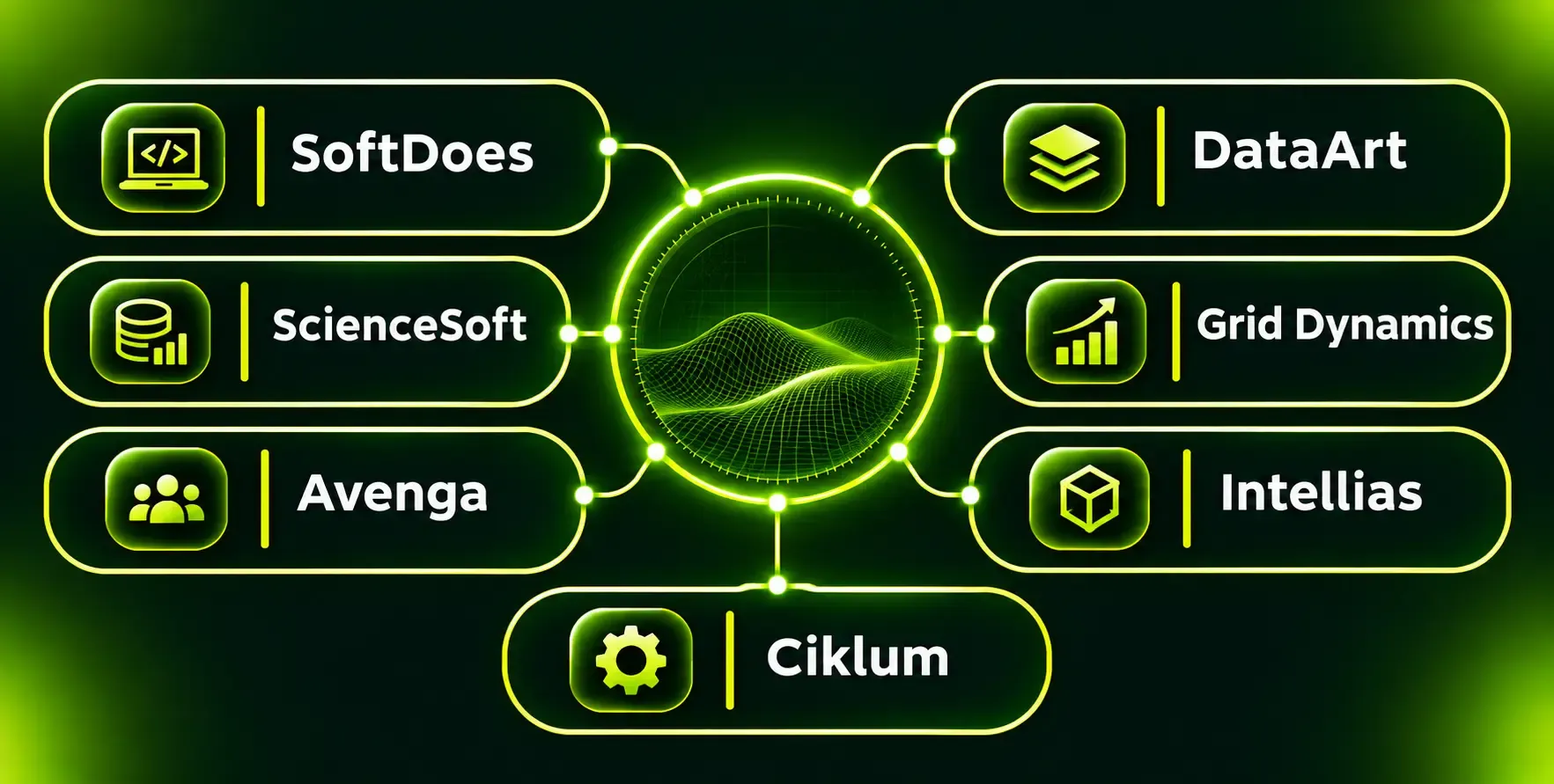
- SoftDoes - Best for custom, AI enhanced energy platforms and modernization for U.S. and Canadian utilities and energy innovators.
- DataArt - Best for complex data platforms and advanced energy analytics projects.
- ScienceSoft - Best for EMS and predictive maintenance in plants, utilities, and oil and gas.
- Grid Dynamics - Best for large utilities needing smart grid analytics and demand response solutions.
- Avenga - Best for upgrading digital customer experiences and smart metering portals.
- Intellias - Best for EV charging platforms and embedded or edge heavy energy systems.
- Ciklum - Best for large MDMS deployments and renewable energy software development.
How to Choose the Right Energy Software Development Partner
The "best" energy software development company depends on your utility size, asset mix, regulatory context, and whether you are a utility, IPP, industrial operator, or startup. Companies must adopt platforms to optimize operations and ensure compliance, but the path to get there varies. The following subsections outline practical decision factors to narrow the field quickly.
Choose Based on Your Energy Segment and Use Case
Needs differ significantly between electric and gas utilities, renewable developers, energy retailers, and EV charging networks. A grid analytics project for a large IOU has almost nothing in common with a customer portal for a community solar provider.
Match vendors' reference projects to your segment. If you need DER orchestration, look for case studies in that area. If you need an energy trading platform, ask for examples. Energy companies face challenges integrating complex distributed resources, so your partner must have hands on experience with the type of integration complexity you face. Choose partners with proven energy sector delivery in your specific scenario, whether that is AMI rollouts, renewable integration, or asset monitoring platforms.
Choose Based on Integration and Legacy Complexity
Projects tied to SCADA, AMI, CIS, OMS, or ISO/RTO markets require vendors comfortable with OT and IT integration and real time constraints. Energy software must handle real time data from SCADA and meters, and legacy systems often complicate energy software modernization efforts. If your project involves connecting to existing systems, make sure your vendor can demonstrate phased rollouts and zero downtime migrations.
Select partners with clear strategies for working with North American standards and typical platforms used by U.S. and Canadian utilities. Vendors lacking energy domain knowledge may face integration issues that delay timelines and inflate budgets. Select vendors with strong technical proficiency in IoT and AI, and evaluate partners based on their scalability and reliability.
Long term support and maintenance are crucial for energy software solutions. A vendor that builds your platform and disappears creates risk. Look for partners offering ongoing digital transformation support.
Choose Based on Data, AI, and Cloud Maturity
Organizations early in data maturity may need foundational data engineering before advanced AI or DER optimization. AI and machine learning solutions are integrated into energy software across the industry, but the value depends on having clean, accessible operational data first.
Evaluate vendors on both core engineering and AI/ML delivery. Cloud security, observability, and cost control matter for always on energy platforms. Security compliance is crucial when selecting a software partner, especially for energy infrastructure that touches grid control systems or customer data.
Communication and cultural compatibility affect the success of partnerships in software development. Make sure your vendor's working style, time zones, and communication practices align with your team's expectations before signing a multi-year contract.
Benefits of Working With SoftDoes for Energy Software Projects
The focus is on custom software development, data, AI, and cloud services tailored for utilities, renewable developers, and energy tech firms.
Energy Focused Custom Development and Modernization
SoftDoes builds and modernizes EMS, asset monitoring, customer portals, and energy data platforms around each client's grid, plant, or portfolio. Whether you need to modernize legacy systems powering a municipal utility or build a greenfield renewable energy software platform, the team structures work around your existing operations.
The approach is designed to gradually replace legacy modules while keeping critical operations online. Energy software development includes legacy modernization services, and SoftDoes handles that transition without forcing unnecessary disruption.
AI, Data, and Cloud Expertise for Energy Workloads
SoftDoes uses AI and machine learning for forecasting, anomaly detection, and optimization of storage and flexible loads. These capabilities extend across demand forecasting, generation dispatch, and grid modernization tools.
The team designs secure, cloud native architectures that meet North American reliability and compliance expectations. Energy software must comply with strict regulatory requirements, and SoftDoes brings the governance discipline from finance and healthcare into every energy engagement.
Flexible Engagement Models and Long Term Partnership
SoftDoes offers flexible engagement models including discovery and architecture assessments, dedicated teams for long term platforms, and focused build projects.
The collaborative approach with client product and operations teams reduces miscommunication and keeps projects aligned with real operational needs. Whether your organization is a renewable energy provider or a consulting company founded to serve the energy industry, SoftDoes scales its involvement to match your internal team maturity.
Which Energy Software Development Company Is Best for You?
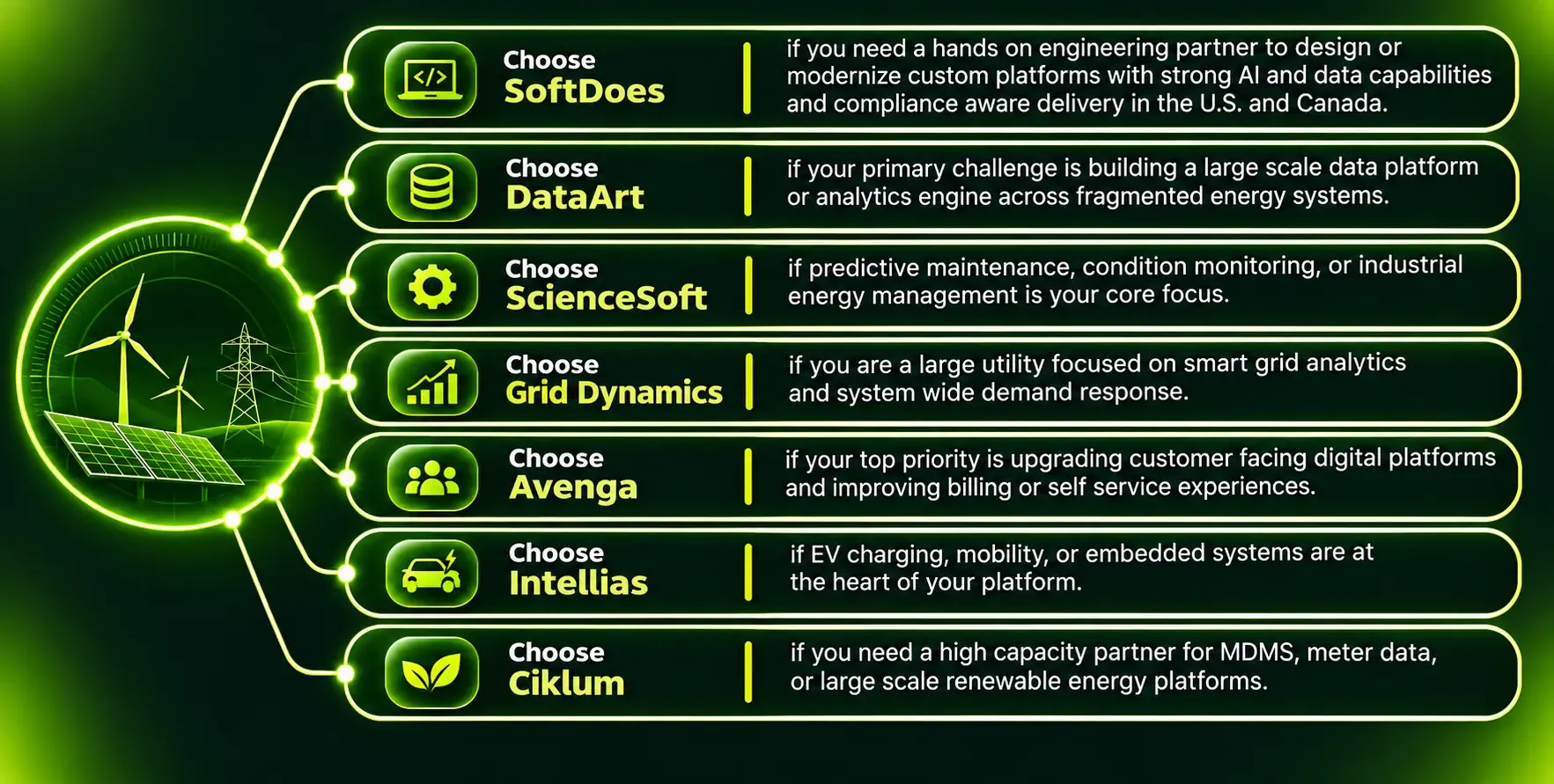
The right choice depends on your scale, risk tolerance, and whether you prioritize speed, depth of domain expertise, or innovation. Here is a decision oriented guide to help you shortlist:
Shortlist two or three vendors and run a small discovery or architecture engagement before making a multi-year commitment.
Final Thoughts
Energy software in North America is shifting toward data centric, cloud based, and AI enabled platforms. The energy software market is projected to exceed $50 billion by 2027, and the pace of investment in grid infrastructure, renewable energy, and digital infrastructure shows no sign of slowing. Top partners bring both domain insight and strong software engineering discipline.
The best choice will align with your specific grid, asset mix, regulatory environment, and internal team maturity. Whether you are a large IOU managing millions of meters or a renewable energy company scaling a new portfolio, the right energy software development partner will accelerate your outcomes rather than add complexity.
SoftDoes and the other listed energy software companies can each be the right option in the right context. For organizations near the Midwest, working with a Kansas City based custom software development partner can simplify collaboration and onsite discovery. Thoughtful evaluation, grounded in the criteria outlined above, is worth the effort. Start with the use case, match it to proven energy sector delivery, and build from there.










Comments (0)
No comments yet.