

U.S.-Based
Embedded & Mission-Critical Defense Software Development
Embedded defense software development by SoftDoes: real-time, safety-critical software for defense platforms, built to DO-178C, FACE, and SOSA.

Let's build together.
Talk with a senior engineer about your product idea, architecture, and what it would take to build it.
90+
Active Client Partnerships
80+ Person
Product & Engineering Team
100%
Your Code & IP Ownership
U.S.-Led
Delivery & Accountability
We understand the challenges you're facing
Our software must pass DO-178C or similar certification. How do we produce the evidence without the schedule slipping again?
SoftDoes builds audit readiness into embedded mission-critical defense software development from day one-not as a phase tacked on at the end. That means standing up formal plans (PSAC, SDP, SVP, SQAP, SCMP) and configuration management before the first line of code is written, then executing requirements-based development with explicit requirements traceability from system requirements down through software requirements, design, implementation, and test cases. Structural coverage analysis-up to MC/DC for the highest assurance levels-and independent code reviews are performed continuously, not in a final sprint. We reference and tailor processes to the applicable standards: DO-178C with DO-330 tool qualification, DO-331 for model-based development, DO-332 for object-oriented technology, and DO-333 for formal methods, alongside ARP4754A for systems, DO-254 for hardware interfaces, MIL-STD-882E system safety, MIL-HDBK-516C airworthiness criteria, IEC 61508 functional safety, and UK DEF STAN 00-055 and DEF STAN 00-056. SoftDoes supports the client during certification authority reviews-whether FAA or EASA SOI milestones or defense airworthiness authorities-with organized evidence and clear traceability, while making clear that approvals are granted by those authorities, not by us. Mission-critical software development involves strict adherence to safety and reliability standards, and software must comply with rigorous military and safety standards like DO-178C and MIL-STD-882. Certification processes include DO-178C for software and DO-254 for hardware, and SoftDoes ensures every artifact is prepared for the depth of scrutiny these processes require.
Our software must respond within strict time limits every time, on limited hardware. How do we prove it will?
Deterministic real-time performance is essential for defense systems to meet strict timing requirements, and resource constraints in defense systems limit CPU speed, memory, and power available for software. SoftDoes addresses this through disciplined real-time engineering: deterministic task scheduling, worst-case execution time (WCET) analysis, stack and heap budgets, and clear separation of time-critical versus non-critical functions via partitioning. We work with real-time operating systems and hypervisors including VxWorks and VxWorks 653, Green Hills INTEGRITY, PikeOS, LynxOS, QNX, Deos, real-time Linux, and Zephyr, and implement ARINC 653 partitioning to isolate safety-critical functions from lower-criticality tasks. For multicore platforms, we apply interference channel analysis following CAST-32A and AC 20-193 guidance, bounding shared-resource contention that can multiply WCET by factors of 4× to 12× if left unmitigated. Embedded software must often provide verifiable performance under both normal and abnormal conditions, so we incorporate fault detection, graceful degradation, and recovery strategies alongside long-duration reliability and endurance testing on target hardware and hardware-in-the-loop (HIL) rigs. Real-time operating systems are used for guaranteeing predictable task completion in defense applications, and our testing validates that predictable behavior holds under operational loads, temperature variation, and hardware aging.
Every upgrade means rewriting software for new hardware. How do we make our software portable and ready for future upgrades?
SoftDoes applies Modular Open Systems Approach (MOSA) principles and open standards to make embedded defense software portable and ready for future upgrades. For avionics, we align components to the FACE Technical Standard; for sensor and electronics payloads, we follow SOSA and OpenVPX; for vetronics and land vehicles, we use CMOSS and VICTORY architectures. Hardware abstraction layers (HALs) and board support packages (BSPs) isolate hardware-specific code-device drivers, peripheral interfaces, boot sequences-so that when a processor or board changes, only the HAL/BSP layer needs rework while application and middleware software remains intact. We integrate with defense data buses and networks including MIL-STD-1553, ARINC 429, ARINC 664/AFDX, CAN, Time-Sensitive Networking (TSN), and DDS middleware for distributed real-time integrated systems. Modular architectures are preferred to isolate critical functions and improve fault tolerance, and FACE- and SOSA-aligned components let clients field the same certified software across multiple platforms with minimal rework, protecting investment across the product lifecycle.
Our platforms now face cyber threats too. How do we build security into embedded software without breaking safety or real-time limits?
Defense software must withstand adversarial cybersecurity threats including jamming and reverse-engineering, and cybersecurity features must be integrated throughout the software development lifecycle for defense systems. SoftDoes designs security in from the start: secure boot chains, signed and authenticated software updates, strict memory and pointer hygiene, partitioning between different security domains, secure communication on platform networks, and security logging-all designed together with safety analysis so one does not compromise the other. We reference DO-326A and DO-356A for airworthiness security, NIST SP 800-53 and RMF for platform IT, and the client's program protection requirements, while adhering to secure coding standards such as MISRA C and MISRA C++, CERT C, and AUTOSAR C++14. Code quality is enforced through strict coding standards to prevent buffer overflows and memory leaks, and SBOMs are maintained for all third-party components to manage vulnerability and license risk. SoftDoes works within the client's security framework and export-control rules-ITAR, EAR, CMMC 2.0, and NIST SP 800-171-coordinating safety and security analysis so defensive measures are incorporated into the architecture to ensure software integrity without adding latency or jeopardizing real-time performance.
Our platform will serve for another 20 years, but its software runs on obsolete processors and old code few people understand. What are our options?
Long lifecycle management is critical as military systems can remain operational for decades, and legacy code management is complex due to the need for updates without disrupting certified behavior. SoftDoes begins legacy modernization by analyzing existing code, reverse engineering undocumented modules, and extracting requirements from existing behavior and test logs-building regression test suites first so behavior is locked down before any migration begins. We then define migration paths: from older C dialects, Ada, or legacy DSPs to modern C/C++ on current multicore SoCs, re-hosting on new real-time operating systems with emulation layers where needed, and incrementally re-certifying only the impacted components. Obsolescence management services ensure long product lifecycles, and design processes allow easy modifications for component obsolescence. Throughout, we use the embedded toolchains and verification tools our clients rely on-Wind River, Green Hills, Lauterbach debuggers, MATLAB/Simulink, Ansys SCADE, LDRA, VectorCAST, Polyspace, Rapita-plus the client's own HIL setups. Effective system integration of new and legacy components is a significant challenge, and SoftDoes manages this through careful regression verification, clear documentation, and controlled change management that keeps existing safety cases intact.
You build the platform. We engineer the software inside it.

Embedded and Real-Time Platform Software
SoftDoes designs and implements embedded software stacks tailored to the client's hardware, real-time operating system, timing, and safety requirements-from BSPs and low-level device drivers through partitioned applications to cockpit and crew station displays. Our coverage spans avionics flight computers, vehicle mission computers, shipboard controllers, unmanned vehicle control electronics, and communications equipment firmware. Embedded defense software operates on specialized hardware like microcontrollers or FPGAs, and we configure each layer for the target environment.
Deterministic real-time applications running on certified RTOS and hypervisors (VxWorks 653, INTEGRITY, Deos, LynxOS, PikeOS)
FACE- and SOSA-aligned software components portable across platforms and hardware generations
Built-in test (BIT), health monitoring, and secure software update pipelines integrated with maintenance systems

Verification, Validation, and Certification Support
SoftDoes helps embedded defense teams produce the verification and certification artifacts that safety, airworthiness, and platform acceptance authorities require-while development is still ongoing, not after it. Services include test strategy definition, automated test harnesses, coverage analysis, requirements traceability management, and preparation of formal data packages. High verification and testing overhead is necessary due to strict requirements for software reliability, and automated tools are critical for maintaining software quality and managing complex verification processes.
Requirements-based test design with full bidirectional traceability to DO-178C-style objectives.
Structural coverage measurement up to MC/DC using tools like LDRA, VectorCAST, Rapita, or client-specified suites.
Certification plans and data packages (plans, standards, test reports, trace matrices) prepared for authority review.

Modernization and Model-Based Engineering
SoftDoes modernizes legacy mission-critical defense software while preserving verified behavior through regression testing, and uses model-based techniques to accelerate new development under DO-331. AI-assisted tools support code analysis, documentation drafting, and test case generation, but final code and artifacts always go through standard certification-grade verification under human review-never replacing the required processes.
Migration of legacy Ada, C, and DSP code to modern processors, RTOS environments, and toolchains with controlled re-certification.
Model-based design and qualified code generation from environments like Simulink and SCADE.
Digital twins and software-in-the-loop / processor-in-the-loop simulation to de-risk integration before hardware is available.
Numbers Don’t Lie
Recent projects showcasing how we design, engineer, and deliver production-ready software solutions.

- Startup
- Real Estate
Our Haus AI
A finance professional turned founder built Our Haus AI, an AI-powered collaborative workspace where homeowners and contractors scope, bid, contract, and document renovation projects together. SoftDoes took her prototype and made it production-ready.- 10XMVP scope delivered
- 2+years Ongoing partnership
- 1Fully owned Platform

- Finance
- Energy
Deepwater Insights
Deepwater Insights delivers proprietary alternative data and niche research on the offshore drilling and energy sector to institutional investors, family offices, and high-net-worth individuals who require coverage that larger firms don't provide.- 100%Brand Continuity
- 2Platform Distribution
- 100%Paywall-Ready Content

- Real Estate
The building buyer
The Building Buyer is a Florida-based real estate investment firm co-founded by Dylan Troiano and Charles Hanlin. They acquire single-family, multifamily, and commercial properties across South Florida and beyond, with a focus on motivated seller opportunities.- 18Weekly hours saved
- 2+Years Ongoing partnership
- 1Fully owned Platform

- Education
- Non-Profit
WOVEN & NICE
Woven is a Spring Valley, NY nonprofit running the NICE program (New Training Inclusive Community Environment) in four Rockland County schools. Their team supports students through restorative practices, mediation, and professional development for teachers and administrators.- 4Schools Served
- 4Weeks to Launch
- 1STTime on Upwork

- Healthcare
CareInTouch
CareInTouch is a Bay Area home health agency providing skilled nursing and therapy services to patients referred from hospitals and clinics. With over 100 staff, they operate in one of the most complex and compliance-driven healthcare markets in the country.- 40% Reduction In Billing Errors
- 100+Staff Operations Managed
- 0Missed Compliance Deadlines

- Startup
Sparkle The Cleaning Service
Sparkle The Cleaning Service is a Detroit-area residential cleaning company with 10 years in business, connecting homeowners with vetted, insured independent cleaners through a subscription-based marketplace platform.- 75% Platform Transparency
- 2XPlatform Growth
- 40%Higher User Retention

- Startup
DineMate
DineMate is a Maryland-based dating and connecting platform built around verified profiles, restaurant reservations, and prepaid dining experiences. Founded to bring back authenticity to how people meet and connect.- 60% Time Saved
- 99%System Reliability
- 40%Higher User Retention

- Healthcare
Prior Authorization AI
Prior Authorization AI is a healthcare automation startup building AI-powered tools to streamline prior authorization for Medicare and Medicaid medical transportation providers in New Jersey.- 16Weekly hours saved
- 63%Admin time reduced
- 43%Fewer submission errors

- Education
Grand Central Language Services
Grand Central Language Services provides translation and interpretation for organizations operating in complex, multilingual environments. As demand grew, internal workflows became harder to manage. SoftDoes built a custom platform to streamline coordination, improve visibility, and support scalable operations.- 72%Workflow Reduction
- 48%Coordination Reduction
- 83%Visibility Increase

- Healthcare
FMY Orthodontics
FMY Orthodontics, a multi-location practice in West Tennessee, partnered with SoftDoes to replace a spreadsheet-based financial workflow with a custom web platform. The goal was to simplify how staff present treatment financing while allowing patients and families to review and complete decisions remotely.- 60%Workflow Reduction
- 75%Remote Adoption
- 5Locations Aligned

Forbidden Alchemy
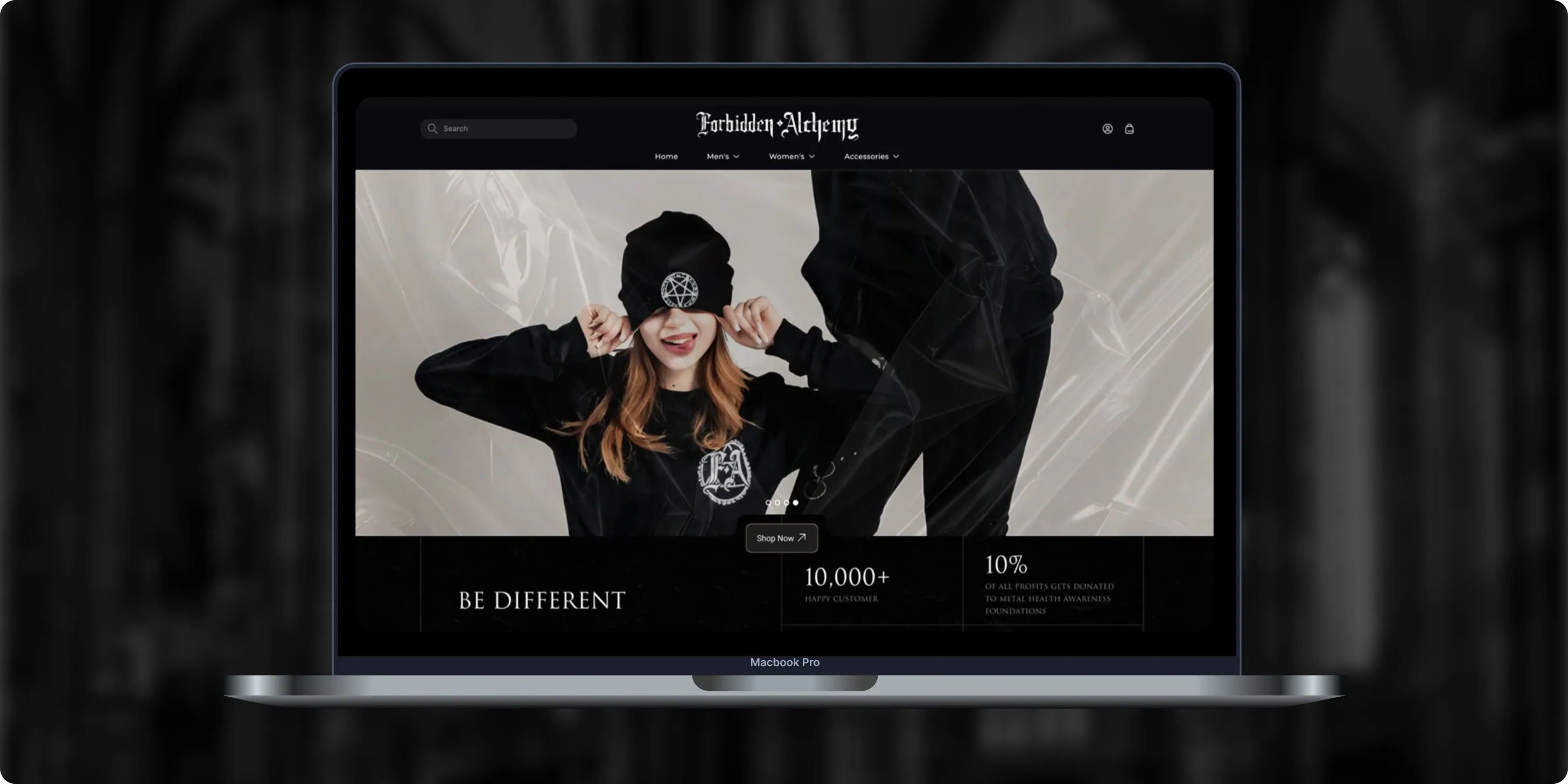
Forbidden Alchemy is an alternative fashion brand creating dark, provocative clothing for the metalhead community, with 10% of profits donated to mental health awareness. Its mostly mobile audience struggled with a store that was hard to navigate and weak on functionality.- +44%Revenue Month Over Month
- 86%Design Satisfaction
- 2.8XUser Retention Growth
Altera
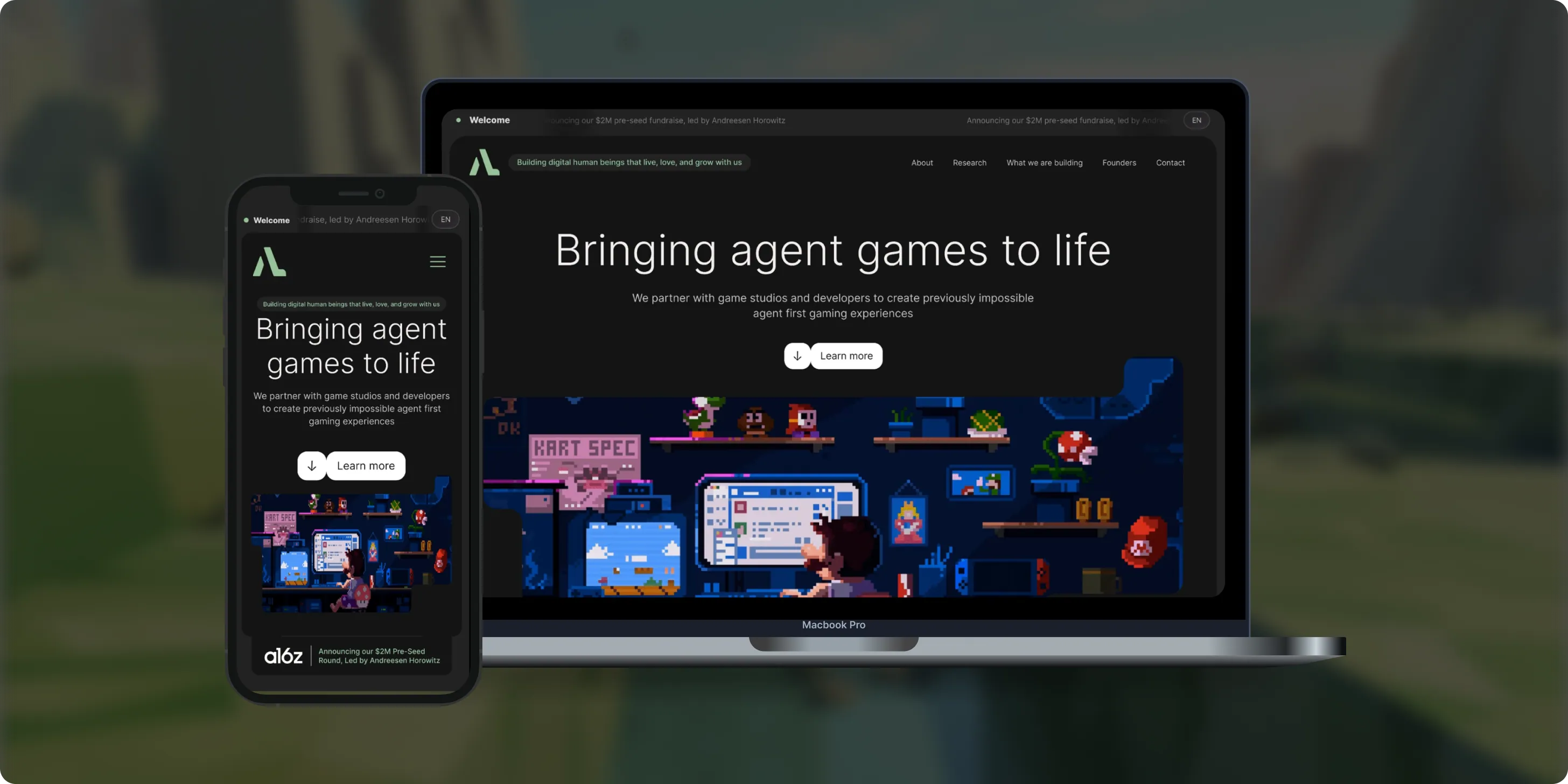
Altera builds on decades of computational neuroscience research to create digital human beings for gaming. Backed by a $2M pre-seed round led by Andreessen Horowitz, the team needed a landing page that could explain complex agent technology to players, partners, and investors.- 98%Dynamic Customization
- 100%Streamlined Navigation
- $2MPre-Seed Round
- Real Estate
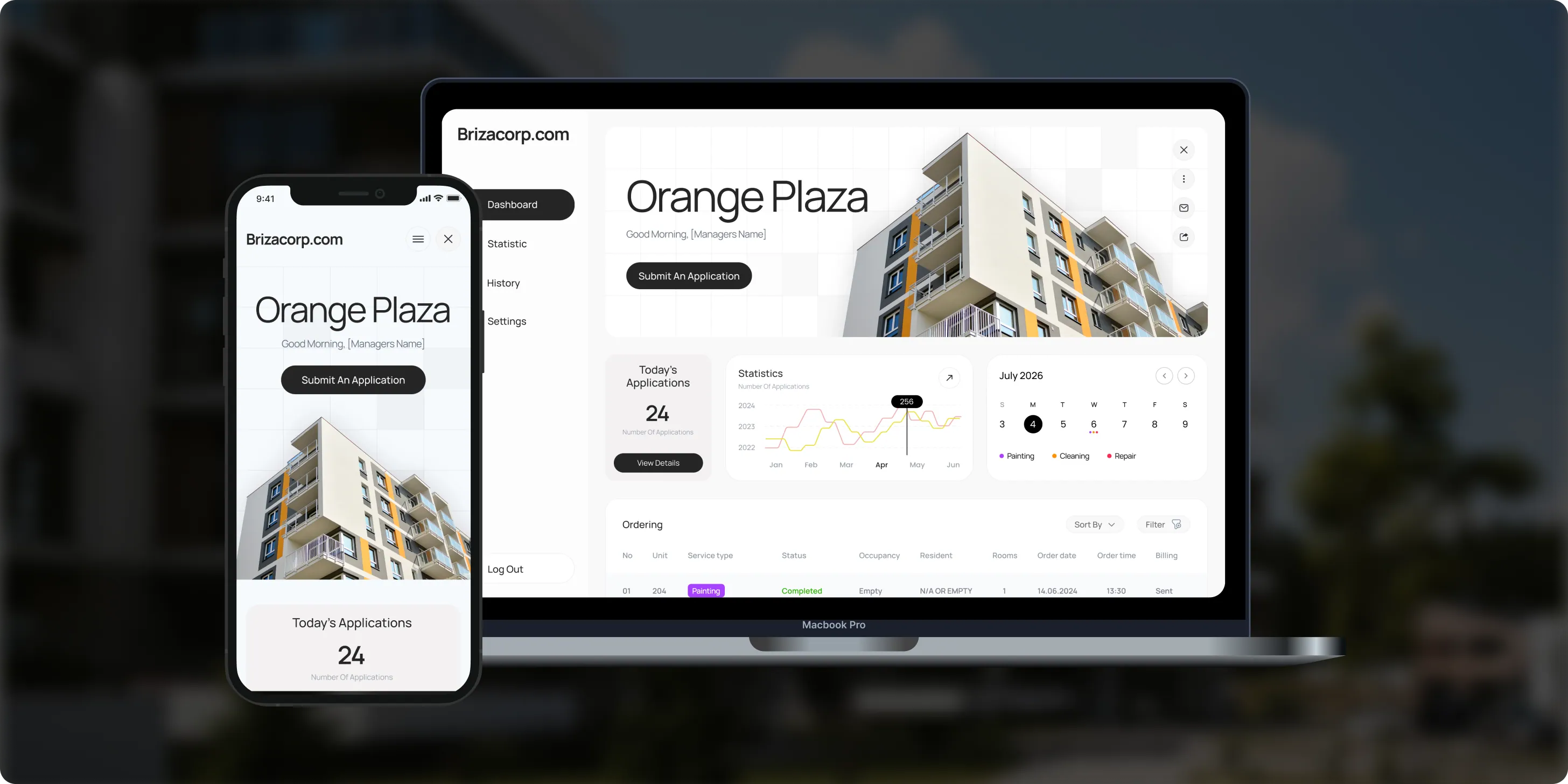
Brizacorp
Brizacorp manages residential properties and coordinates the staff who handle painting, cleaning, and repair requests. Its team tracked work across messengers, phone calls, e-mail, and paper planners, with no single place to manage requests or measure performance.- 98%Application Stability
- 95%Utilization Rate
- 30%Faster Task Completion
Color & Harmony
Color & Harmony is a Kentucky-based color consulting studio led by certified color strategist Diana Cartaya. The studio needed a website that reflects its refined aesthetic, showcases its portfolio, and explains a science-based color process in simple language.- 45%Conversion Rate Increase
- 50%Higher User Engagement
- 2Months to Launch

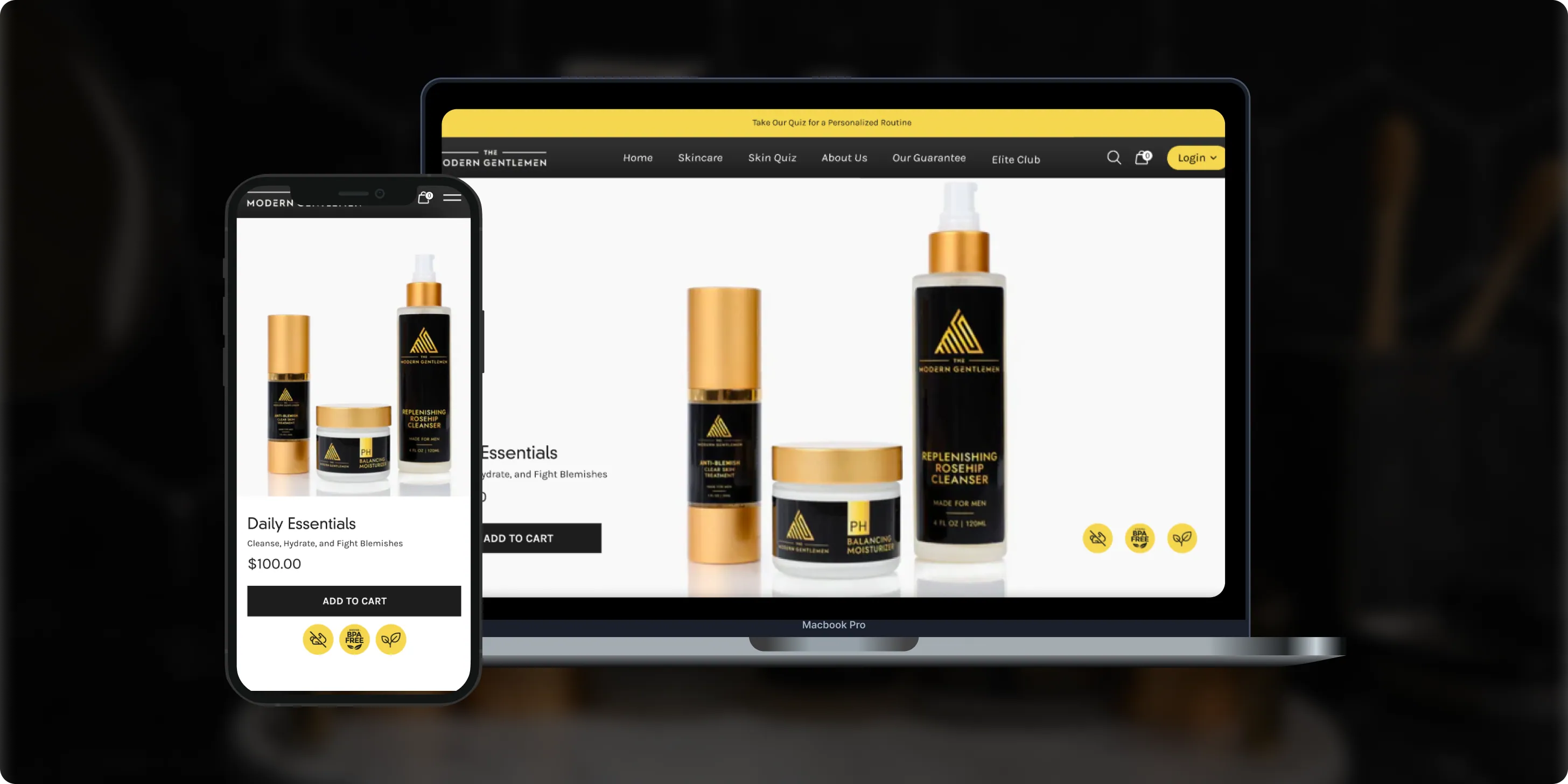
The Modern Gentlemen
The Modern Gentlemen sells premium men's skincare featured in Men's Health, GQ, and Men's Journal. Its customers wanted an efficient routine, but generic product suggestions and limited skincare knowledge made choosing the right products hard.- 30%Increase in Conversions
- 25%Higher Customer Retention
- 92%Mobile Purchases
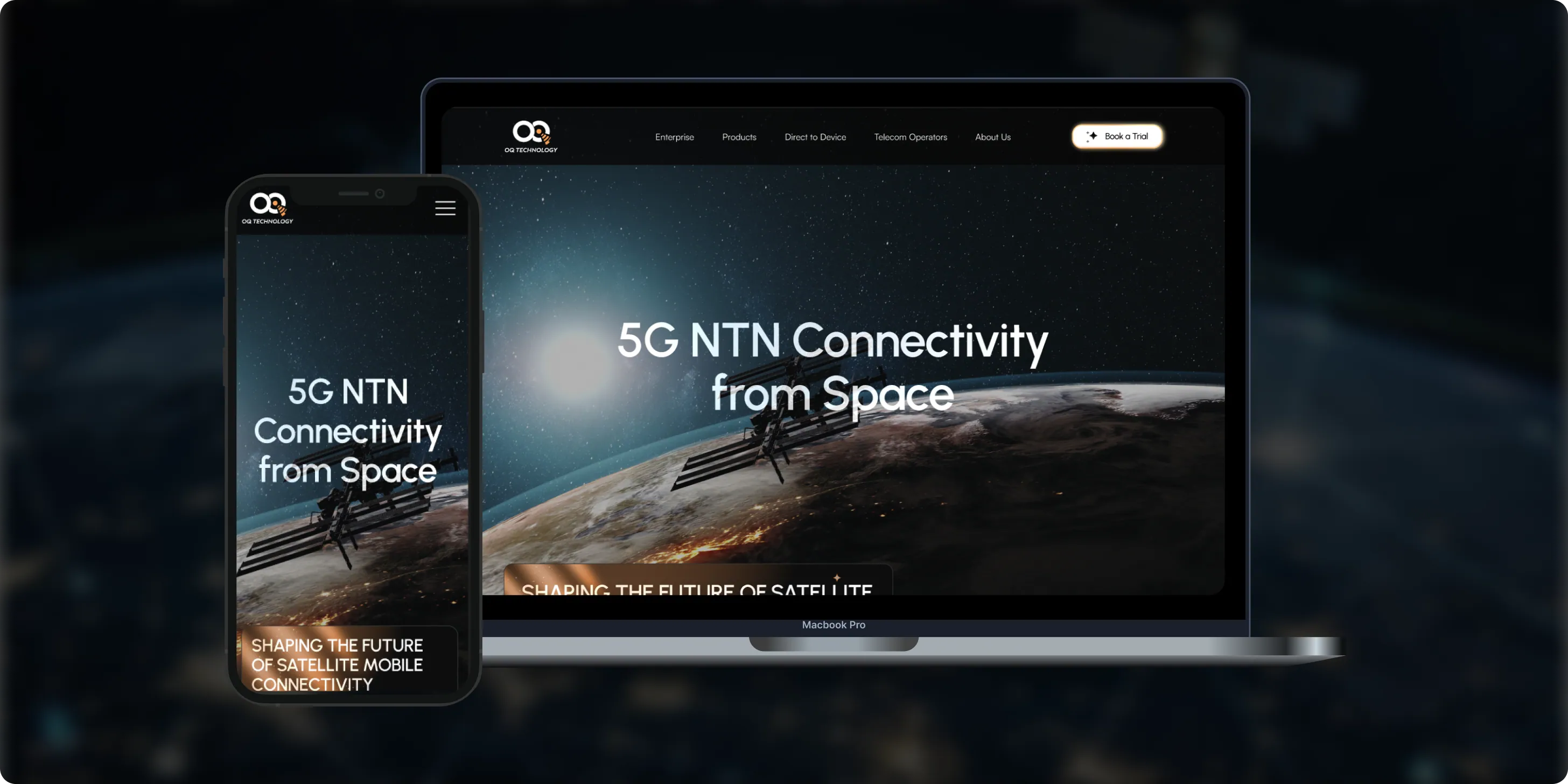
OQ Technology
OQ Technology connects IoT devices, machines, and people anywhere on the planet through its satellite network, serving energy, maritime, logistics, agriculture, and mobile operators. Its website made it hard to explore products and reach pricing plans.- 4Pricing Plans Clarified
- 3Dedicated User Flows
- 1Unified Platform
- Real Estate
- Finance
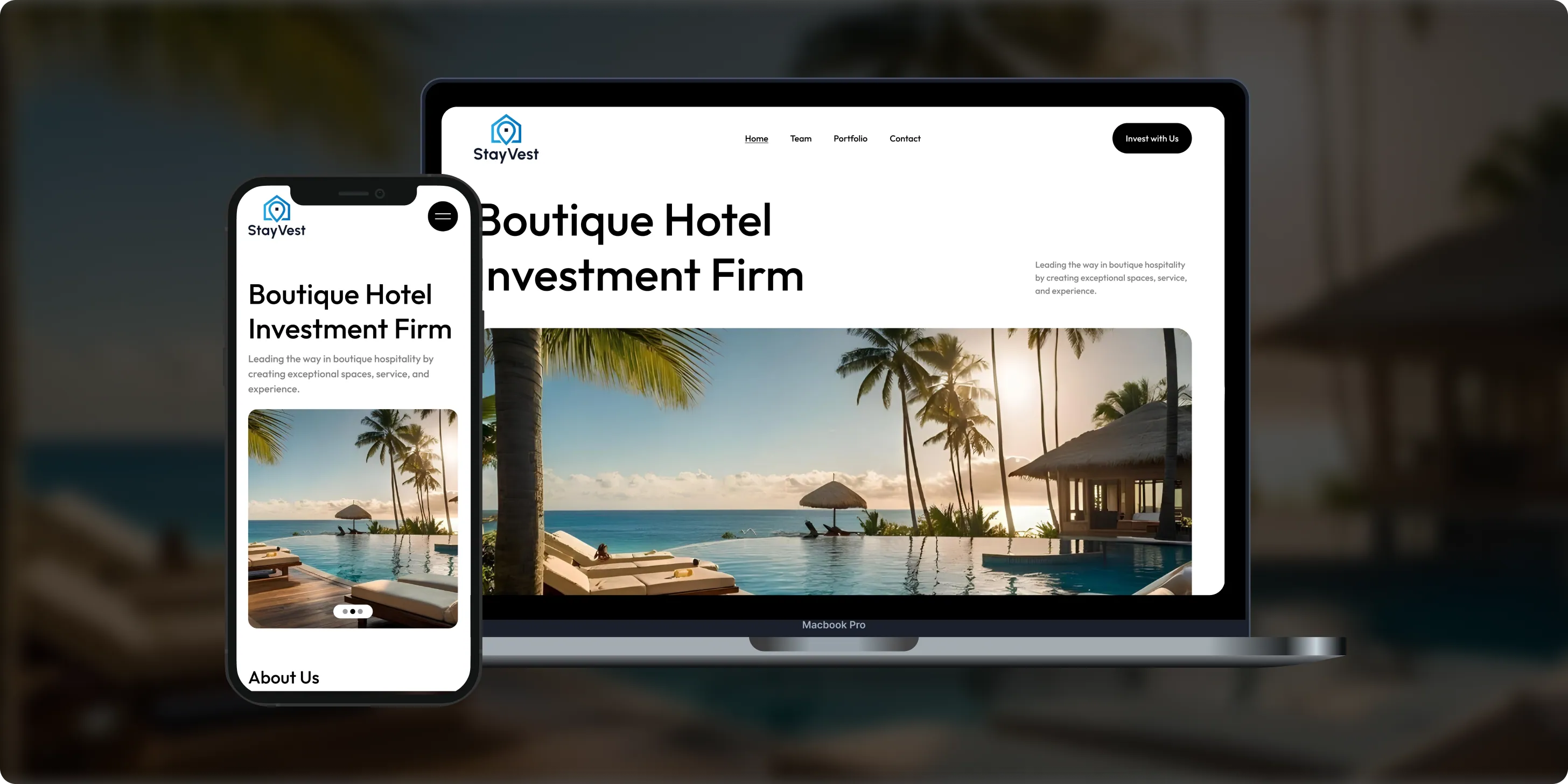
Stay Vest
Stay Vest is a private real estate investment firm that acquires, renovates, and operates boutique hotels for cash flow, tax benefits, and equity gain. It needed a platform that explains its strategy and earns the trust of passive investors.- 1,500+Guest Stays
- 200+Rooms Managed
- 5States Covered
Bokeyno Motorsports
Bokeyno Motorsports is the leading mobile installer of vertical doors for high-performance cars. This Shopify website isn’t just about services—it’s a bold statement of power, style, and expertise. With a sharp layout, strong visuals, and real-world case studies, the site delivers all the information car enthusiasts need to book confidently and instantly.- 54%Booking Requests
- 43%Lead Conversion
- 32%Qualified Inquiries

ai document processing platform
A comprehensive talent solution designed to help companies attract, hire, and retain top talent more effectively. The platform combines AI-powered recruitment technology with employee financial wellbeing programs, enabling smarter hiring decisions while supporting employees’ financial stability and long-term engagement.- 62%Faster Processing Time
- 78%Less Manual Work
- 35%Improved Accuracy

WHAT CLIENTS SAY
Independently verified reviews from real clients on Clutch.co


Client Story
Real feedback from
FMY Orthodontics

“Their perseverance and solution-oriented mindset. SoftDoes consistently found ways to make things work, added features we had not originally envisioned, and never became frustrated. It felt like working with a true partner who cared about the success of our practice.”
Dan Merwin
DDS, MS -- President, FMY Orthodontics

Client Story
Real feedback from
Prior Authorization AI
“Every time I sent a request, if there was anything that didn't work, they were able to turn it around quickly. Even when there were no updates yet, they always reached out to let me know they were working on it.”
Joseph Oluwo
Founder of Prior Authorization AI


Client Story
Real feedback from
WOVEN
“What stood out most was their commitment to understanding our needs before presenting solutions.”
Danna Pastran
Administrative Operations Manager, WOVEN

Client Story
Real feedback from
Grand Central Language Services
“The site performs as intended and provides the foundation for our company's digital presence.”
Joe Goldstein
QA Manager, Grand Central Language Services


Client Story
Real feedback from
DineMate
“They go above and beyond.”
Eric Snead
CEO, DineMate "Dating Connecting Platform"
Why they Choose SoftDoes
- 01SENIOR ENGINEERS, NOT LAYERS
Projects are led by senior embedded and safety-critical software engineers who have shipped real-time platform software for avionics, vehicles, naval systems, and unmanned platforms. They read system requirements, interface control documents, hardware data sheets, and certification standards, then translate them into practical architectures and code. SoftDoes engineers speak daily with client systems, hardware, safety, and certification engineers-no layers of project coordinators or account managers filtering technical detail. They can discuss ARINC 653 partitioning, WCET margins, MC/DC coverage gaps, DO-330 tool qualification, data bus protocol nuances, and secure boot flows with the client's own experts. This senior-led approach reduces ramp-up time and rework, which is critical when lab access and test ranges are scarce resources on any defense program.
- 02PREDICTABLE DELIVERY
SoftDoes plans work in increments aligned with platform milestones: hardware availability, lab integration windows, environmental qualification, flight or sea trials, and certification stages of involvement such as SOI audits for DO-178C projects. Written plans define entry and exit criteria, requirements traceability matrices track every objective, and regular demos on simulators, development boards, and target hardware give program managers and chief engineers concrete evidence of progress. Dependencies with hardware vendors, adjacent software suppliers, test labs, and certification authorities are managed proactively so blocking issues surface early. Predictability is especially important because missed windows for environmental or field test campaigns can delay entire defense programs-and failure of mission-critical systems can terminate entire operations.
- 03BUILT TO LAST PAST LAUNCH
SoftDoes designs software with modular open architectures-MOSA, FACE, SOSA, and hardware abstraction-so code can move to new processors or line-replaceable units without full rewrites across the product lifecycle. Built-in test, continuous health monitoring, logging, and secure update channels support maintainers over decades of platform life. We enforce coding guidelines (MISRA, CERT, AUTOSAR C++14), maintain a strong code review culture, and run automated regression test suites that guard against unintended changes during upgrades. Disciplined configuration management, SBOM tracking, and DevSecOps practices adapted for embedded targets ensure traceability as hardware and toolchains evolve. These practices reduce lifecycle cost and risk when platforms undergo mid-life upgrades or capability insertions years after initial deployment-because mission-critical qualification is not a one-time milestone.
- 04NO BABYSITTING REQUIRED
SoftDoes prepares comprehensive handover packages: full source code, design and architecture documentation, test specifications and scripts, coverage reports, certification data, and build toolchain configurations. Build and test environments are made reproducible-scripted setups and containerized toolchains where the client's security policies allow-so client teams can build, verify, and modify the software independently. Documentation and training sessions cover architecture rationale, safety assumptions, and how to extend or modify components safely. SoftDoes avoids proprietary lock-in at the code or process level, giving customers the ability to take over completely or keep SoftDoes as a long-term partner. When clients do choose ongoing partnership, SoftDoes supports complex changes and new capabilities without requiring day-to-day oversight.
How we work with your quality team
This is how SoftDoes partners with you from first conversation through long term support.

Experience Across Defense Aerospace, Land and Naval Systems, Unmanned Systems, and Space
We build embedded software where real-time reliability, certifiable safety, cyber resilience, and long service life are non-negotiable.
Command Control
Edge AI Software
ISR Software
Logistic Software
Mission Planning
Complex systems, integrations, and internal platforms built to evolve. We step in when off-the-shelf tools stop being enough.
CyberSecurity
From first version to real traction without painting yourself into a corner. Built for speed now and hard decisions later.
Training Simulation
Systems designed around controls, traceability, and change management. Built so audits don’t become fire drills.
Defense Software
Infrastructure software built for long timelines and high stakes. Reliable systems for assets that can’t afford guesswork.


Frequently Asked Questions
Everything you need to know about working with SoftDoes. Can’t find an answer?
How long does embedded defense software development take, and what drives the cost?
A first usable increment-such as a BSP, device driver package, or test suite for existing code-can be delivered in a few months. Full safety-critical applications with complete verification and certification support typically span 12–24 months depending on software size and complexity, required assurance level (DO-178C DAL A demands significantly more evidence than DAL C), hardware readiness, and integration needs. Major cost drivers include depth of verification and coverage, multicore timing analysis, tool qualification, security requirements such as DO-326A compliance, and the scope of integration support. Scheduling often hinges as much on hardware and test rig availability as on pure engineering effort.
Can you work to DO-178C and other safety standards?
Yes. SoftDoes follows the client's required standards-DO-178C, ARP4754A, MIL-STD-882E, IEC 61508, DEF STAN 00-055 and DEF STAN 00-056-tailoring plans, processes, and evidence to the target assurance level. We help create plans, traceability, tests, and coverage analysis, but certification authorities and the client are the ones who grant approval. SoftDoes does not claim design assurance levels, clearances, or approvals it does not hold; instead we prepare the data and support audits so the client's certification activities proceed smoothly.
Can you work with our hardware, RTOS, and existing code?
SoftDoes regularly works with client-selected processors, boards, FPGAs, and RTOS or hypervisor environments, and can also help with board bring-up and BSP development for new hardware. On existing code bases, typical activities include static and dynamic analysis, documentation recovery, bug fixes, refactoring, and adding new features while preserving behavior through regression tests. Adoption of open standards like FACE or SOSA can be done incrementally, starting with interfaces and components that are easiest to modularize-a practical path for technologies already in production.
How do you handle security and export-controlled technical data?
Security is built into architecture and code-secure boot, signed updates, partitioning, secure communication-and aligned with standards such as DO-326A and DO-356A for airworthiness security, plus the client's RMF or program protection plans. Development environments, personnel access controls, and data handling follow contract security rules, including ITAR and EAR requirements, CMMC 2.0, and NIST SP 800-171 for controlled unclassified information where applicable. General Digital is compliant with DFARS, NIST, and CMMC standards, and SBOMs plus supply chain checks are maintained for every third-party software component to manage vulnerability and license risk.
Who owns the source code, certification data, and intellectual property?
Ownership is defined in the contract, and SoftDoes supports models where the client-and where required, its government customer-receives full rights to source code, designs, and certification data. Third-party RTOS and tool licenses, open-source components, and any SoftDoes internal utilities are documented and licensed transparently so there are no surprises. Handover includes build and test environments, all lifecycle data, and the documentation needed for the client to maintain and extend the system independently if desired.
Do you use AI in safety-critical software development?
SoftDoes may use AI-assisted tools for tasks like code analysis, documentation drafting, or proposing test cases, but always under human review and within the client's policies. AI-generated content is never treated as certification evidence by itself; every artifact must pass the same verification and review steps as manually created work. If your program needs AI models running on deployed edge hardware, SoftDoes covers that separately under its Defense Edge AI software development offerings.
What kind of support do we get after delivery?
SoftDoes typically supports clients through system integration, environmental qualification, flight or field testing, and initial deployment, addressing issues discovered in those phases. Options for ongoing sustainment include service agreements for defect fixes, security updates, performance tuning, and assistance with certification impact analysis for changes-structured under change control with the client. We also monitor hardware and RTOS obsolescence to plan upgrades before they become urgent, because continuous verification is crucial for long-life defense platforms.
How do you reduce risk on a mission-critical software development program?
SoftDoes reduces risk through early planning, clear standards, and incremental delivery with visible checkpoints-not big-bang releases. We emphasize early testing on simulators and development boards, early timing and safety analysis, and early involvement of security and certification stakeholders. Automated regression testing, continuous traceability checks, configuration management, and independent reviews catch defects and gaps before they affect flight or field trials. Transparent reporting on risks, issues, and trade-offs enables program leadership to make informed decisions in time to adjust scope or schedule, because in mission-critical environments, surprises are the most expensive risk of all.