
U.S.-Based
AI in banking for the work behind every loan and account
Loan files, account opening checks and fraud alerts wait in queues while staff re-key documents. We build AI that reads them, drafts the decision file and leaves every decision to your people.
$7,000
Banking AI build, from
40
AI projects delivered since 2020
5.0
Clutch rating from 40 reviews
























How a loan file moves through the build
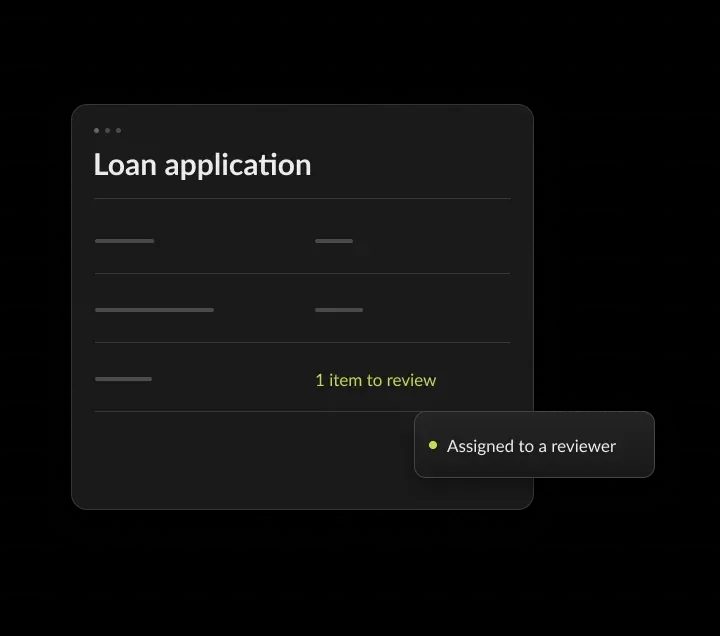
One application: the AI reads and checks it, an underwriter decides and the LOS updates.
An application arrives
Pay stubs, tax returns and statements come in through the portal.
AI reads and checks it
It drafts the income figures, checks your policy and lists open conditions.
An underwriter decides
They review the file, request missing items and make the call.
The LOS updates
Fields, conditions and notes land in your loan system, with a log.
AI for financial services, in short
- Kansas City metro software and AI company
- AI for banks, credit unions and lenders
- We automate loan file review, account opening checks, fraud alert triage and member service, with audit trails your examiners can follow
- Builds start at $7,000, run on your own accounts, and you own all the code

Files prepared by AI. Decisions made by your people.
- 01Build priceFrom $7,000. AI agents across 3 or more systems, such as one that assembles loan files, start at $13,000. Model usage is billed at cost. AI development cost
- 02Who it's forBanks and credit unions: operations, lending and compliance leaders at community banks, credit unions and lenders. Lending software development
How is AI used in banking?
Banks and credit unions use AI to read the documents behind loans and accounts, triage fraud and BSA alerts and answer routine customer questions. The AI prepares the work, and a named person makes every credit, fraud and compliance decision.
What a banking AI build includes
Read access to your systems
Read access to your core, loan origination system and imaging system, through approved interfaces.
Document reading
Document reading for pay stubs, tax returns, statements, IDs and business filings, with each figure linked to its page.
Your policy and templates
Your credit policy, conditions and memo templates, written down and tested before launch.
A review screen
A review screen where staff accept, edit or reject each AI draft.
A full log
A log of every input, output, model version and reviewer, ready for a model risk review.
Your own cloud tenant
Data in your own cloud tenant, encrypted, behind role-based access and single sign-on.





The middle and back office
The builds on this page sit in the middle and back office. Loan files, account opening packets and alert queues are full of documents that staff read and re-key by hand.
Custom AI vs AI features from your core vendor
AI features from a core or lending vendor fit when the job stays inside that one system. A custom build fits when the work spans the core, the loan system, documents and email, or when your policy differs from the vendor's defaults.
Types of AI for banks and credit unions
Five builds for banks, credit unions and lenders, what each one does and where it fits. The price is the starting price on our price list. Model usage and hosting are billed at cost on your own accounts. Maintenance starts at $500 a month.

Chatbot on your documents
Answers member questions from your approved content, such as fees, hours and forms. Fits when your contact center fields the same questions daily.
Document extraction
Reads pay stubs, statements and IDs, then writes checked fields. Fits when staff retype documents into the loan system or core. See document extraction.
Banking workflow AI
Reads, drafts and routes one queue across 1 or 2 systems, with approval steps. Fits when one queue, such as loan conditions, eats staff hours.
AI agent across 3 or more systems
Assembles a loan file or fraud case from the portal, the core and the credit report. Fits when the work spans several systems.
Private AI on your data
Runs models inside your own cloud tenant, plus hosting at cost. Fits when customer data cannot go to a public model API. See private AI on your data.
AI for credit unions and banks, on the systems you run
The AI reads from your core and loan systems through approved access, and writes only where a person reviews it.
Built for exams, fair lending and model risk reviews
Ready for examiners
Banking AI has to explain itself to examiners and to customers. Every build ships with these controls. See AI governance and compliance, AI agent evaluation, AI red teaming and private AI on your data.
No credit decision by AI alone
AI never approves, denies or prices credit alone: a named person makes every credit decision.
Ready for a model risk review
Each AI output is logged with its inputs, model version and reviewer, ready for a model risk review.
Specific adverse action reasons
Adverse action reasons come from your own decision rules, so notices stay specific.
Your cloud account
Customer data stays in your own cloud account, encrypted, behind role-based access and single sign-on.
Tested for unfair outcomes
Models are tested for errors and unfair outcomes before launch, and again after each change.
AI in lending, onboarding and member service
Five queues where AI does the reading and gathering, and your staff make the calls.
Loan file review
AI reads pay stubs, tax returns and bank statements, drafts the income figures and lists open conditions. Writes to: your loan origination system, such as Encompass. For example, a borrower uploads two pay stubs, a W-2 and three bank statements. The AI drafts qualifying income, flags a large deposit and lists it as an open condition.
Commercial credit memos
AI drafts the credit memo from financial statements and the borrower file for a credit officer to finish. Writes to: your memo template and loan system. For example, a credit officer opens a $750,000 equipment loan. The AI has already drafted the cash flow and collateral sections from the borrower's statements.
Account opening checks
AI checks IDs, business documents and beneficial owner forms for gaps before an analyst reviews them. Writes to: your account opening platform and core. For example, a new business account packet arrives without one beneficial owner's ID. The AI flags the gap before the analyst opens the file.
Fraud and BSA alert triage
AI gathers transaction history, prior alerts and the customer profile into one summary per alert. Writes to: your case management system, where an analyst decides. For example, an alert fires on a run of cash deposits. The AI gathers 12 months of activity, prior alerts and the customer profile into one summary for the analyst.
Member and customer service
An AI assistant answers card, loan and account questions and hands complex cases to staff with the history attached. Writes to: your CRM or help desk. For example, a member asks why a card payment was declined. The assistant checks the card status with permission, then hands off to staff with the history attached. See AI customer service agent.
How a banking AI build runs
Four steps, starting with one queue and your written policy. Your staff make every decision at every step.
We map one queue end to end, such as consumer loan conditions or BSA alerts, with your policy and examples. Your institution sees the plan and a fixed price before any code. You get a written plan and fixed price.
We build on a branch and test the AI on past loan files or alerts with known outcomes. Results are measured field by field against what staff recorded. You get a working build and test results.
Your compliance and model risk teams review the documentation, logs and fairness tests. The build must pass the agreed test set before release. You get a documentation pack for your review.
We release to one branch, team or product line first. Staff accept or edit every AI draft while we track accuracy and time saved, then widen the release. You get a live queue and runbook.
AI builds running in production
Two AI builds from our case studies: one reads documents in a regulated workflow, one runs a daily data pipeline.

- Healthcare
Prior Authorization AI
Prior Authorization AI is a healthcare automation startup building AI-powered tools to streamline prior authorization for Medicare and Medicaid medical transportation providers in New Jersey.- 16Weekly hours saved
- 63%Admin time reduced
- 43%Fewer submission errors

- Startup
- Real Estate
Our Haus AI
A finance professional turned founder built Our Haus AI, an AI-powered collaborative workspace where homeowners and contractors scope, bid, contract, and document renovation projects together. SoftDoes took her prototype and made it production-ready.- 10XMVP scope delivered
- 2+years Ongoing partnership
- 1Fully owned Platform

- Real Estate
The building buyer
The Building Buyer is a Florida-based real estate investment firm co-founded by Dylan Troiano and Charles Hanlin. They acquire single-family, multifamily, and commercial properties across South Florida and beyond, with a focus on motivated seller opportunities.- 18Weekly hours saved
- 2+Years Ongoing partnership
- 1Fully owned Platform

- Healthcare
CareInTouch
CareInTouch is a Bay Area home health agency providing skilled nursing and therapy services to patients referred from hospitals and clinics. With over 100 staff, they operate in one of the most complex and compliance-driven healthcare markets in the country.- 40% Reduction In Billing Errors
- 100+Staff Operations Managed
- 0Missed Compliance Deadlines

- Startup
Sparkle The Cleaning Service
Sparkle The Cleaning Service is a Detroit-area residential cleaning company with 10 years in business, connecting homeowners with vetted, insured independent cleaners through a subscription-based marketplace platform.- 75% Platform Transparency
- 2XPlatform Growth
- 40%Higher User Retention

- Healthcare
FMY Orthodontics
FMY Orthodontics, a multi-location practice in West Tennessee, partnered with SoftDoes to replace a spreadsheet-based financial workflow with a custom web platform. The goal was to simplify how staff present treatment financing while allowing patients and families to review and complete decisions remotely.- 60%Workflow Reduction
- 75%Remote Adoption
- 5Locations Aligned

- Real Estate
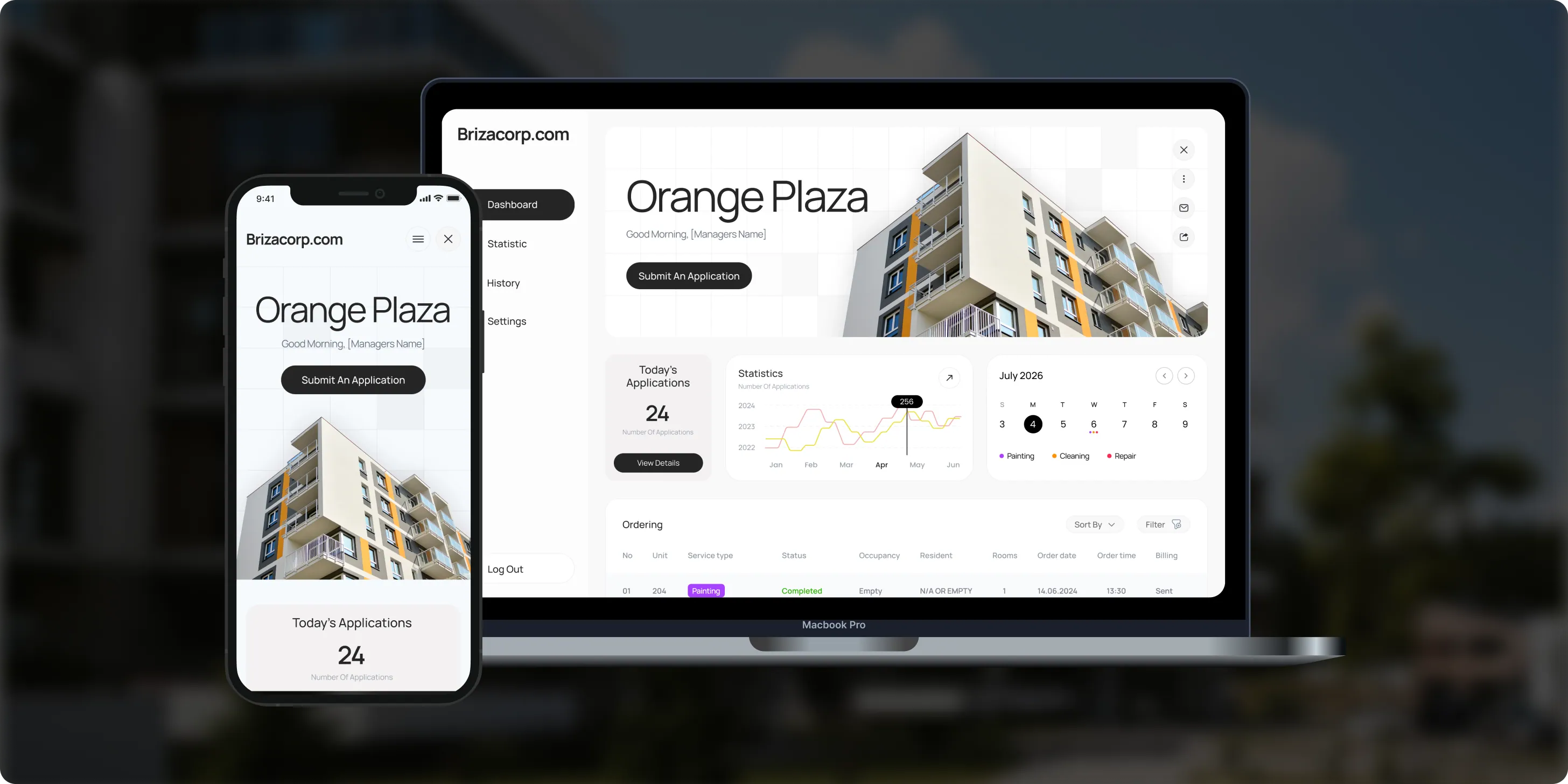
Brizacorp
Brizacorp manages residential properties and coordinates the staff who handle painting, cleaning, and repair requests. Its team tracked work across messengers, phone calls, e-mail, and paper planners, with no single place to manage requests or measure performance.- 98%Application Stability
- 95%Utilization Rate
- 30%Faster Task Completion
Risks in banking AI, and how we handle them
The main risks are wrong figures, unfair outcomes, vague adverse action reasons, data exposure, model changes and low adoption. Each gets a control before go-live.

AI in lending: the rules your build must meet
Applicants who are denied credit are entitled to specific reasons, and models should be governed in proportion to their risk. Your AI build should produce clear reasons, full logs and documentation your model risk team can review.
What the build gives your compliance and model risk teams
- A description of each AI component: its purpose, inputs, outputs and limits
- Logs of every input, output, model version and reviewer, kept in your accounts
- Test results for accuracy and unfair outcomes, before launch and after each change
- Change records for every prompt, rule and model update
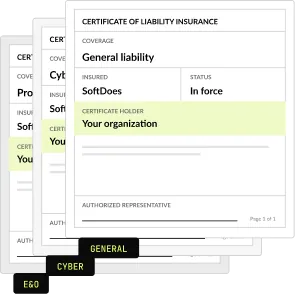
- Vendor documents for your third-party risk file, including our NDA and a certificate of insurance on request
Regulation B and OCC model risk guidance
Regulation B requires the statement of reasons for adverse action to be specific and to name the principal reasons. A notice that only cites internal standards, or a failed credit score cutoff, is not enough under the rule. For consumer credit, notice of the decision is due within 30 days of a completed application. OCC Bulletin 2025-26, issued in October 2025, says community banks it supervises may tailor model risk management to their risk and model use. The OCC identifies community banks as institutions with up to $30 billion in assets. Its guidance does not require them to perform annual model validation.
Your model risk team decides
Your model risk team decides how to classify and validate each component, and our documentation supports that review. AI agent evaluation can supply the test results, and AI governance and compliance helps set the policy around it.
How to choose an AI partner for your bank or credit union
Choose a builder that keeps data in your accounts, leaves decisions with your staff and documents every AI step for examiners. Ask these questions before you sign.
Questions to ask, and what a good answer includes
- Where will customer data live? In your own cloud tenant or data center, encrypted, behind your single sign-on.
- What can the AI decide alone? Nothing on credit, fraud or compliance: a named person decides.
- How will adverse action reasons stay specific? Reasons drawn from your decision rules, never written by the model.
- What will our model risk team receive? A description of each component, logs, test results and change records.
- Can you work with our core? Yes, through approved access, reading by default and writing only where a person reviews the change.
- What paperwork comes first? An NDA before the first call, and a certificate of insurance on request.
AI in banking ROI: a worked example
Banking AI pays back when the staff hours it frees cost more than the build, maintenance and model usage. The example below uses assumed numbers for consumer loan file review, so swap in your own. Example math with assumed numbers, not a client result. At these numbers, the build pays back in about two months, before model usage. Faster files can also mean faster answers for applicants, which this math leaves out. Enter your processors' hours and loaded cost in the AI ROI calculator, and your monthly loan file count in the LLM cost calculator.
Questions about AI in banking
Use cases, jobs, cost and data. Can't find your answer?
What are the most important AI use cases in banking?
For most banks and credit unions, four stand out: loan file review, account opening checks, fraud and BSA alert triage, and customer service. Each one has a high volume of documents or questions, a clear rule set and a person who already reviews the result. That makes them safe places to start and easy to measure. Our guide to AI use cases by industry lists more examples, sector by sector.
Is AI going to take over banking?
No. AI takes over reading, re-keying and first drafts, and people keep the decisions. In our builds, a named person owns every credit, fraud and compliance call, and the AI prepares the file for them. The change is in where staff time goes: less on gathering documents, more on judgment and customers.
What is the future of AI in banking?
The next step is AI agents that prepare work across several systems. One assembles a loan file from the portal, the core and the credit report; another builds a fraud case from transaction history. People approve the result. Banks that log every AI step and keep data in their own accounts will be ready for the exam questions that follow.
Which banks are leading in AI?
The largest national banks run big internal AI programs with their own engineering teams. Community banks and credit unions rarely have that staff, so they lead differently. They move one workflow at a time, on their own data, with a partner who hands over the code. That is the work SoftDoes does for regional and community institutions.
How much does AI for a bank or credit union cost?
Industry AI builds start at $7,000, and an AI agent that works across three or more systems starts at $13,000. Private AI that runs entirely in your own cloud starts at $15,000, plus hosting at cost. Maintenance starts at $500 a month, and Project Discovery costs $490, credited to the build.
Can AI run on premises for a bank?
Yes. For banks that cannot send customer data to a public model API, we deploy models inside your own cloud tenant or data center. The trade-off is hosting cost and a narrower choice of models, which we size during discovery. Our private AI page explains the options and what each one costs to run.
Do you build AI chatbots for credit unions?
Yes. We build assistants that answer member questions on cards, loans and accounts, look up details in your core with permission, and hand complex cases to staff. Chatbots on your own documents start at $4,000, and assistants that take actions across systems start at $7,000. See AI chatbot development for the full range.
How are credit unions using AI?
Credit unions use AI for member service, loan file review, account opening checks and fraud alert triage. A good first project is one queue where staff already review the result, such as consumer loan conditions or a member help line. Our builds keep member data in the credit union's own cloud tenant and leave every decision with staff.
What is the best AI tool for banks?
There is no single best tool. AI features in your core or loan platform fit jobs inside that system, and workspace tools help staff draft and summarize. A custom build fits work that spans systems or follows your own policy, with logs your examiners can review. We help you choose per workflow, by accuracy, cost and where data must stay.
How is AI being used in lending?
In consumer lending, AI reads pay stubs, tax returns and bank statements, drafts income figures and lists open conditions for a processor or underwriter to check. In commercial lending, it drafts credit memo sections from financial statements. A person still makes every credit decision, and adverse action reasons come from your own rules.
How long does an AI project at a bank take?
It depends on the queue, the interfaces your core and loan system offer and your compliance review. We set the scope, price and schedule for your first queue in a written plan before the build starts. Banks and credit unions can begin with Project Discovery for $490, credited to the build. Starting with one queue keeps the first release small and easy to measure.
Can the AI write to our core banking system?
It can, but by default it reads. The AI reads from your core and loan systems through approved access. It writes only where a person reviews the change, such as a loan condition or a case note. Every write follows the same permissions and audit trail as your staff, so examiners see one record.
How do you keep customer data private?
Customer data stays in your own cloud tenant, encrypted, behind role-based access and single sign-on. Model calls run on your own vendor accounts, under your contracts, and send only the fields a task needs. Every read and write is logged. For data that cannot leave your environment, we deploy private models instead of a public API.
Updated · Reviewed by Orest Andrusyshyn, Founder and CEO