
U.S.-Based
AI in manufacturing that catches defects and downtime early
Scrap, unplanned stops and paperwork between the floor and the ERP cost plants hours every shift. We build AI on the data your machines already collect, with a person signing off on every change.
$7,000
Manufacturing AI build, from
40
AI projects delivered since 2020
5.0
Clutch rating from 40 reviews
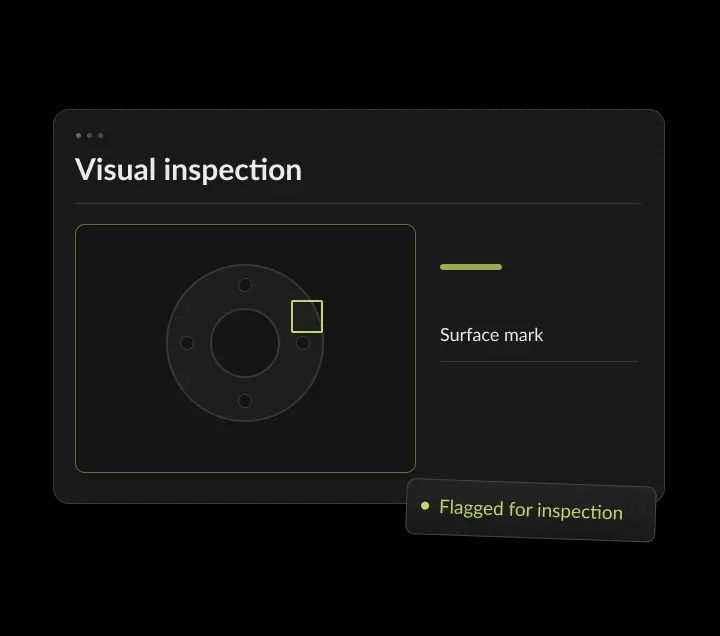






















How a defect alert moves through the build
One part: the AI flags a likely defect, a quality tech decides and the QMS logs it.
A camera images each part
Images come off the line at production speed.
AI flags a likely defect
It compares each part with approved samples and scores the risk.
A quality tech decides
They pass, rework or scrap the part in one tap.
The QMS logs it
The result, image and lot number go to your quality system.
AI for manufacturing, in short
- Kansas City metro software and AI company
- AI for manufacturers: quality inspection, predictive maintenance and production paperwork
- We work with plant, quality and operations leaders on the data their machines and systems already collect
- Builds start at $7,000, and you own all the code

AI flags it. A person signs off.
- 01Build priceFrom $7,000. Computer vision starts at $9,000 and predictive analytics at $8,000. Model usage is billed at cost. Computer vision development
- 02Who it's forPlant and quality leaders: mid-size manufacturers who want one problem solved on one line before they scale. Predictive analytics services
How AI is used in manufacturing today
AI in manufacturing turns plant data into three kinds of result: a likely defect, a likely failure or a drafted record. Quality, maintenance and planning staff approve each one. Plants collect camera images, sensor readings, schedules and emails every shift. AI reads that data continuously and hands staff a short list of things to check. Each kind has its own service: computer vision, predictive analytics and document processing.
Three kinds of manufacturing AI
Computer vision
Reads camera images of parts and assemblies. Produces a pass, fail or check flag for each part.
Predictive models
Reads vibration, temperature, current and run time. Produces a failure risk for each machine.
Language models
Reads emails, purchase orders, manuals and quality records. Produces extracted fields and drafted documents.

What stays with your people
Pass and scrap decisions, maintenance priorities, schedules and supplier calls stay with people. The AI scores, drafts and flags, and a person approves each change.
Where to start
1. Pick one line and one costly problem, such as a recurring defect or unplanned downtime. 2. Check the data: images at the inspection point, or sensor history from your PLC, historian or MES. 3. Label real examples with your quality or maintenance team, so tests use your own parts and machines. 4. Run the model beside your current process first, then let it route work once results meet your bar. For a quick first check of your data and systems, take our AI readiness quiz.
Predictive maintenance software, wired to your machines
We read the data your lines already produce and write results back to the systems your teams use.
Built for quality audits and plant data rules
Ready for an audit
Manufacturing AI has to stand up in a customer or ISO 9001 audit. Every build ships with these controls. See AI governance and compliance, AI agent evaluation and defense edge AI software.
Your cloud or plant servers
Production data stays in your own cloud account or on servers at the plant.
Everything logged
Every AI result is logged with the model version, the input and the person who approved it.
A person approves changes
A person approves any change to a work order, a schedule or a quality record.
Tested on your parts
Models are tested on your own parts and defects before launch, and retested after each change.
On-site models
Plants with export-controlled work can run models on site, on edge hardware.
Quality records, regulated plants and export rules
Manufacturing AI has to leave records an auditor can follow from the part to the decision. Regulated and export-controlled plants add their own rules for electronic records and where data may go.
AI governance and compliance sets company-wide rules for AI use. This summary points to official FDA, BIS and NIST pages for planning. Your quality and export compliance leads decide how each rule applies.
AI quality inspection and four more plant workflows
Each one reads data the plant already has and hands a person a result to approve.
Visual quality inspection
Cameras and AI check every part against approved samples and send likely defects to a technician. Writes to: your QMS, with the image and lot number. For example, a stamped bracket shows a burr on one edge. The AI flags it, a technician scraps it, and the image is saved with the lot number.
Predictive maintenance
AI watches vibration, temperature and run-time data and warns before a machine is likely to fail. Writes to: a work order in your CMMS. For example, vibration on a pump motor creeps up over two weeks. The AI opens a work order for the next planned stop.
Production scheduling
AI drafts the next shift's schedule from open orders, inventory and machine status for a planner to approve. Writes to: your ERP or MES. For example, a rush order arrives on Tuesday. The AI drafts a revised schedule that moves two jobs, and the planner approves it.
Quality paperwork
AI drafts nonconformance reports, corrective actions and supplier notices from inspection data. Writes to: your QMS, after a quality manager signs off. For example, after a failed inspection, the AI drafts the nonconformance report with images, lot and defect type for the quality manager to sign.
Orders and supplier documents
AI reads purchase orders, quotes and packing slips from email and enters them for review. Writes to: the sales order or receipt in your ERP. For example, a customer emails a purchase order as a PDF. The AI enters the sales order in your ERP, and a rep checks pricing before it posts. See AI data entry automation.
AI builds running in production
Two AI builds from our case studies: one reads documents, one runs a daily data pipeline.

- Healthcare
Prior Authorization AI
Prior Authorization AI is a healthcare automation startup building AI-powered tools to streamline prior authorization for Medicare and Medicaid medical transportation providers in New Jersey.- 16Weekly hours saved
- 63%Admin time reduced
- 43%Fewer submission errors

- Startup
- Real Estate
Our Haus AI
A finance professional turned founder built Our Haus AI, an AI-powered collaborative workspace where homeowners and contractors scope, bid, contract, and document renovation projects together. SoftDoes took her prototype and made it production-ready.- 10XMVP scope delivered
- 2+years Ongoing partnership
- 1Fully owned Platform

- Real Estate
The building buyer
The Building Buyer is a Florida-based real estate investment firm co-founded by Dylan Troiano and Charles Hanlin. They acquire single-family, multifamily, and commercial properties across South Florida and beyond, with a focus on motivated seller opportunities.- 18Weekly hours saved
- 2+Years Ongoing partnership
- 1Fully owned Platform

- Healthcare
CareInTouch
CareInTouch is a Bay Area home health agency providing skilled nursing and therapy services to patients referred from hospitals and clinics. With over 100 staff, they operate in one of the most complex and compliance-driven healthcare markets in the country.- 40% Reduction In Billing Errors
- 100+Staff Operations Managed
- 0Missed Compliance Deadlines

- Startup
Sparkle The Cleaning Service
Sparkle The Cleaning Service is a Detroit-area residential cleaning company with 10 years in business, connecting homeowners with vetted, insured independent cleaners through a subscription-based marketplace platform.- 75% Platform Transparency
- 2XPlatform Growth
- 40%Higher User Retention

- Healthcare
FMY Orthodontics
FMY Orthodontics, a multi-location practice in West Tennessee, partnered with SoftDoes to replace a spreadsheet-based financial workflow with a custom web platform. The goal was to simplify how staff present treatment financing while allowing patients and families to review and complete decisions remotely.- 60%Workflow Reduction
- 75%Remote Adoption
- 5Locations Aligned

- Real Estate
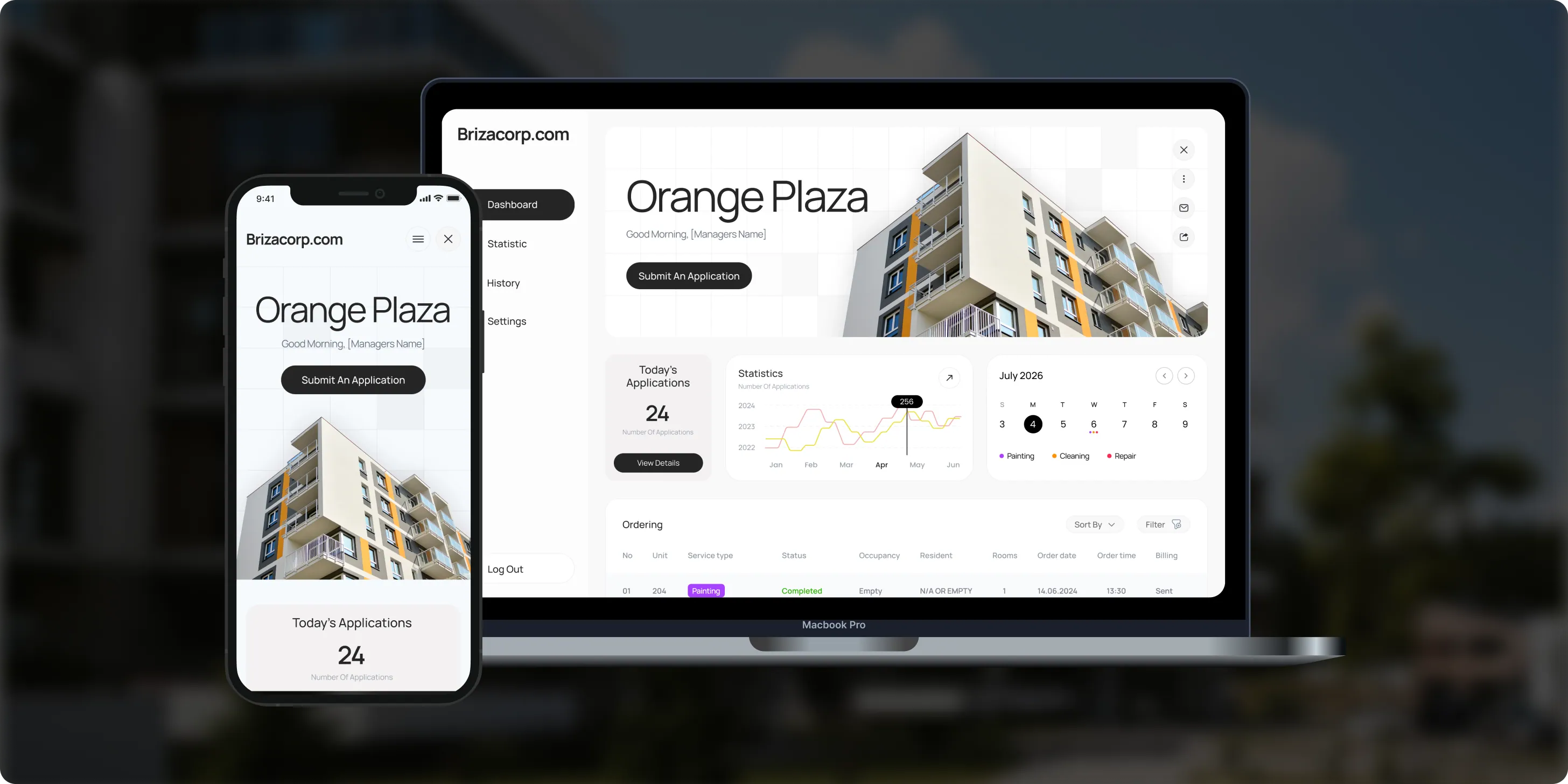
Brizacorp
Brizacorp manages residential properties and coordinates the staff who handle painting, cleaning, and repair requests. Its team tracked work across messengers, phone calls, e-mail, and paper planners, with no single place to manage requests or measure performance.- 98%Application Stability
- 95%Utilization Rate
- 30%Faster Task Completion
Risks of AI in manufacturing, and how we handle them
The main risks are missed defects, false alarms, drift, bad sensor data, unapproved changes and data leaving the plant. Each gets a control before launch.

How to choose a manufacturing AI partner
Choose a partner that works on your existing data, measures accuracy on your own parts and keeps a person approving every change. Ask these questions before you sign.
Questions to ask, and what a good answer includes
- Will it work on our existing data? A check of your images, historian or MES data before any build, with a written plan.
- How will you measure accuracy? On your own parts and machines, with thresholds set with your quality and maintenance teams.
- What happens to uncertain results? They go to a technician or planner, never straight through.
- Where will production data live? In your own cloud account or on plant servers, with on-site models where needed.
- What does it write to? Your QMS, CMMS, MES or ERP, as drafts a person approves.
- Who owns the code? You do, including every connector we build.
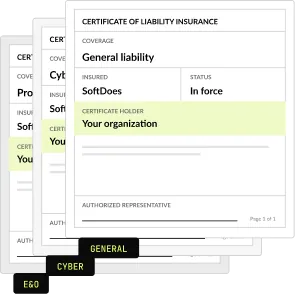
- What paperwork comes first? An NDA and a certificate of insurance before the first call.
AI in manufacturing ROI: a worked example
Predictive maintenance pays back when the downtime it prevents costs more than the build and upkeep. The example below uses one critical line and assumed numbers, so swap in your own. Example math with assumed numbers, not a client result. At these numbers, the build pays back in under three months. New sensors, where a machine has none, add to the cost. The math leaves out repair parts and scrap from failures, which would add to the saving. Run your own numbers in the AI ROI calculator. Our AI development cost guide shows more price ranges.
Questions about AI in manufacturing
Uses, cost, data and accuracy. Can't find your answer?
How is AI used in the manufacturing industry?
The most common uses are visual quality inspection, predictive maintenance and production scheduling. AI also handles the paperwork between the floor and the ERP, such as work orders and supplier documents. Each one reads data the plant already has, like camera images, sensor readings or emails. Then it hands a person a result to approve before anything changes in the system.
Which companies use AI in manufacturing?
Manufacturers of every size use it, from automotive and electronics plants to food and beverage lines. Large manufacturers often staff their own data teams. Mid-size plants tend to start with one line and one problem, such as a recurring defect or unplanned downtime. SoftDoes builds for that second group: one use case, on existing data, owned by the plant.
How much does AI for manufacturing cost?
Industry AI builds start at $7,000. Computer vision for quality inspection starts at $9,000, and predictive analytics, the base of predictive maintenance, starts at $8,000. A data readiness review costs $3,500 if your machine data needs work first. Maintenance starts at $500 a month, and model usage and hosting are billed at cost.
What is predictive maintenance software?
Predictive maintenance software watches machine data such as vibration, temperature and current draw, and warns before a failure is likely. It turns each warning into a work order in your CMMS, so repairs happen on a planned stop. We build it on the data your machines already send, starting with the assets that cost the most when they fail.
How accurate is AI quality inspection?
Accuracy depends on your parts, lighting and defect types, so we measure it on your own samples before launch. We set the threshold with your quality team, and uncertain parts go to a technician instead of passing automatically. The model is retested whenever a product, supplier or camera changes, and every result stays in the log.
Do we need new sensors or cameras?
Often not. Plants that already log machine data in a PLC, historian or MES can start predictive maintenance with that data. Quality inspection needs a camera with steady lighting at the inspection point. We specify the hardware during discovery and reuse your existing cameras when their images are good enough for the defects you care about.
Will the AI work with our ERP and MES?
Yes. We connect through the ERP or MES API where one exists, and through database views, file drops or OPC UA where it does not. The AI writes drafts, such as a work order or a quality record, and a person approves them before they post. You own the code and every connector we build.
What is AI quality inspection?
AI quality inspection uses cameras and computer vision to check each part against approved samples at production speed. Every part gets a pass, fail or check result, and uncertain parts go to a technician. Results are logged in your QMS with the image and lot number. Computer vision builds start at $9,000.
What are the best predictive maintenance tools?
The best tool reads the data your machines already produce and writes work orders into your CMMS. Packaged tools fit common assets with standard sensors. A custom build fits when your data sits in a PLC, historian or MES and your maintenance rules are specific. We check your data before recommending either route.
Is Excel a CMMS?
No. A spreadsheet can list assets and repairs. A CMMS manages work orders, preventive maintenance schedules, spare parts and the history of each machine. If your maintenance records live in spreadsheets today, the AI can still read them alongside sensor data. Warnings then become work orders wherever your team tracks maintenance.
What are the benefits of AI in manufacturing?
The main benefits are fewer escaped defects, fewer unplanned stops, less paperwork and faster order entry. Each one is measured on your own line against today's numbers. We do not promise a percentage before we see your data, because results depend on your parts, machines and processes.
What are the challenges of AI in manufacturing?
The usual hurdles are data quality, changing conditions and trust on the floor. Sensor data has gaps, products and suppliers change, and operators stop trusting alerts that are often wrong. We check the data before the build and retest after every change. Thresholds are tuned with the people who act on alerts.
Can manufacturing AI run without the cloud?
Yes. Models can run on edge hardware at the plant, so camera images and sensor data never leave the site. This suits plants with export-controlled work or strict customer data rules. We specify the hardware during discovery and reuse existing equipment where it is good enough.
Updated · Reviewed by Orest Andrusyshyn, Founder and CEO